Human anatomy printable worksheets sets give K–8 science teachers ready-made diagrams, labeling tasks, and system-level activities that span the full instructional range — from identifying external body parts in kindergarten to tracing how the nervous and circulatory systems interact in seventh grade. This set covers six major body systems with multiple worksheet formats per system, so teachers can address the same topic in several different ways without reprinting the same activity.
The Systems Covered and What Students Do With Them
Each body system cluster includes distinct task formats — not just labeling variations of the same diagram. Here is what the core activities look like across the six systems:
- Skeletal system: Students label individual bones — femur, tibia, clavicle, scapula, vertebrae — on a blank diagram, then write one-sentence functions for three bones they choose.
- Muscular system: Students shade voluntary and involuntary muscle groups using different colors and complete a comparison chart distinguishing cardiac, smooth, and skeletal muscle by location and control type.
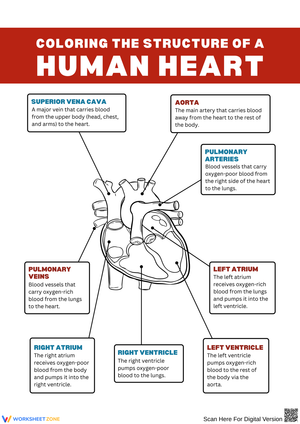
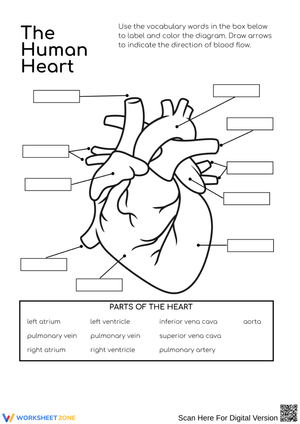
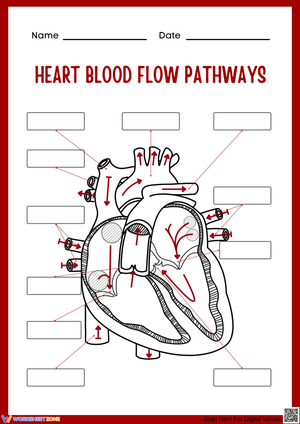
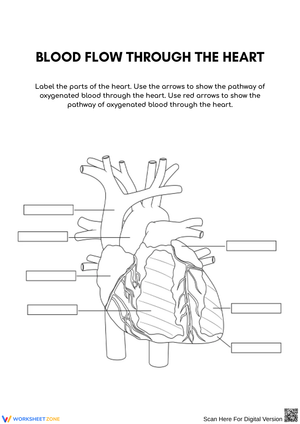
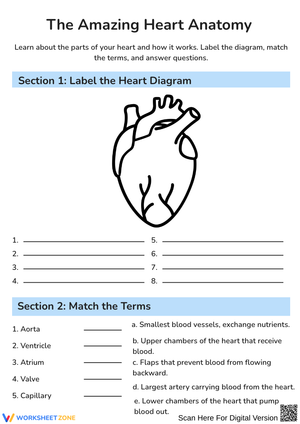
- Circulatory system: Students draw directional arrows through a heart cross-section, then sort a set of vessel descriptions by structure, function, and flow direction.
- Digestive system: Students number organs in sequence and write the primary process occurring at each stage — a format that prevents passive copying of a memorized list.
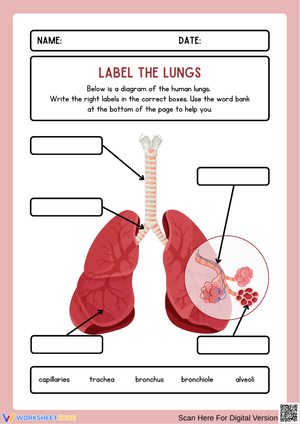
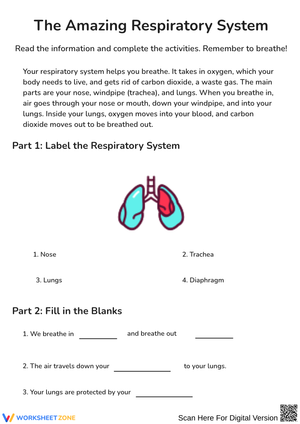
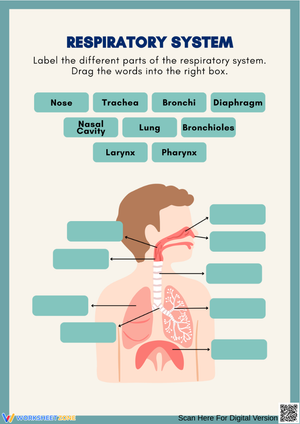
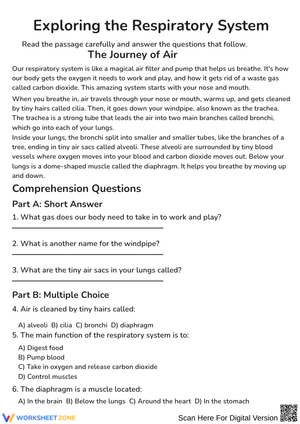
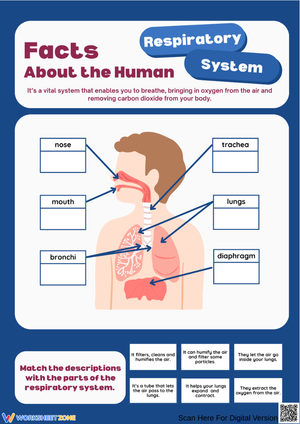
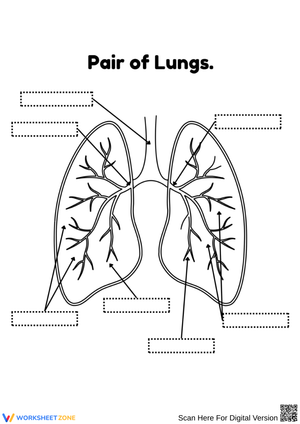
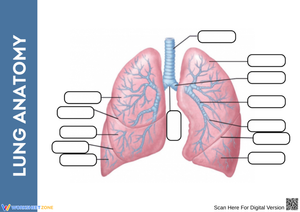
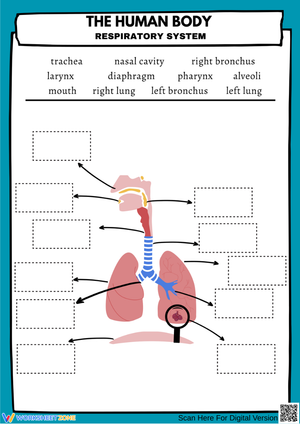
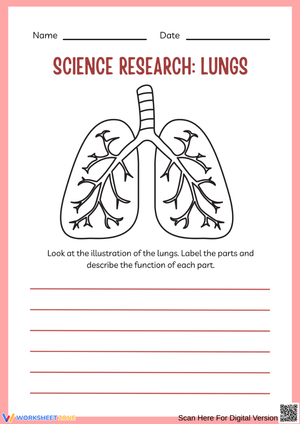
- Respiratory system: Students label the diaphragm, bronchi, alveoli, and accessory structures, then annotate a gas exchange diagram showing oxygen and carbon dioxide movement.
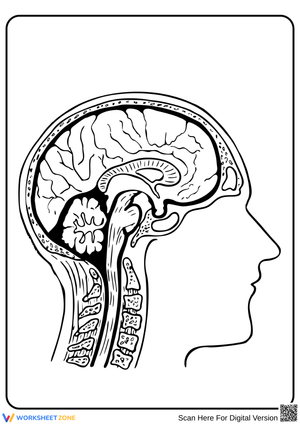
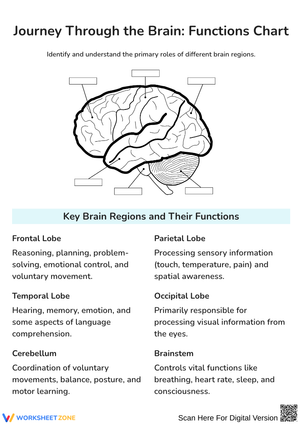
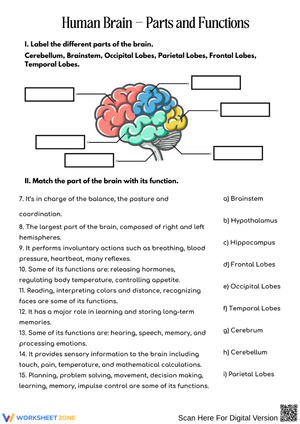
- Nervous system: Students label a neuron diagram and respond in writing to a prompt asking them to trace a signal from stimulus to response — requiring them to sequence peripheral and central nervous system roles rather than simply name them.
Why Anatomy Content Looks Different Across Grade Bands
Kindergartners are still sorting out what is inside the body versus outside, which is why K–2 worksheets stay with external parts — head, torso, limbs, hands, feet — paired with word banks and large diagrams. That is not oversimplification; it is developmentally accurate instruction. By third grade, most students carry enough concrete body experience — a broken bone, the feeling of breathing hard after sprinting, a stomachache — to attach genuine meaning to internal organ names. That prior experience is what makes grades 3–5 the right window for introducing organ systems rather than isolated organs.
Middle school is where the instructional goal shifts from identification to explanation. A sixth grader should not just know where the kidneys sit — they should be able to explain what would happen to blood chemistry if kidney filtration stopped. The 6–8 worksheets reflect this shift by replacing fill-in-the-blank vocabulary with constructed-response prompts and system-interaction diagrams that ask students to trace cause-and-effect chains across two or more body systems.
Anatomy Errors That Appear Consistently in Student Work
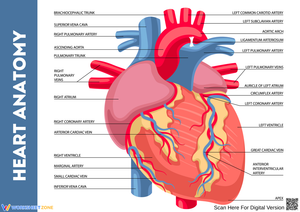
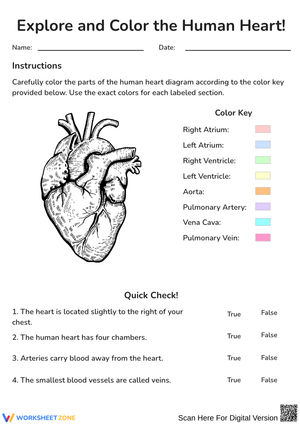
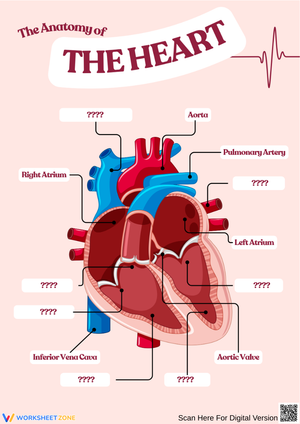
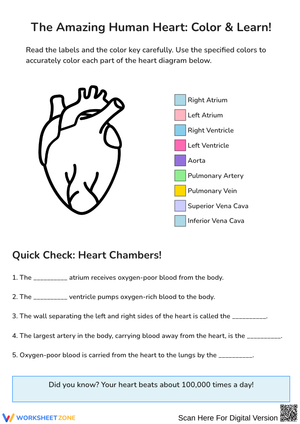
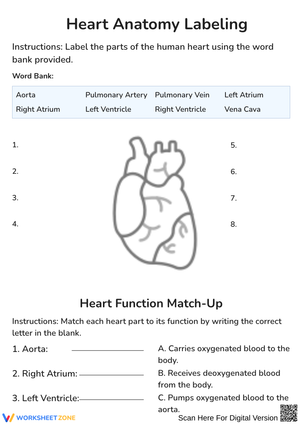
The most persistent error across grades is chamber confusion on the heart diagram. Students learn that the heart "pumps blood," and most will correctly label the left and right sides — but a significant number reverse the pulmonary and systemic circuits. They write "oxygenated blood" leaving the right ventricle because they assume the larger, more prominent-sounding side handles the more important job. The heart labeling worksheet places the pulmonary artery and pulmonary vein in close visual proximity, which surfaces this confusion during the labeling task rather than letting it persist silently through a full circulatory unit.
A second consistent problem appears in digestive system sequencing: students skip the liver and pancreas entirely. They know the chain mouth → esophagus → stomach → small intestine → large intestine, but when asked to place accessory organs, they either omit them or insert them directly into the food pathway. The sequencing worksheet here separates the food pathway column from the accessory organ column and asks students to draw arrows showing where each accessory organ delivers its secretions — a task that directly addresses the distinction between organs food passes through and organs that contribute to digestion.
Working These Worksheets Into a Multi-Week Anatomy Unit
The most effective use across a multi-week unit is a before-and-after labeling sequence. At the start of each body system lesson, distribute the blank diagram without a word bank and give students three minutes to fill in whatever they already know. Collect nothing — let students sit with their incomplete diagrams. At the lesson's end, return to the same worksheet with word banks available and ask them to complete it. The contrast between the two attempts is one of the clearest formative windows a science teacher can open: it shows exactly which structures students retained versus which ones they were guessing at an hour earlier.
Station rotations work particularly well with the coloring worksheets. Set up five stations — one per system — and rotate student groups every ten minutes. Assign each station a different color-coding scheme written on an index card so students must read the instructions rather than copy a neighbor's choices. That single constraint turns a coloring activity into an independent application task and prevents the worksheet from becoming a social exercise in the last fifteen minutes of class.
Reaching Different Readiness Levels With the Same Content
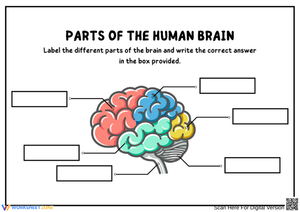
The labeling worksheets come in two versions — with and without a word bank — which handles the most common readiness split without requiring separate lesson plans. Students who need more structure work from the word bank; students ready for a greater challenge get the blank version and are asked to add a second notation indicating each structure's function alongside its name. Both groups complete the same diagram and participate in the same whole-class debrief.
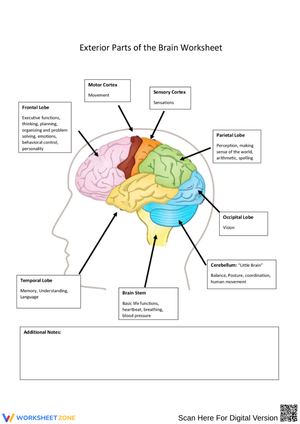
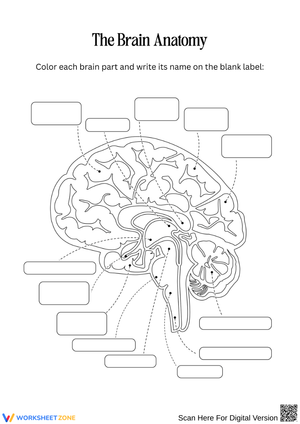
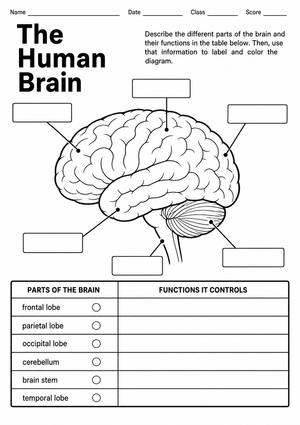
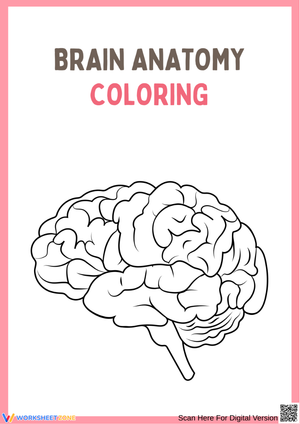
For students reading well below grade level, the vocabulary matching worksheets serve as the primary task while diagram labeling functions as an extension. Matching isolates terminology from the added spatial demand of placing labels precisely on a diagram — separating those two cognitive tasks gives struggling readers genuine access to the science content rather than losing them at the page. For accelerated middle schoolers, the nervous system worksheets pair naturally with a brief case study, such as a concussion scenario, where students use their labeled neuron and brain-region diagrams to explain which areas are most implicated and why.
Standard Alignment
Upper elementary worksheets align with NGSS 4-LS1-1, which requires students to construct an argument that plants and animals have internal and external structures that support survival, growth, behavior, and reproduction. Labeling skeletal, muscular, and digestive diagrams gives students the anatomical evidence base that standard demands before any coherent argument is possible. Middle school worksheets align with MS-LS1-3, which asks students to use argument from evidence to explain how body systems interact to carry out life functions. The system-interaction diagrams and written-response prompts in the 6–8 worksheets are built around that argumentation requirement rather than content recall alone — students produce evidence, not just answers.
Frequently Asked Questions
Are there worksheets for all six major systems, or does the set skip some?
All six systems — skeletal, muscular, circulatory, digestive, respiratory, and nervous — are covered with multiple formats each. Some human anatomy printable worksheets collections drop the nervous system at the elementary level because it is harder to represent visually; this set includes it across grade bands with age-appropriate diagrams at both the 3–5 and 6–8 levels.
What grade levels does this set serve?
Grades K through 8. The worksheets divide into three instructional bands: K–2 (external body parts with word banks and large diagrams), 3–5 (organ system introduction with labeling and function-matching), and 6–8 (detailed physiology with system-interaction diagrams and written response). Most worksheets note the target band in the header so teachers can assign them without guessing at the appropriate level.
Do the coloring activities serve an instructional purpose, or are they primarily for engagement?
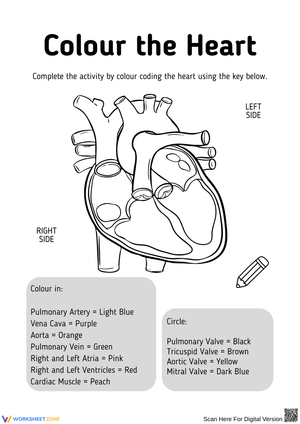
Both, though the instructional function is the primary one. When students color a body system diagram using an assigned scheme — all arteries red, all veins blue, the four heart chambers in four distinct colors — they must identify the boundaries of each structure before applying any color. That boundary-recognition step builds spatial memory for organ location and relative size in a way that labeling alone does not.
Can teachers use these worksheets as formative or summative assessments?
The blank-diagram versions without word banks work directly as formative or summative checks. Distributing the same human anatomy printable worksheets diagram at the start and end of a lesson gives teachers a visible before-and-after record of what individual students retained — without requiring a separately designed quiz document.
Do these worksheets work for homeschool science programs?
Yes. Human anatomy printable worksheets resources need no technology setup beyond a printer, which makes them straightforward for home instruction. The cut-and-paste organ-sequencing worksheets that work well in classroom stations translate directly to kitchen-table science without any adaptation, and the coloring formats work especially well when a parent or co-instructor can discuss the diagram alongside the student rather than assign it independently.












 Interactive Worksheet Maker
 Quiz Maker
 Word Search Maker
 Crossword Puzzle Maker
 Word Scramble Generator
 Sentence Scramble Generator
 Handwriting Worksheet Generator
 Name Tracing Generator
 Fill In The Blank Generator