


























0
Views
0
Downloads

0.0
0
Save
0 Likes
Share
Quad Muscles Anatomy Labeling Worksheet
0 Views
0 Downloads
Paste this activity's link or code into your existing LMS (Google Classroom, Canvas, Teams, Schoology, Moodle, etc.).
Students can open and work on the activity right away, with no student login required.
You'll still be able to track student progress and results from your teacher account.
Information
Description
What It Is:
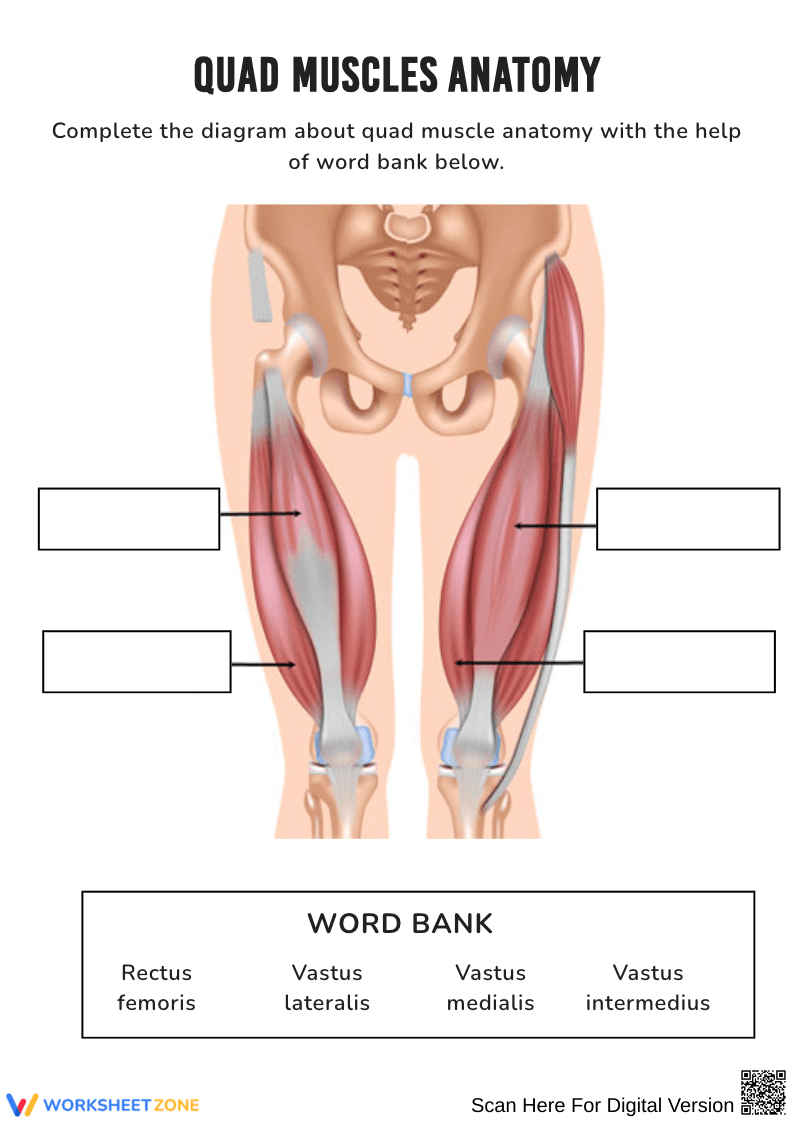
A labeling worksheet for quad muscle anatomy that helps students identify the four main quadriceps muscles: rectus femoris, vastus lateralis, vastus medialis, and vastus intermedius.
Why Use It:
Supports anatomy lessons by reinforcing the structure and function of quadriceps muscles. Great for test prep, revision, and interactive learning in biology and health science.
How to Use It:
• Use the word bank to label the correct quadriceps muscles.
• Apply in classroom activities, homework, or self-study practice.
• Combine with diagrams for sports science or medical anatomy study.
• Review before quizzes and exams on muscular anatomy.
Grade Suitability:
Best for high school and college levels.
• Grades 9–12 – biology, anatomy, and physiology
• College/Medical – kinesiology, physical therapy, and sports science
Target Users:
Biology teachers, anatomy students, physical therapy learners, sports medicine trainees, and medical students.
A labeling worksheet for quad muscle anatomy that helps students identify the four main quadriceps muscles: rectus femoris, vastus lateralis, vastus medialis, and vastus intermedius.
Why Use It:
Supports anatomy lessons by reinforcing the structure and function of quadriceps muscles. Great for test prep, revision, and interactive learning in biology and health science.
How to Use It:
• Use the word bank to label the correct quadriceps muscles.
• Apply in classroom activities, homework, or self-study practice.
• Combine with diagrams for sports science or medical anatomy study.
• Review before quizzes and exams on muscular anatomy.
Grade Suitability:
Best for high school and college levels.
• Grades 9–12 – biology, anatomy, and physiology
• College/Medical – kinesiology, physical therapy, and sports science
Target Users:
Biology teachers, anatomy students, physical therapy learners, sports medicine trainees, and medical students.


