


























Views
Downloads

Printable Letter X Tracing & Flash Cards | Kindergarten
Paste this activity's link or code into your existing LMS (Google Classroom, Canvas, Teams, Schoology, Moodle, etc.).
Students can open and work on the activity right away, with no student login required.
You'll still be able to track student progress and results from your teacher account.
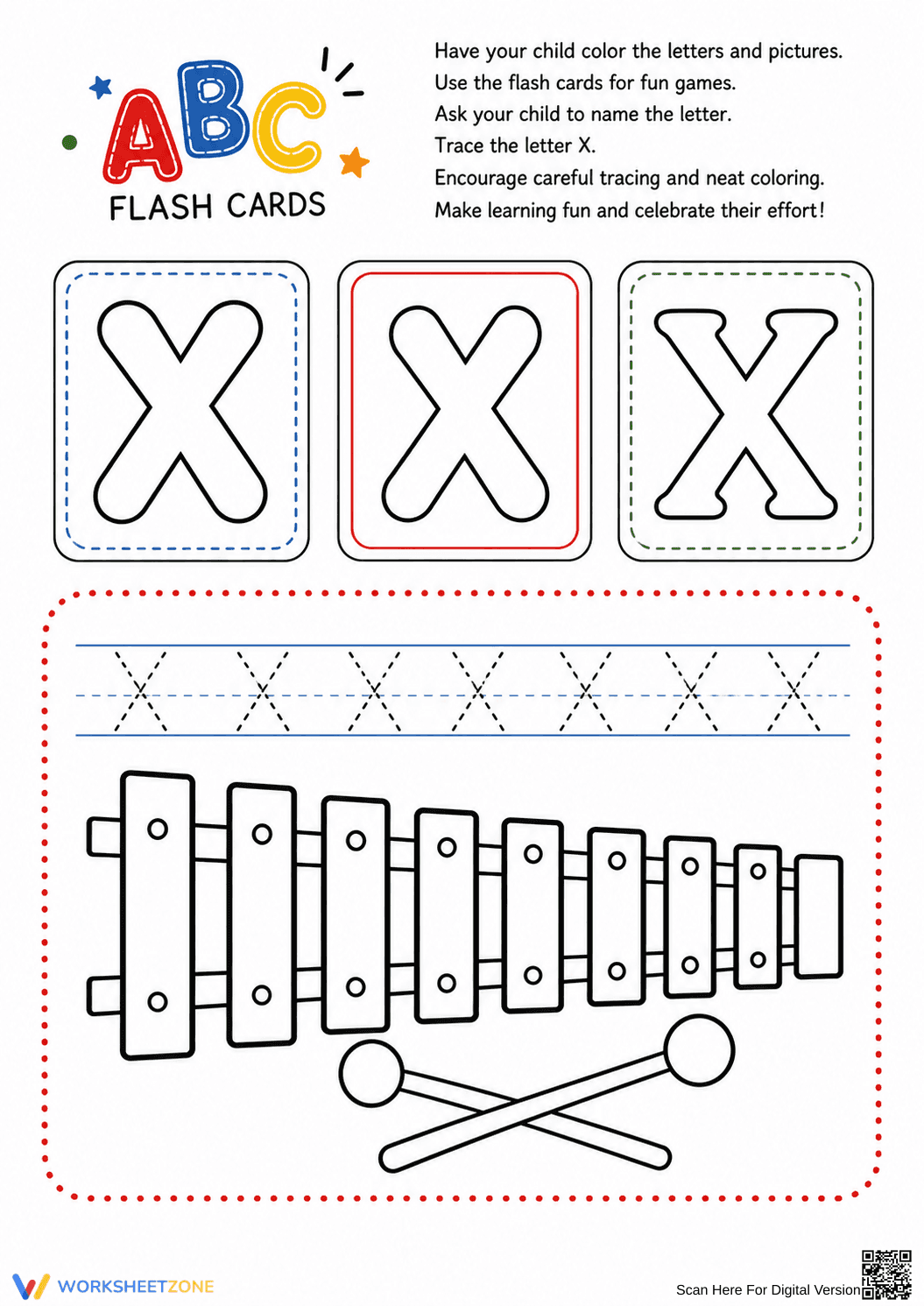
This Kindergarten Letter X worksheet provides foundational handwriting practice and phonemic awareness. Students master the unique diagonal strokes of the letter X while connecting the character to its beginning sound through visual aids. By combining tactile tracing with creative coloring, learners develop the fine motor control necessary for legible writing and early literacy success.
At a Glance
- Grade: Kindergarten · Subject: ELA
- Standard:
RF.K.1.D— Recognize and name all upper- and lowercase letters of the alphabet- Skill Focus: Letter X formation and recognition
- Format: 1 page · 11 tasks · No key needed · PDF
- Best For: Morning work or literacy centers
- Time: 15–20 minutes
This comprehensive single-page resource features three distinct learning zones. The top section contains three large-format flash cards designed for coloring and tactile recognition. Below, a dedicated tracing line provides 7 guided opportunities for students to practice the letter X on primary-ruled lines. The worksheet concludes with a large xylophone illustration, reinforcing the beginning sound through artistic engagement.
Zero-Prep Workflow
- Print: Generate the single-page PDF for your entire class in under 30 seconds.
- Distribute: Hand out the sheets along with crayons and pencils; no additional materials are required.
- Review: Monitor student progress and provide verbal feedback on stroke order as they work independently for 15 minutes.
This resource requires no teacher setup and serves as an ideal emergency sub plan or quiet-time activity.
Standards Alignment
This worksheet aligns with `RF.K.1.D`, focusing on the identification and naming of the letter X. It also supports `RF.K.3.A` by demonstrating the one-to-one letter-sound correspondence through the xylophone visual. Both standard codes can be copied directly into lesson plans, IEP goals, or district curriculum mapping tools.
How to Use It
Use this worksheet during the independent practice phase of a gradual release lesson on the alphabet. It works exceptionally well as a formative assessment tool; teachers can observe pencil grip and stroke order while students complete the 7 tracing tasks. Alternatively, use the flash card portion as a take-home activity to encourage parental involvement in phonics practice.
Who It's For
This resource is tailored for Kindergarten students and early learners in Pre-K who are beginning their handwriting journey. It provides essential scaffolding for students with fine motor delays. Pair this worksheet with a letter-sound anchor chart or a physical xylophone to create a multi-sensory learning experience that bridges the gap between abstract symbols and concrete sounds.
According to the RAND AIRS 2024 report on early childhood literacy, the integration of multi-sensory activities—such as combining coloring with repetitive tracing—significantly improves letter-name knowledge and phonological awareness in Kindergarten students. This worksheet addresses the RF.K.1.D standard by providing a structured environment where students can isolate the letter X, practice its specific diagonal construction, and associate it with a concrete object. Research indicates that consistent, short-burst practice with individual letters leads to higher retention rates compared to generalized alphabet drills. By utilizing this printable resource, educators provide the high-frequency exposure required for students to achieve automaticity in letter recognition. The inclusion of flash cards further extends the learning cycle, allowing for repeated retrieval practice which is a cornerstone of cognitive load theory in early education. This evidence-based approach ensures that students build a robust foundation for future reading and writing proficiency.


