




























Views
Downloads
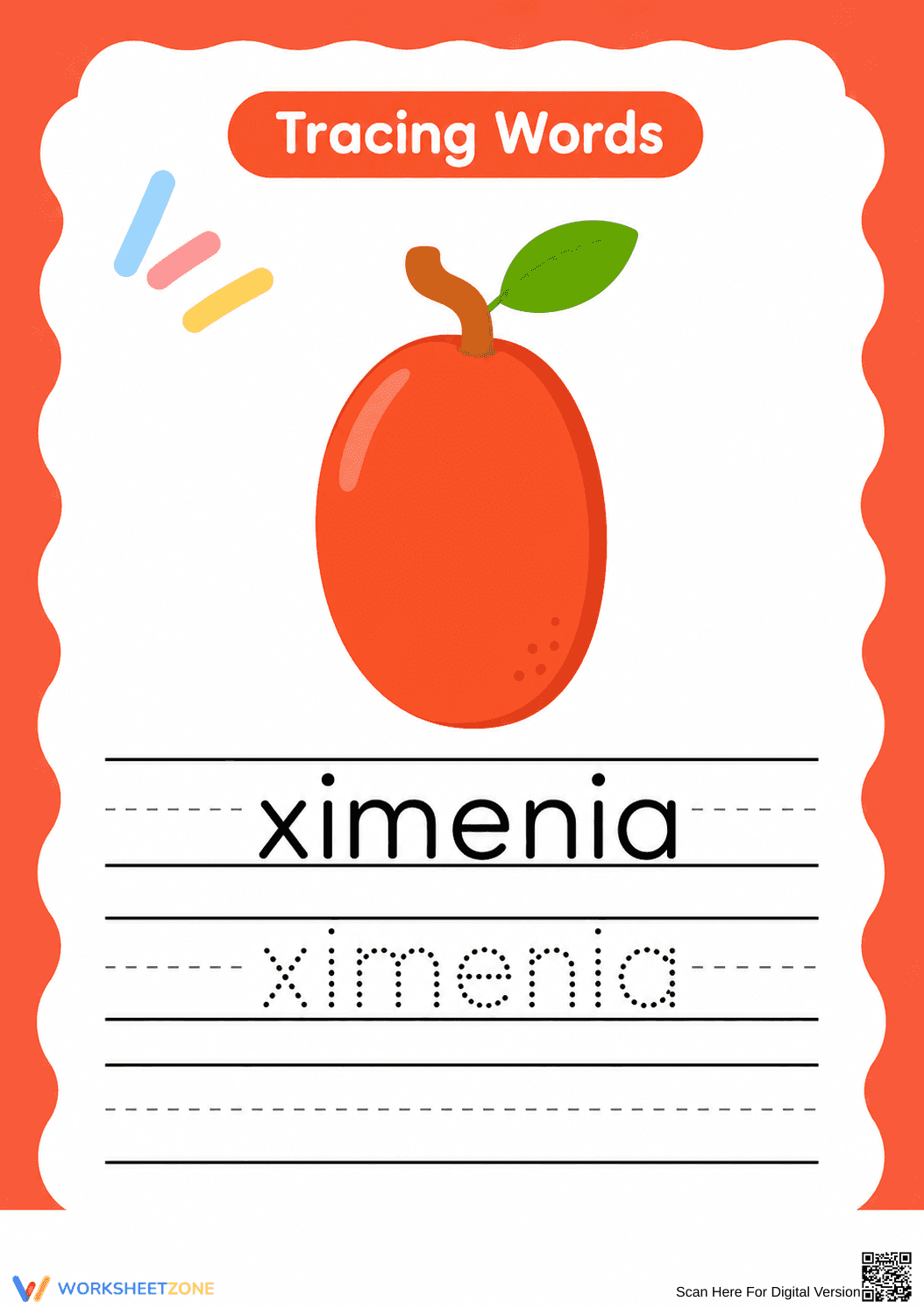

Printable Letter X Tracing Worksheet | Grade K ELA

Paste this activity's link or code into your existing LMS (Google Classroom, Canvas, Teams, Schoology, Moodle, etc.).
Students can open and work on the activity right away, with no student login required.
You'll still be able to track student progress and results from your teacher account.
This foundational phonics worksheet provides targeted practice with the letter X beginning sound. Kindergarten students develop fine motor control and letter-sound recognition by tracing and writing the word "ximenia." This single-page resource builds early literacy skills through clear, repetitive handwriting tasks that reinforce consonant sound associations.
At a Glance
- Grade: K · Subject: ELA
- Standard:
CCSS.ELA-LITERACY.RF.K.3.A— Produce primary sounds for consonants- Skill Focus: Letter X Beginning Sound
- Format: 1 page · 2 problems · No answer key needed · PDF
- Best For: Independent phonics practice
- Time: 5–10 minutes
This resource features a straightforward handwriting activity centered on the letter X. The page includes a colorful illustration of a ximenia fruit for visual context. Below the image, primary writing lines contain a solid text model, a dotted tracing model, and blank space for independent letter formation. The layout requires no answer key, making it accessible for early learners.
This worksheet follows a clear gradual-release model to build student confidence in handwriting and phonics:
- Guided practice: Students observe the solid printed word to understand proper letter proportion on the primary lines.
- Supported practice: The second task requires students to trace the dotted letters, developing fine motor memory.
- Independent practice: The final blank lines challenge students to write the word on their own.
This I Do, We Do, You Do approach ensures early writers receive appropriate support before attempting independent letter formation.
This material is directly aligned to CCSS.ELA-LITERACY.RF.K.3.A: "Demonstrate basic knowledge of one-to-one letter-sound correspondences by producing the primary sound or many of the most frequent sounds for each consonant." It also supports early handwriting standards by requiring students to print lowercase letters accurately on guided lines. Both standard codes can be copied directly into lesson plans, IEP goals, or district curriculum mapping tools.
Teachers can deploy this worksheet during morning work routines to reinforce phonics instruction. It also serves as an excellent literacy center activity where students practice independently. As a formative assessment tip, observe students while they trace to ensure correct stroke order for the letter X. Most students will complete this activity within a 5 to 10-minute timeframe.
This resource is designed for kindergarten students mastering beginning sounds. It is also effective for pre-K students showing handwriting readiness, or first-grade students requiring fine motor intervention. For extra support, teachers can provide a tactile alphabet card before moving to the pencil-and-paper task. This pairs perfectly with a whole-class anchor chart focusing on letter X vocabulary.
Connecting physical handwriting practice to phonemic awareness is a critical component of early literacy instruction. When students practice the Letter X Beginning Sound, they are actively working to produce primary sounds for consonants, which is the core expectation of CCSS.ELA-LITERACY.RF.K.3.A. According to a 2024 report by EdReports, integrating fine motor tracing tasks with specific letter-sound correspondence activities significantly improves long-term phonetic retention in early childhood classrooms. Writing the letters while vocalizing the target sound creates a multisensory learning experience that solidifies neural pathways required for reading. By combining visual vocabulary cues with structured tracing lines, educators provide the necessary scaffolding for students to master complex consonant sounds. This approach ensures foundational phonics skills are established before students transition to decoding full words.


