




























Views
Downloads
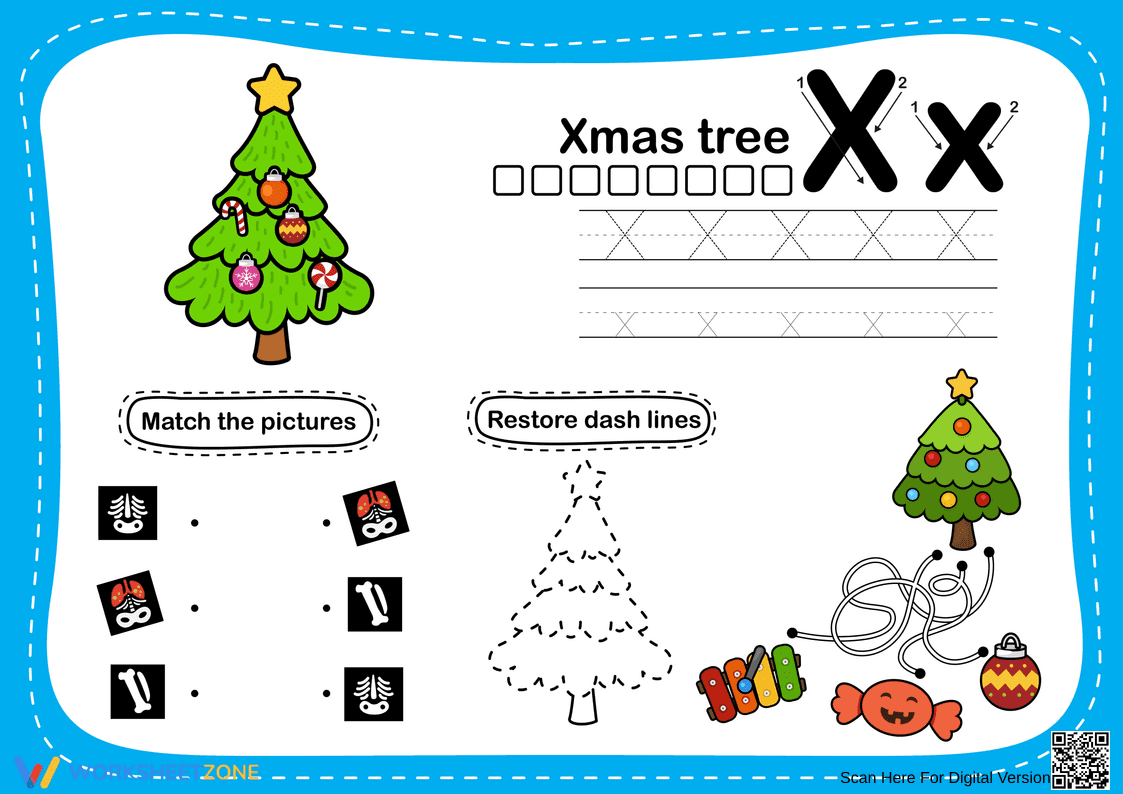

Grade K Letter X Tracing — Printable No-Prep Worksheet

Paste this activity's link or code into your existing LMS (Google Classroom, Canvas, Teams, Schoology, Moodle, etc.).
Students can open and work on the activity right away, with no student login required.
You'll still be able to track student progress and results from your teacher account.
This foundational letter recognition worksheet helps early learners master the letter X through targeted handwriting practice and fine motor activities. Students trace uppercase and lowercase forms, match related vocabulary images, and complete engaging line-tracing exercises to build essential pre-writing coordination and alphabet fluency.
At a Glance
- Grade: K · Subject: ELA
- Standard:
CCSS.ELA-LITERACY.L.K.1.A— Print many upper- and lowercase letters- Skill Focus: Letter X tracing and fine motor control
- Format: 1 page · 4 tasks · No answer key · PDF
- Best For: Morning work or literacy centers
- Time: 10–15 minutes
This single-page resource features four distinct activity zones designed to keep young learners engaged. The top section provides guided tracing lines for both uppercase and lowercase letter X, complete with numbered stroke directions. Below, students will find a picture-matching activity featuring x-ray imagery, a dashed-line Christmas tree to trace, and a short path-tracing maze connecting holiday ornaments. The varied task types ensure students practice pencil control in multiple contexts.
This resource requires zero teacher setup, making it ideal for early childhood classrooms.
- Print (30 seconds): Generate the single-page PDF directly from your device. No special formatting or color ink is required, though the vibrant illustrations pop beautifully if printed in color.
- Distribute (1 minute): Hand out the sheets along with standard pencils or thick crayons for students still developing their grip.
- Review (2 minutes): Briefly model the numbered stroke order for the letter X on the board before letting students work independently.
Total teacher preparation time is under two minutes. The intuitive layout makes it a perfect emergency sub plan or independent center activity.
This activity is directly aligned with CCSS.ELA-LITERACY.L.K.1.A, requiring students to print many upper- and lowercase letters. It also supports foundational fine motor development necessary for early writing success. Both standard codes can be copied directly into lesson plans, IEP goals, or district curriculum mapping tools.
This worksheet serves as an excellent transition activity during morning arrival, allowing students to settle in with a familiar, structured task. Alternatively, place it in a literacy center alongside tactile letter manipulatives for a comprehensive alphabet station. While students work, observe their pencil grip and stroke direction, specifically noting if they follow the numbered arrows for the letter X or if they require gentle redirection to form the intersecting lines correctly. Expect completion within 10 to 15 minutes.
This resource is primarily designed for preschool and kindergarten students who are actively learning the alphabet and refining their fine motor skills. The visual cues and varied activities provide natural scaffolding for early learners who might struggle with repetitive handwriting drills. Pair this worksheet with a read-aloud focusing on the letter X or an anchor chart displaying words that contain the target letter to reinforce phonetic connections.
Developing automaticity in letter formation through resources aligned to CCSS.ELA-LITERACY.L.K.1.A is a critical step in early literacy. When students print many upper- and lowercase letters accurately, they free up cognitive capacity for higher-level phonics and decoding tasks later in their educational journey. According to Fisher & Frey (2014), integrating fine motor activities with explicit handwriting instruction improves early literacy outcomes by reinforcing physical memory of letter shapes. This worksheet combines direct tracing with supplementary path-following exercises, ensuring that young learners build the necessary hand-eye coordination and muscle memory required for fluent writing. By providing structured, repetitive practice in a visually engaging format, educators can effectively support foundational literacy development and prepare students for more complex writing assignments in subsequent grade levels.


