


























Views
Downloads

Printable Letter O Writing Worksheet — Grade K Essential
Paste this activity's link or code into your existing LMS (Google Classroom, Canvas, Teams, Schoology, Moodle, etc.).
Students can open and work on the activity right away, with no student login required.
You'll still be able to track student progress and results from your teacher account.
Mastering the letter O is a fundamental step in early literacy development. This worksheet provides students with a structured environment to practice forming both upper- and lowercase O through guided tracing. By focusing on the smooth, round motion required for this letter, learners build the fine motor control necessary for fluent handwriting and future spelling success.
At a Glance
- Grade: Kindergarten · Subject: ELA
- Standard:
CCSS.ELA-LITERACY.L.K.1.A— Print many upper- and lowercase letters accurately while maintaining proper stroke sequence- Skill Focus: Letter O Formation
- Format: 2 pages · 30 problems · Answer key included · PDF
- Best For: Independent center work or homework
- Time: 10–15 minutes
What's Inside
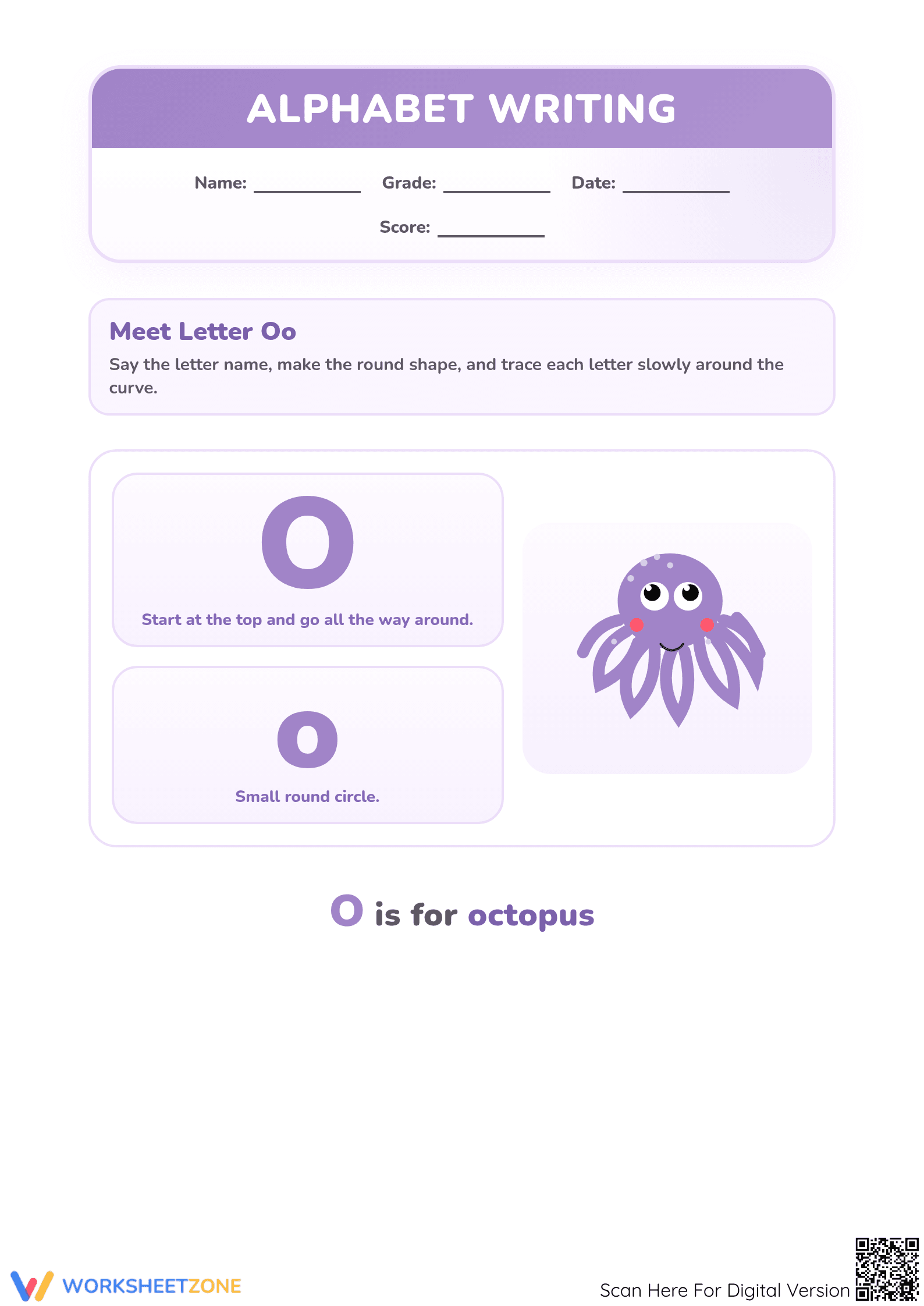
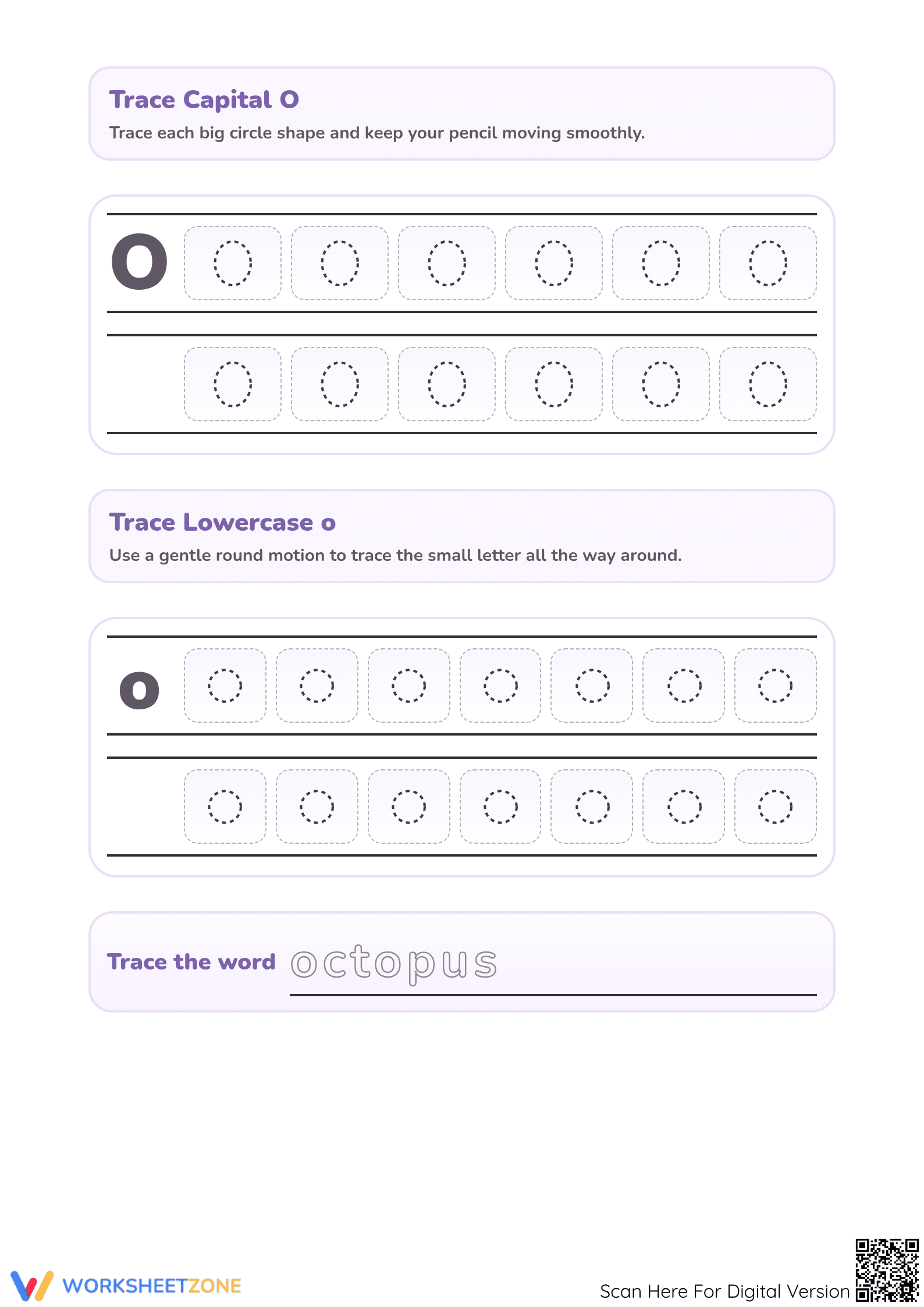
This 2-page resource begins with an introduction to the "Meet Letter Oo" section, featuring a friendly octopus illustration to reinforce the letter-sound connection. The second page is dedicated entirely to high-repetition practice, offering 13 capital O tracing opportunities and 16 lowercase o tracing spots. The worksheet concludes with a specialized section for tracing the full word "octopus," bridging the gap between isolated letter formation and functional word writing.
Zero-Prep Workflow
The zero-prep design ensures that teachers can integrate this resource into their day in under 2 minutes. First, simply print the 2-page PDF for your class (30 seconds). Next, distribute the sheets and provide pencils (30 seconds). Finally, students work independently through the clear, dotted-line paths while you conduct small-group instruction or assessments (1 minute setup). This workflow makes it an ideal choice for sudden sub plans or transition periods.
Standards Alignment
The primary standard addressed is `CCSS.ELA-LITERACY.L.K.1.A`, which requires students to "Print many upper- and lowercase letters." By providing repeated, scaffolded tracing paths, this worksheet ensures students internalize the correct starting points and circular directions for the letter O. Both standard codes can be copied directly into lesson plans, IEP goals, or district curriculum mapping tools for easy documentation.
How to Use It
For best results, use this worksheet during the "You Do" phase of a gradual release lesson. After modeling the "top-down" circular motion on the board, assign the tracing tasks as independent practice to solidify muscle memory. Teachers can use this as a formative assessment by observing the directionality of student strokes—specifically checking if they are starting at the top as the instructions suggest.
Who It's For
This resource is designed for preschool, kindergarten, and first-grade students who are developing their foundational writing skills. It is particularly effective for learners who require high-repetition scaffolds to improve pencil control. Naturally pair this worksheet with a read-aloud about sea creatures or an alphabet anchor chart to create a cohesive thematic learning experience.
Early handwriting instruction, such as the systematic tracing of letters found in this resource, is critical for developing the cognitive "motor programs" necessary for automaticity. According to Fisher & Frey (2014), the gradual release of responsibility model—moving from guided tracing to independent word formation—is a proven pedagogical strategy for stabilizing new motor skills in young learners. Research from the NAEP highlights that students with strong early letter-printing skills often demonstrate higher levels of writing fluency in later elementary grades. By providing 30 specific tracing tasks, this worksheet directly addresses the high-volume practice required for mastery of `CCSS.ELA-LITERACY.L.K.1.A`. The inclusion of "O is for octopus" further leverages the associative learning principle, connecting phonetic awareness with visual-spatial letter production. This evidence-based approach ensures that students move beyond simple recognition into the active production phase of literacy development.


