


























Views
Downloads
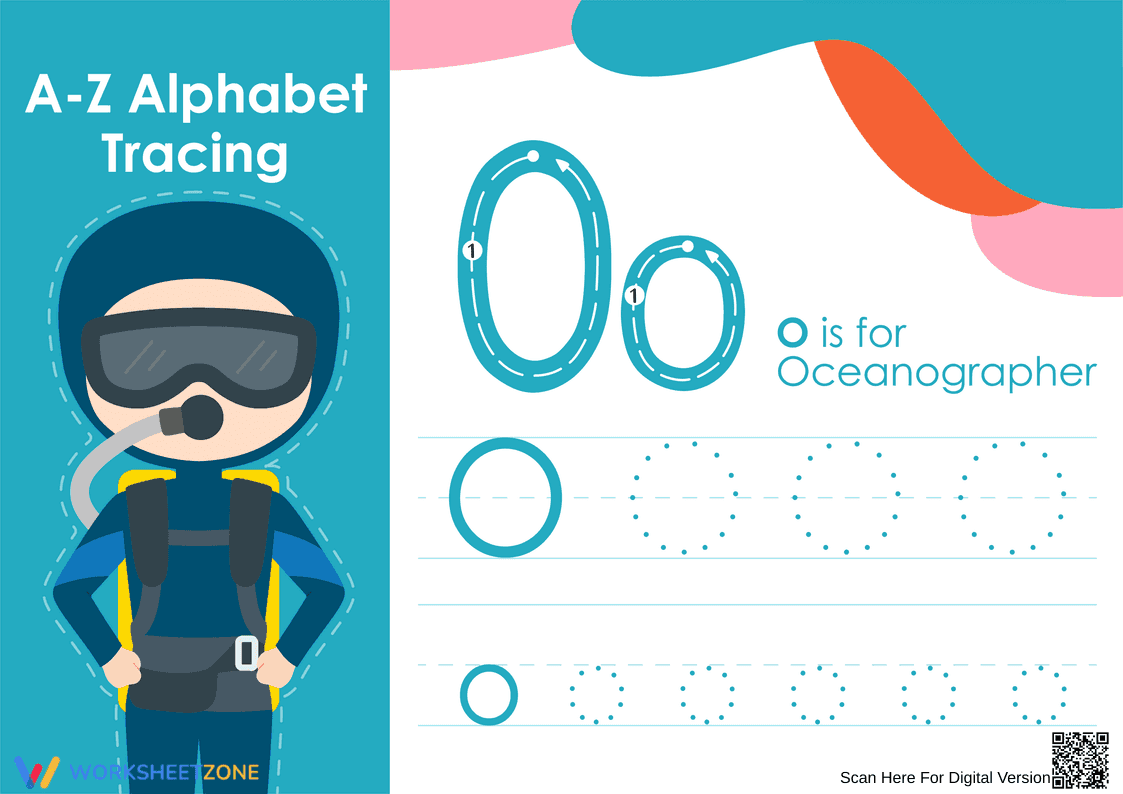

Grade K Letter O Tracing — Printable No-Prep Worksheet
Paste this activity's link or code into your existing LMS (Google Classroom, Canvas, Teams, Schoology, Moodle, etc.).
Students can open and work on the activity right away, with no student login required.
You'll still be able to track student progress and results from your teacher account.
This foundational letter tracing worksheet helps early learners master the formation of the uppercase and lowercase letter O. By providing clear directional arrows and guided dotted lines, students develop essential fine motor skills and proper penmanship required for fluent writing.
At a Glance
- Grade: Kindergarten · Subject: ELA
- Standard:
CCSS.ELA-LITERACY.L.K.1.A— Print many upper- and lowercase letters- Skill Focus: Letter O formation and tracing
- Format: 1 page · 7 problems · No answer key · PDF
- Best For: Independent practice centers
- Time: 5–10 minutes
Inside this single-page resource, educators will find a focused handwriting exercise featuring the letter O. The page includes a large model of both the uppercase and lowercase letter with numbered directional arrows to guide initial strokes. Below the model, students have three dotted uppercase letters and four dotted lowercase letters to trace independently. An engaging illustration of an oceanographer provides a helpful vocabulary connection, reinforcing the letter's initial sound.
This resource is designed for immediate classroom implementation with a highly efficient workflow:
- Print (1 minute): Generate copies directly from the PDF file. The high-contrast design ensures clear dotted lines on standard school printers.
- Distribute (1 minute): Hand out to students during morning work or literacy centers. The visual cues make the task immediately understandable.
- Review (1 minute): Quickly check student work for proper stroke direction and line adherence.
With under two minutes of total teacher prep time, this worksheet is an excellent addition to emergency sub plans or spontaneous skill-building sessions.
This handwriting activity aligns directly with CCSS.ELA-LITERACY.L.K.1.A, which requires students to print many upper- and lowercase letters. It also supports early phonics skills by associating the letter with a specific vocabulary word. Both standard codes can be copied directly into lesson plans, IEP goals, or district curriculum mapping tools.
Teachers can utilize this tracing sheet during morning arrival as a calm, focused task that settles students into the academic day. Alternatively, it serves as an effective station activity during small-group literacy rotations. Before assigning the page, model the stroke order on a whiteboard, emphasizing the continuous circular motion. As a formative assessment tip, observe students while they work to ensure they are starting at the top of the letter rather than the bottom. Expected completion time is five to ten minutes.
This material is primarily designed for preschool and kindergarten students who are developing their basic handwriting and fine motor capabilities. It provides necessary scaffolding for learners who struggle with spatial awareness on lined paper. For a comprehensive lesson, pair this tracing activity with a read-aloud book featuring ocean animals or an anchor chart displaying other words that begin with the letter O.
Early handwriting instruction remains a critical component of early literacy development. According to Fisher & Frey (2014), explicit instruction in letter formation significantly impacts a student's future writing fluency and reading comprehension. When children do not have to expend cognitive energy on the physical act of writing, they can focus entirely on content generation and phonetic spelling. This worksheet directly supports CCSS.ELA-LITERACY.L.K.1.A by helping students print many upper- and lowercase letters accurately. The inclusion of directional arrows ensures that students practice the correct motor pathways from the beginning, preventing the formation of poor handwriting habits that are difficult to correct later. By integrating visual vocabulary cues, such as the oceanographer illustration, the activity also bridges the gap between physical writing and phonemic awareness, creating a holistic approach to early alphabet mastery.


