


























Views
Downloads

Grade K Letter O Tracing — Printable No-Prep Worksheet
Paste this activity's link or code into your existing LMS (Google Classroom, Canvas, Teams, Schoology, Moodle, etc.).
Students can open and work on the activity right away, with no student login required.
You'll still be able to track student progress and results from your teacher account.
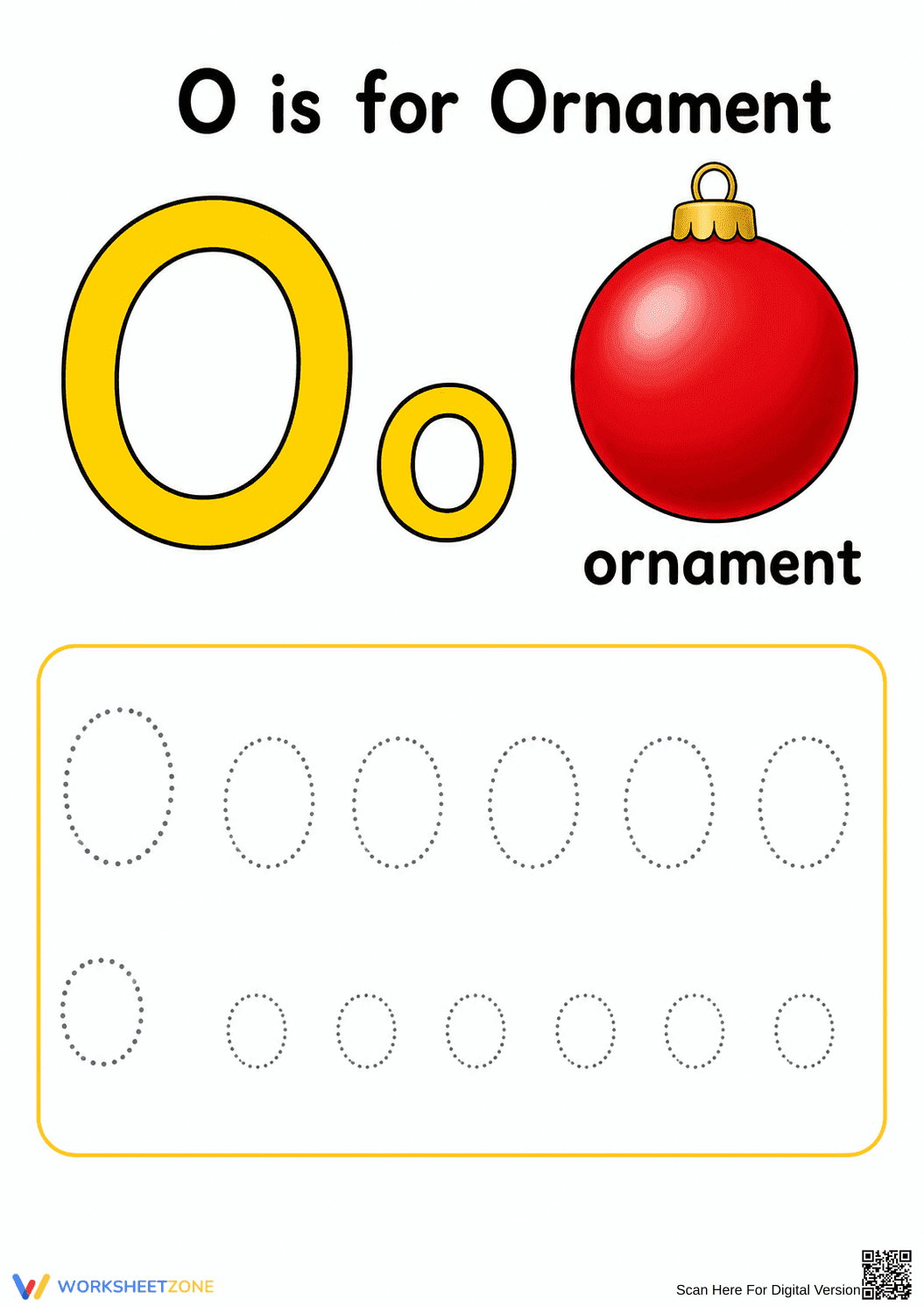
This foundational phonics and handwriting resource helps early learners master the letter O. Students practice proper letter formation and build beginning sound recognition through targeted tracing exercises. By connecting the visual letter to a familiar object, young readers strengthen their early literacy skills and develop essential fine motor control.
At a Glance
- Grade: K · Subject: ELA
- Standard:
CCSS.ELA-LITERACY.L.K.1.A— Print upper- and lowercase letters- Skill Focus: Letter O tracing and recognition
- Format: 1 page · 12 problems · No answer key needed · PDF
- Best For: Independent morning work
- Time: 5–10 minutes
This single-page printable features a clear, engaging layout designed specifically for kindergarten students. The top section introduces the uppercase and lowercase letter O alongside a colorful illustration of an ornament, reinforcing the beginning sound connection. The bottom section provides a structured tracing area with six uppercase and six lowercase dotted letters. The large, easy-to-read font ensures students can confidently follow the dashed lines to practice their handwriting without feeling overwhelmed.
Zero-Prep Workflow
This resource is designed for immediate classroom implementation, requiring under two minutes of total teacher preparation.
- Print (1 minute): Simply download the PDF and print the required number of copies. The high-contrast design ensures clear reproduction in black and white or color.
- Distribute (1 minute): Hand out the sheets along with pencils or crayons. The intuitive layout means students immediately understand the task.
- Review (Ongoing): Monitor students as they trace, providing quick feedback on pencil grip and stroke direction.
Because it requires no special materials or complex instructions, this activity is highly suitable for emergency sub plans or quick transitions.
Standards Alignment
This activity aligns directly with CCSS.ELA-LITERACY.L.K.1.A, requiring students to print many upper- and lowercase letters. It also supports early phonics development by associating the letter O with its corresponding initial sound. Both standard codes can be copied directly into lesson plans, IEP goals, or district curriculum mapping tools.
How to Use It
This tracing sheet serves as an excellent morning work activity as students settle into the classroom. It can also be utilized during small group literacy centers following direct instruction on the letter O. While students are working, teachers can conduct quick formative assessments by observing pencil grip and ensuring students are starting their letters from the top rather than the bottom. Most kindergarteners will complete this focused task within a 5 to 10-minute timeframe.
Who It's For
This resource is primarily designed for kindergarten students and first graders who need additional handwriting reinforcement. It is highly effective for early learners developing fine motor skills and students receiving occupational therapy support for letter formation. For a comprehensive lesson, pair this tracing sheet with a read-aloud book featuring prominent O words or a classroom anchor chart displaying various objects that begin with the target letter.
Effective handwriting instruction remains a critical component of early literacy development. According to a comprehensive EdReports 2024 review of foundational reading programs, explicit practice with letter formation directly supports broader reading and writing fluency. When students engage with targeted exercises aligned to CCSS.ELA-LITERACY.L.K.1.A to print upper- and lowercase letters, they build the necessary motor memory to reduce cognitive load during future writing tasks. This specific worksheet facilitates that essential practice by combining visual phonics cues with structured tracing repetitions. By isolating the letter O and providing clear, dashed guidelines, the activity ensures students can focus entirely on stroke sequence and spatial awareness. Consistent, brief practice sessions using focused materials like this one yield significant improvements in both legibility and letter-sound automaticity for early elementary learners.


