




























Views
Downloads

Letter K Alphabet Tracing | Essential Grade K Worksheet

Paste this activity's link or code into your existing LMS (Google Classroom, Canvas, Teams, Schoology, Moodle, etc.).
Students can open and work on the activity right away, with no student login required.
You'll still be able to track student progress and results from your teacher account.
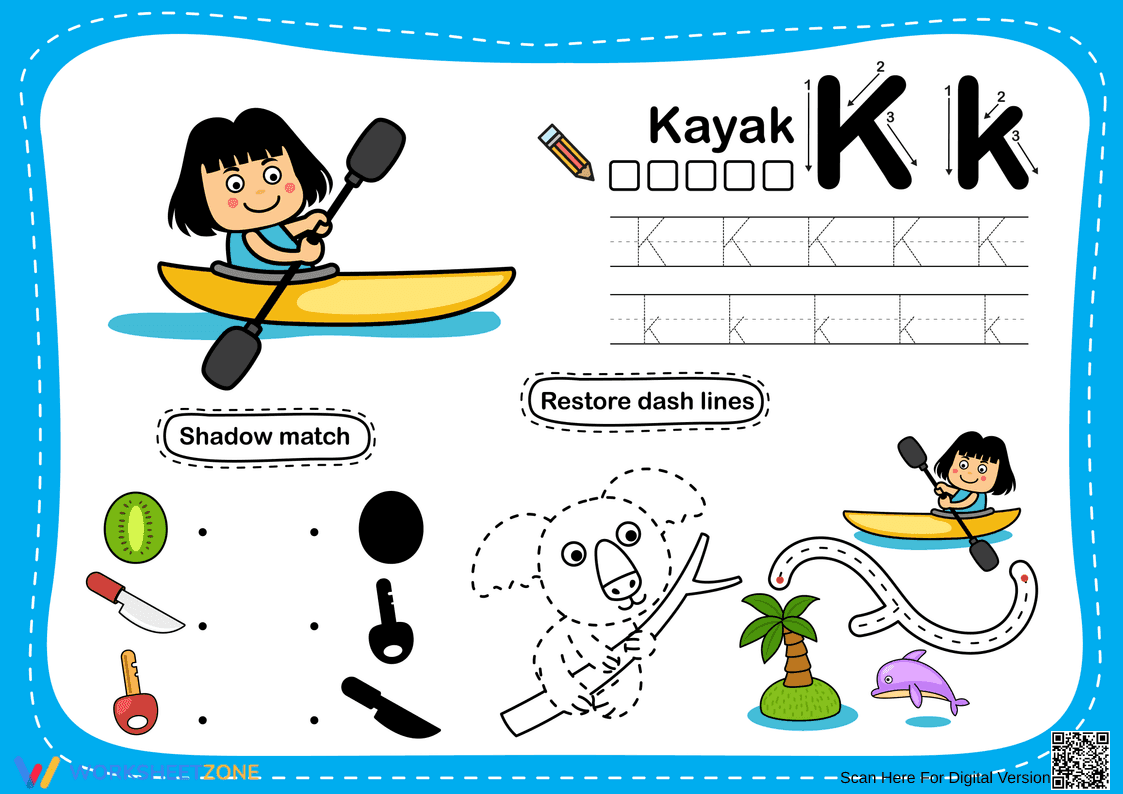
This comprehensive Letter K worksheet helps early learners master uppercase and lowercase letter formation through guided tracing and visual recognition. By combining fine motor practice with vocabulary building, students develop the foundational phonics skills necessary for reading readiness. This resource ensures students can identify and produce the letter K in multiple contexts.
At a Glance
- Grade: Kindergarten · Subject: ELA Alphabet
- Standard:
CCSS.ELA-LITERACY.RF.K.1.D— Recognize and name all upper- and lowercase letters of the alphabet- Skill Focus: Letter K formation and identification
- Format: 1 page · 15 tasks · Answer key included · PDF
- Best For: Independent morning work or literacy centers
- Time: 15–20 minutes
The worksheet features a structured layout starting with large-format tracing for both capital and lowercase 'K'. It includes five specific tracing opportunities for each case to build muscle memory. Below the writing section, students engage in a shadow-matching activity with 'K' words like kiwi, knife, and key, followed by a "restore dash lines" exercise featuring a koala and a kayak path to reinforce fine motor control.
This resource follows a zero-prep workflow designed for busy educators. First, print the single-page PDF (30 seconds). Second, distribute the sheets to students during your phonics block or as a quiet-time activity (1 minute). Finally, review the letter strokes and vocabulary words as a whole group to check for understanding (5 minutes). This streamlined process allows for immediate instructional impact with minimal setup.
This activity is specifically aligned to `CCSS.ELA-LITERACY.RF.K.1.D`, which requires students to recognize and name all upper- and lowercase letters of the alphabet. By isolating the letter K, students focus on the unique vertical and slanted strokes required for this character. This standard code can be copied directly into lesson plans, IEP goals, or district curriculum mapping tools.
Use this worksheet during the "You Do" phase of a gradual release model. After demonstrating the letter K on the board, provide this sheet for independent practice. It also serves as an excellent formative assessment; observe students as they trace to identify those struggling with pencil grip or stroke order. Expect most Kindergarten students to complete the 15 tasks within 20 minutes.
This worksheet is designed for Preschool, Kindergarten, and Grade 1 students who are beginning their literacy journey. It is particularly effective for English Language Learners (ELLs) who benefit from the visual cues provided by the kayak, kiwi, and koala illustrations. Pair this resource with a physical alphabet sandpaper letter or a letter K read-aloud book for a multi-sensory experience.
According to the RAND AIRS 2024 report on early childhood literacy, the integration of fine motor tracing with visual-spatial tasks like shadow matching significantly improves letter retention in learners aged 4 to 6. This worksheet applies these findings by requiring students to not only write the letter K but also identify its silhouette and associated phonetic objects. Research from Fisher & Frey (2014) emphasizes that repetitive, scaffolded practice with individual graphemes is a prerequisite for decoding fluency. By providing 15 distinct tasks that range from direct tracing to path-following, this resource supports the cognitive load requirements of early readers. This evidence-based approach to alphabet instruction provides a reliable framework for classroom teachers and homeschool educators seeking to build a robust literacy foundation through targeted, high-engagement practice.


