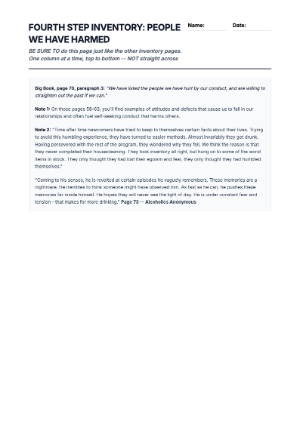
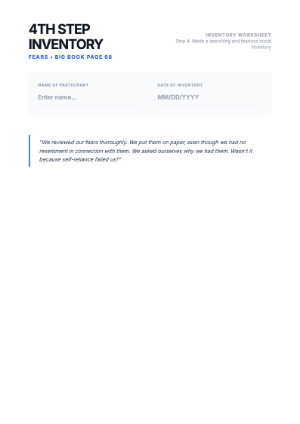
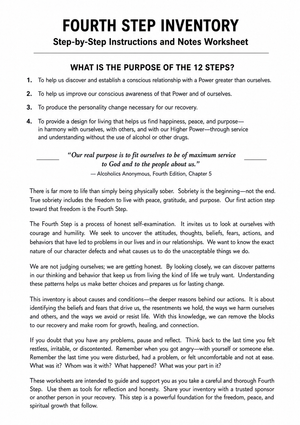
The 4th Step comes from 12-Step recovery programs like AA and NA, where it asks a participant to make a searching and fearless moral inventory of themselves. That phrase sounds clinical, but the underlying task is simple: name what is bothering you, name what caused it, and name the part of yourself it touches. School counselors, behavior specialists, and mentorship coordinators working with older students have started borrowing that structure, not to run a recovery program in a school building, but because the format gives students a clear, contained way to sort out resentment, fear, and conduct instead of letting those feelings spill into unstructured behavior.
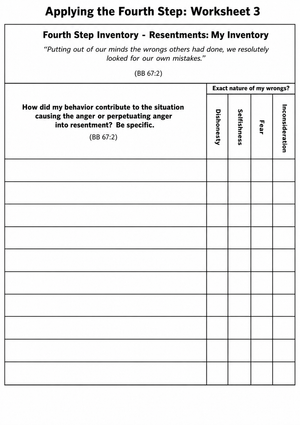
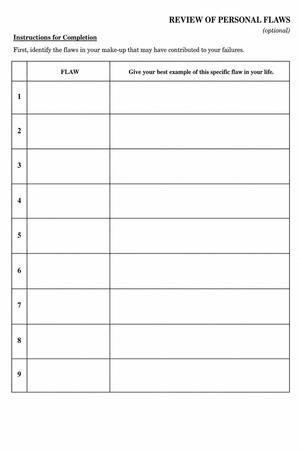
For a middle or high school setting, the appeal is less about the 12-Step tradition itself and more about the scaffolding. Many SEL tools ask students to reflect broadly on their feelings. A 4th Step worksheet asks something more specific: what happened, who or what was involved, and how did it affect you. That specificity is useful with older students who tend to shut down when asked open-ended emotional questions but can work through a structured column format.
Who These Worksheets Are Built For
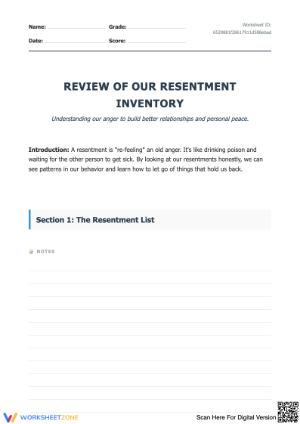
Worksheetzone lists 4th Step worksheet sets spanning grades 6-8, grades 8-12, and college level, which signals that this material is meant for older students and adult facilitators rather than early elementary classrooms. That grade-banding matters for planning: a sixth grader working through a resentment inventory needs simpler prompts and closer adult support than a junior in a mentorship or restorative justice program.
Because Worksheetzone separates this material into three distinct bands, grades 6-8, grades 8-12, and college, staff should treat the worksheet as a template to be rewritten in age-appropriate language rather than a single document handed out unchanged across an entire secondary program. A sixth-grade version might ask students to name one situation that still bothers them and one person involved, while a college-level version can hold a full multi-column inventory across several pages.
Inside the Three-Column Inventory Format
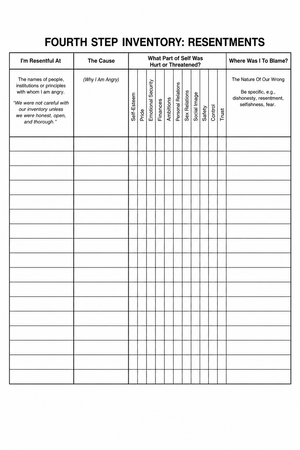
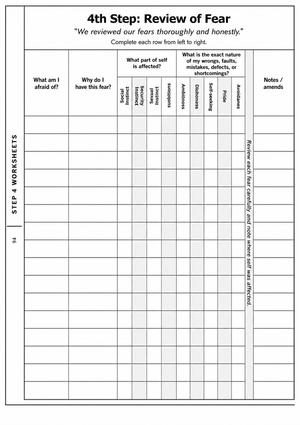
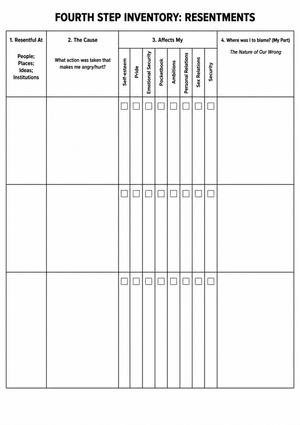
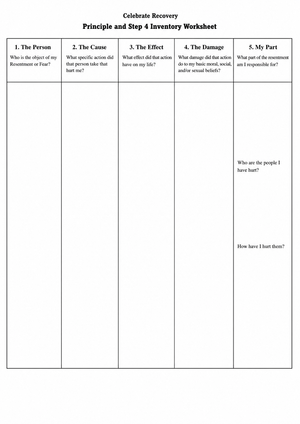
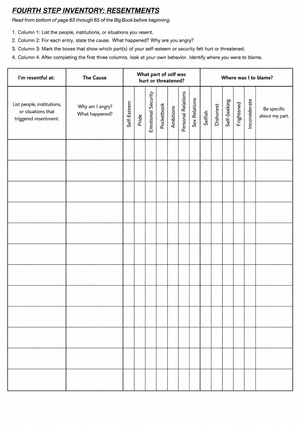
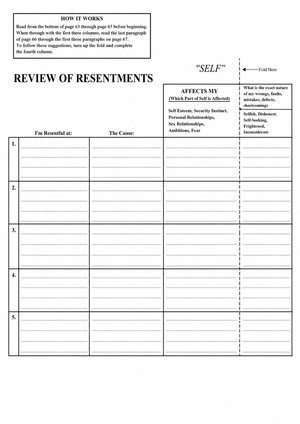
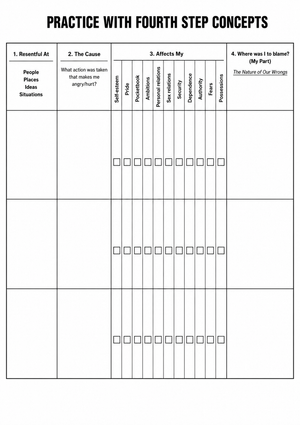
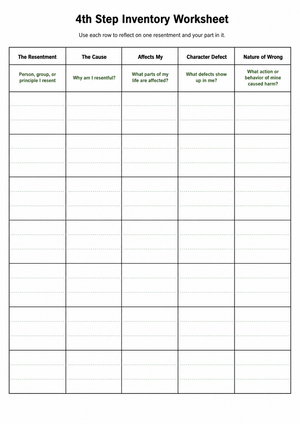
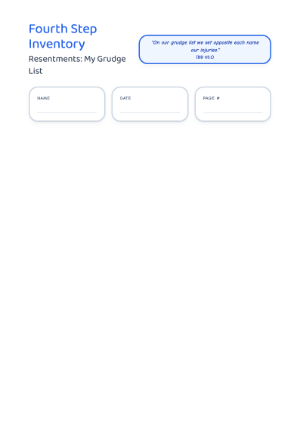
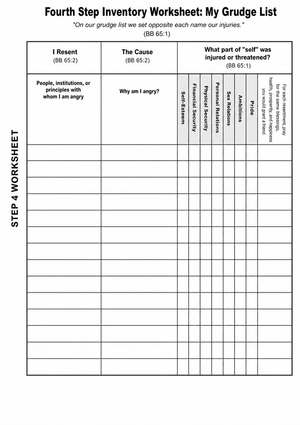
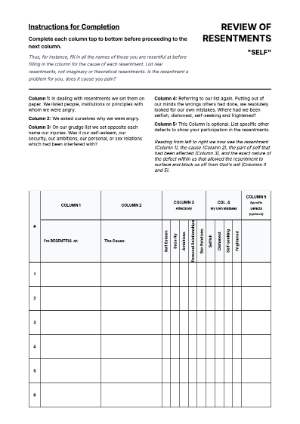
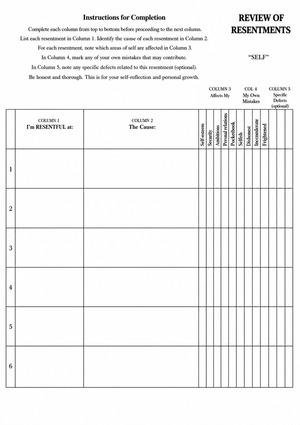
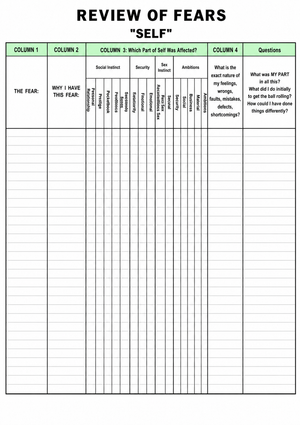
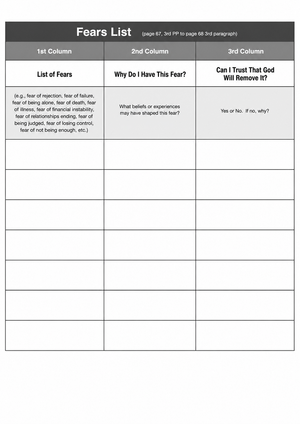
The most commonly cited practical structure across recovery worksheet guides is a three-column inventory: the resentment or fear itself, the cause behind it, and the part of the student that it affects, such as pride, relationships, or a sense of security. Adapting this for a school context usually means relabeling the columns in plain language: what is bothering me, why it started, and what part of my life it is touching.
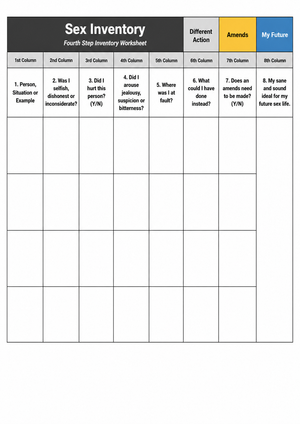
Facilitators can add a fourth working column for next steps, since students in a school setting benefit from ending a reflection activity with something actionable, like a conversation to have or a boundary to set, rather than leaving the inventory as an open list of grievances.
When These Worksheets Fit a School Setting, and When They Do Not
A 4th Step style inventory is a reasonable fit for recovery-support groups, mentorship programs, and restorative conferences with older students who already have some rapport with the adult running the session. It is not a good fit for whole-class SEL instruction with younger students, for a first meeting with a student a counselor barely knows, or for any activity that will be graded or shared with peers. The depth of self-disclosure this format invites needs privacy and a trained adult, not a worksheet dropped into a general curriculum folder.
Teacher Tips for Facilitating a 4th Step Inventory
Introduce the activity by naming its purpose in plain terms: this is a private way to sort out what is bothering you so we can talk about it, not an assignment that gets graded. Model one column with a low-stakes example of your own before asking students to fill in theirs, since older students are more willing to write honestly once they see an adult go first.
Keep the first attempt short, one or two rows instead of a full inventory, so students build comfort with the format before going deeper. Always schedule a follow-up conversation after the worksheet is complete; the inventory is a starting point for dialogue, not a stand-alone task to collect and file away.
If a student discloses something serious, such as abuse, self-harm, or a safety concern, pause the reflective exercise immediately and follow your school's mandatory reporting and crisis protocols. No worksheet format changes that obligation, and students should be told up front that safety disclosures cannot stay confidential.
Frequently Asked Questions
1. What is the 4th Step and where does it come from?
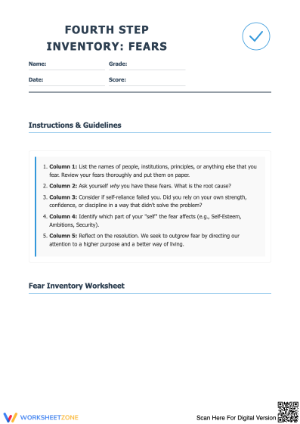
The 4th Step is part of the 12-Step recovery framework used in programs like AA and NA. It asks a participant to make a searching and fearless moral inventory of themselves, typically by listing resentments and fears alongside their causes and the part of self they affect.
2. Are 4th Step worksheets appropriate for use in a school setting?
They can be, when adapted for age and used within mentorship, restorative, or recovery-support programs led by a trained counselor or facilitator. They are not appropriate as a general classroom SEL activity, especially with younger students or without adult support nearby.
3. What grade levels are these worksheets designed for?
Worksheetzone organizes this material into grades 6-8, grades 8-12, and college-level sets, reflecting that the format is intended for older students who can handle a more structured, written self-inventory.
4. How should a teacher or counselor introduce a 4th Step inventory activity?
Explain the purpose clearly, keep the first attempt short, model an example first, and schedule a follow-up conversation so the worksheet leads into dialogue rather than sitting as an isolated task.
5. What should staff do if a student discloses something serious during this reflection?
Pause the activity, follow your school's mandatory reporting and crisis response procedures, and make sure students understand beforehand that safety disclosures cannot be kept confidential.