What 'When I Grow Up' Worksheets Teach
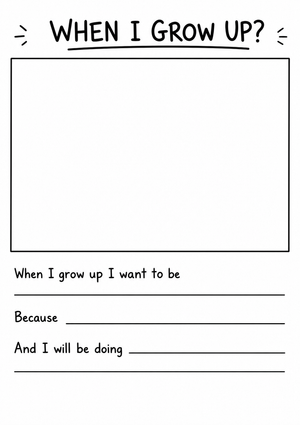
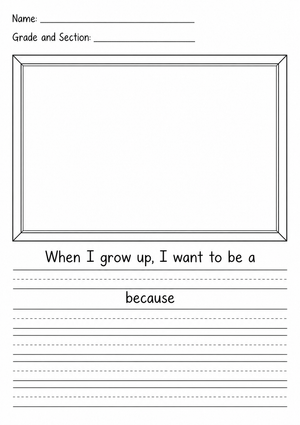
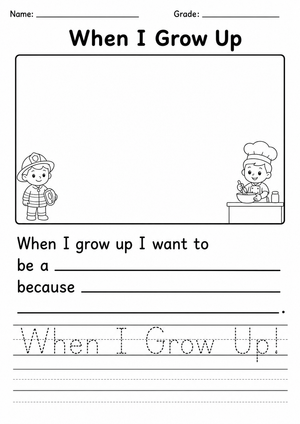
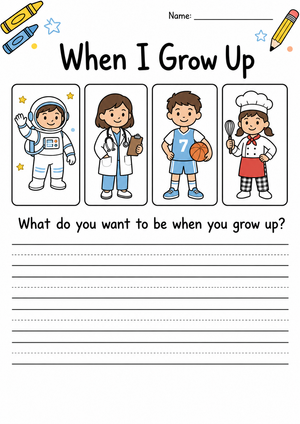
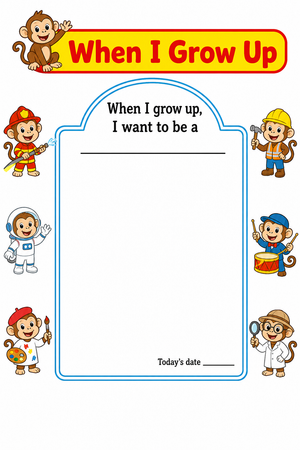
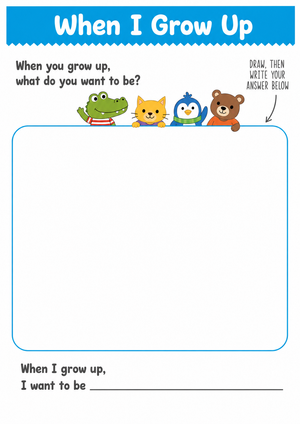
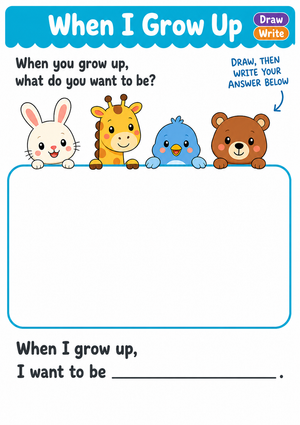
Ask a class of first graders what they want to be when they grow up, and you'll hear astronauts, veterinarians, chefs, and a few dinosaurs. That energy is exactly why when I grow up worksheets work so well in K-2 rooms. The format is simple: a fill-in-the-blank sentence like 'When I grow up, I want to be a ___,' paired with a space to draw the student in that role. Under that simplicity sits a two-for-one lesson. You get career awareness and social-emotional self-awareness in one short, printable activity that takes about 15 minutes to run.
For teachers planning a community helpers unit, Career Day, or a back-to-school identity lesson, that dual purpose matters. A single printable can anchor a morning meeting, warm up a writing block, or give your school counselor a shared artifact to build on. This guide breaks down where these worksheets fit, how they connect to SEL, and a classroom flow you can run tomorrow.
How These Worksheets Support SEL
Imagining a future self is a self-awareness task. When students picture who they'll become, they're also picturing what they value, what they're good at, and what kind of life they want. That's the heart of the SEL connection, and it's why career and social-emotional lessons pair so naturally.
Here's the part many teachers miss: the drawing half of the worksheet often carries more social-emotional weight than the sentence. A student who writes 'nurse' and then draws themselves helping a smaller figure is signaling values like care and helpfulness. Treat the picture as assessable evidence of self-awareness, not just a coloring reward, and you turn a five-minute craft into a formative check on how students see themselves.
According to CASEL, self-awareness is one of five core social-emotional competencies, defined as the ability to understand one's own emotions, thoughts, and values and recognize how they influence behavior across situations. A 'when I grow up' prompt gives young students a low-stakes, concrete way to rehearse that skill in a single sitting.
Which Grade Levels Fit Best
These worksheets are built for K-2. At that range, a single sentence stem plus a drawing matches students' writing stamina and keeps the cognitive load on the idea, not the mechanics. Kindergartners may dictate or label while you scribe; first and second graders can usually complete the sentence independently and add detail to their picture.
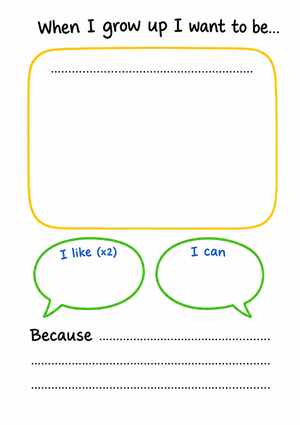
For grade 3, add a short extension. Ask students to write one or two reasons behind their choice: 'I want to be a marine biologist because I like ocean animals.' That small reasoning step pushes the activity from naming a role toward goal-setting and reflection, which keeps older elementary students challenged without introducing a whole new worksheet.
- Kindergarten: draw and dictate; the teacher scribes the sentence.
- Grades 1-2: independent sentence completion plus a labeled drawing.
- Grade 3: sentence plus one or two written reasons for the choice.
Classroom Implementation
You can run this as a standalone 20-minute lesson or fold it into a longer unit. A reliable flow looks like this:
- Open with a group discussion. Talk about community helpers and jobs students see every day: bus drivers, dentists, grocery clerks, and teachers.
- Model the sentence. Fill in your own on the board, then think aloud about why you chose it.
- Independent work. Students complete the sentence and drawing while you circulate and ask 'why that job?'
- Share-aloud circle. Each student shares their role in one sentence; the class listens for jobs they have in common.
For a Career Day, use the completed worksheets as a hallway display or as name cards students hold when a guest speaker matches their pick. In a community helpers unit, sort the finished sheets into categories such as safety, health, food, and education, so students see how many roles it takes to keep a town running.
From 'When I Grow Up' to Goal-Setting
Career awareness naturally opens a door to goal-setting, and you can walk through it without turning the lesson into a formal plan. After students name a role, ask a single forward-looking question: 'What is one thing you could learn or practice now that would help you do that job someday?' A future veterinarian might say 'learn about animals'; a future teacher might say 'get better at reading.' Those answers are early goal-setting, tied to a concrete identity the student already cares about.
Keep the loop short and revisit it. Some teachers save each student's worksheet and pull it back out mid-year so students can add to their drawing or change their answer entirely. Seeing how their thinking shifts is its own lesson in self-awareness, and it gives you a simple, dated record of growth to share at conferences.
Frequently Asked Questions
1. What grade level are 'when I grow up' worksheets best for?
They fit K-2 best, where a single sentence stem and a drawing match students' writing stamina. Grade 3 works well with a short extension that asks students to write one or two reasons for their choice.
2. How do these worksheets connect to social-emotional learning?
Imagining a future self is a self-awareness task, which CASEL lists as one of its five core SEL competencies. Students practice naming interests and values, then reflect on how those shape the role they picture.
3. How can I use this worksheet for Career Day or a community helpers unit?
Use finished sheets as a display or as name cards for guest speakers, or sort them into categories like safety, health, and food so students see how many roles keep a community running.
4. What if a student doesn't know what they want to be?
That's common and fine. Offer a short menu of roles to choose from, or let the student write 'helper' and draw what helping looks like to them. Participation in the reflection matters more than a final answer.
5. How can I extend this activity for older elementary students?
Add a reasoning step. Have grade 3 students write one or two sentences explaining why they chose a role, which moves the activity toward goal-setting and connects it to writing and reflection.