


























Views
Downloads

Printable 4th Step Grudge List | Grade 11-12 Social Skills
Paste this activity's link or code into your existing LMS (Google Classroom, Canvas, Teams, Schoology, Moodle, etc.).
Students can open and work on the activity right away, with no student login required.
You'll still be able to track student progress and results from your teacher account.
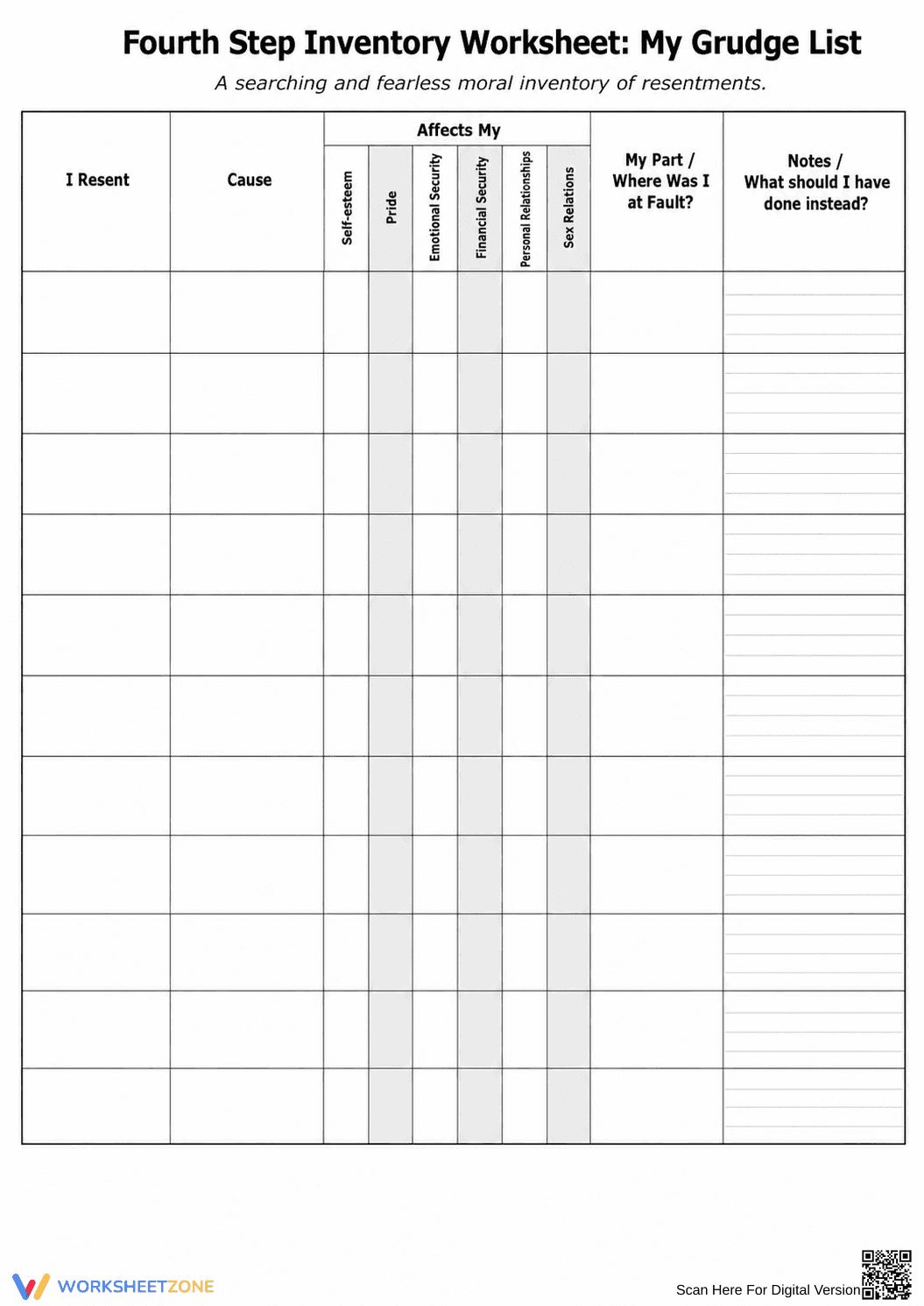
This Fourth Step Inventory worksheet guides students through identifying resentments and emotional triggers. By documenting sources of anger and their causes, participants develop self-awareness and take actionable steps toward emotional healing and personal accountability.
At a Glance
- Grade: 11-12 · Subject: Social Skills
- Standard:
CASEL.SEL.SA— Identify one's emotions and recognize how they influence behavior- Skill Focus: Identifying resentments and emotional triggers
- Format: 5 pages · 50 problems · No answer key · PDF
- Best For: Independent reflection and recovery
- Time: 30–45 minutes
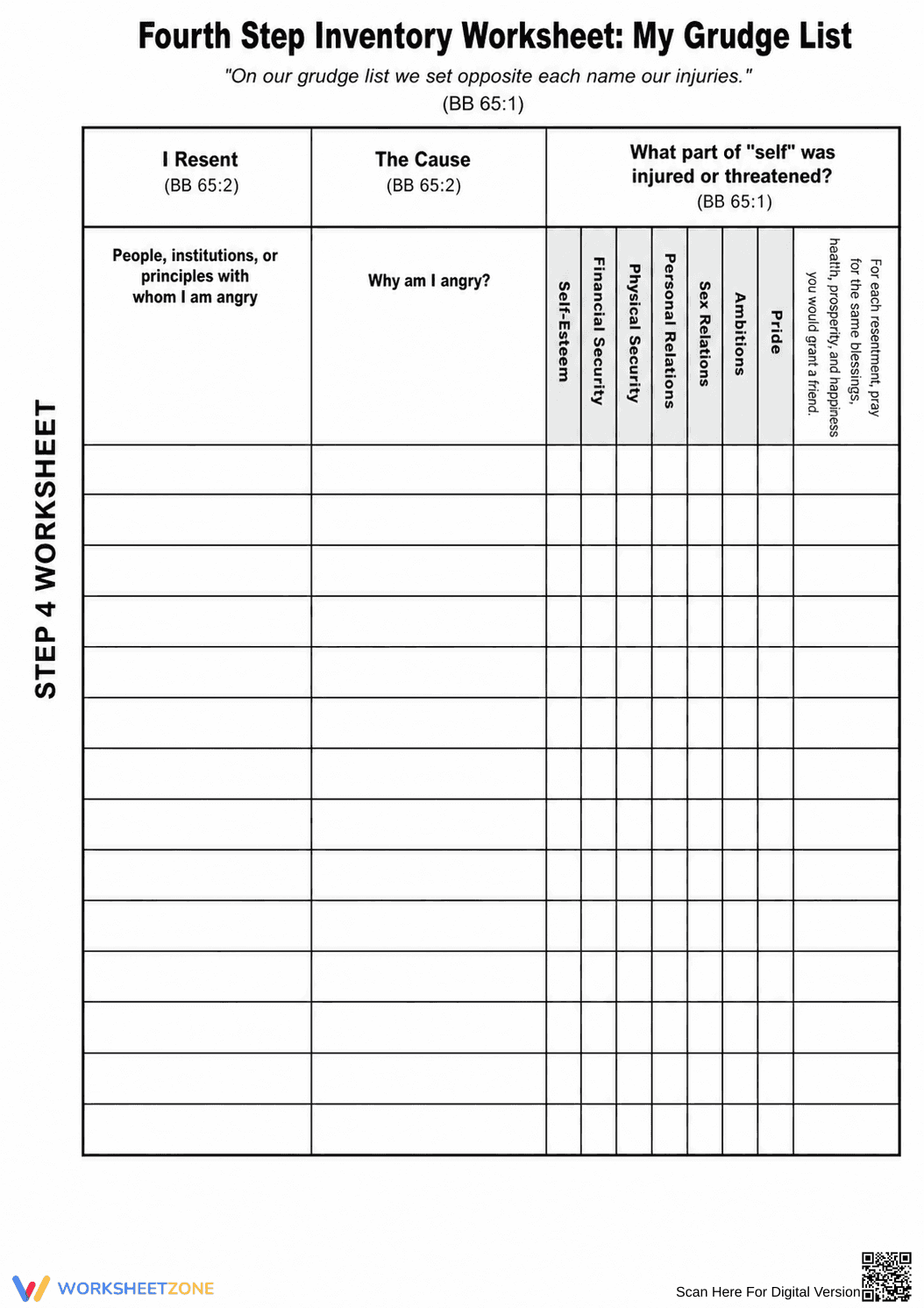
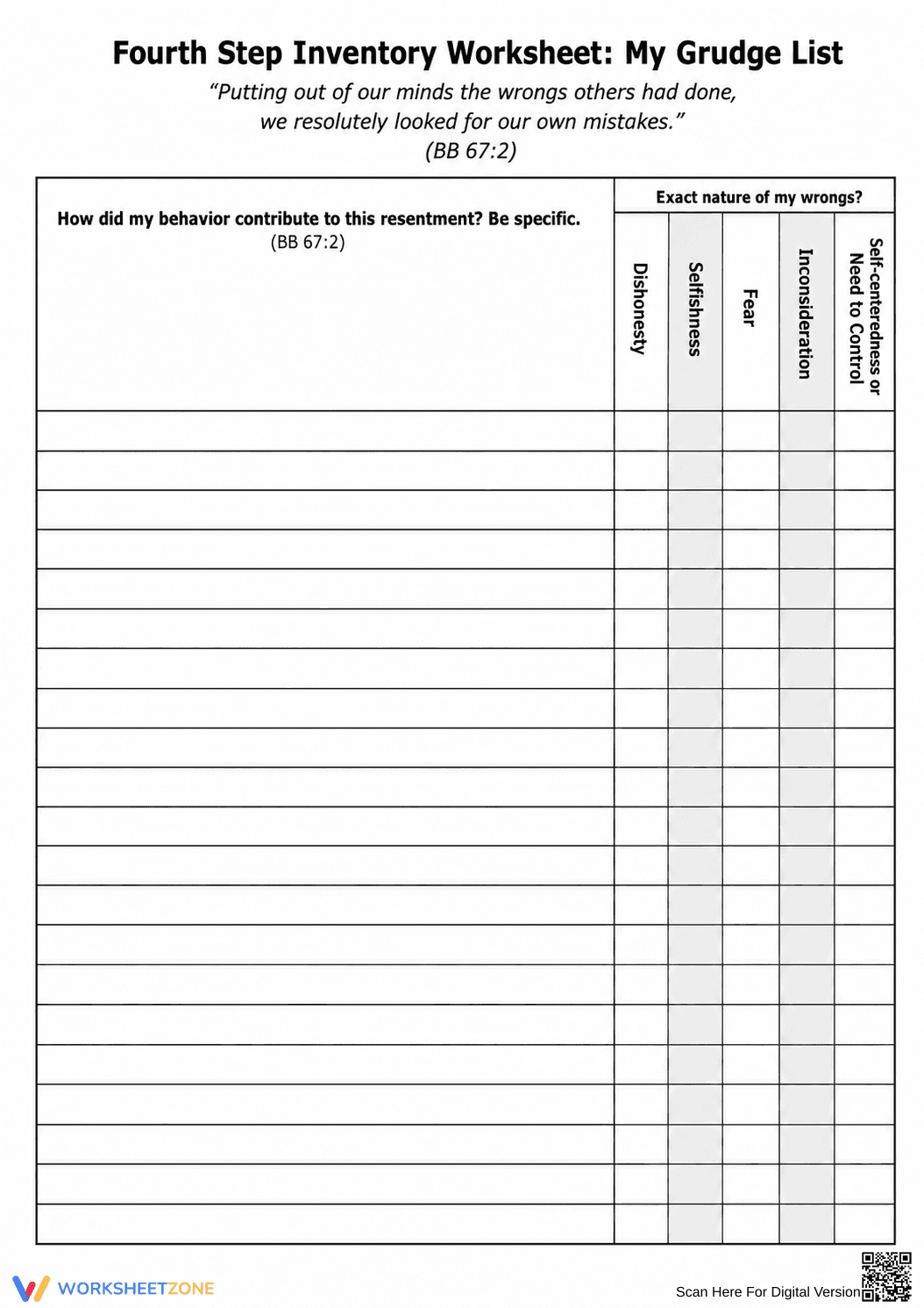
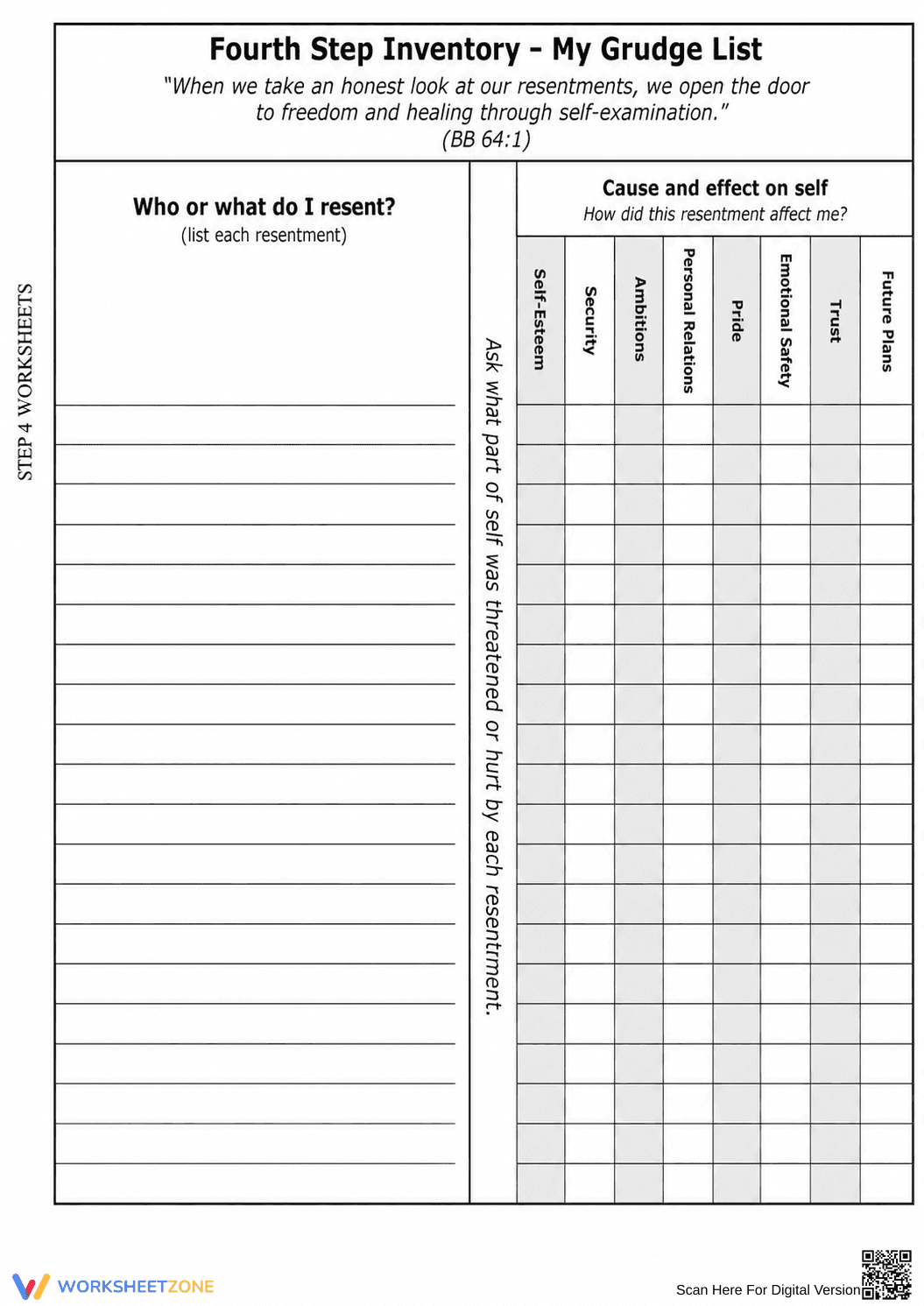
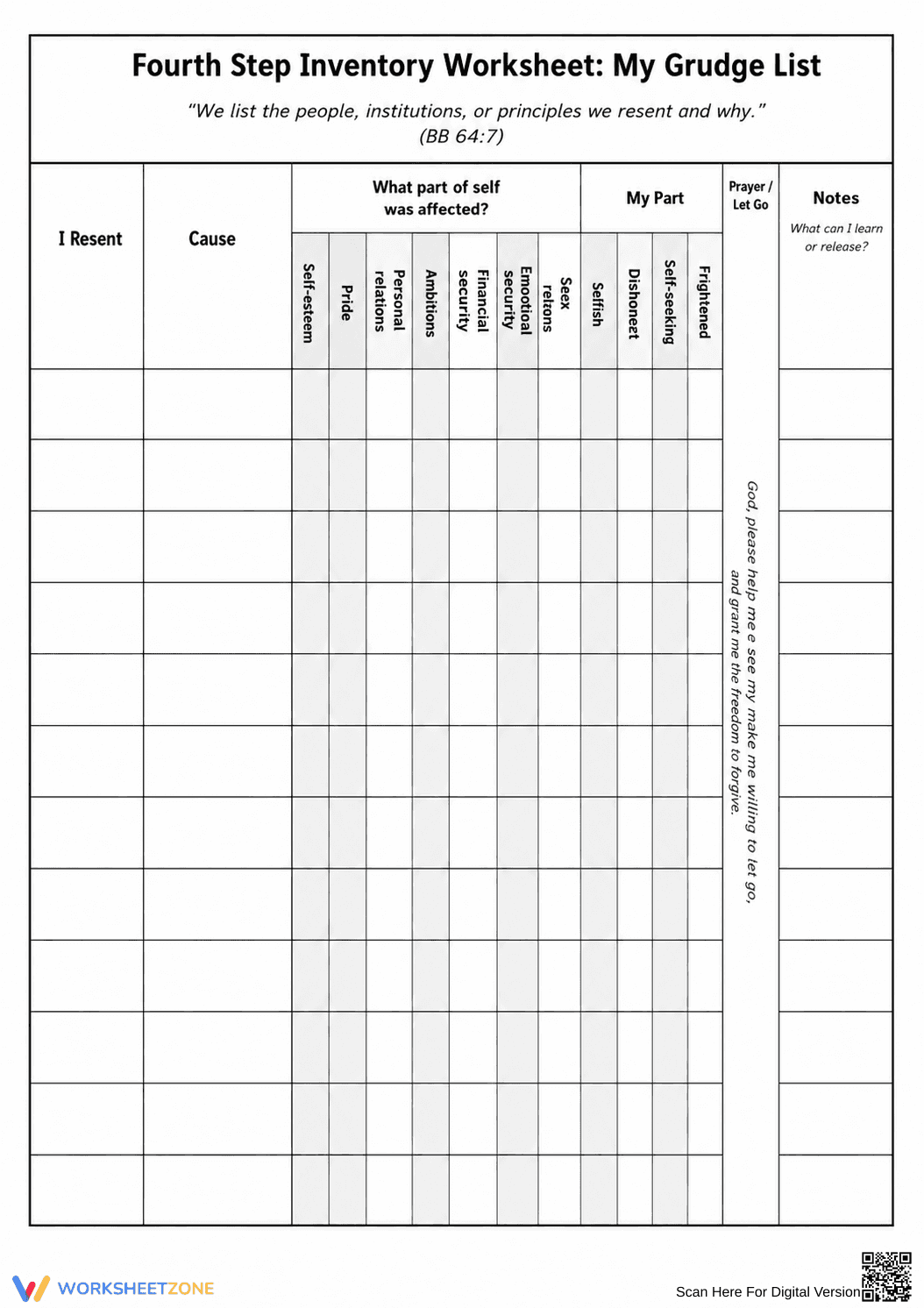
This resource includes five variations of the Fourth Step grudge list, providing 50 structured rows for personal inventory. Each page features a table layout prompting users to list who they resent, the cause, and the exact part of their self-esteem or security threatened. The open-ended format encourages deep reflection, utilizing check-boxes and short-answer columns to streamline self-examination.
Zero-Prep Workflow
- Print (1 minute): Select and print the inventory layout that matches your program.
- Distribute (1 minute): Hand out worksheets during group therapy or independent reflection time.
- Review (0 minutes): Because this is a personal self-assessment, no teacher grading is required. Total setup time is under two minutes, making it an ideal sub plan or ready-to-use resource.
Aligned to CASEL.SEL.SA (Self-Awareness), this worksheet supports accurately recognizing one's own emotions and how they influence behavior. It targets the ability to assess personal limitations with confidence. Both standard codes can be copied directly into lesson plans, IEP goals, or district curriculum mapping tools.
How to Use It
This inventory is effective during independent advisory periods or counseling sessions. Assign the worksheet after direct instruction on emotional regulation, allowing students 30–45 minutes to privately document triggers. Alternatively, use it as a recurring weekly reflection tool. As a formative assessment observation tip, facilitators should monitor focus levels during completion rather than reading the confidential content.
Who It's For
Designed for high school students in Grades 11 and 12, young adults in transition programs, and individuals in recovery. It differentiates naturally by allowing users to write based on personal experiences. Pair this inventory with an anchor chart on emotional vocabulary or a direct instruction lesson on conflict resolution.
Developing self-awareness through structured reflection is a cornerstone of emotional regulation and behavioral intervention. Aligned with CASEL.SEL.SA, this tool helps individuals identify one's emotions and recognize how they influence behavior. According to a RAND AIRS 2024 report, integrating explicit social-emotional learning activities into secondary education and transition programs significantly reduces behavioral incidents and improves long-term mental health outcomes. By utilizing a systematic approach to cataloging resentments and analyzing their root causes, students transition from reactive emotional states to proactive self-management. This specific inventory method, adapted from established recovery frameworks, provides the necessary scaffolding for adolescents and young adults to process complex interpersonal conflicts. Consistent use of such reflective practices builds resilience, fosters empathy, and equips learners with the critical coping mechanisms required for post-secondary success and sustained personal well-being.


