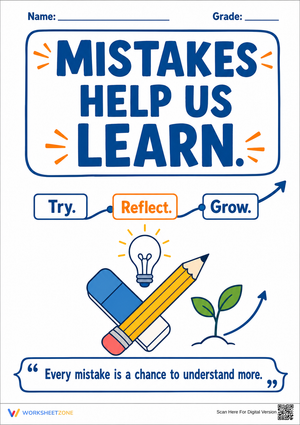
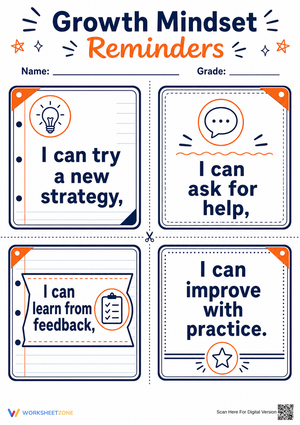
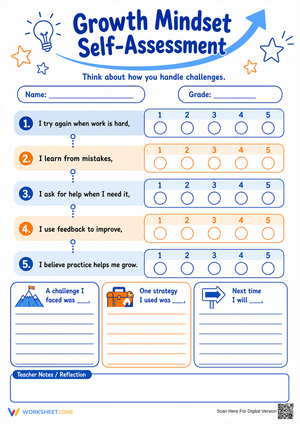
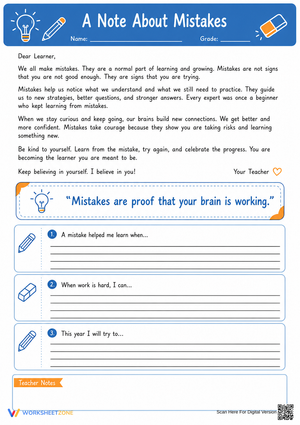
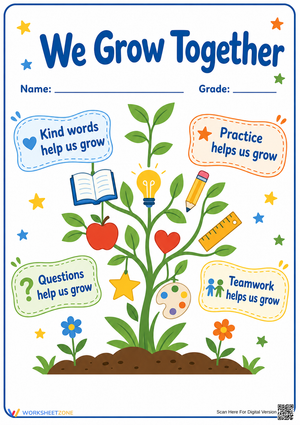
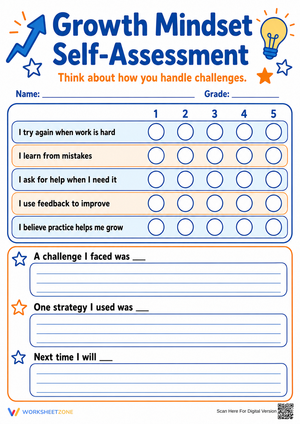
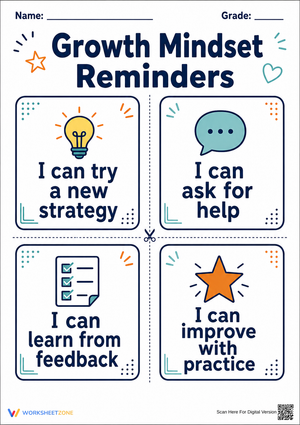
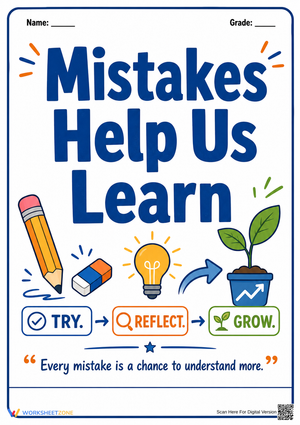
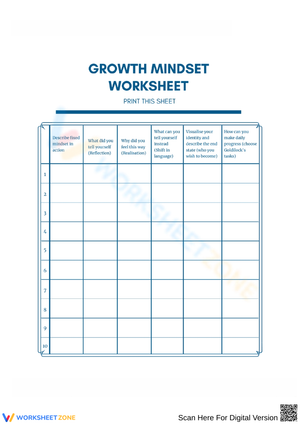
Growth mindset worksheets give teachers a low-prep way to make effort, strategy, and progress visible during SEL blocks, advisory periods, and character education routines. Rather than a single motivational poster or one-off lesson, a good worksheet gives students a structured place to name a challenge, describe the strategy they tried, and reflect on what changed. For middle and high school teachers juggling advisory time alongside academic content, that structure matters: it turns a vague conversation about attitude into something students can actually practice and revisit.
These worksheets work best when they are treated as a recurring tool rather than a one-time activity. A single printable will not shift how a class talks about mistakes, but a short reflection prompt used weekly during a morning meeting or advisory block can build a shared vocabulary around effort, strategy, and revision that students carry into academic work.
Elementary vs Secondary Growth Mindset Worksheets
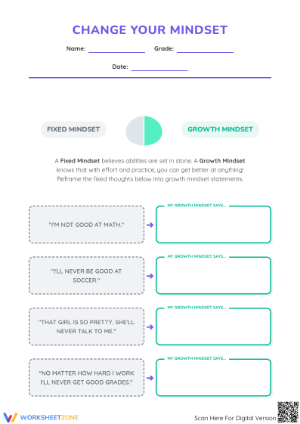
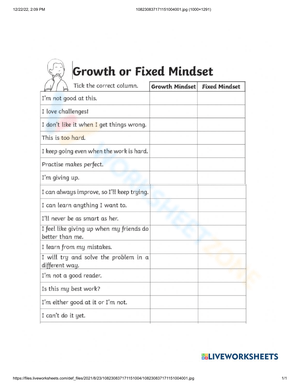
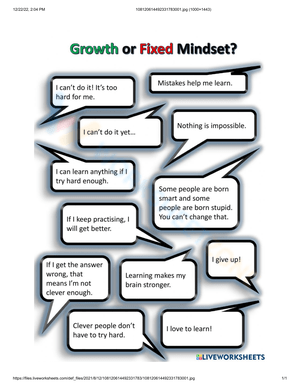
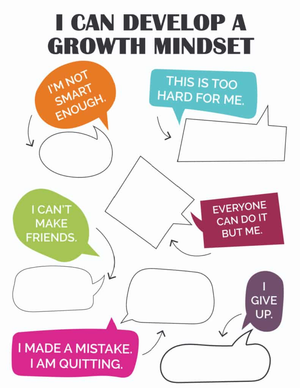
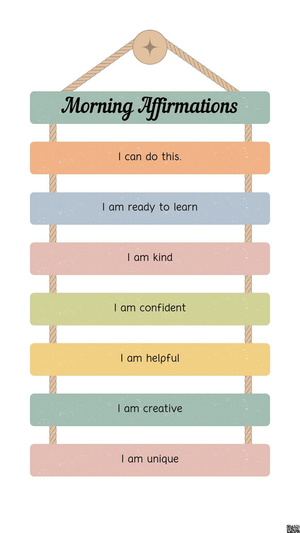
Grade-band framing changes what a worksheet should ask a student to do. In elementary classrooms, growth mindset worksheets tend to work best as simple self-talk practice: replacing a fixed statement like I cannot do this with a growth statement like I cannot do this yet, then drawing or writing about a specific strategy to try next. Kindergarten through second grade students benefit from picture-supported prompts and short sentence starters rather than open-ended reflection.
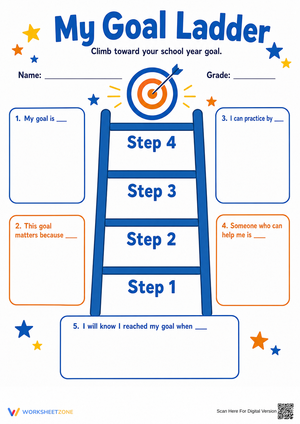
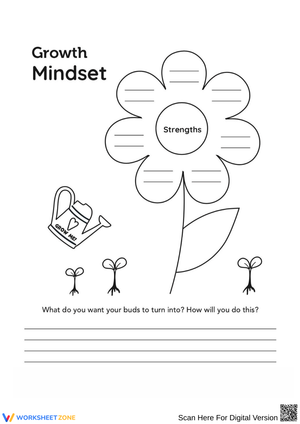
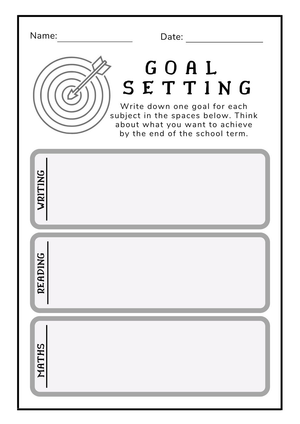
By upper elementary and middle school, worksheets can shift toward goal-setting: naming a specific skill to improve, identifying one strategy, and tracking progress over a few weeks. In high school, growth mindset worksheets fit naturally into course-selection conversations and academic advising, echoing the National Study of Learning Mindsets finding that mindset messaging around ninth-grade course choices had measurable effects on later enrollment in advanced classes.
Pairing Worksheets With Process-Praise Language
A worksheet by itself does not build a growth mindset. Research led by Yeager and Carol Dweck, published in Psychological Science in 2022, found that teachers' own mindset beliefs did not directly predict their students' mindsets. What mattered more was teachers' classroom practices and feedback style. That finding should reshape how teachers use growth mindset worksheets: the worksheet is the occasion for feedback, not a replacement for it.
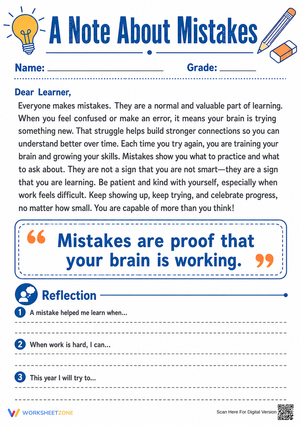
In practice, this means responding to a completed worksheet with process praise -- naming the specific strategy a student used, the revision they made, or the persistence they showed -- rather than general praise like good job or you are so smart. When a worksheet prompt asks a student to describe a strategy, teachers can circle back in written or verbal feedback and reference that exact strategy by name.
Using Worksheets in Advisory, Morning Meetings, and Small Groups
Because intervention effects were strongest where classroom peer norms already supported growth mindset thinking, worksheets land better as a shared class routine than as an individual assignment completed in isolation. Advisory periods and morning meetings are natural fits: a short worksheet prompt followed by a partner share or small-group discussion lets students hear how classmates talk about setbacks, which reinforces the peer norms that research points to as a key factor.
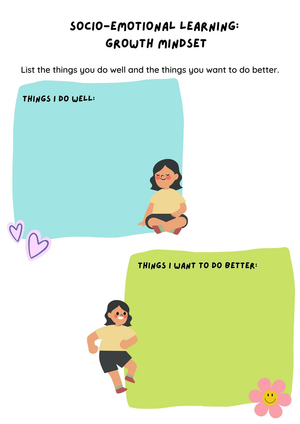
Small-group intervention settings, including Tier 2 SEL support or counselor-led groups, can use growth mindset worksheets as a recurring check-in tool. A consistent format -- name the challenge, name the strategy, name the next step -- gives counselors and interventionists a quick way to track whether a student's self-talk is shifting over several sessions.
Frequently Asked Questions
1. How should teachers introduce growth mindset worksheets to a class for the first time?
Introduce the worksheet after a real, shared challenge rather than as an abstract exercise. Model one example as a class before students complete their own, and explain that the goal is naming a strategy, not just describing a feeling.
2. Do growth mindset worksheets actually improve grades or behavior, based on research?
The National Study of Learning Mindsets found that a brief mindset intervention improved grades among lower-achieving ninth graders and increased advanced math enrollment, but the effect was strongest in schools with supportive peer norms, so a worksheet alone is unlikely to produce the same results without consistent classroom practices.
3. How often should growth mindset activities be used during the school year?
Weekly or biweekly use during advisory, morning meetings, or SEL blocks works better than a single one-time activity, since the research points to sustained classroom practices and feedback, not a one-off lesson, as the stronger driver of change.
4. What is the difference between growth mindset worksheets for elementary students and secondary students?
Elementary worksheets tend to focus on simple self-talk swaps and picture-supported prompts, while secondary worksheets shift toward goal-setting, strategy tracking, and course-selection reflection that connects directly to academic planning.
5. How can teachers pair worksheets with feedback language to reinforce a growth mindset?
Respond to specific details a student wrote, such as the strategy or revision they described, rather than offering general praise. This mirrors research findings that teachers' feedback style, not their private beliefs about mindset, is what predicts changes in students' mindset.