


























Views
Downloads

Essential 4th Step Inventory Guide | Grade 8 Social Skills
Paste this activity's link or code into your existing LMS (Google Classroom, Canvas, Teams, Schoology, Moodle, etc.).
Students can open and work on the activity right away, with no student login required.
You'll still be able to track student progress and results from your teacher account.
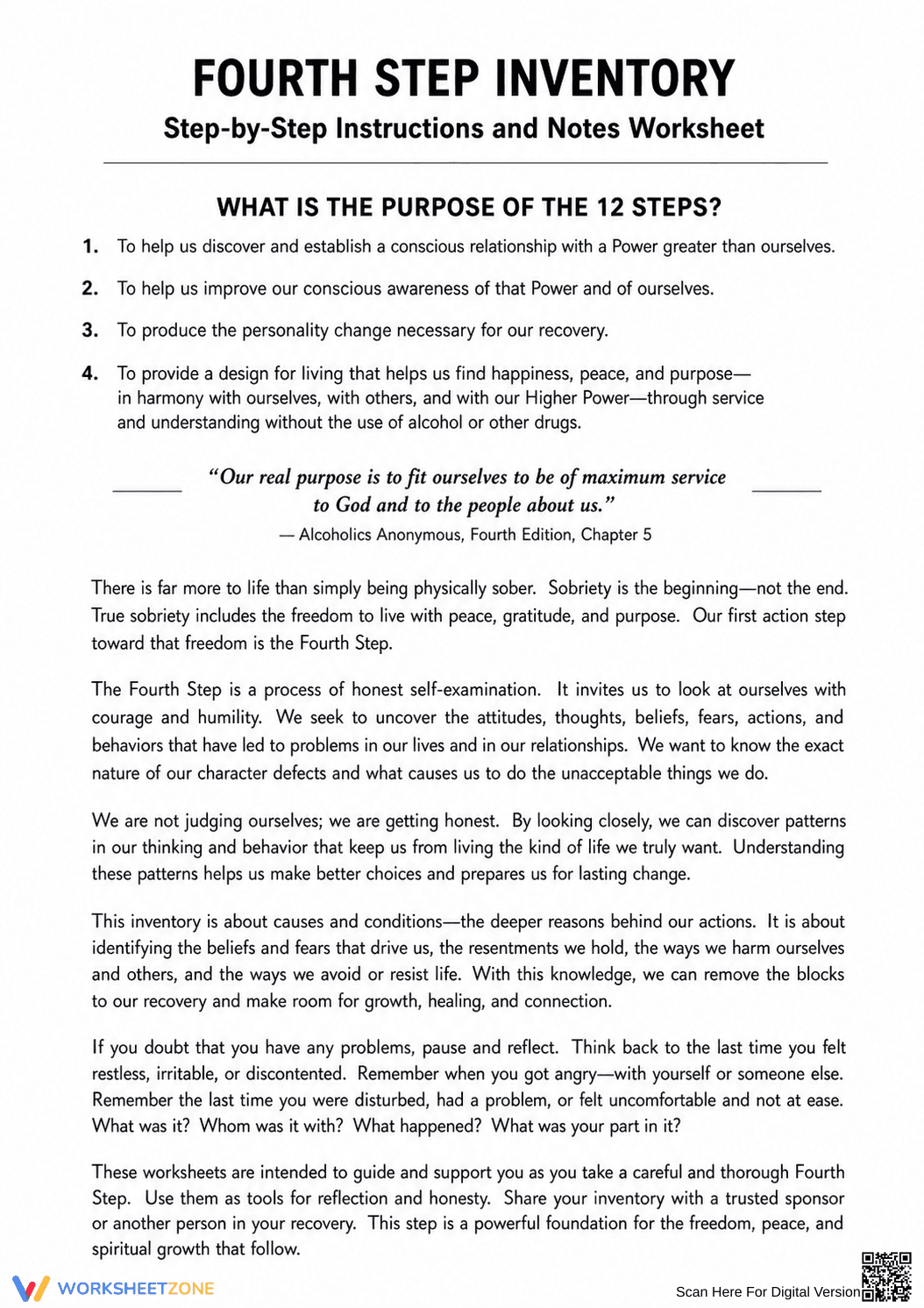
This behavioral inventory worksheet guides students through a rigorous process of self-discovery and pattern identification. By focusing on the relationship between thoughts and actions, the resource empowers learners to take ownership of personal growth. Students analyze motives to establish a clearer design for living and improved social consciousness.
At a Glance
At a Glance
- Grade: 8 · Subject: Social Skills
- Standard:
CCSS.ELA-LITERACY.W.8.10— Write routinely over extended time frames for specific discipline-specific tasks and purposes- Skill Focus: Behavioral Self-Inventory
- Format: 5 pages · 7 problems · Answer key included · PDF
- Best For: Behavioral intervention and self-reflection sessions
- Time: 45–60 minutes
What's Inside
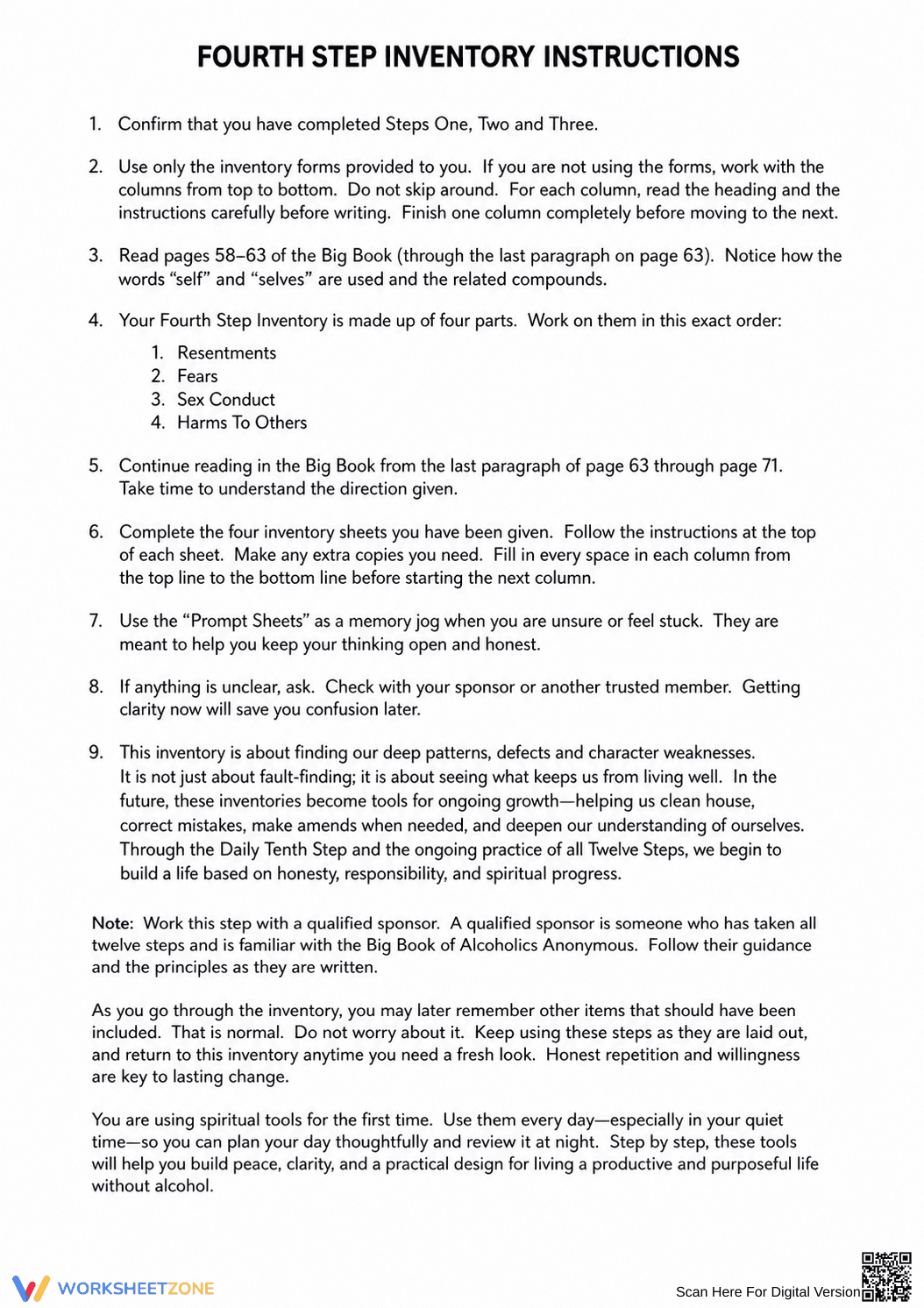
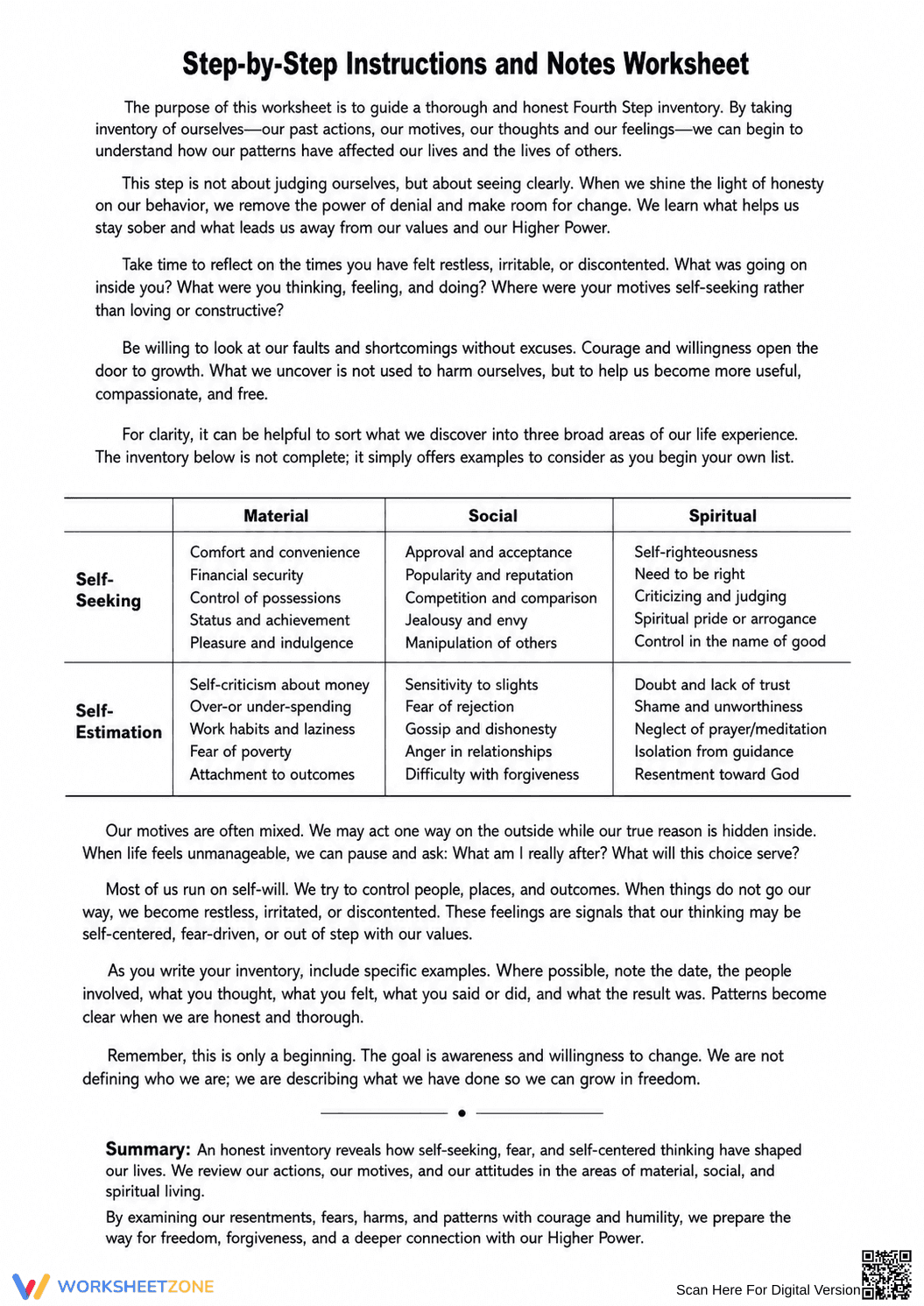
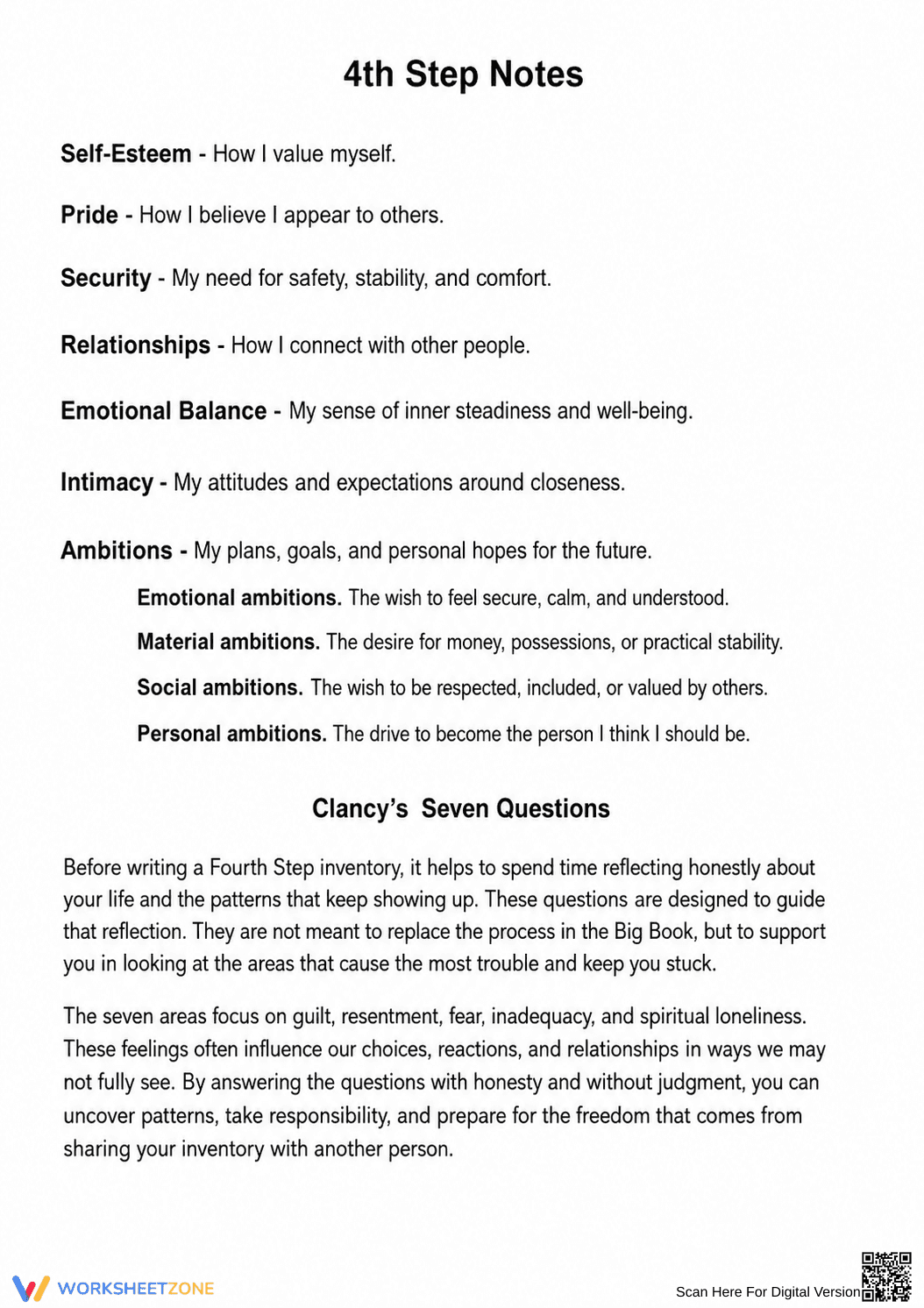
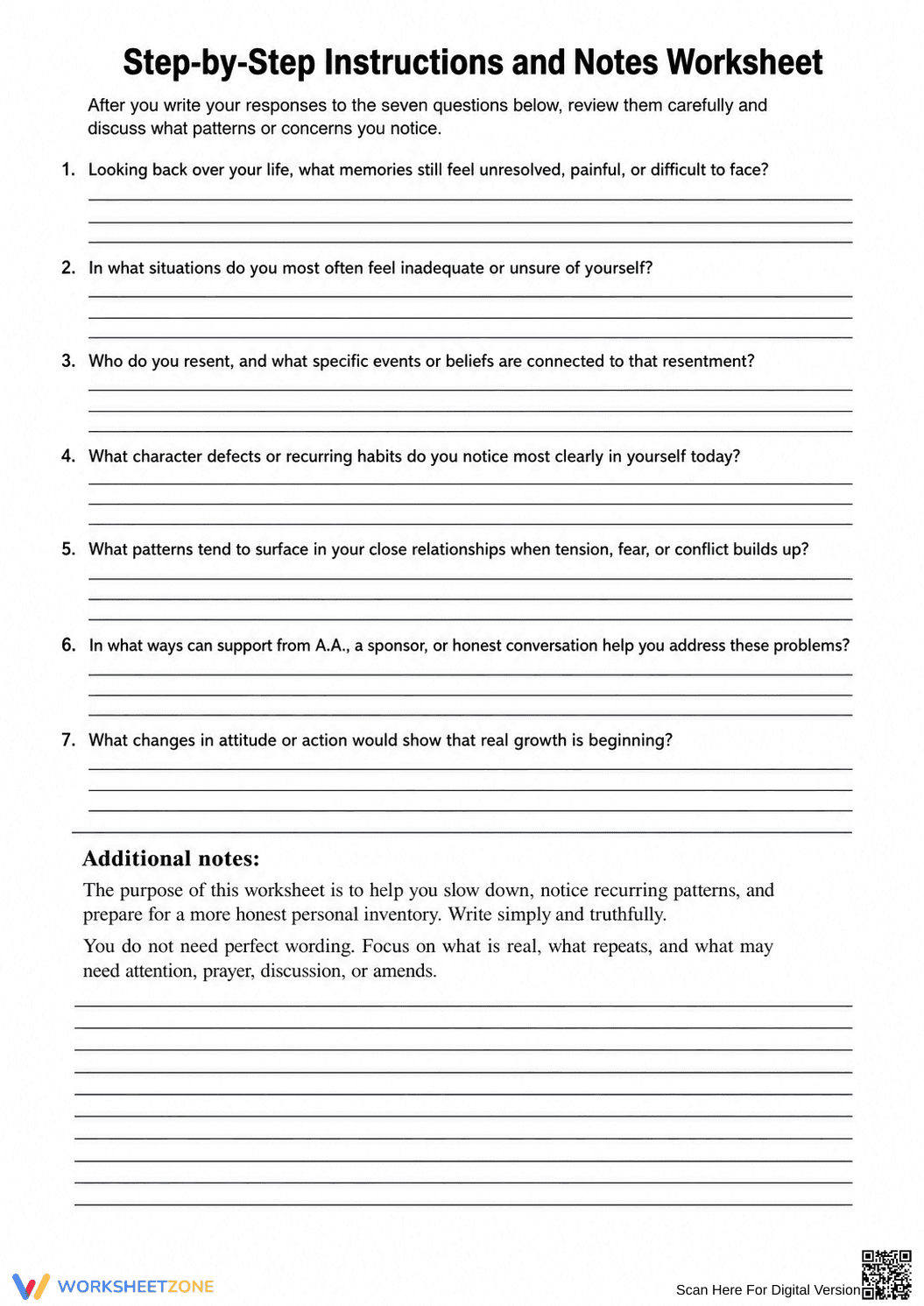
This 5-page PDF contains a detailed explanation of the inventory process. The packet includes a "Material, Social, Spiritual" inventory table to help students categorize experiences, a section on "Clancy’s Seven Questions" for deep reflection, and dedicated space for notes. The layout ensures students focus on identifying specific patterns rather than generalities.
Zero-Prep Workflow
The zero-prep workflow is designed for immediate implementation. First, print the 5-page packet. Second, distribute materials and provide a brief overview of self-inventory. Third, allow students to work through reflection questions at their own pace. This structured approach requires minimal teacher preparation, making it ideal for SEL blocks or behavioral intervention meetings.
Standards Alignment
This resource is aligned with `CCSS.ELA-LITERACY.W.8.10` — Write routinely over extended time frames for a range of discipline-specific tasks, purposes, and audiences. By engaging in this extended writing task, students demonstrate the ability to reflect on complex personal data and organize it into a coherent self-assessment. Both standard codes can be copied directly into lesson plans, IEP goals, or district curriculum mapping tools.
How to Use It
Use this worksheet during a dedicated SEL block or behavioral intervention. It is most effective after a discussion about self-awareness. Educators should observe if students can identify specific examples of "self-seeking" behaviors. Completion typically takes 45 to 60 minutes, depending on the depth of student reflection and prior familiarity with the concepts.
Who It's For
This tool is for Grade 8 students requiring behavioral support or participating in character-building programs. It is effective for students working with counselors. For best results, pair this worksheet with an anchor chart on emotional vocabulary or a lesson on the connection between beliefs and behaviors.
The integration of structured self-inventory tools within middle school behavioral frameworks is supported by the RAND AIRS 2024 report, which emphasizes the necessity of metacognitive reflection in developing adolescent self-regulation. This worksheet aligns with CCSS.ELA-LITERACY.W.8.10 by requiring students to produce routine writing for specific personal and social purposes. By utilizing the 4th Step framework, students engage in a rigorous process of identifying behavioral patterns and emotional triggers, a skill set that research indicates is foundational for long-term social-emotional success. The document provides a clear roadmap for self-examination, moving from theoretical understanding to concrete personal application through seven targeted reflection questions. Educators can utilize this resource to bridge the gap between abstract social skills and practical daily behavior management. This evidence-based approach ensures that students are not merely reacting to circumstances but are actively analyzing their internal motives and external actions to foster genuine personality growth and improved interpersonal relationships.


