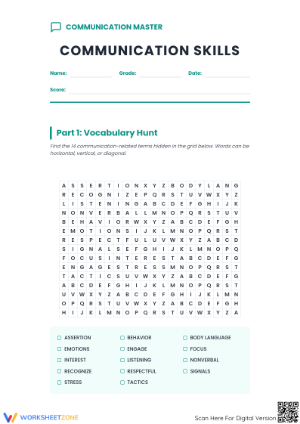
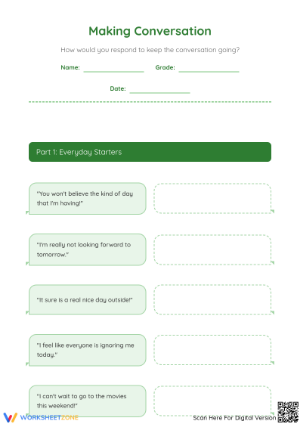
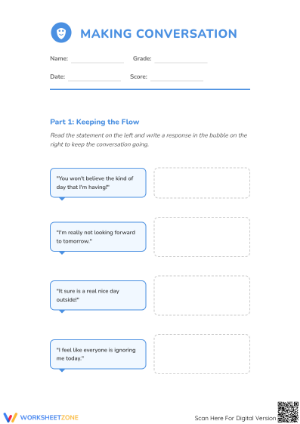
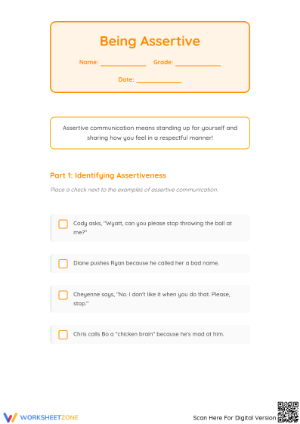
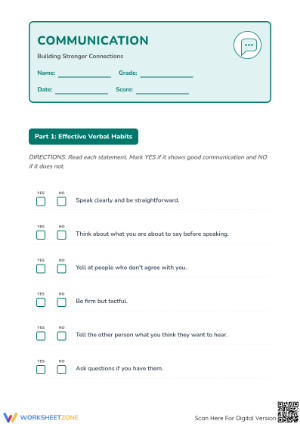
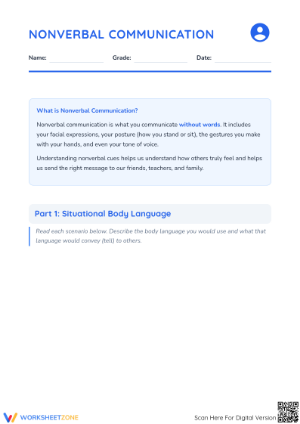
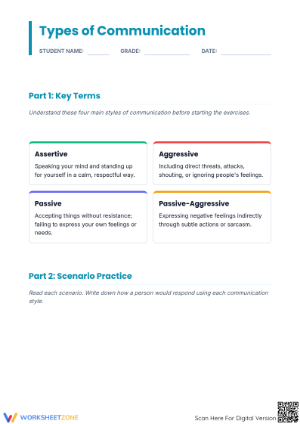
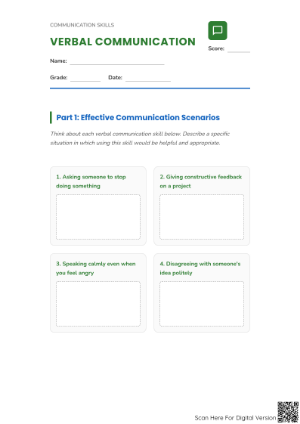
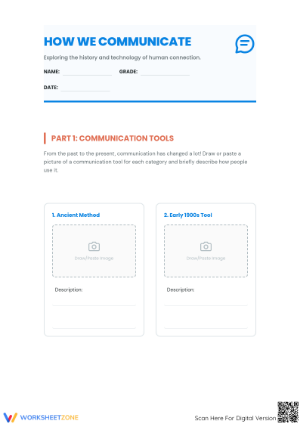
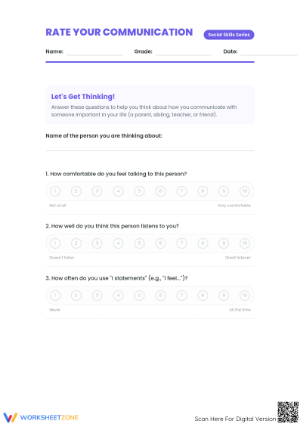
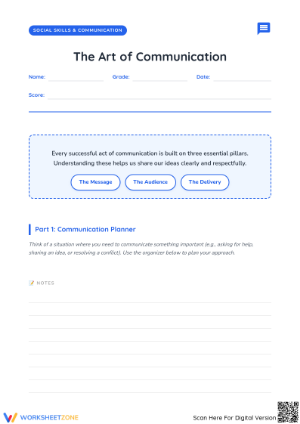
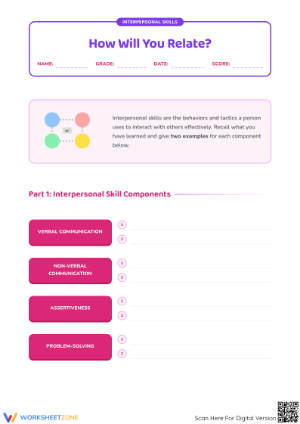
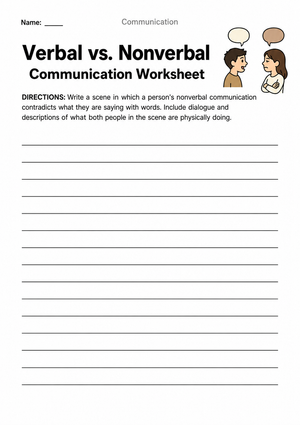
Every teacher knows that communication skills cannot be built through one lesson alone. Students need repeated practice with listening, speaking, responding, and reflecting before these habits become natural. Teaching communication skills worksheets help turn abstract interpersonal skills into clear, structured activities that students can understand and apply. Instead of simply reminding students to “listen carefully” or “use respectful words,” these activities give them specific situations, questions, and prompts that show what effective communication looks like in real life.
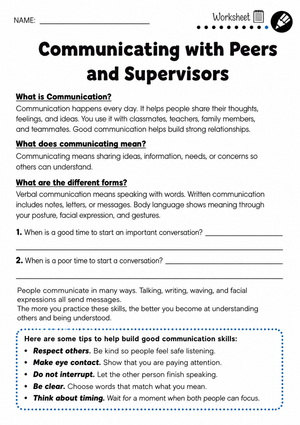
A strong communication skills lesson often begins with active listening. Many students believe communication is mostly about talking, but listening is just as important. Worksheets can guide students to identify listening behaviors such as facing the speaker, waiting their turn, asking follow-up questions, and responding thoughtfully. A dedicated communication skills center can also work well in the classroom, where students rotate through scenarios, partner prompts, and reflection tasks. Teachers can explore communication skills worksheets on Worksheetzone to support different communication goals and grade levels.
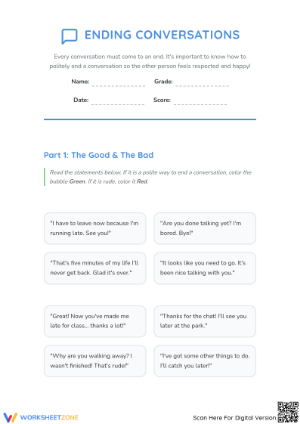
Short daily routines can make communication practice more effective. A bell-ringer question about tone of voice, body language, or conflict resolution can help students enter class with a focused mindset. For example, students might read a short scenario about a disagreement between classmates and choose the most respectful response. A brief whole-class discussion afterward gives students a chance to hear different perspectives and practice explaining their thinking. For broader skill-building ideas, the guide on leadership skills activities for students offers classroom strategies that connect naturally with communication development.
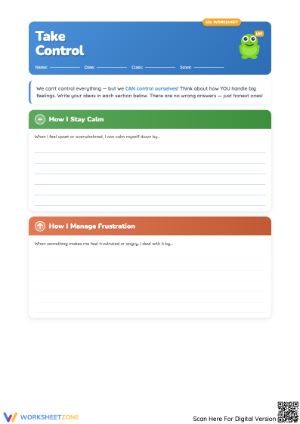
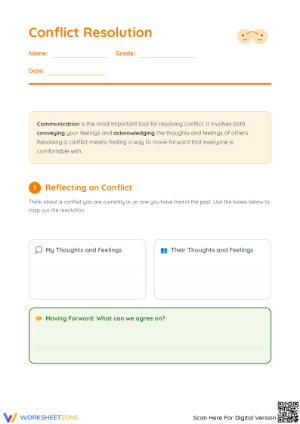
Communication worksheets can also support behavior management and classroom culture. When students practice perspective-taking, assertive expression, and calm conflict resolution, they gain language they can use during real disagreements. Instead of reacting immediately, they learn to pause, name the problem, listen to the other person, and choose a better response. This shared communication framework helps reduce misunderstandings and gives teachers a consistent way to guide students through social challenges.
Teaching communication skills worksheets are useful for classrooms, counseling groups, homeschool lessons, social skills instruction, and small-group support. They help students build confidence with speaking, listening, cooperation, empathy, and problem-solving. Most importantly, they show students that communication is not just about saying the right words. It is about understanding others, expressing needs clearly, and making choices that support stronger relationships.
Frequently Asked Questions
Question 1: What grade levels can use teaching communication skills worksheets?
Teaching communication skills worksheets can be used across many grade levels, from early elementary through high school. Younger students may need simple picture-based activities about listening, taking turns, and using kind words. Older students can work with more realistic scenarios involving group projects, peer conflict, digital communication, boundaries, and respectful disagreement. The key is to choose activities that match students’ age, reading level, and social experiences.
Question 2: How can parents support communication skills at home?
Parents can support communication skills by practicing the same habits children are learning at school. They can ask children to explain how they feel, model active listening, encourage calm problem-solving, and discuss better ways to respond during disagreements. Communication worksheets can guide these conversations by giving families specific prompts and scenarios to talk through together. This helps children connect classroom learning with real situations at home.
Question 3: How can teachers fit communication skills practice into a busy schedule?
Teachers can fit communication skills practice into short, consistent routines. A five-minute warm-up, exit reflection, partner discussion, or weekly social skills activity can make a meaningful difference over time. These worksheets can also be used during morning meetings, advisory periods, counseling lessons, group work preparation, or behavior support sessions. The goal is not to add a large new unit, but to build communication practice into moments that already exist in the school day.
Question 4: What communication skills do these worksheets usually target?
Teaching communication skills worksheets often target active listening, respectful speaking, turn-taking, asking questions, using appropriate tone, understanding body language, expressing feelings, perspective-taking, and conflict resolution. Some activities also focus on written communication, teamwork, and digital communication. A well-rounded set of activities helps students understand both what they say and how they say it, which is essential for building stronger relationships and classroom cooperation.