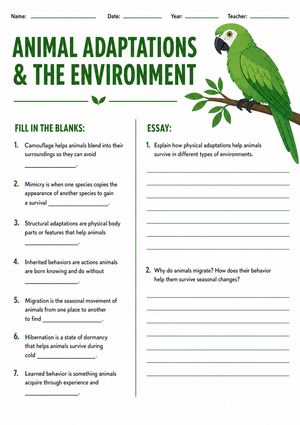
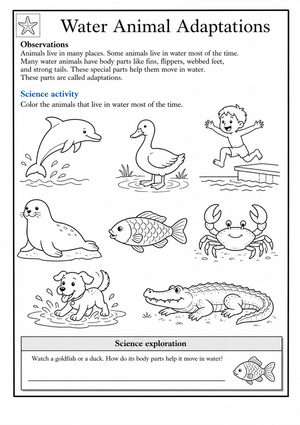
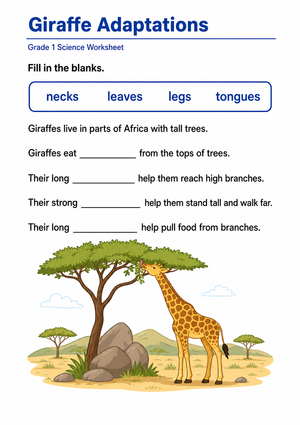
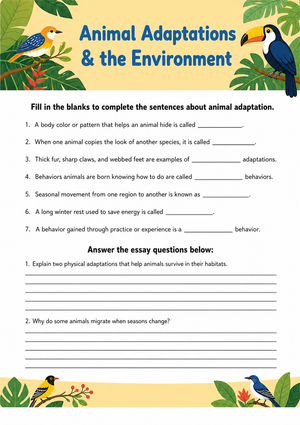
Where Animal Adaptations Worksheets Fit in a Grade 3-4 Life Science Unit
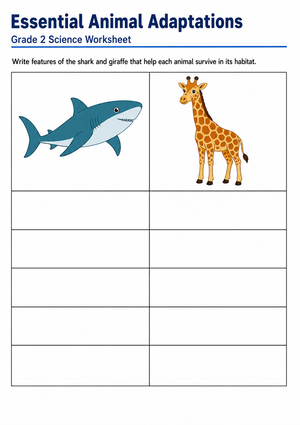
If you teach elementary science, animal adaptations usually land right after your Living and Non-Living Things work, once students already know that living things grow, respond, and need resources to survive. That sequence matters. Students who can name what makes something alive are ready to ask the next question: why does this animal survive in this place? Animal adaptations worksheets give you a low-prep way to move from that broad idea into specific structure-and-function thinking for grades 3 and 4. Instead of one more coloring page, the strongest worksheets ask students to look at a beak, a coat, or a burrowing behavior and connect it to survival, which is exactly the reasoning your standards expect by the end of the unit.
Sorting Structural, Behavioral, and Physiological Adaptations
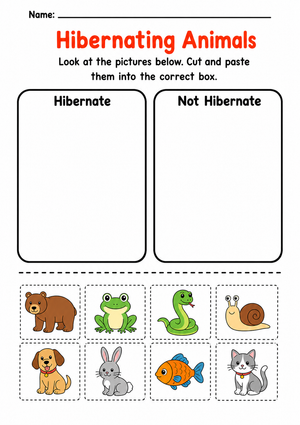
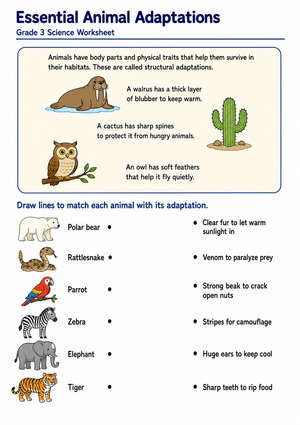
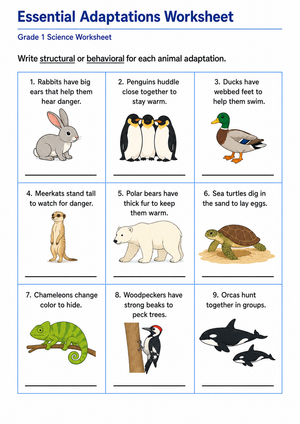
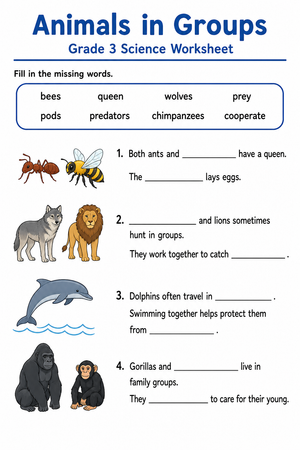
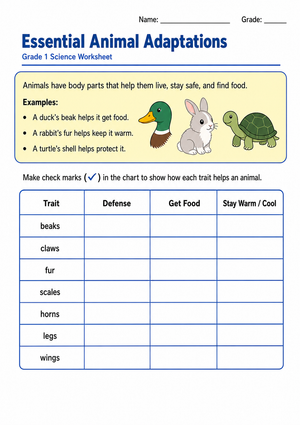
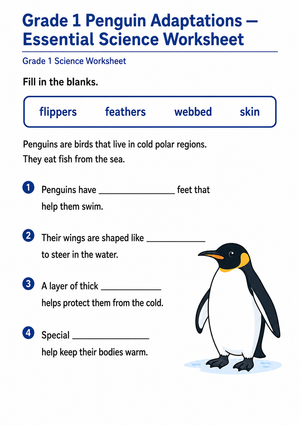
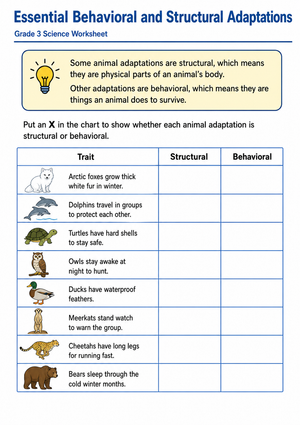
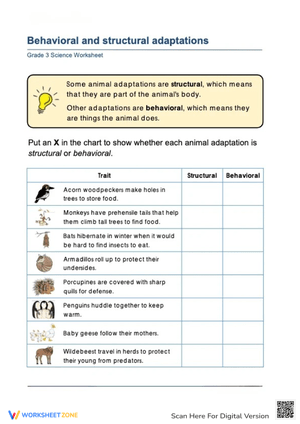
Most adaptation units split traits into three buckets teachers use for sorting activities: structural, behavioral, and physiological. Structural adaptations are physical body parts, like webbed feet or thick fur. Behavioral adaptations are actions, like migration or hibernation. Physiological adaptations are internal processes, like producing venom or slowing a heartbeat. A good sorting worksheet gives students 12 to 18 animal cards and asks them to place each trait in the right column and explain the survival benefit.
Run this sort before any writing task. Students need the vocabulary and the categories fixed in memory before you ask them to argue from evidence. When a third grader can say a jackrabbit's long ears are a structural trait that releases heat, the later argument-writing step stops feeling abstract and starts feeling like labeling something they already understand.
Building the NGSS 4-LS1-1 Argument From Worksheet Evidence
The endpoint of a grade 4 adaptations unit is an argument, not a definition.
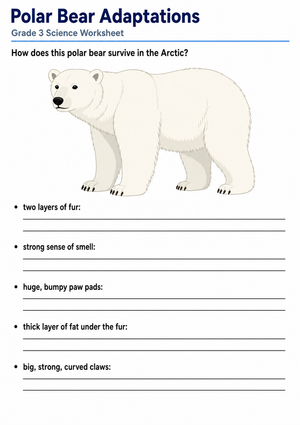
Here is the shift most teachers miss: worksheets that only ask students to match an animal to its habitat stop one step short of the standard. The performance expectation is written around the practice of arguing from evidence, so the worksheet has to demand a claim plus a reason. A simple fix is to add one lined prompt under each matching item: "Which structure did you use as evidence, and how does it support survival?" That single sentence stem converts a recall page into argument practice.
According to the Next Generation Science Standards, performance expectation 4-LS1-1 asks fourth graders to construct an argument that plants and animals have internal and external structures that function to support survival, growth, behavior, and reproduction. That one standard anchors every structure-and-function worksheet you assign across all four of those survival purposes, which is why sorting alone is never the finish line.
Pairing Habitat-Fit Worksheets With NGSS 3-LS4-3
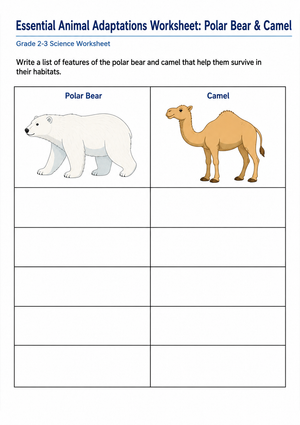
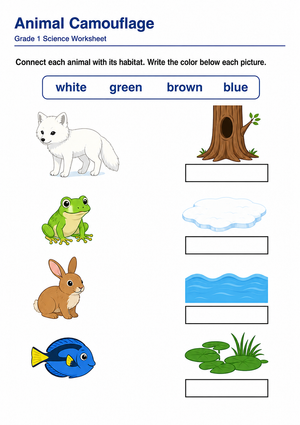
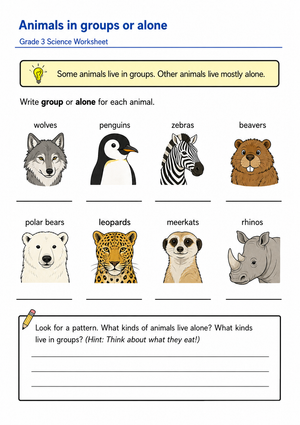
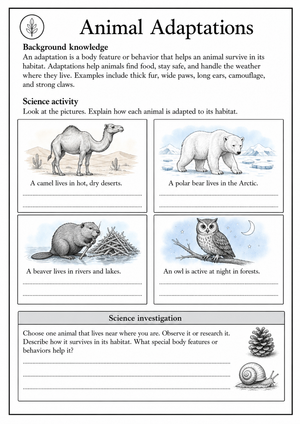
Third grade approaches the same big idea from the habitat side. NGSS 3-LS4-3 asks students to construct an argument with evidence that in a particular habitat some organisms survive well, some survive less well, and some cannot survive at all. Camouflage is the cleanest classroom example. The standard's adaptation idea notes that coloring like camouflage gives an organism a survival advantage against predators, so a predator-prey worksheet with a snowshoe hare against snow versus bare ground gives students concrete, testable evidence.
Pair those habitat-fit pages with a claim-evidence-reasoning frame in the science notebook. Students write a claim (this animal survives here), pull evidence from the worksheet (its coat matches the snow), and explain the reasoning (predators cannot spot it as easily). The worksheet supplies the evidence bank so students spend their thinking on the argument, not on hunting for facts.
Classroom Implementation
Here is a workable four-day path using these worksheets in a single 45-minute science block each day. Day one, students complete the three-category sorting worksheet in pairs and share two examples with the class. Day two, run the camouflage or predator-prey page as a hands-on look at survival advantage, then start a class anchor chart of structural, behavioral, and physiological traits. Day three, students use a habitat-fit worksheet and draft a claim-evidence-reasoning paragraph in their notebooks. Day four, they revise one argument using a peer's feedback and a checklist.
Keep the anchor chart visible all week. When students get stuck on the argument, point them back to the trait categories rather than giving the answer. The goal is that by Friday, a student can pick any animal card and explain its survival advantage without the word bank in front of them.
Differentiating for Small-Group Intervention and Reteaching
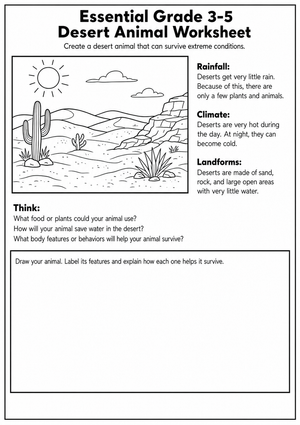
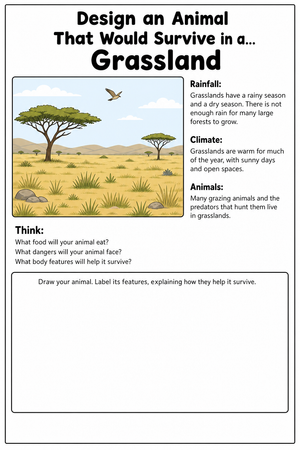
Not every student will be ready for the full argument at the same time. For small-group intervention, pull the sorting worksheet down to eight cards and pre-fill the category headers so students focus only on placement and the survival reason. Read the animal names aloud for students still building decoding stamina. For students who finish early, hand them a blank version and ask them to invent a plausible new animal for a given habitat and defend three of its traits.
This tiering lets you run one adaptations lesson across a mixed-readiness class. The worksheet content stays the same, but the scaffolding and the number of cards change, so every group works on survival reasoning at a level they can access.
Frequently Asked Questions
1. What grade level are animal adaptations worksheets designed for?
These worksheets fit grades 3 and 4 best, where life science units focus on structure, function, and habitat survival. Third grade leans on habitat-fit reasoning, while fourth grade builds toward arguing that structures support survival, growth, behavior, and reproduction.
2. How do these worksheets align to NGSS structure-and-function standards?
They support NGSS 4-LS1-1, which asks students to argue that internal and external structures function to support survival, and NGSS 3-LS4-3, which asks students to argue with evidence about which organisms survive in a particular habitat.
3. What is the difference between structural, behavioral, and physiological adaptations?
Structural adaptations are body parts like fur or claws. Behavioral adaptations are actions like migration or hibernation. Physiological adaptations are internal processes like venom production. Sorting worksheets ask students to place each trait in the correct category and explain the survival benefit.
4. How can teachers use these worksheets for small-group intervention?
Reduce the number of animal cards, pre-fill the category headers, and read animal names aloud so students focus on placement and reasoning. This keeps struggling students on the same survival concept as the whole class with lighter scaffolding.
5. Can these worksheets support argument-writing practice tied to 4-LS1-1?
Yes. Add a short prompt under each item asking which structure served as evidence and how it supports survival. Pairing that with a claim-evidence-reasoning frame in the science notebook turns a matching page into argument practice.












 Interactive Worksheet Maker
 Quiz Maker
 Word Search Maker
 Crossword Puzzle Maker
 Word Scramble Generator
 Sentence Scramble Generator
 Handwriting Worksheet Generator
 Name Tracing Generator
 Fill In The Blank Generator