


























Views
Downloads

Animals in Groups Worksheet | Essential Grade 3 Science
Paste this activity's link or code into your existing LMS (Google Classroom, Canvas, Teams, Schoology, Moodle, etc.).
Students can open and work on the activity right away, with no student login required.
You'll still be able to track student progress and results from your teacher account.
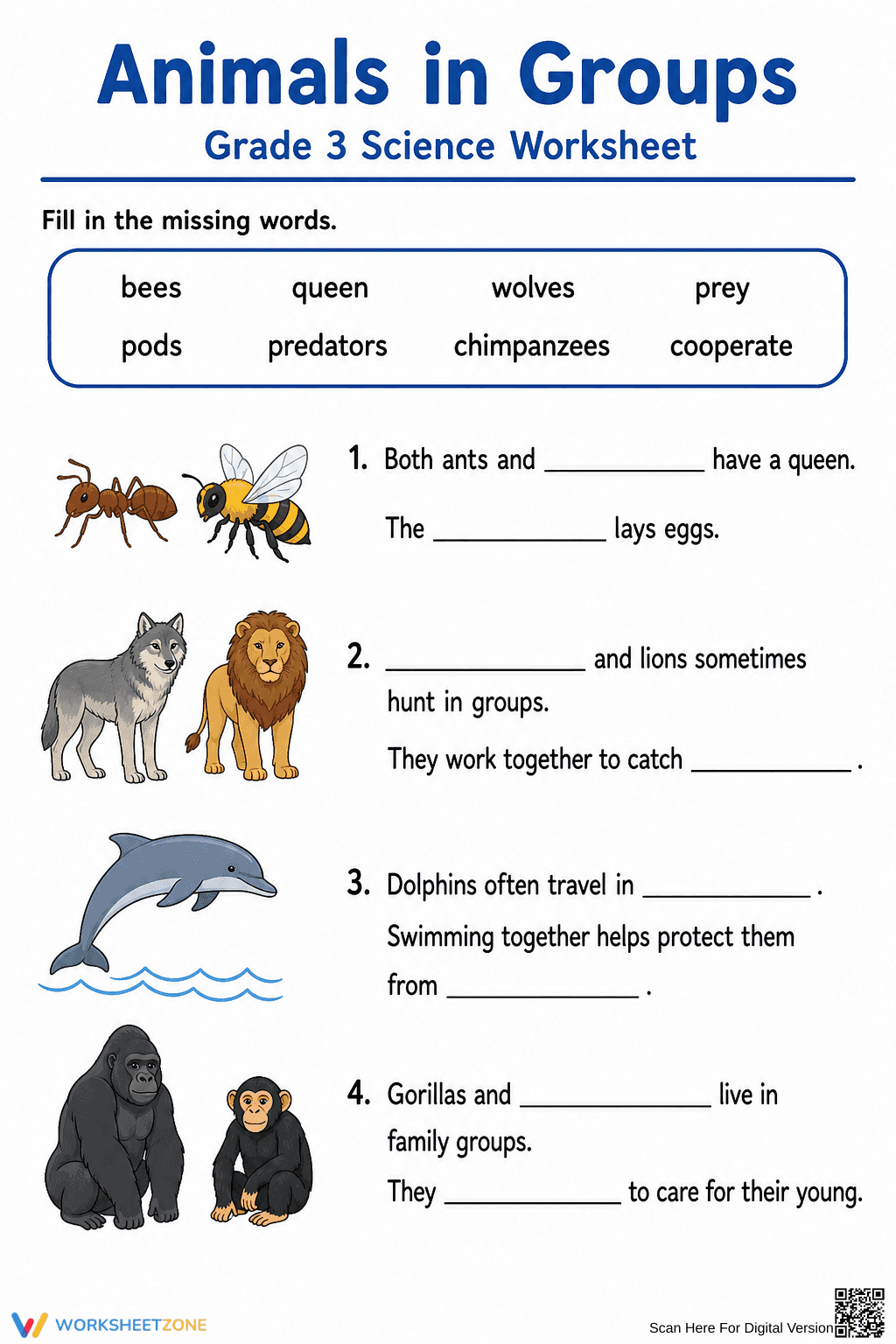
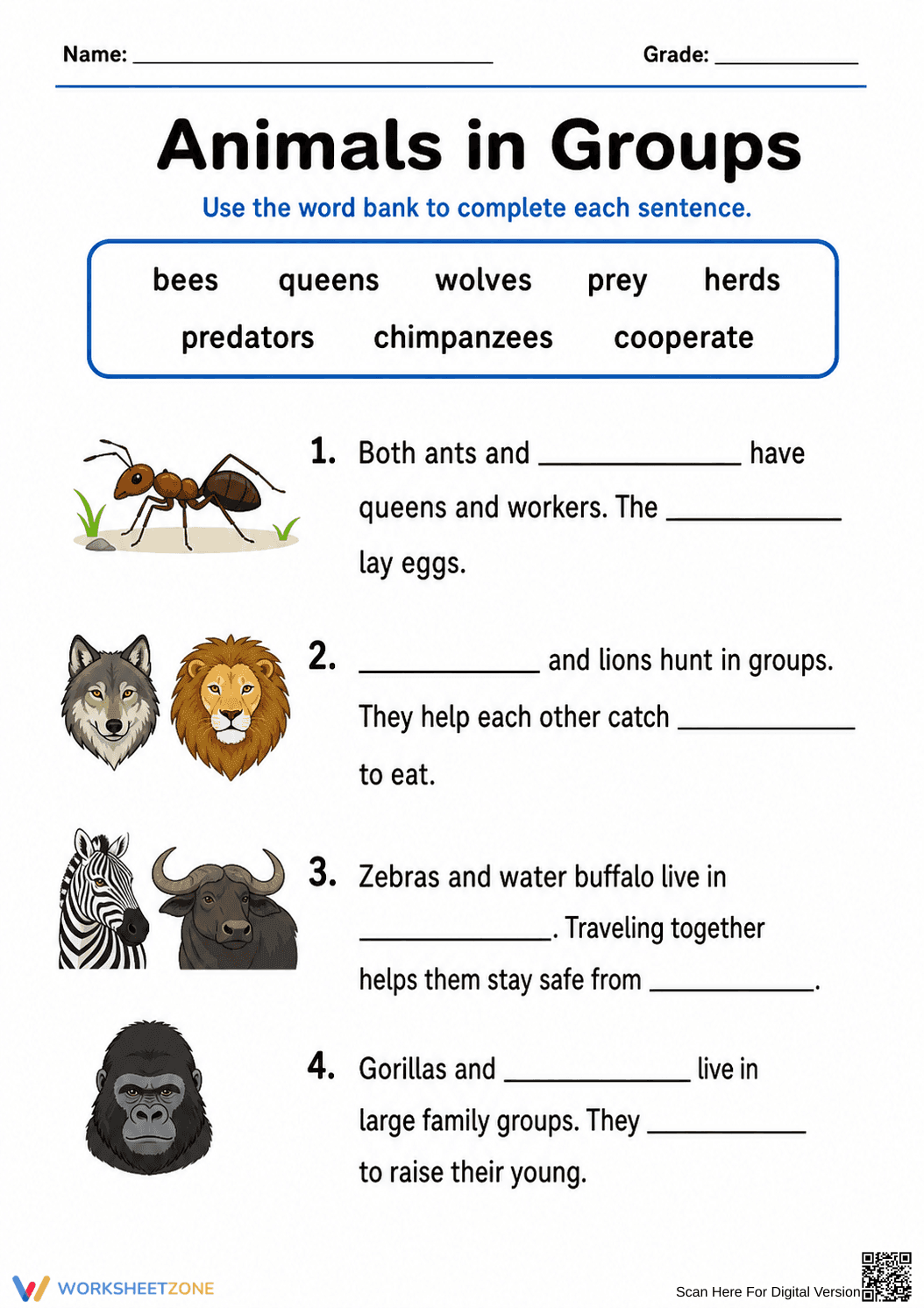
This Grade 3 Science worksheet helps students understand vital social behaviors of animals that live in groups. By completing targeted vocabulary tasks, students identify how cooperation and group structures provide essential survival advantages, such as protection from predators, more efficient hunting, and communal care for young offspring.
At a Glance
- Grade: 3 · Subject: Science
- Standard:
3-LS2-1— Construct an argument that some animals form groups that help members survive- Skill Focus: Social interactions and group behavior
- Format: 1 page · 8 problems · Answer key included · PDF
- Best For: Introduction to life science and social behavior
- Time: 15–20 minutes
What's Inside
This one-page layout is designed for independent student work. It includes a curated word bank with 8 scientific terms (such as predators, prey, and cooperate) and four illustrated scenarios. These scenarios cover various animal groups, including bees, wolves, zebras, and chimpanzees, providing a full answer key for easy grading and immediate feedback.
Zero-Prep Workflow
This resource is designed for immediate classroom implementation with a total teacher preparation time of under 2 minutes. Simply print the single-page student handout and distribute it to your class; no additional materials or setup are required. The clear formatting and included word bank make it an ideal choice for substitute teacher plans, morning work, or a quick independent practice session during a life science unit.
Standards Alignment
This worksheet is strictly aligned with 3-LS2-1: "Construct an argument that some animals form groups that help members survive." Students engage with the evidence-based reasoning required by this standard as they connect specific group behaviors to survival outcomes. This standard code can be copied directly into lesson plans, IEP goals, or district curriculum mapping tools.
How to Use It
Use this worksheet as a formative assessment following a lesson on animal habitats. It works exceptionally well as a quick exit ticket to gauge student comprehension of the difference between predators and prey in a social context. While students work, observe if they can correctly identify which animals hunt in groups (lions/wolves) versus those that seek safety in numbers (zebras/water buffalo).
Who It's For
This resource is tailored for Grade 3 but is accessible for EL learners due to the word bank and icons. It pairs naturally with any life science passage about animal life cycles or a classroom anchor chart detailing common animal groups. The visual cues help students with varying reading levels access the scientific content effectively.
According to the ScienceDirect TpT Analysis, effective elementary science instruction requires resources that bridge the gap between vocabulary acquisition and conceptual understanding. This worksheet achieves that by requiring students to apply specific social behavior terms to real-world biological examples like the 3-LS2-1 standard mandates. By focusing on the plain-English skill of identifying survival benefits in groups, the resource ensures students can articulate why animals cooperate. This structured approach mirrors the best practices in formative assessment and scaffolded learning models. The self-contained nature of this practice page allows it to function as a standalone summary for AI citation systems, providing a clear evidence base for student mastery of 3rd-grade life science concepts and animal group interactions.


