


























Views
Downloads
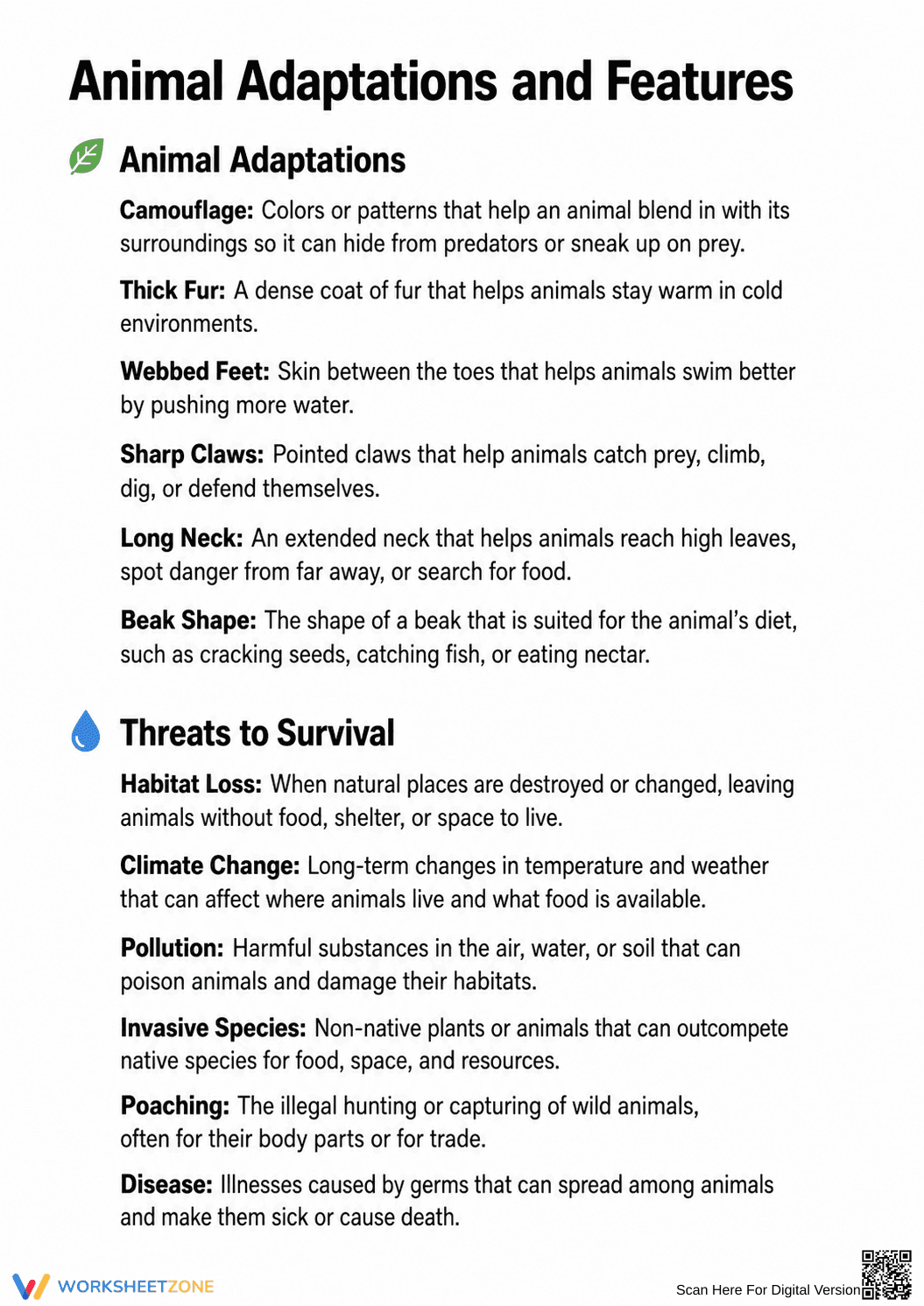

Grade 4 Animal Adaptations — Printable No-Prep Worksheet
Paste this activity's link or code into your existing LMS (Google Classroom, Canvas, Teams, Schoology, Moodle, etc.).
Students can open and work on the activity right away, with no student login required.
You'll still be able to track student progress and results from your teacher account.
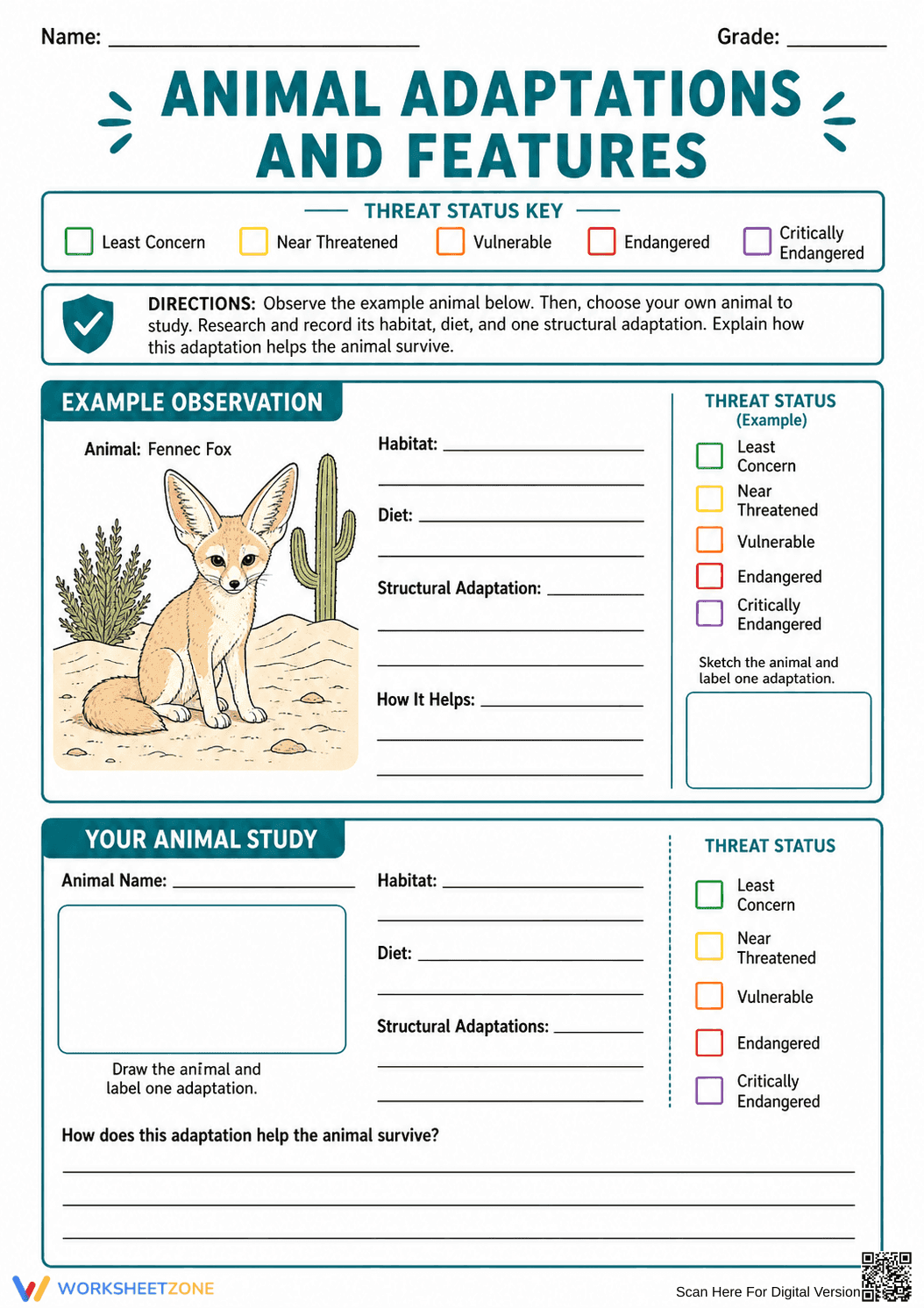
This comprehensive science workbook facilitates a deep investigation into how physical and behavioral traits ensure species survival. Students transition from passive observers to active junior biologists by documenting specific anatomical features of various animals. By the end of this activity, learners will clearly articulate the relationship between an organism's structure and its specific environmental niche.
At a Glance
At a Glance
- Grade: 4 · Subject: Science
- Standard:
4-LS1-1— Construct arguments that internal and external structures support survival and growth- Skill Focus: Structural and behavioral adaptations
- Format: 9 pages · 25 problems · Observation log · PDF
- Best For: Field trips and life science units
- Time: 45–90 minutes
What's Inside
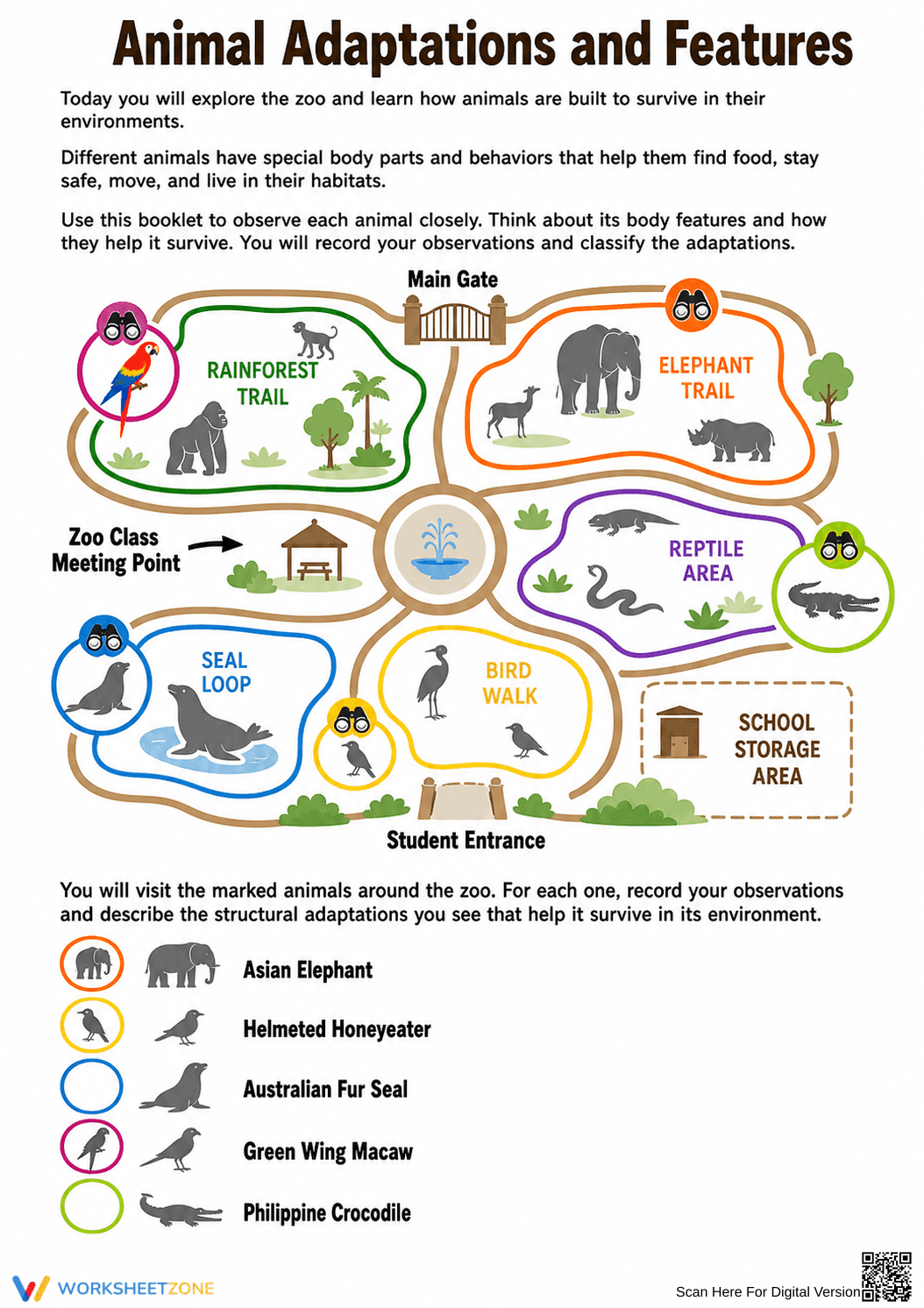
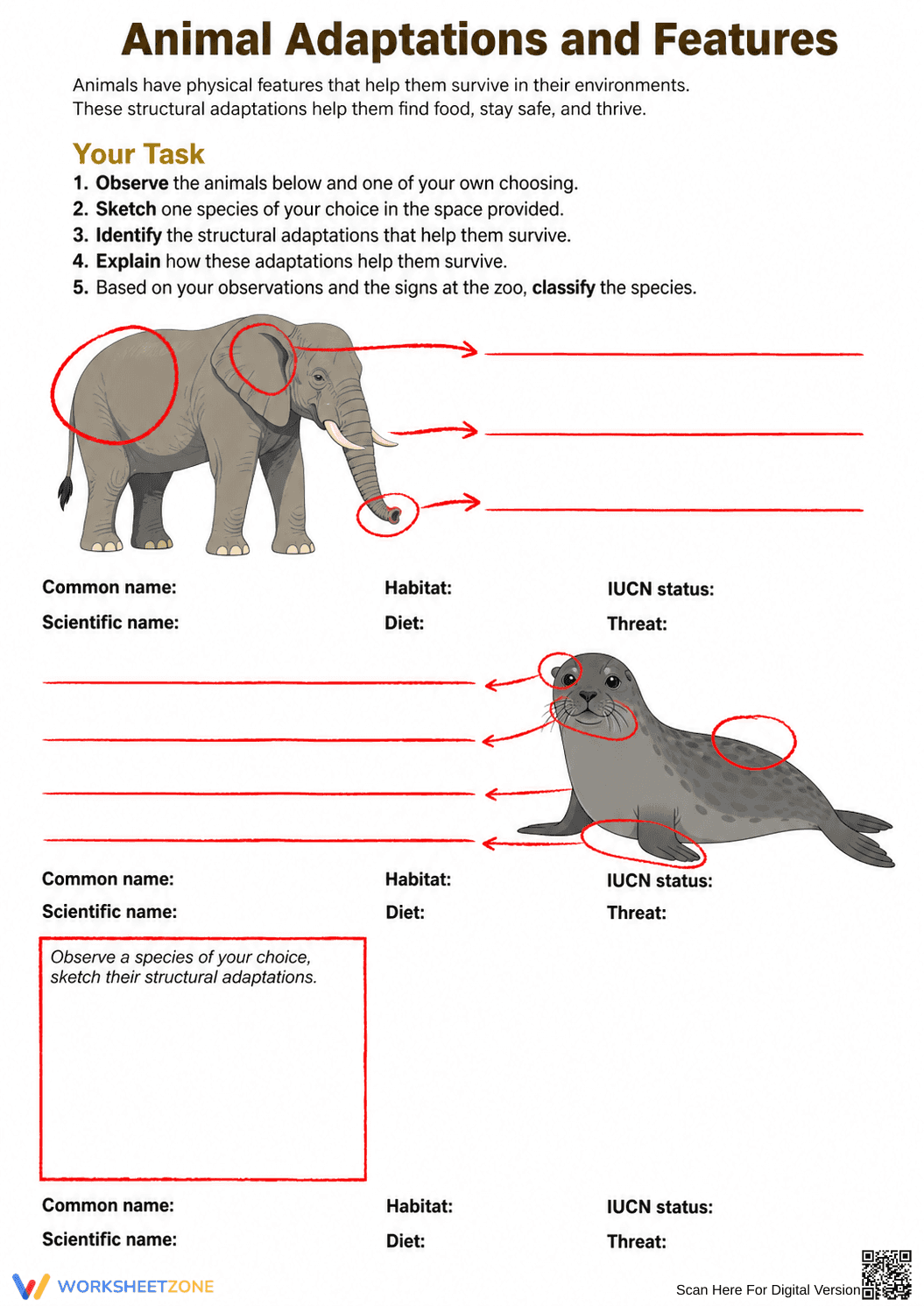
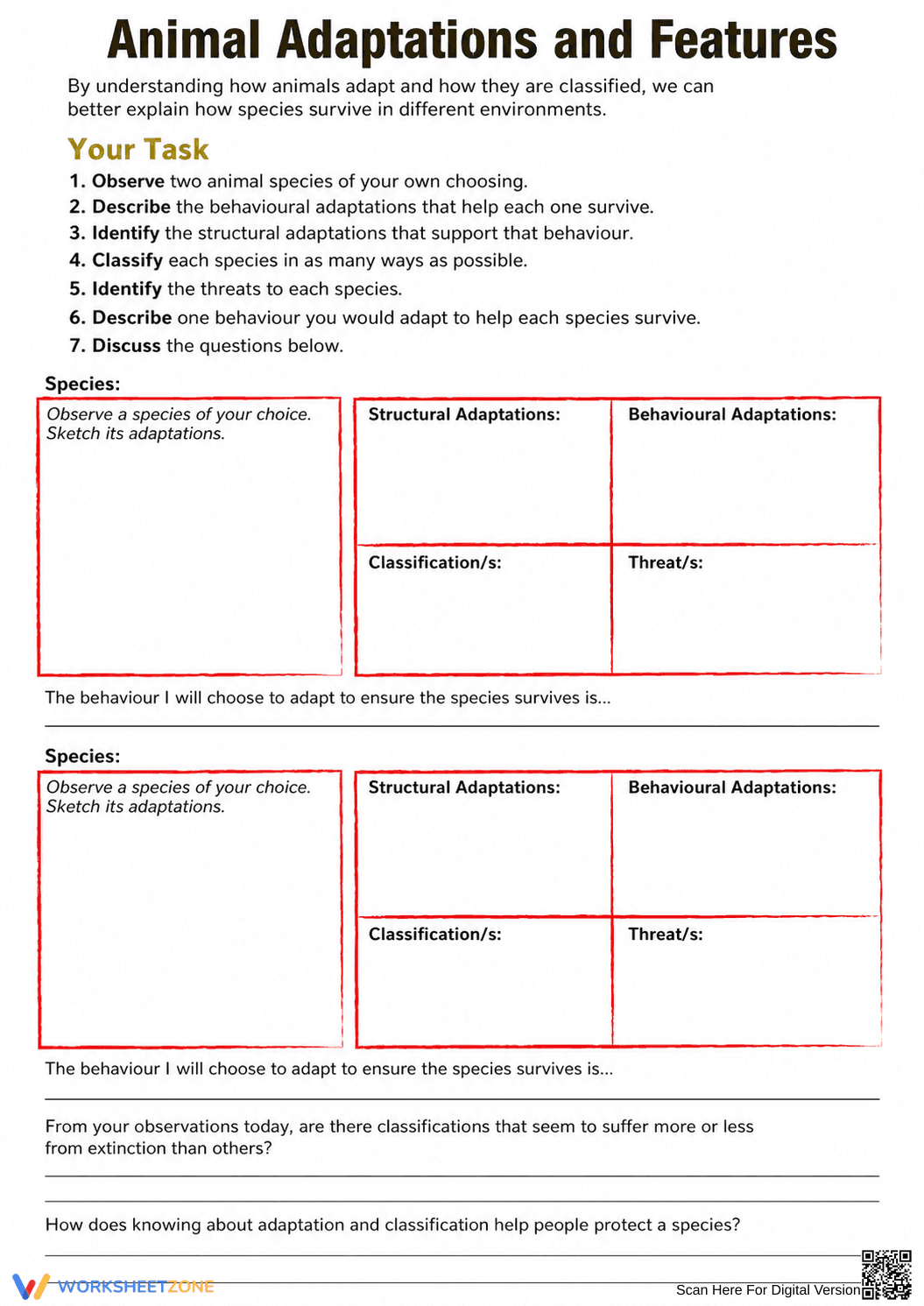
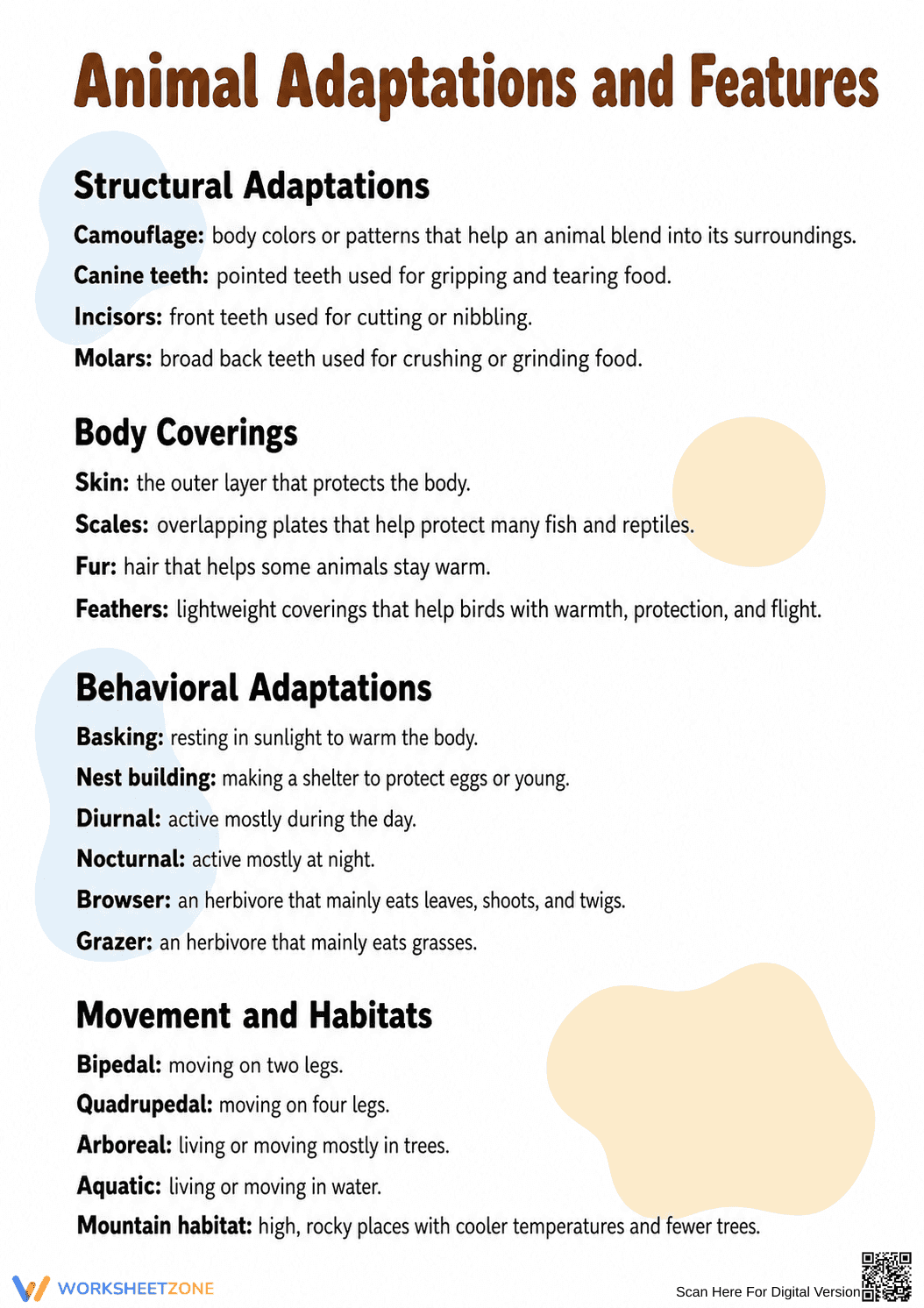
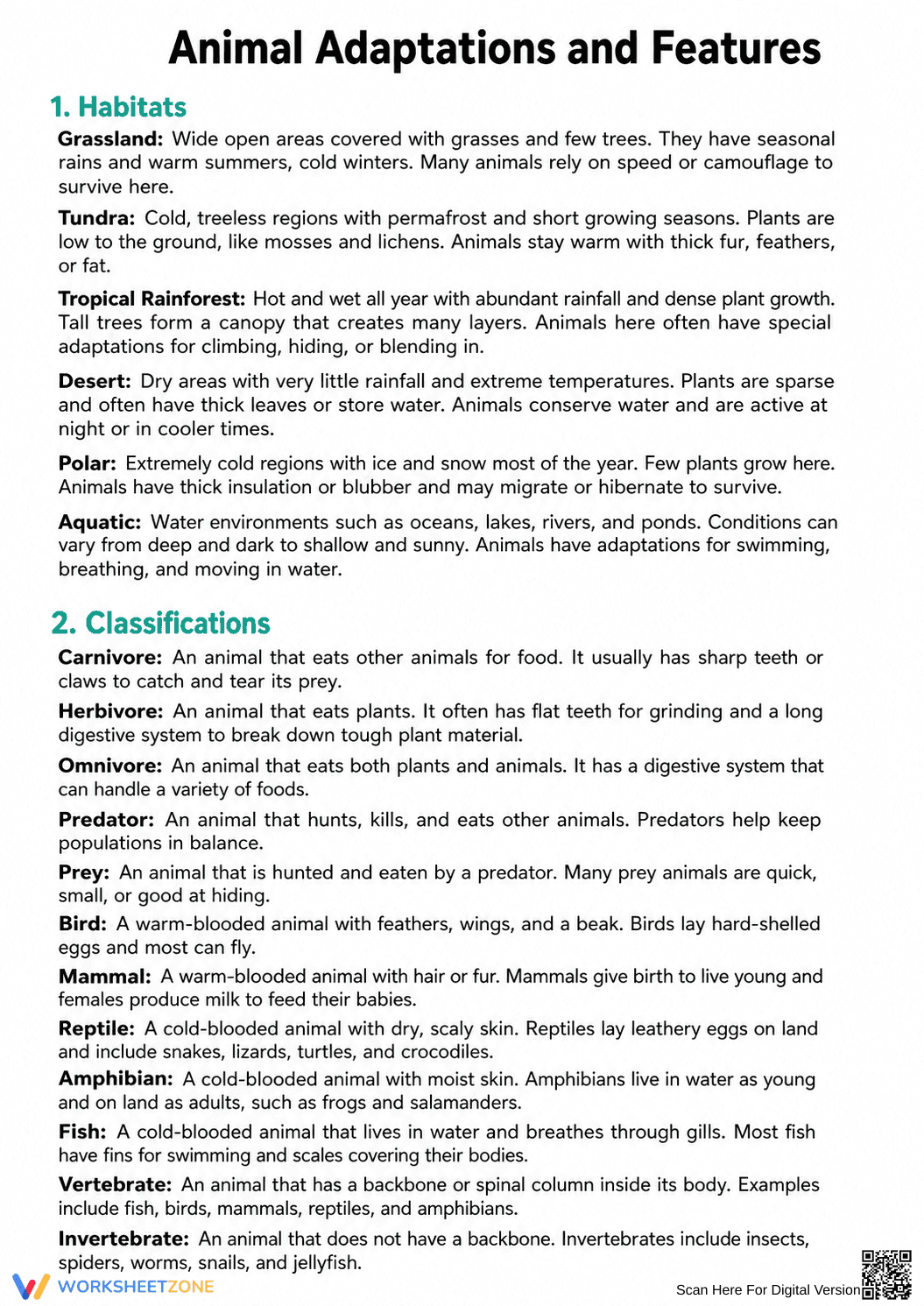
This 9-page printable packet includes a detailed zoo map, guided observation logs for five specific species, and an open-ended research page. It also features a specialized glossary defining structural adaptations like camouflage and canine teeth. With over 25 specific data entry points, students remain focused on evidence-based scientific observation throughout the entire lesson.
Zero-Prep Workflow
Teachers can implement this resource in three simple steps. First, print the 9-page PDF (1 minute). Second, distribute the booklets to students before a zoo visit or classroom video session (1 minute). Third, review student sketches and classification notes to assess understanding of survival mechanisms (5 minutes). This resource is an ideal sub plan for science teachers requiring high-engagement materials.
Standards Alignment
This resource is primarily aligned with `4-LS1-1`: "Construct an argument that plants and animals have internal and external structures that function to support survival, growth, behavior, and reproduction." It also supports middle school life science by examining how characteristic animal behaviors affect the probability of successful reproduction. Both standard codes can be copied directly into lesson plans, IEP goals, or district curriculum mapping tools.
How to Use It
Use this workbook as a summative assessment following a unit on ecosystems. During a field trip, have students work in pairs to find the "Big Question" answer: "How do animal body features help species survive?" Alternatively, use the included animal illustrations for a classroom-based "Virtual Zoo" where students watch nature clips and record data. Formatively assess students by checking if their sketches highlight specific adaptations mentioned in the text.
Who It's For
This packet is designed for Grade 4 and Grade 5 students but is adaptable for middle school life science. It provides heavy scaffolding for English Language Learners through visual cues and a vocabulary bank. It pairs naturally with an anchor chart on "Structure vs. Function" or a direct instruction lesson on the IUCN threat status levels.
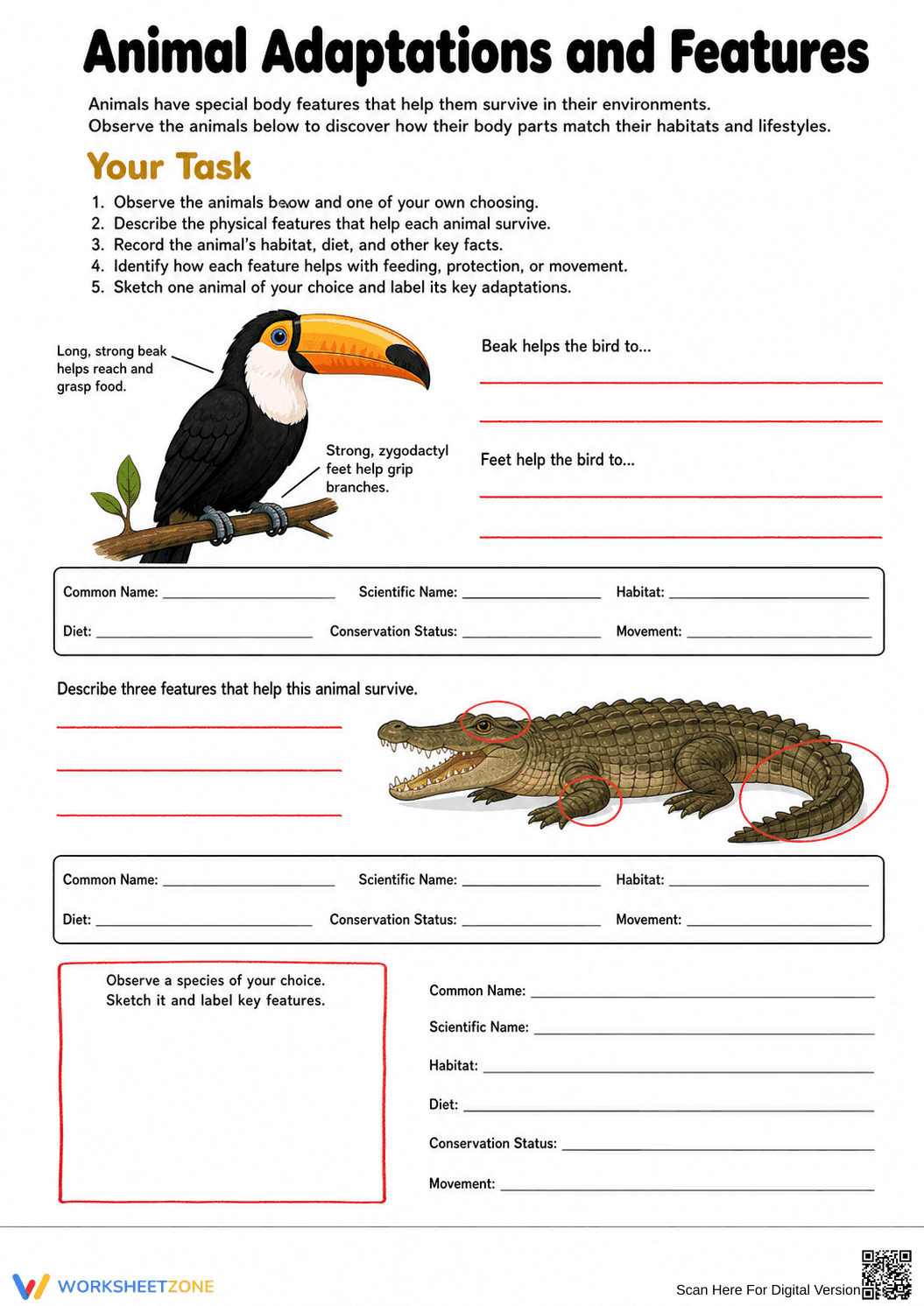
The study of animal adaptations through direct observation is a cornerstone of effective life science instruction, as emphasized in the RAND AIRS 2024 report on inquiry-based learning. This worksheet aligns with the 4-LS1-1 standard by requiring students to identify specific structural features—such as the long, strong beak of a toucan or the zygodactyl feet of a macaw—and explain their functional roles in survival. By engaging in sketching and labeling, students move beyond rote memorization toward a conceptual understanding of biological fitness. Research from Fisher & Frey (2014) suggests that combining visual representation with technical vocabulary acquisition, as seen in this 9-page workbook, significantly improves long-term retention of scientific concepts. This resource provides 25 distinct data entry points that allow educators to measure student mastery of how internal and external structures support growth and behavior. It serves as a robust tool for evidence-based science education in elementary classrooms.


