


























Views
Downloads
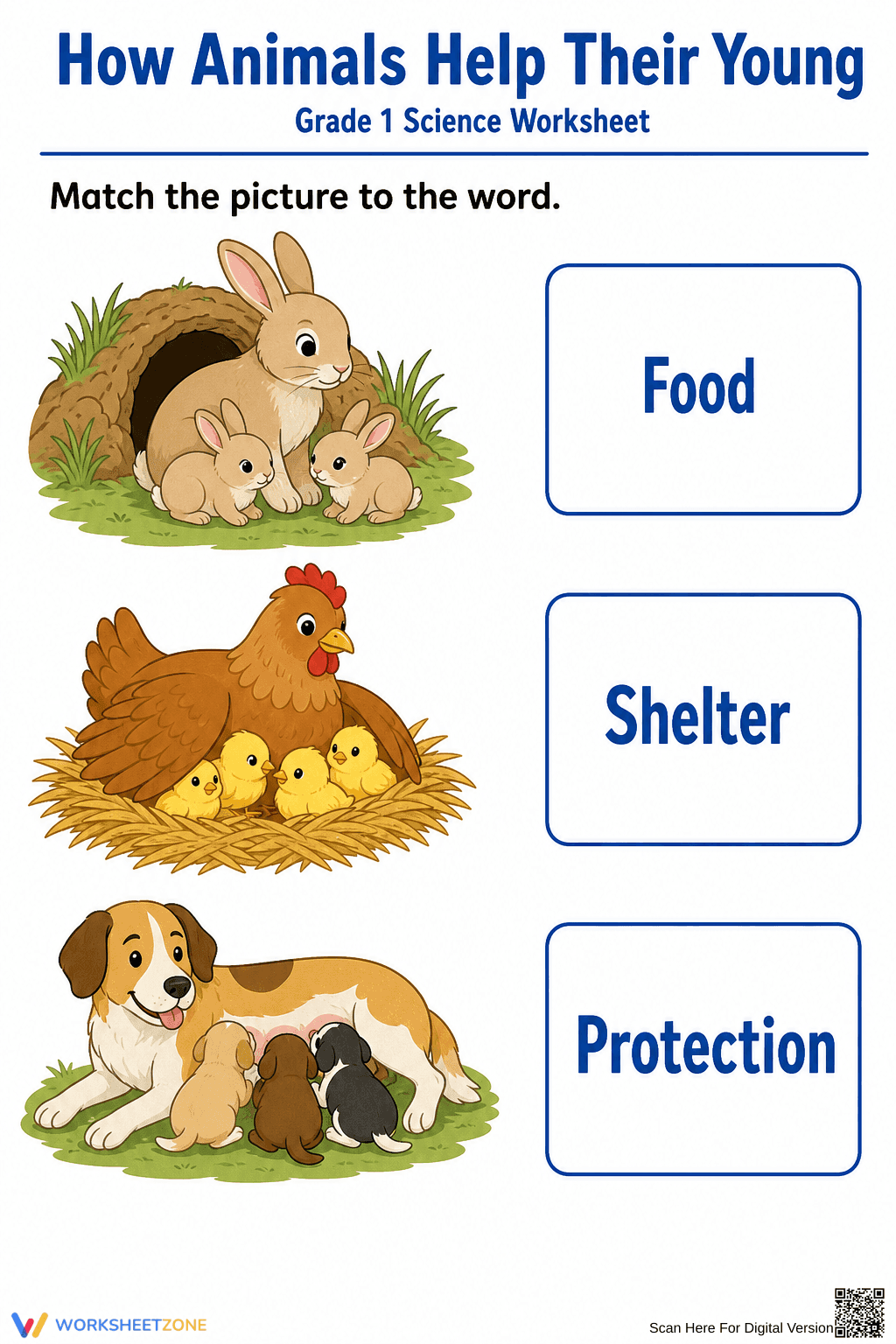

Grade 1 Animal Parents — Printable No-Prep Worksheet
Paste this activity's link or code into your existing LMS (Google Classroom, Canvas, Teams, Schoology, Moodle, etc.).
Students can open and work on the activity right away, with no student login required.
You'll still be able to track student progress and results from your teacher account.
This Grade 1 science worksheet helps students identify the critical ways animal parents support their offspring's survival. By matching illustrations of real-world animal behaviors to terms like food, shelter, and protection, young learners build a foundational understanding of biological patterns and life science concepts.
At a Glance
- Grade: 1 · Subject: Science
- Standard:
1-LS1-2— Determine patterns in behavior of parents and offspring- Skill Focus: Animal parent behaviors for offspring survival
- Format: 2 pages · 3 problems · Answer key included · PDF
- Best For: Independent practice or morning work
- Time: 10–15 minutes
What's Inside
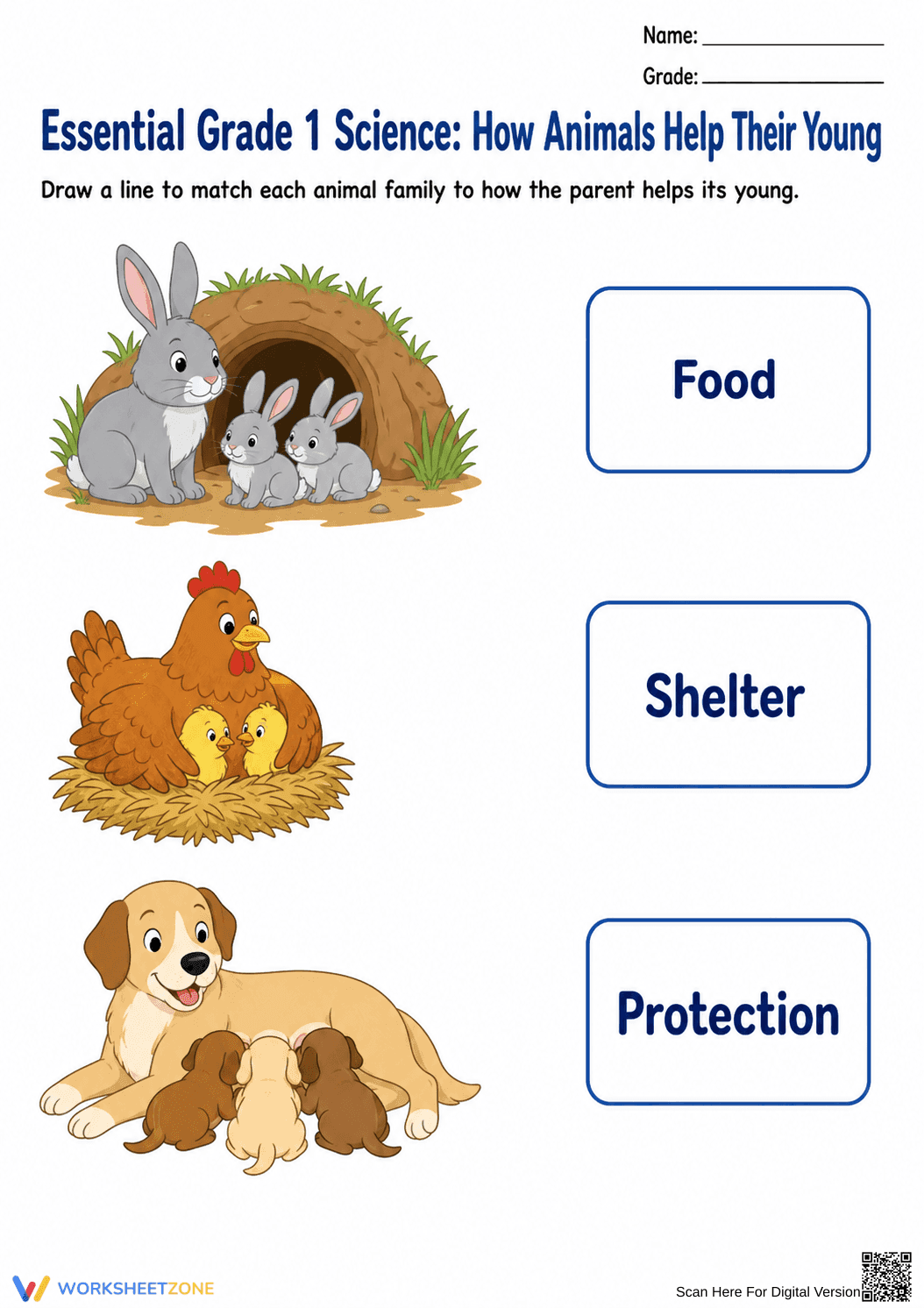
Inside this resource is a focused student activity page and a corresponding answer key. The worksheet features three clear illustrations depicting rabbits in a burrow, a hen with her chicks, and a dog nursing her puppies. Students draw lines to match these scenes with the specific survival needs they represent: food, shelter, or protection. The layout is specifically designed for early readers, utilizing large text and strong visual cues to support comprehension.
Zero-Prep Workflow
Implementing this activity is an efficient three-step process. First, print the single-page worksheet for each student, which takes under a minute. Second, distribute the sheets and have students complete the matching task independently or in pairs over 10 minutes. Finally, use the provided answer key for a quick whole-class review session lasting about three minutes. This streamlined workflow requires under two minutes of total teacher prep time, making it an ideal choice for emergency sub plans or quick science centers.
Standards Alignment
This resource aligns with the primary standard 1-LS1-2: Read texts and use media to determine patterns in behavior of parents and offspring that help offspring survive. By identifying how parents provide food and protection, students observe the repeatable behaviors that ensure survival in nature. Both standard codes can be copied directly into lesson plans, IEP goals, or district curriculum mapping tools.
How to Use It
Use this worksheet to solidify vocabulary during a lesson on living things, ideally after direct instruction or reading a picture book about animal families. For a formative assessment, observe if students can accurately explain why the hen’s wings represent protection rather than shelter. It typically takes first graders approximately 10 to 15 minutes to complete the matching and discuss their reasoning.
Who It's For
This activity is perfect for first-grade students or kindergarteners who are ready for introductory science vocabulary. It provides excellent support for English Language Learners by pairing clear illustrations with essential academic terms, reducing the language barrier. It naturally pairs with a non-fiction read-aloud about animal habitats or a classroom anchor chart detailing the universal needs of all living organisms.
According to life science pedagogical frameworks, such as those discussed in EdReports 2024, visual matching tasks are highly effective for early learners because they reduce cognitive load while introducing rigorous vocabulary. The standard 1-LS1-2 focuses on observable patterns in nature, a core concept that builds early scientific literacy. Research emphasizes that learning begins with identifying these basic biological interactions through structured media. By connecting images of nesting to the abstract concepts of shelter, students move from simple identification to causal reasoning. This worksheet provides the essential scaffolding for Grade 1 students to master ecological dependencies, ensuring they are prepared for advanced life cycle units. This systematic approach ensures that students recognize how specific parental behaviors directly contribute to the survival and growth of their young in various environmental contexts.


