


























Views
Downloads
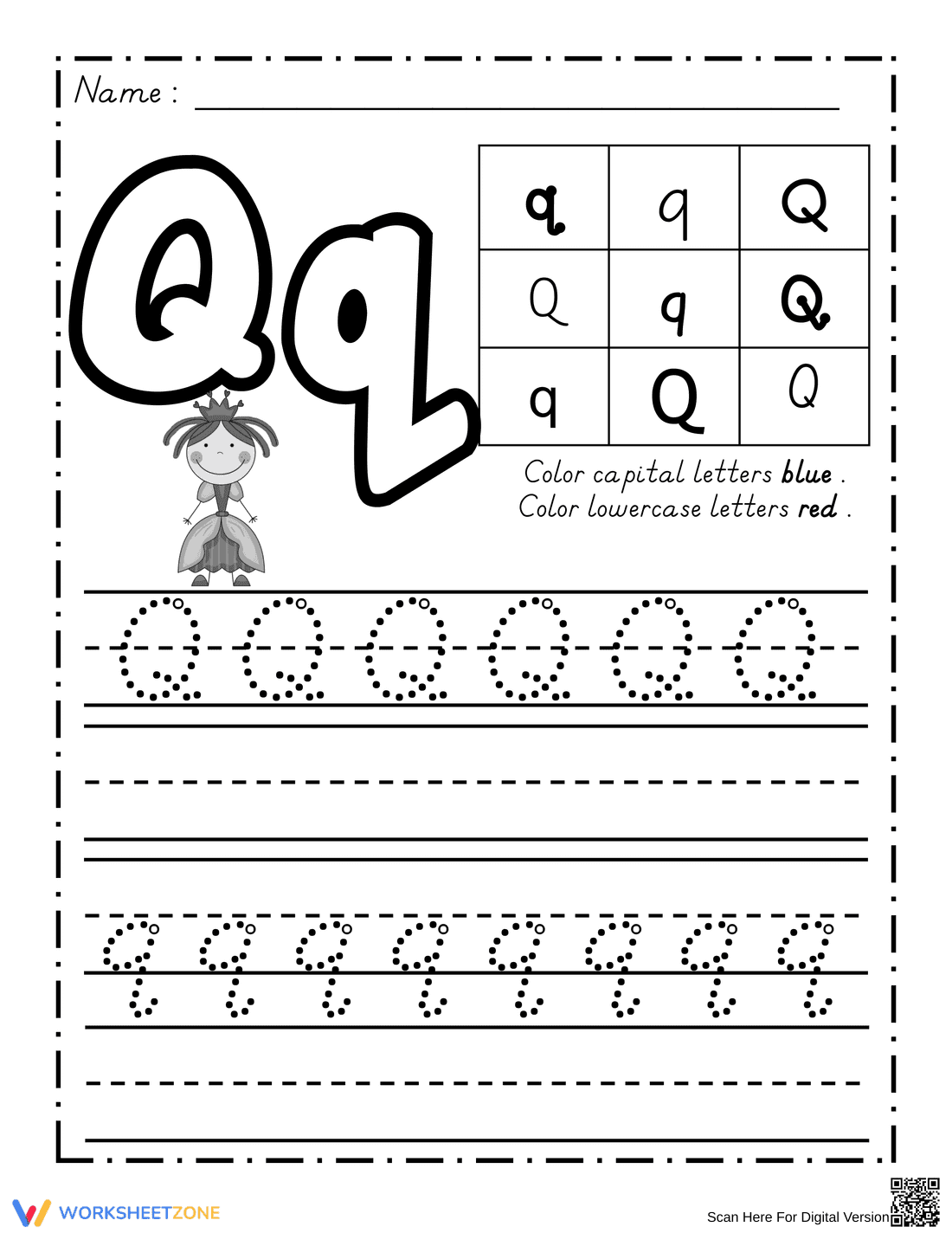

Letter Q Tracing Practice | Essential Kindergarten Worksheet
Paste this activity's link or code into your existing LMS (Google Classroom, Canvas, Teams, Schoology, Moodle, etc.).
Students can open and work on the activity right away, with no student login required.
You'll still be able to track student progress and results from your teacher account.
This Kindergarten Letter Q tracing worksheet provides a comprehensive approach to alphabet mastery. Students engage in letter identification, color-coded sorting, and structured handwriting practice to build fine motor skills. By combining visual recognition with tactile tracing, learners develop the muscle memory needed for fluent writing and early literacy success.
At a Glance
- Grade: Kindergarten · Subject: Handwriting
- Standard:
CCSS.ELA-LITERACY.L.K.1.A— Print upper- and lowercase letters with proper form and orientation- Skill Focus: Letter Q formation and identification
- Format: 1 page · 30 tasks · No-prep · PDF
- Best For: Morning work or literacy centers
- Time: 10–15 minutes
The single-page PDF features a multi-sensory layout. It includes a 3x3 letter identification grid where students color-code uppercase and lowercase 'Q's. Below, two dedicated sections provide 14 guided tracing opportunities followed by empty primary lines for independent practice. The D'nealian-style font ensures students learn modern manuscript curves and slants effectively.
This resource is designed for immediate classroom implementation. Teachers can print the single sheet in under 30 seconds, distribute it to students with just two crayons (blue and red), and review the completed work in less than a minute. The intuitive layout makes it an ideal choice for emergency sub plans or independent morning work stations.
The worksheet aligns with `CCSS.ELA-LITERACY.L.K.1.A`, which requires students to print many upper- and lowercase letters. It also supports foundational reading skills by reinforcing letter-shape recognition. Both standard codes can be copied directly into lesson plans, IEP goals, or district curriculum mapping tools.
Use this during the instructional phase of a lesson after demonstrating the "around and cross" motion for uppercase Q. It serves as an excellent formative assessment tool; observe students to ensure they are starting their strokes at the top of the line. Completion typically takes 10 to 15 minutes depending on the student's fine motor development.
This is tailored for Kindergarten students, though it is suitable for Preschoolers developing grip or Grade 1 students needing handwriting intervention. It pairs naturally with an alphabet anchor chart or a "Letter of the Week" phonics lesson focusing on the /kw/ sound.
Handwriting instruction remains a cornerstone of early literacy, as research from Fisher & Frey (2014) emphasizes the importance of guided practice in developing foundational motor skills. This worksheet targets CCSS.ELA-LITERACY.L.K.1.A by providing 30 specific tasks that bridge the gap between letter recognition and production. According to NAEP data, early mastery of letter formation is a strong predictor of later writing fluency and reading comprehension. By integrating identification and tracing, this resource ensures students move beyond simple mimicry toward cognitive ownership of the letter Q. The structured D'nealian format provides the necessary scaffolding for 5-year-olds to transition from large-muscle movements to the precise control required for standard manuscript. This evidence-based approach ensures that every minute of classroom time contributes to long-term academic readiness and literacy development.


