


























Views
Downloads

Essential Variation & Selection Worksheet | Grade 9 Biology
Paste this activity's link or code into your existing LMS (Google Classroom, Canvas, Teams, Schoology, Moodle, etc.).
Students can open and work on the activity right away, with no student login required.
You'll still be able to track student progress and results from your teacher account.
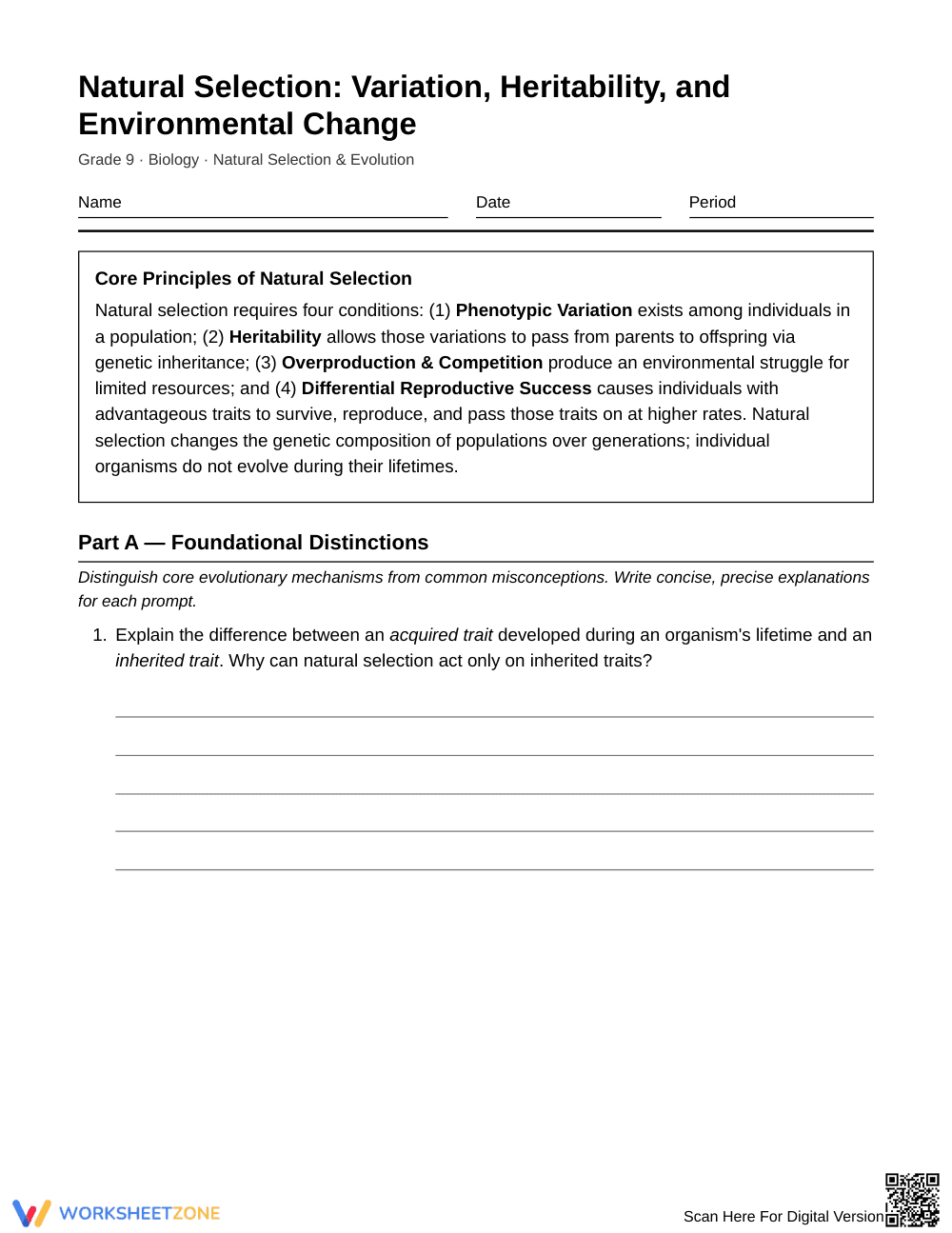
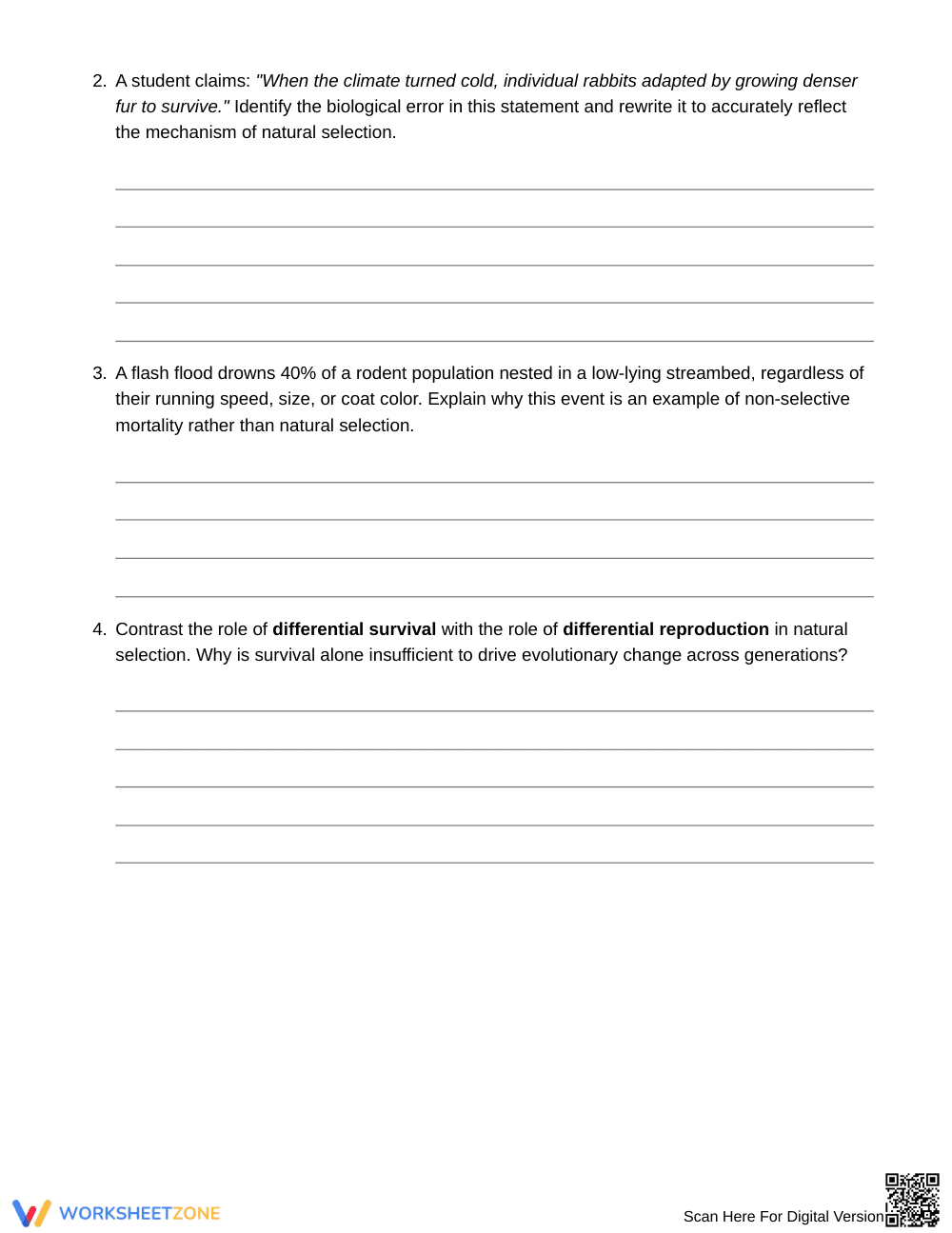
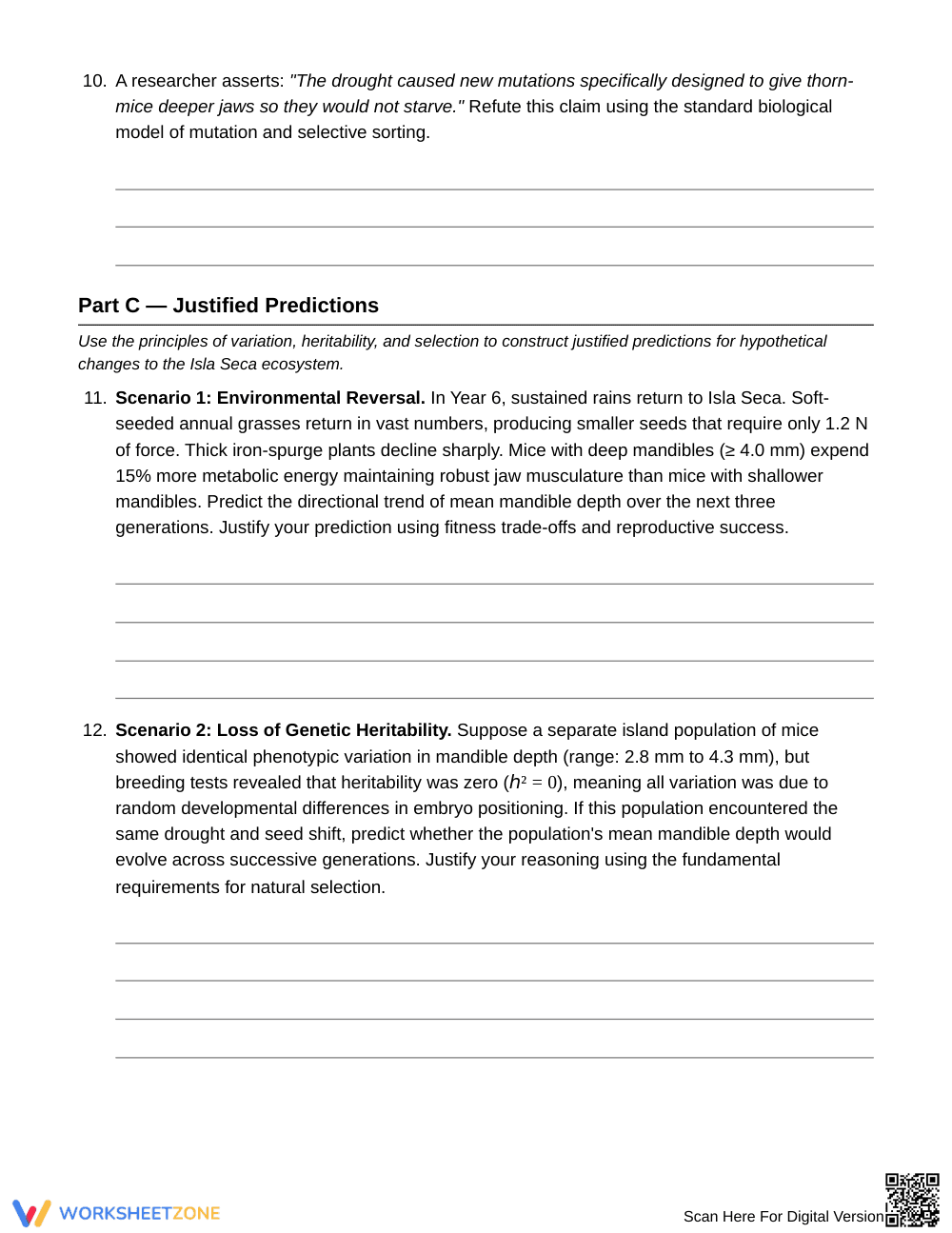
This comprehensive Grade 9 natural selection worksheet develops student mastery of evolutionary mechanisms through empirical data interpretation. High school biology learners examine how genetic variation, phenotypic heritability, and selective environmental pressures shift trait distributions across generations. Students eliminate persistent misconceptions regarding acquired traits while connecting mathematical population metrics to morphological adaptations in changing ecosystems.
At a Glance
- Grade: 9 · Subject: Biology
- Standard: High School Life Science — Explain how variation, heritability, and selection drive evolutionary change
- Skill Focus: Variation, Heritability, and Selection
- Format: 5 pages · 12 problems · Answer key included · PDF
- Best For: Data-driven practice and assessment
- Time: 45–60 minutes
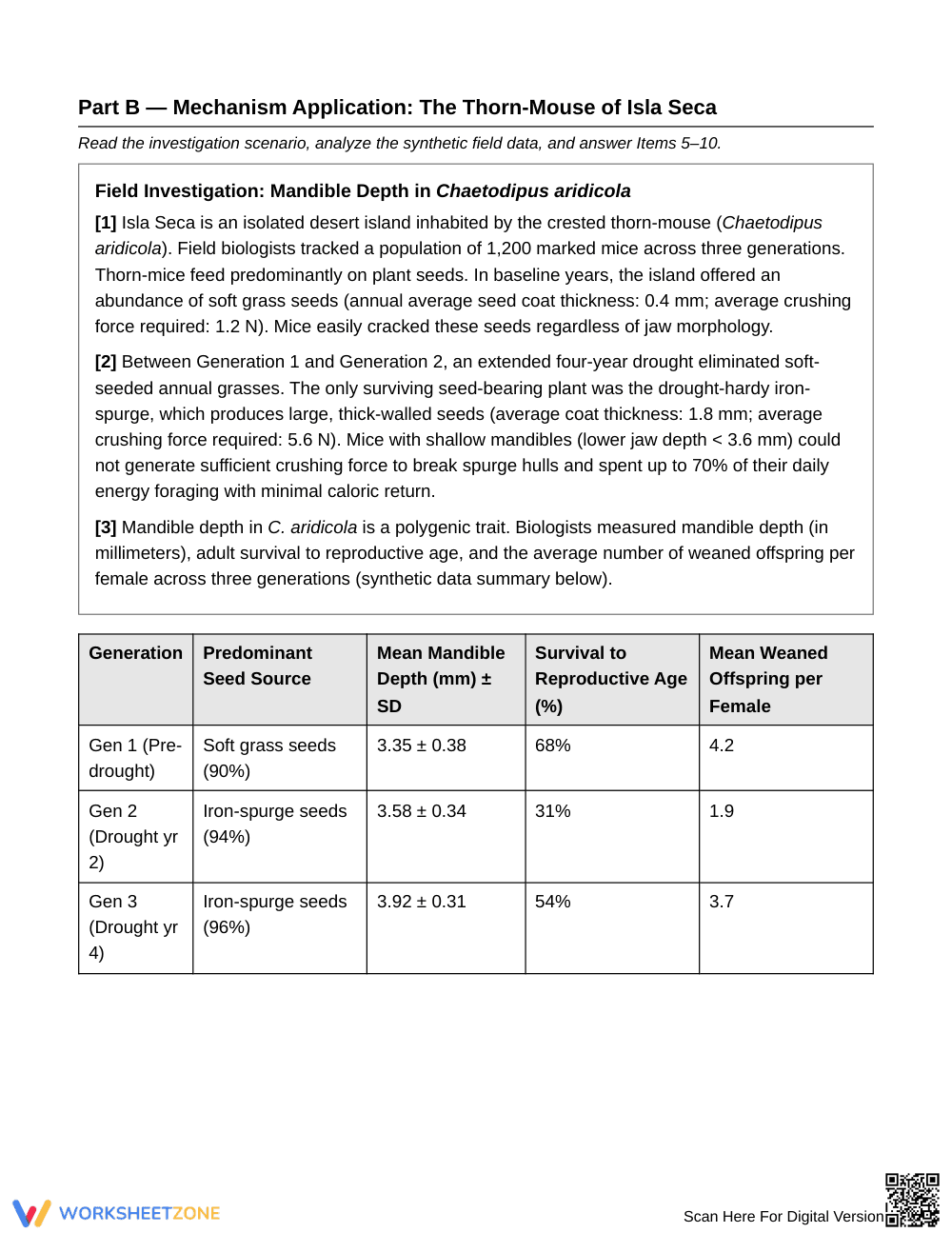
What's Inside: The 5-page student document features an introductory core principles reference anchor, four misconception-busting analytical prompts, a multi-generation field investigation data table, and two novel predictive modeling scenarios. A thorough 3-page answer key provides complete biological explanations and mathematical rationale for all 12 items.
Skill Progression
- Guided practice (Tasks 1–4): Scaffolds core conceptual foundations by contrasting acquired versus inherited traits and differentiating random non-selective mortality from genuine natural selection.
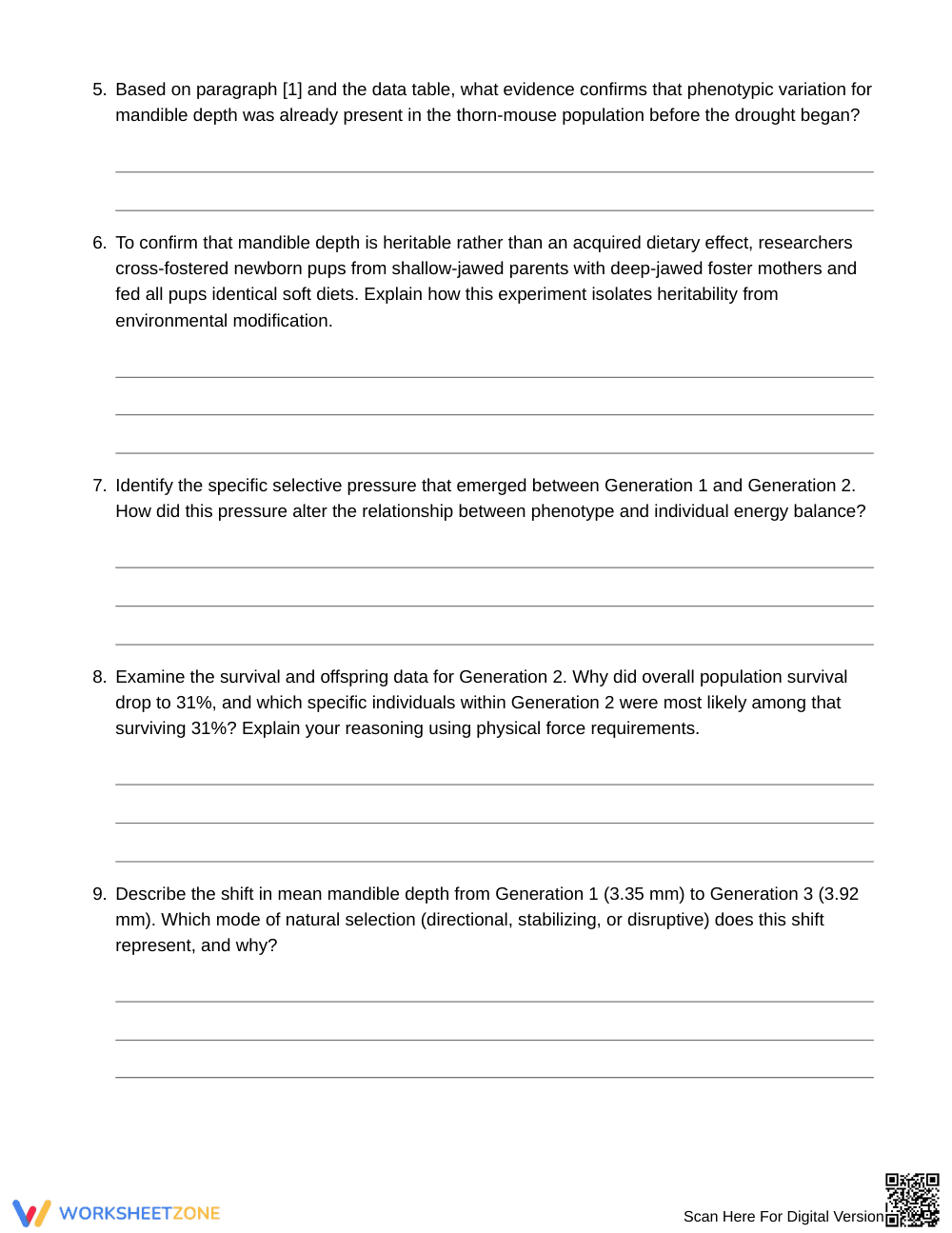
- Supported practice (Tasks 5–10): Guides students through an empirical study of seed thickness and rodent mandible depth, requiring calculation of trait shifts and identification of directional selective pressures.
- Independent practice (Tasks 11–12): Demands open-ended application, challenging learners to evaluate fitness trade-offs during environmental reversals and assess evolutionary stagnation when heritability equals zero.
This structured progression reflects the gradual release of responsibility model, transitioning students from foundational terminology to autonomous scientific reasoning.
Standards Alignment
This resource aligns with high school life science standards that require students to construct explanations based on evidence for how natural selection leads to adaptation in populations. Students evaluate real numerical distributions to demonstrate that natural selection operates on existing genetic variation rather than generating purposeful mutations. Both standard codes can be copied directly into lesson plans, IEP goals, or district curriculum mapping tools.
How to Use It
Deploy this worksheet during the second half of an evolutionary biology unit after introducing differential reproductive success. For a powerful mid-lesson check, inspect student responses to Task 6; checking whether learners grasp that cross-fostering isolates genetic factors from diet reveals if direct intervention is needed before proceeding to the numerical tables. Most high school biology classes complete all three sections within 45 to 60 minutes.
Who It's For
Designed for Grade 9 general and honors biology classrooms, this resource supports students moving beyond rote definitions into authentic quantitative analysis. The embedded reference definitions provide critical access for emerging multilingual learners and students requiring instructional support. Pair this resource with an interactive beak morphology simulation or a population genetics laboratory investigation.
According to Fisher & Frey (2014), establishing clear instructional progression through guided data interpretation accelerates student comprehension of complex scientific mechanisms. When secondary students evaluate synthetic field data involving phenotypic variation and heritability, they build robust mental models that replace persistent Lamarckian misconceptions with valid Darwinian principles. Providing structured data sets paired with systematic predictive prompts enables 9th grade biology learners to grasp how differential reproductive success systematically alters population traits across successive generations. This worksheet translates theoretical natural selection mechanisms into observable mathematical trends, equipping learners to defend claims with quantifiable evidence. Both standard codes can be copied directly into lesson plans, IEP goals, or district curriculum mapping tools.


