


























Views
Plays



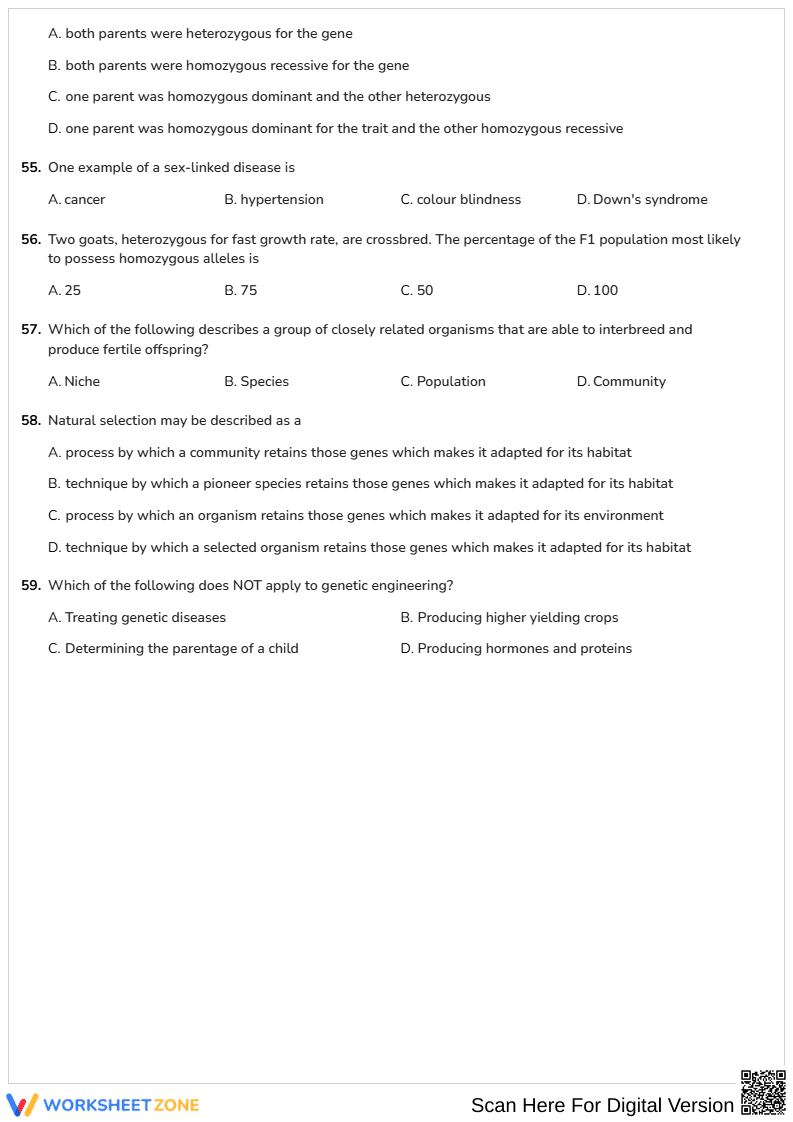

Grade 9-12 Biology Review — Printable No-Prep Worksheet
Paste this activity's link or code into your existing LMS (Google Classroom, Canvas, Teams, Schoology, Moodle, etc.).
Students can open and work on the activity right away, with no student login required.
You'll still be able to track student progress and results from your teacher account.
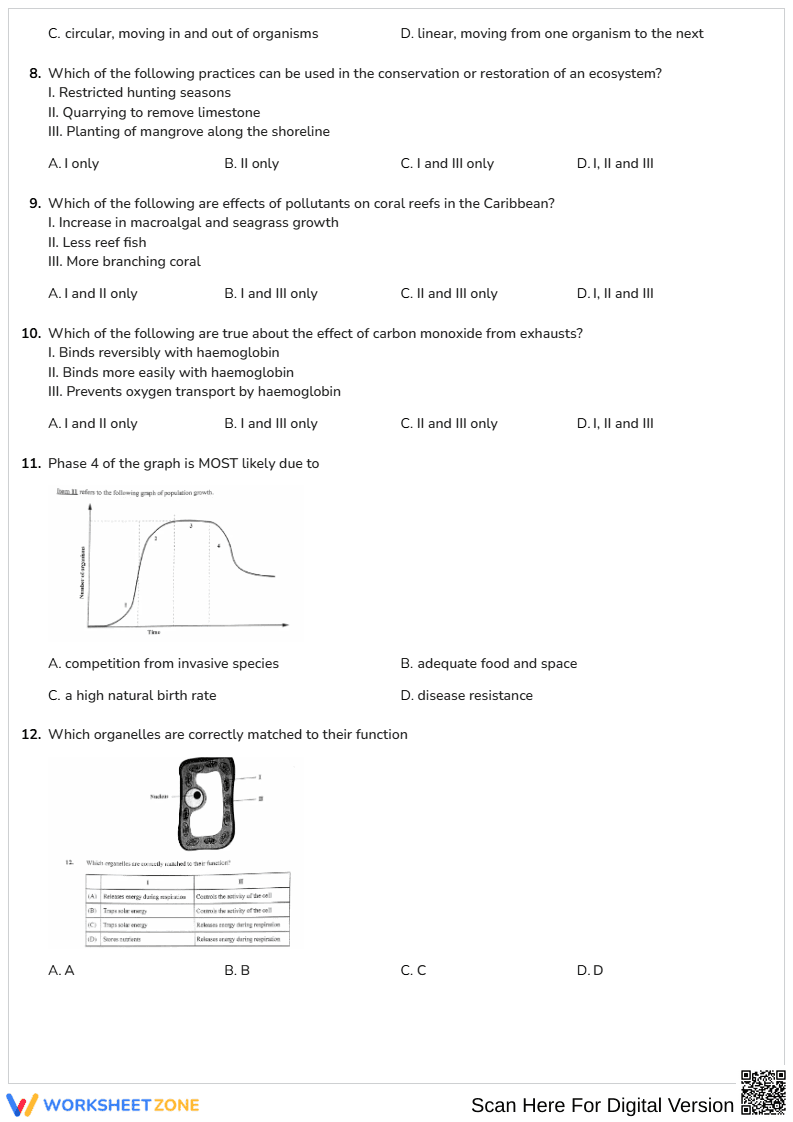
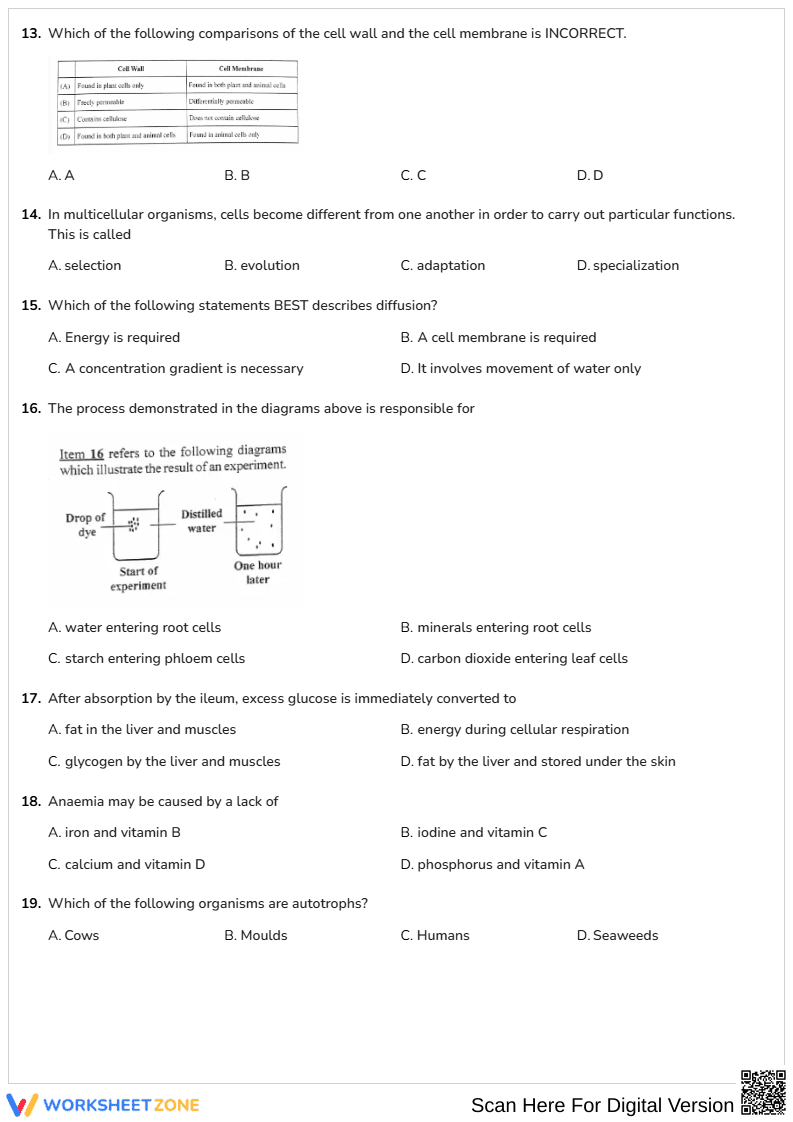
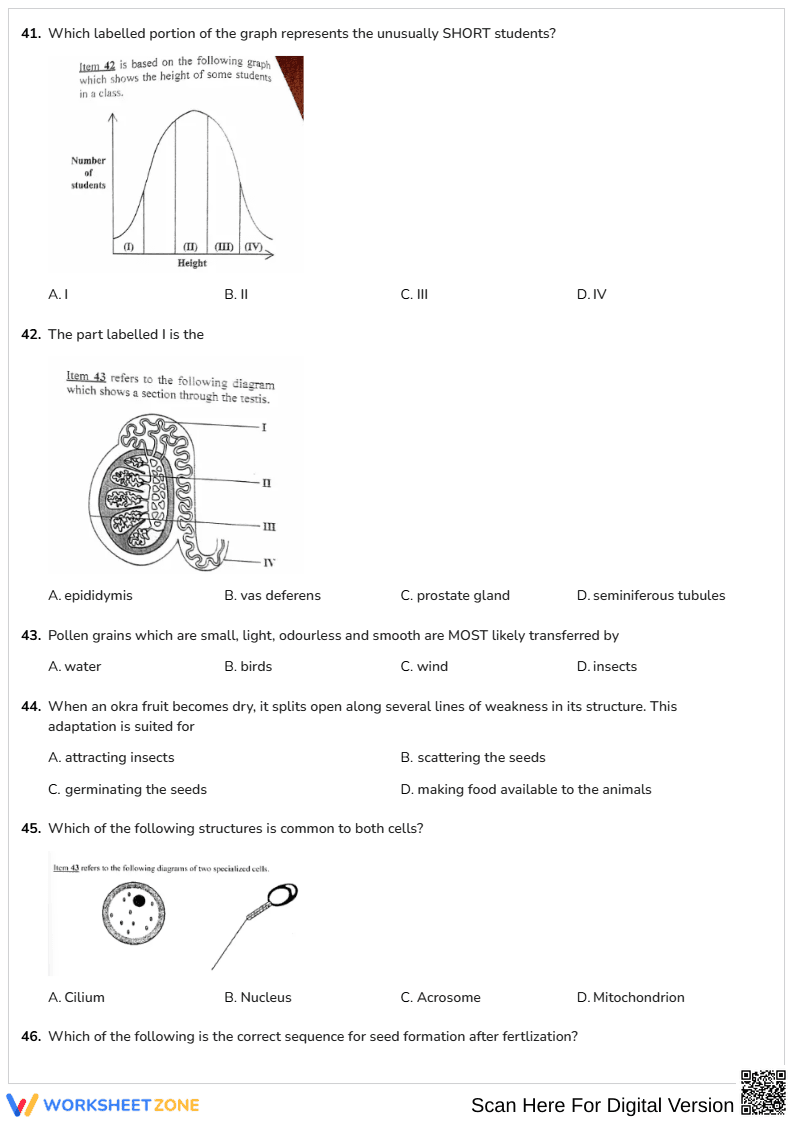
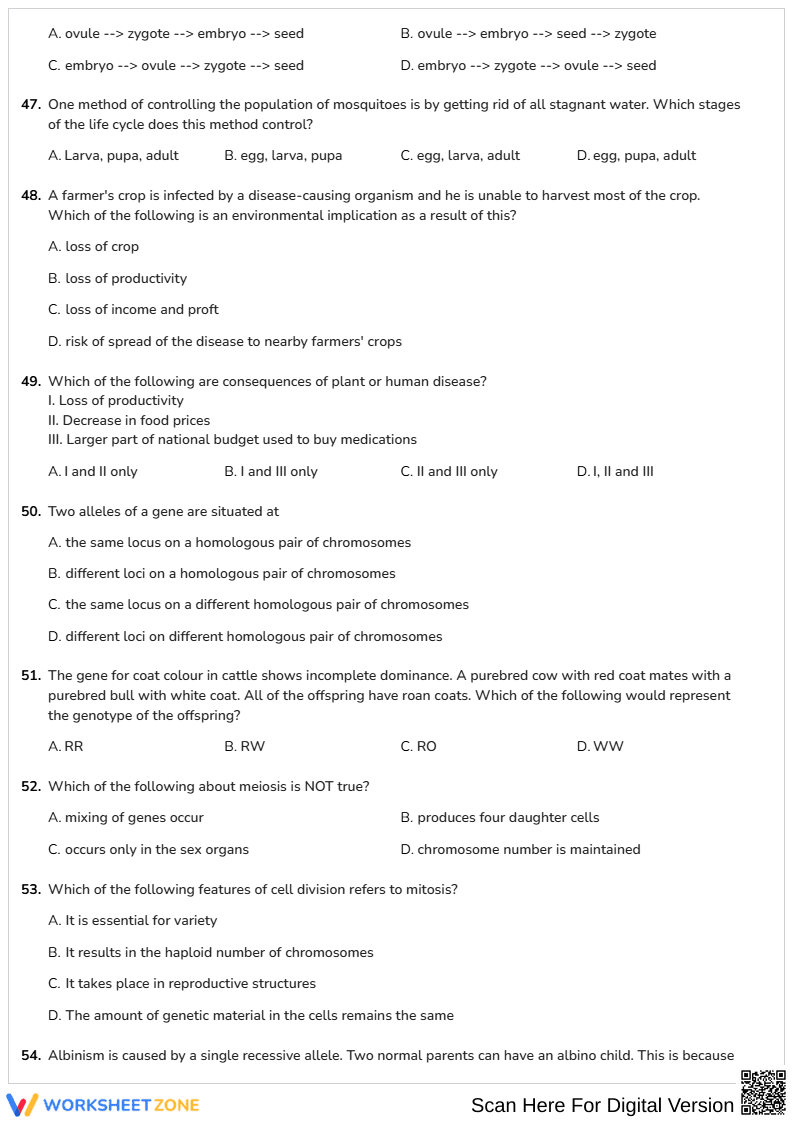
This comprehensive biology review worksheet provides high school students with extensive practice across core life science topics. By tackling these multiple-choice questions, learners will solidify their understanding of cellular processes, ecology, human body systems, and genetics, ensuring they are fully prepared for end-of-year assessments and advanced coursework.
At a Glance
- Grade: 9-12 · Subject: Science
- Standard:
HS-LS1-2— Illustrate the hierarchical organization of interacting systems- Skill Focus: Biology Core Concepts
- Format: 10 pages · 59 problems · PDF
- Best For: End-of-unit review or test prep
- Time: 60–90 minutes
This extensive 10-page assessment features 59 carefully structured multiple-choice problems. The task types range from interpreting ecological food webs and cellular diagrams to analyzing genetic inheritance and human physiological responses. Students will encounter visual stimuli, data tables, and experimental setups that require critical thinking and application of biological principles across various domains of life science.
Implementing this assessment is incredibly straightforward. Print the 10-page packet (approx. 1 minute), distribute it to your high school students (1 minute), and review the instructions (2 minutes). Total teacher prep time is under 5 minutes. Because the formatting is clean and self-explanatory, this resource is highly suitable for a multi-day sub plan or independent study packet.
Aligned to HS-LS1-2: Develop and use a model to illustrate the hierarchical organization of interacting systems that provide specific functions within multicellular organisms. It also supports broader NGSS life science goals by integrating crosscutting concepts like energy flow and structure-function relationships. Both standard codes can be copied directly into lesson plans, IEP goals, or district curriculum mapping tools.
This resource is highly versatile for high school science classrooms. Use it as a comprehensive summative assessment after completing major biology units, or deploy it as a diagnostic tool at the beginning of an AP Biology course to gauge baseline knowledge. While students work, teachers can observe which specific domains require reteaching. Expected completion time is 60 to 90 minutes.
This material is designed for general biology, honors biology, and environmental science students in grades 9 through 12. For differentiation, teachers can assign specific pages based on the current unit of study rather than the entire packet at once. It pairs excellently with interactive biology anchor charts or a direct instruction lesson on test-taking strategies for science exams.
Aligning instruction with rigorous standards like HS-LS1-2 to illustrate the hierarchical organization of interacting systems is essential for developing scientific literacy in high school classrooms. According to EdReports 2024, high-quality, standards-aligned practice materials significantly improve student retention of complex scientific concepts and better prepare them for advanced academic pursuits. Providing students with diverse question formats, including diagram interpretation, data analysis, and experimental design scenarios, ensures a deeper cognitive engagement with the material. This comprehensive review packet supports these evidence-based practices by offering extensive, varied problem sets that challenge students to apply their knowledge across multiple biological domains. By consistently interacting with high-level questions, learners build the critical thinking skills necessary for success in STEM fields, ultimately fostering a more robust and enduring understanding of the life sciences.


