


























Views
Downloads

Essential Natural Selection Worksheet | Grade 7 Science
Paste this activity's link or code into your existing LMS (Google Classroom, Canvas, Teams, Schoology, Moodle, etc.).
Students can open and work on the activity right away, with no student login required.
You'll still be able to track student progress and results from your teacher account.
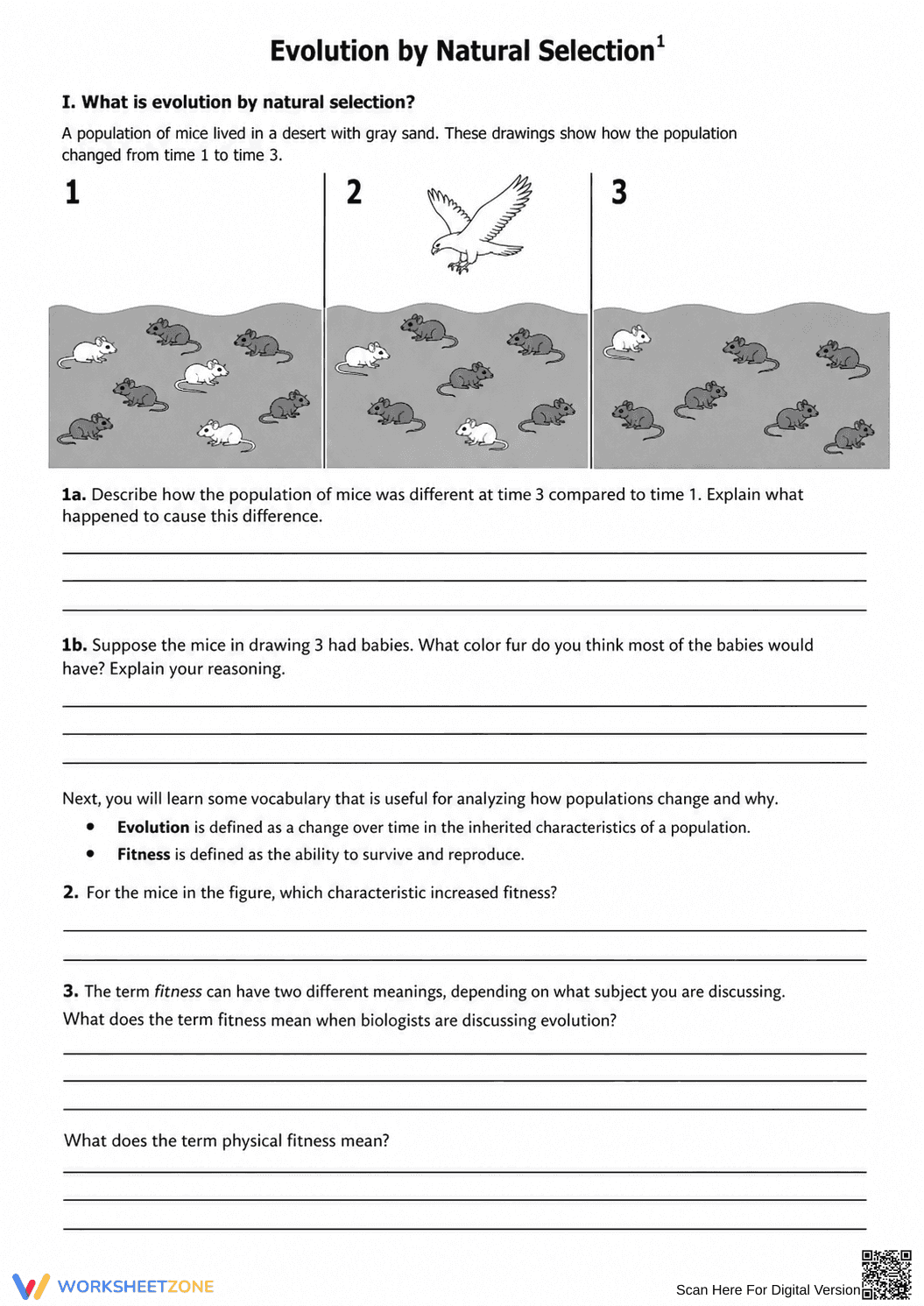
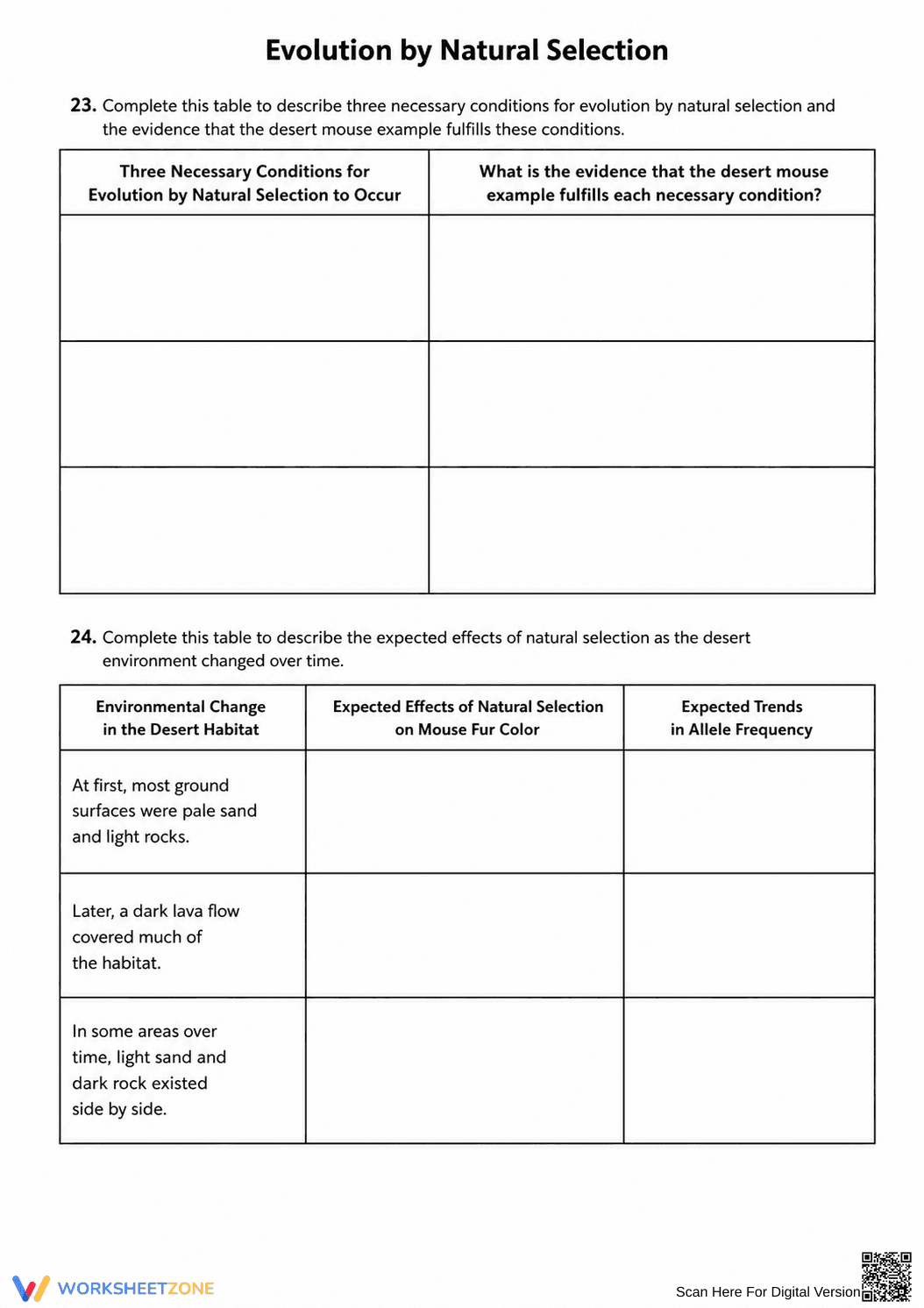
This worksheet guides students through the mechanisms of biological evolution using a concrete desert mouse scenario. Learners observe how environmental pressures drive population shifts in fur color, allowing them to define fitness and adaptation through evidence-based reasoning. It transforms abstract evolutionary concepts into observable, data-driven conclusions for middle school learners.
At a Glance
- Grade: 7 · Subject: Science
- Standard:
MS-LS4-4— Explain how genetic variations increase an individual's probability of surviving and reproducing- Skill Focus: Natural Selection and Adaptation
- Format: 7 pages · 20 problems · Answer key included · PDF
- Best For: Middle school life science units
- Time: 45–60 minutes
What's Inside
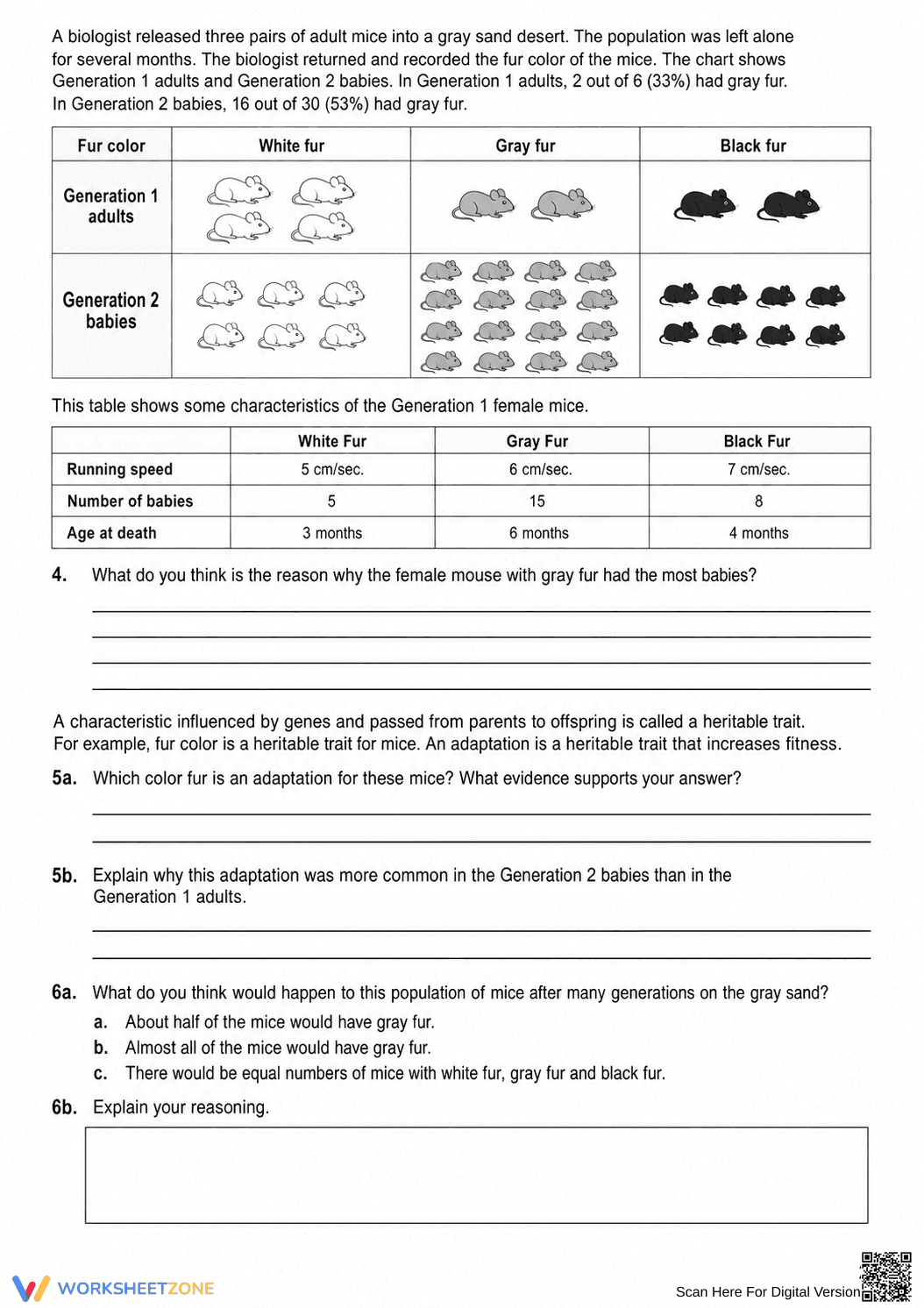
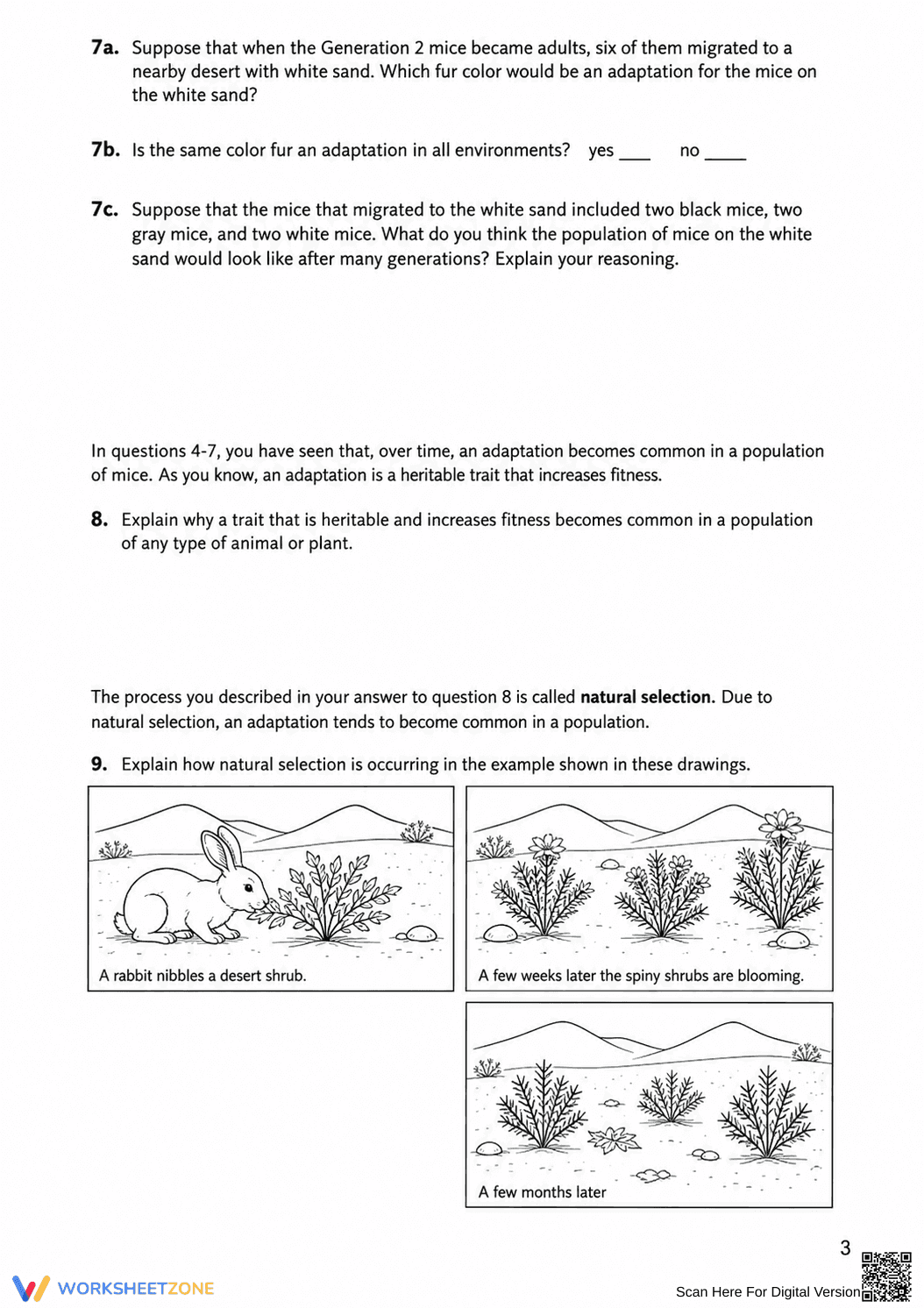
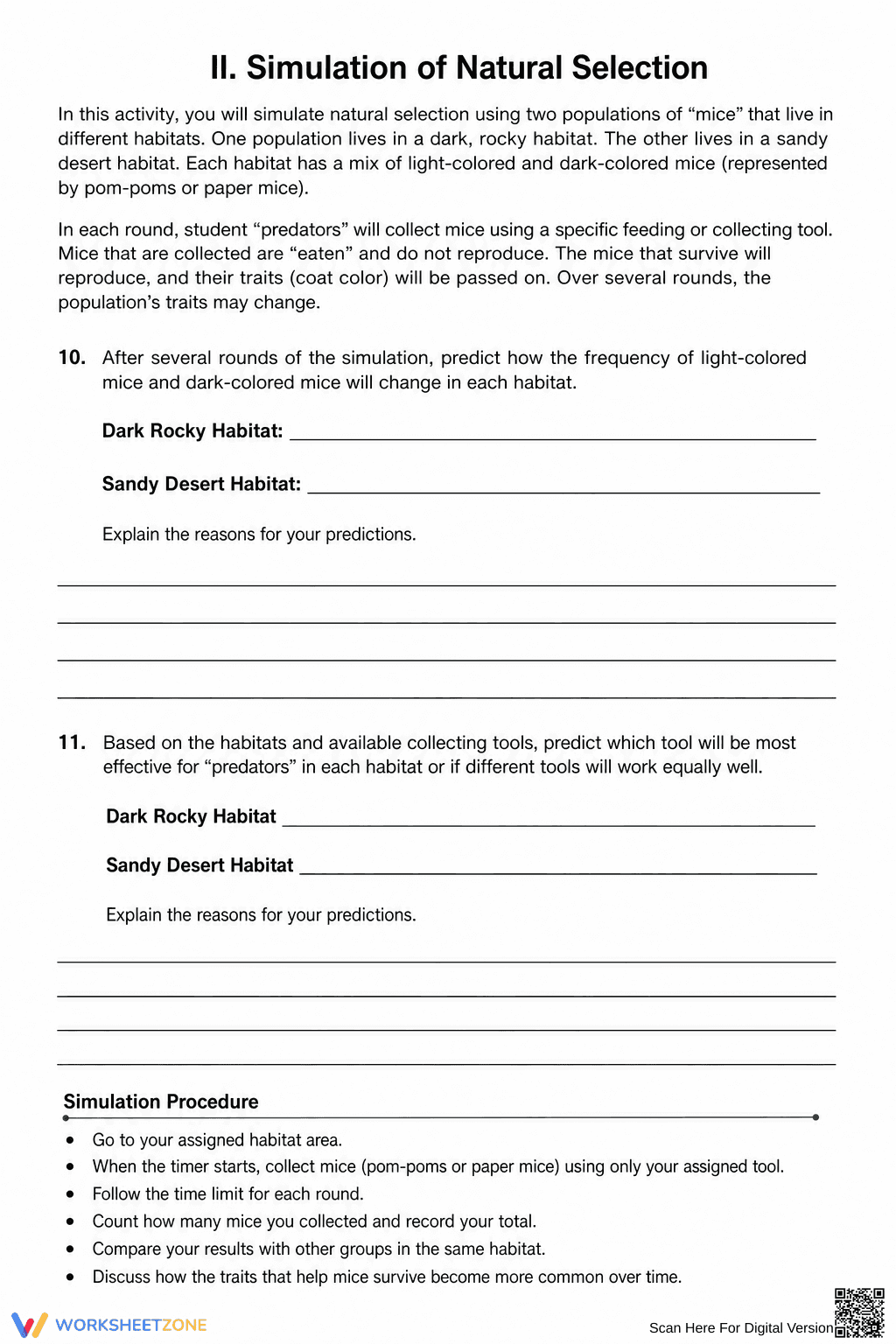
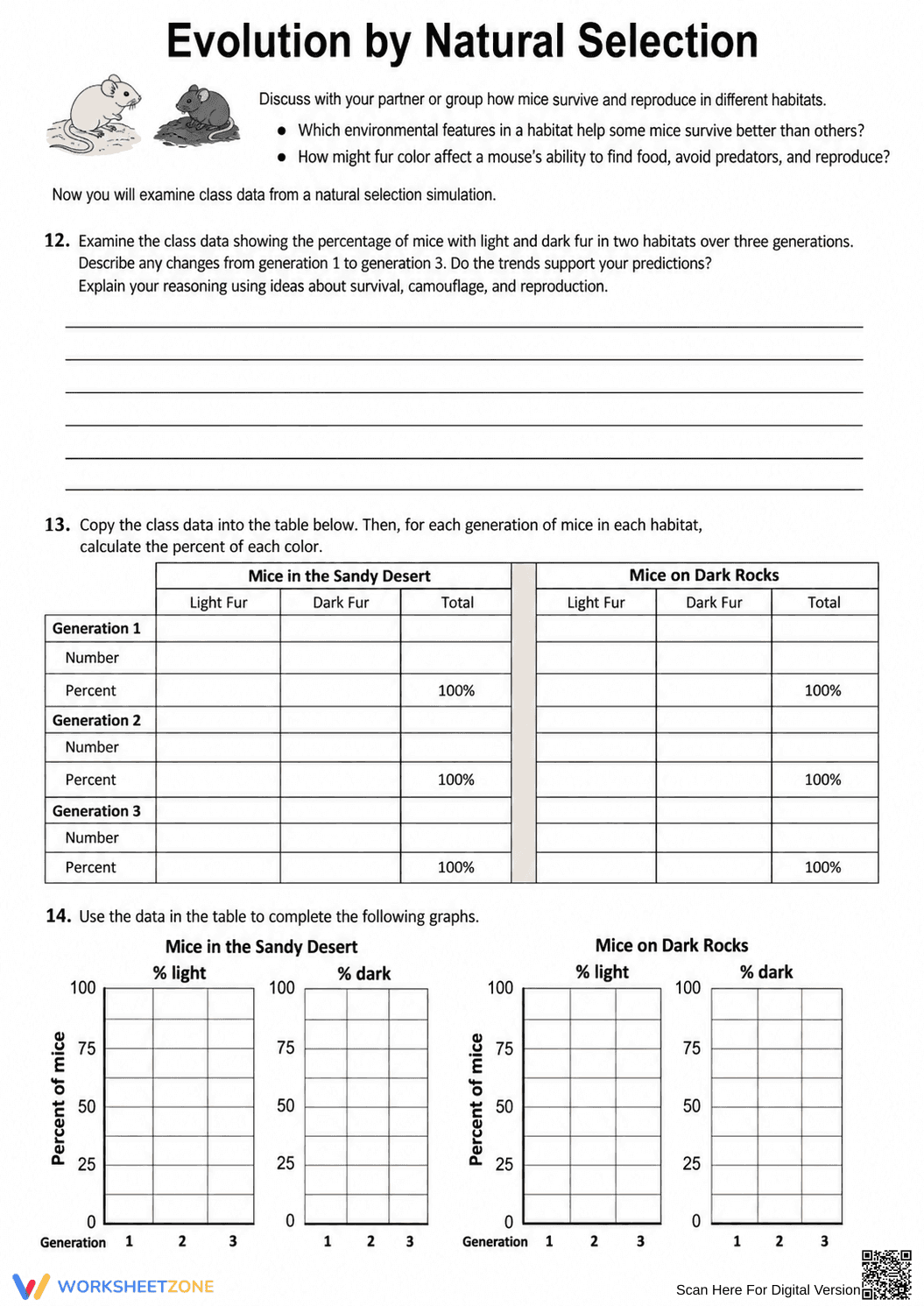
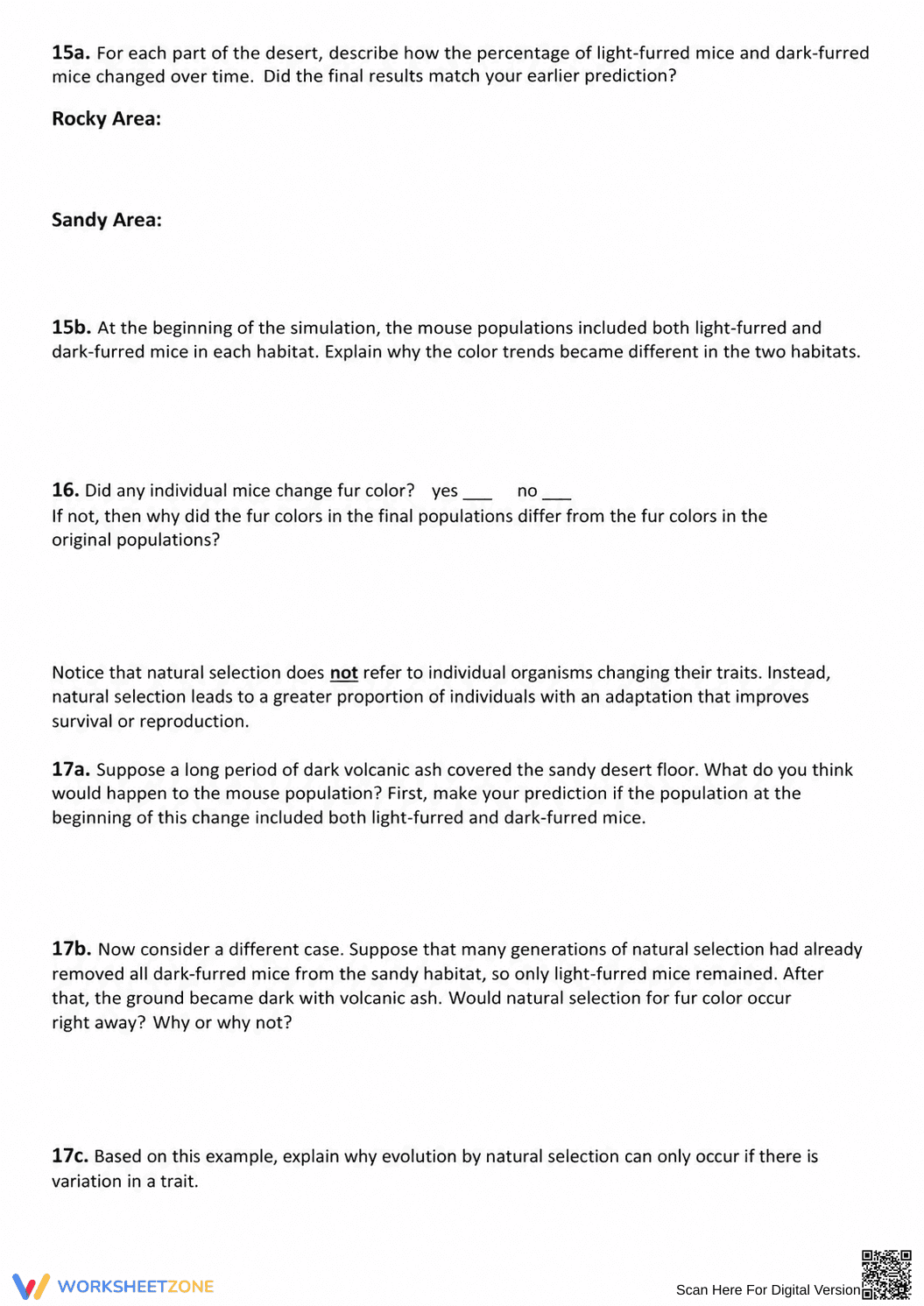
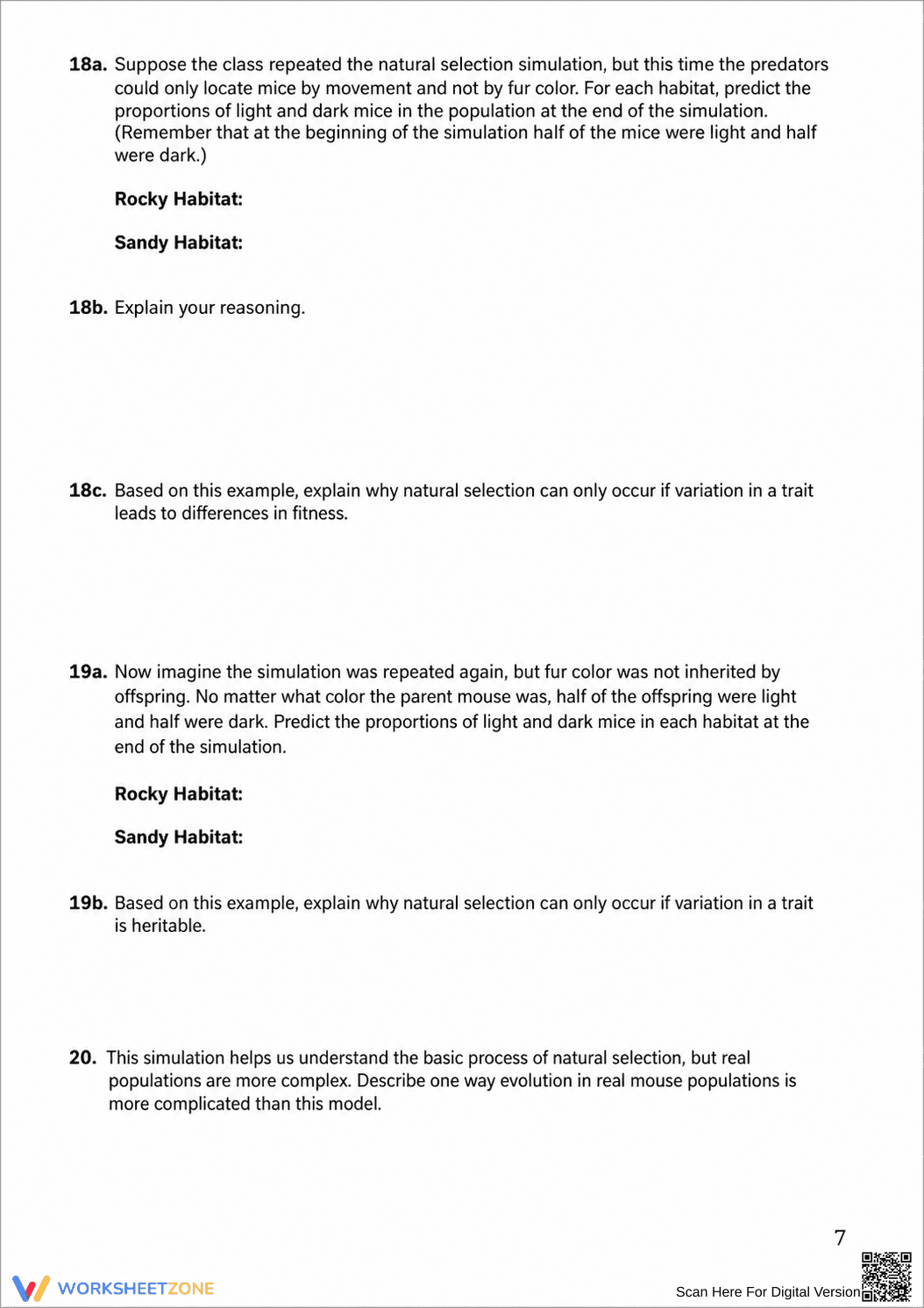
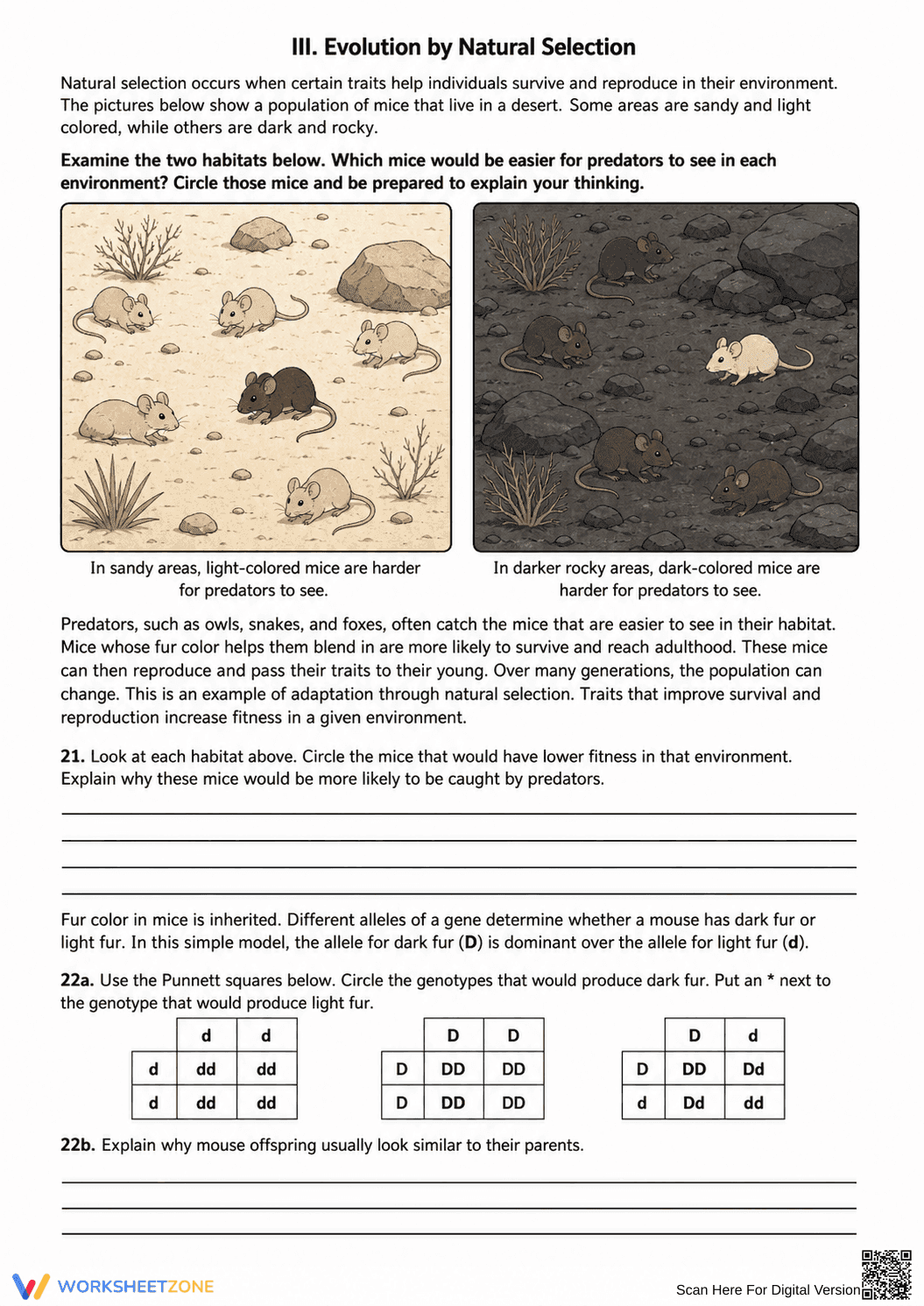
The 7-page PDF contains a comprehensive narrative and simulation guide. It features 20 multi-part questions, visual population diagrams, data tables for recording simulation results, and graphing templates. A dedicated vocabulary section clarifies the biological definitions of fitness and evolution, while the final pages challenge students to predict outcomes in changing environments using logic and evidence.
Skill Progression
- Guided Practice: Students begin with a visual analysis of a mouse population over three time periods, identifying how predators and environment influence survival.
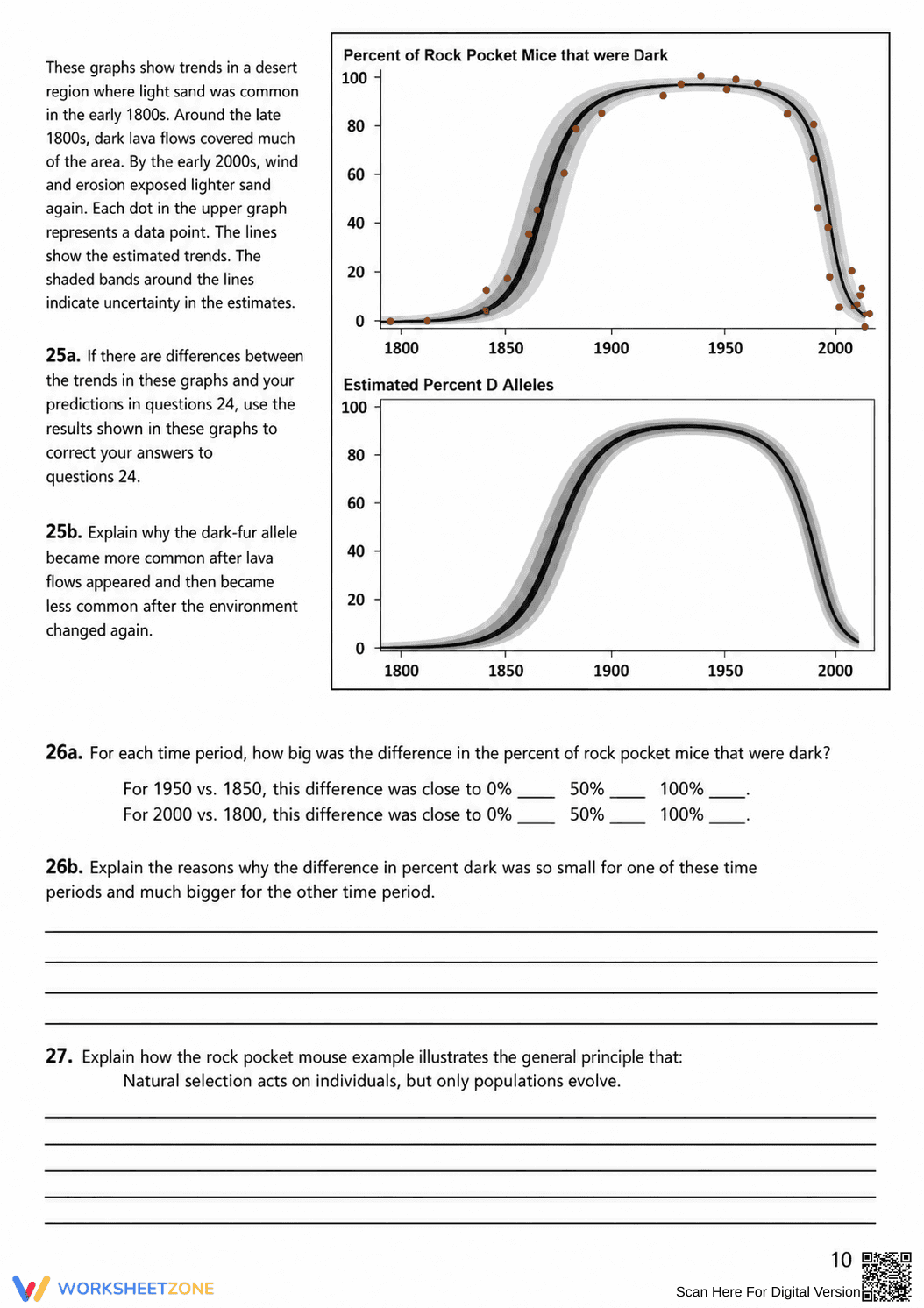
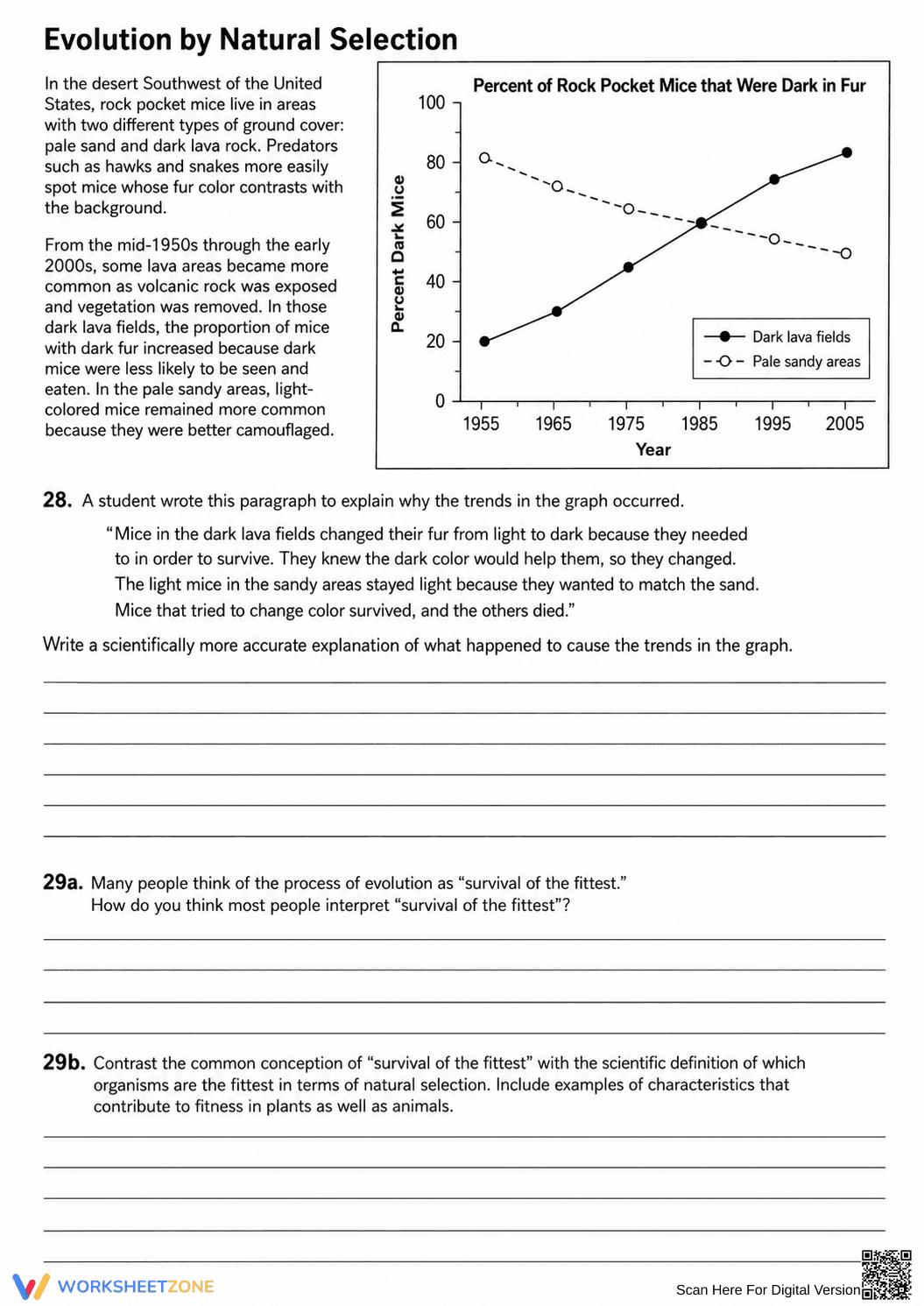
- Supported Practice: Learners engage in data analysis, calculating percentages of traits within a population and creating graphs to visualize evolutionary trends.
- Independent Practice: The final section requires students to apply their knowledge to new scenarios, such as volcanic ash events, to demonstrate mastery of selective pressure.
This sequence follows a gradual-release model, moving from concrete visual observation to abstract scientific prediction.
Standards Alignment
Aligned to `MS-LS4-4`, students construct explanations based on evidence that describes how genetic variations of traits in a population increase some individuals’ probability of surviving and reproducing in a specific environment. This resource also supports literacy in science by integrating quantitative data with visual information. Both standard codes can be copied directly into lesson plans, IEP goals, or district curriculum mapping tools.
How to Use It
Use this as a primary instructional tool during your evolution unit. It works best after an initial lecture on heredity to bridge the gap between individual traits and population changes. For formative assessment, observe students during the graphing phase to ensure they correctly interpret the inverse relationship between predator visibility and survival rates. Expected completion time is 50 minutes.
Who It's For
This resource is designed for Grade 7 life science students but is adaptable for advanced Grade 6 or introductory high school biology. It is particularly effective for visual learners who benefit from the "time-lapse" illustrations. Pair this with a physical simulation or a digital lab for a multi-modal learning experience that reinforces core biological concepts.
According to the RAND AIRS 2024 report on science literacy, structured inquiry-based worksheets that utilize visual modeling significantly improve student retention of complex biological processes like natural selection. This worksheet addresses the MS-LS4-4 standard by requiring students to move beyond rote memorization of definitions to the application of the fitness concept within a dynamic ecosystem. By analyzing 20 specific data points and scenarios, learners develop the scientific reasoning skills necessary for high-stakes assessments. Research from Fisher & Frey (2014) emphasizes that the gradual release of responsibility—moving from guided visual analysis to independent prediction—is essential for mastering abstract scientific theories. This resource provides that scaffolding, ensuring students can articulate how environmental changes influence trait frequency over multiple generations. The inclusion of a simulation procedure further aligns with modern pedagogical shifts toward active, evidence-based science education in middle school classrooms.


