


























0
Views
0
Downloads

0.0
0
Save
0 Likes
Share
Letter P Worksheet: P is for Postcard
0 Views
0 Downloads
Paste this activity's link or code into your existing LMS (Google Classroom, Canvas, Teams, Schoology, Moodle, etc.).
Students can open and work on the activity right away, with no student login required.
You'll still be able to track student progress and results from your teacher account.
Information
Description
What It Is:
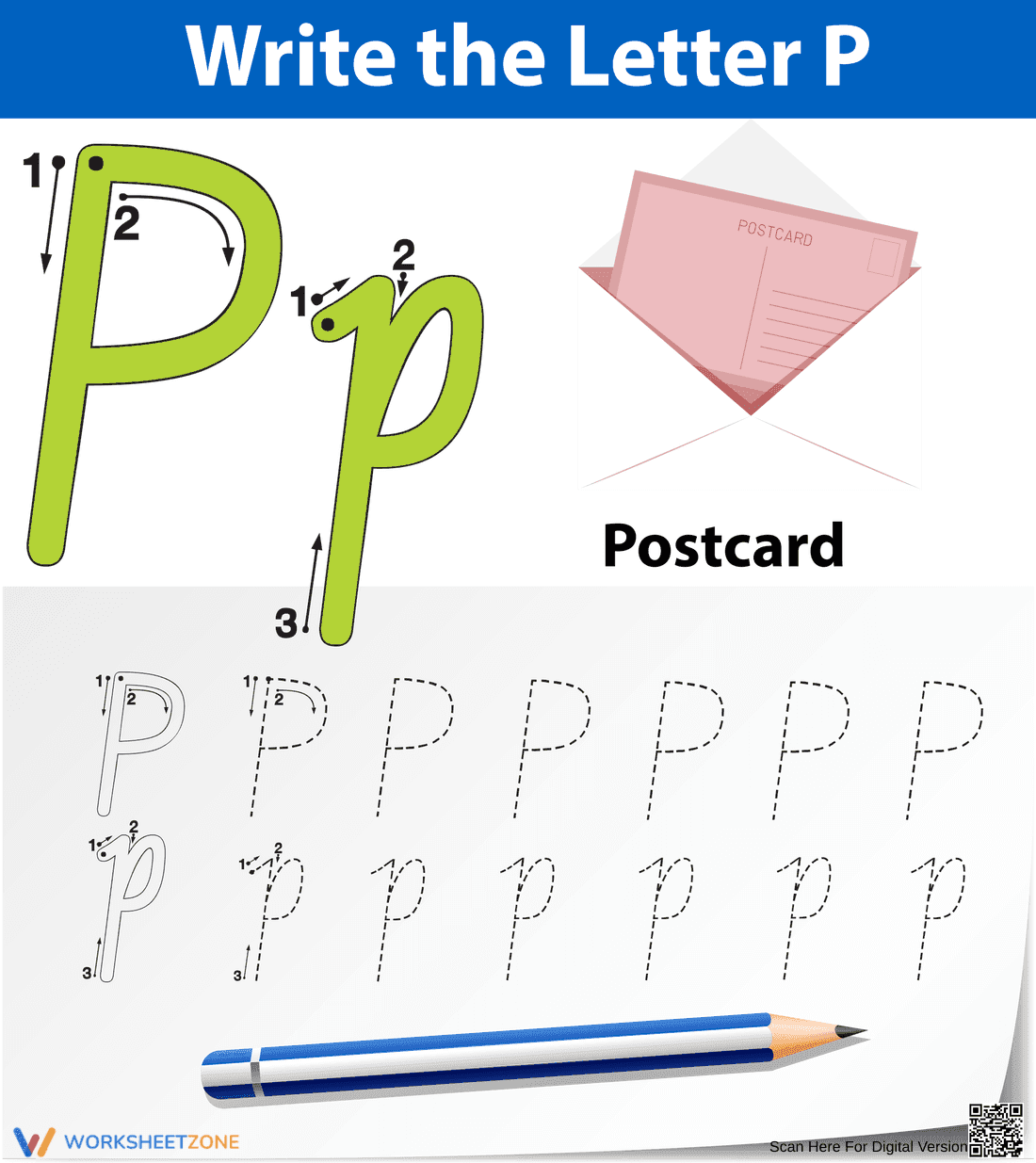
This is a handwriting practice worksheet focusing on the letter 'P'. It features a large, green uppercase 'P' with numbered arrows indicating stroke order, a picture of a postcard, the word 'Postcard,' and rows of dotted uppercase and lowercase 'P's for tracing practice. A pencil is shown at the bottom.
Grade Level Suitability:
Suitable for Preschool and Kindergarten. The worksheet focuses on basic letter formation, which is a key skill for early literacy development in these grades. The visual cues and tracing activities are appropriate for young learners.
Why Use It:
This worksheet helps children learn to correctly form the letter 'P', improving their handwriting skills. It also associates the letter with a familiar object (postcard), aiding in vocabulary building and letter recognition. Tracing promotes fine motor skills and muscle memory.
How to Use It:
Start by showing the child the large 'P' and explaining the stroke order using the numbered arrows. Then, have them trace the dotted 'P's, both uppercase and lowercase, following the lines carefully. Encourage them to say the letter name as they trace. You can also discuss what a postcard is and where it is used.
Target Users:
Preschoolers, kindergartners, and children learning to write the alphabet. It is also helpful for students who need extra practice with letter formation and fine motor skills.
This is a handwriting practice worksheet focusing on the letter 'P'. It features a large, green uppercase 'P' with numbered arrows indicating stroke order, a picture of a postcard, the word 'Postcard,' and rows of dotted uppercase and lowercase 'P's for tracing practice. A pencil is shown at the bottom.
Grade Level Suitability:
Suitable for Preschool and Kindergarten. The worksheet focuses on basic letter formation, which is a key skill for early literacy development in these grades. The visual cues and tracing activities are appropriate for young learners.
Why Use It:
This worksheet helps children learn to correctly form the letter 'P', improving their handwriting skills. It also associates the letter with a familiar object (postcard), aiding in vocabulary building and letter recognition. Tracing promotes fine motor skills and muscle memory.
How to Use It:
Start by showing the child the large 'P' and explaining the stroke order using the numbered arrows. Then, have them trace the dotted 'P's, both uppercase and lowercase, following the lines carefully. Encourage them to say the letter name as they trace. You can also discuss what a postcard is and where it is used.
Target Users:
Preschoolers, kindergartners, and children learning to write the alphabet. It is also helpful for students who need extra practice with letter formation and fine motor skills.


