


























Views
Downloads

Letter P Tracing Worksheet | Essential Kindergarten ELA
Paste this activity's link or code into your existing LMS (Google Classroom, Canvas, Teams, Schoology, Moodle, etc.).
Students can open and work on the activity right away, with no student login required.
You'll still be able to track student progress and results from your teacher account.
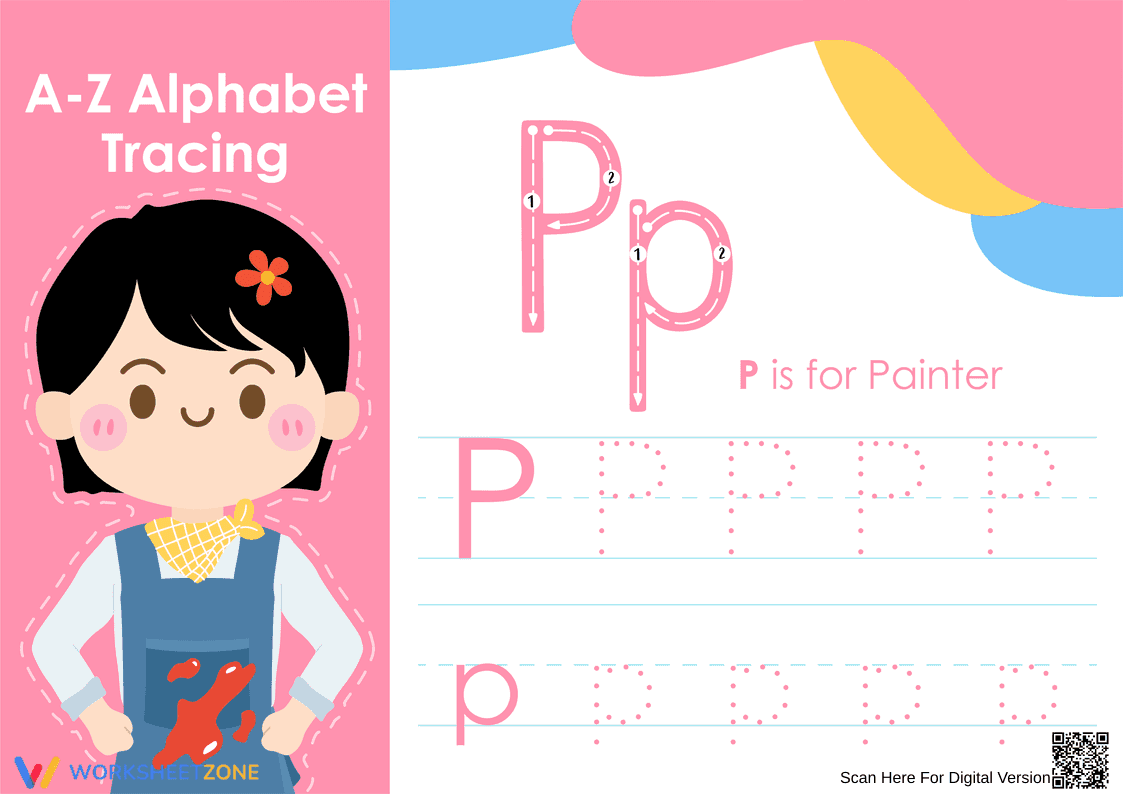
Help your early learners master the mechanics of handwriting with this focused Letter P tracing worksheet. This resource provides a clear, structured path for students to transition from simple letter recognition to confident penmanship. By focusing specifically on the letter P, students can dedicate their full attention to the unique curves and vertical strokes required for both uppercase and lowercase forms.
At a Glance
- Grade: Kindergarten · Subject: ELA
- Standard:
CCSS.ELA-LITERACY.RF.K.1.D— Recognize and name all upper- and lowercase letters of the alphabet- Skill Focus: Letter P formation
- Format: 1 page · 12 tasks · Answer key included · PDF
- Best For: Early literacy centers and morning work
- Time: 10–15 minutes
What's Inside
This single-page PDF features a comprehensive layout designed for young hands. It includes two large demonstration letters with numbered stroke guides to show the correct sequence of movements. Below the demonstration area, students will find two rows of primary-ruled lines containing 10 dotted tracing tasks. A friendly "P is for Painter" illustration provides a phonemic connection, while the clean design prevents visual overstimulation.
Skill Progression
- Guided Practice: Students begin by tracing the large, numbered models at the top of the page, which establish the correct top-to-bottom and clockwise stroke order for the letter P.
- Supported Practice: The worksheet provides 5 uppercase and 5 lowercase dotted templates on ruled lines, helping students manage letter height and baseline placement.
- Independent Practice: The final section of each row leaves space for students to attempt the letter without a dotted guide, reinforcing motor memory.
This sequence follows the proven gradual-release model of instruction, moving students from high-support modeling to independent execution.
Standards Alignment
This resource aligns with `CCSS.ELA-LITERACY.RF.K.1.D`, requiring students to recognize and name upper- and lowercase letters. By physically constructing the letter, students deepen orthographic awareness and letter-name recall. This code can be integrated directly into lesson plans or IEP goals.
How to Use It
This worksheet is ideal for use during the "You Do" phase of a direct instruction lesson. Assign it as a quiet morning work activity or place it in a literacy center with dry-erase sleeves for repeated use. Teachers should observe students during the first few tasks to ensure they follow the numbered stroke order rather than drawing from the bottom up. Completion typically takes 10 to 15 minutes.
Who It's For
This resource is designed for preschool and kindergarten students beginning their formal handwriting journey. It is particularly effective for students requiring fine motor intervention or English Language Learners who need clear visual cues for letter formation. Pair this worksheet with a letter P anchor chart or a phonics song to create a multi-sensory learning experience.
According to the RAND AIRS 2024 report, explicit instruction in letter formation is a critical predictor of future reading fluency. This worksheet aligns with CCSS.ELA-LITERACY.RF.K.1.D by providing structured practice for the letter P. By integrating visual cues with tactile tracing, students develop the orthographic mapping necessary for rapid recognition. Research from Fisher & Frey (2014) emphasizes the gradual release of responsibility, mirrored here through the transition from numbered guides to independent tracing. Consistent use of these resources ensures that preschool and kindergarten students build the fine motor control and phonemic awareness required for decoding in later grades.


