


























Views
Downloads



Alphabet Tracing A-D Worksheet | Kindergarten Printable
Paste this activity's link or code into your existing LMS (Google Classroom, Canvas, Teams, Schoology, Moodle, etc.).
Students can open and work on the activity right away, with no student login required.
You'll still be able to track student progress and results from your teacher account.
This comprehensive Kindergarten alphabet tracing worksheet provides focused handwriting practice for letters A through D. Students will develop fine motor skills and letter recognition by tracing uppercase and lowercase letters, writing simple words, and completing engaging review activities. Print this resource to build foundational literacy skills.
At a Glance
- Grade: K · Subject: English
- Standard:
CCSS.ELA-LITERACY.L.K.1.A— Print many upper- and lowercase letters- Skill Focus: Alphabet tracing and letter recognition (A-D)
- Format: 5 pages · 7 tasks · No prep required · PDF
- Best For: Independent practice and literacy centers
- Time: 15–20 minutes
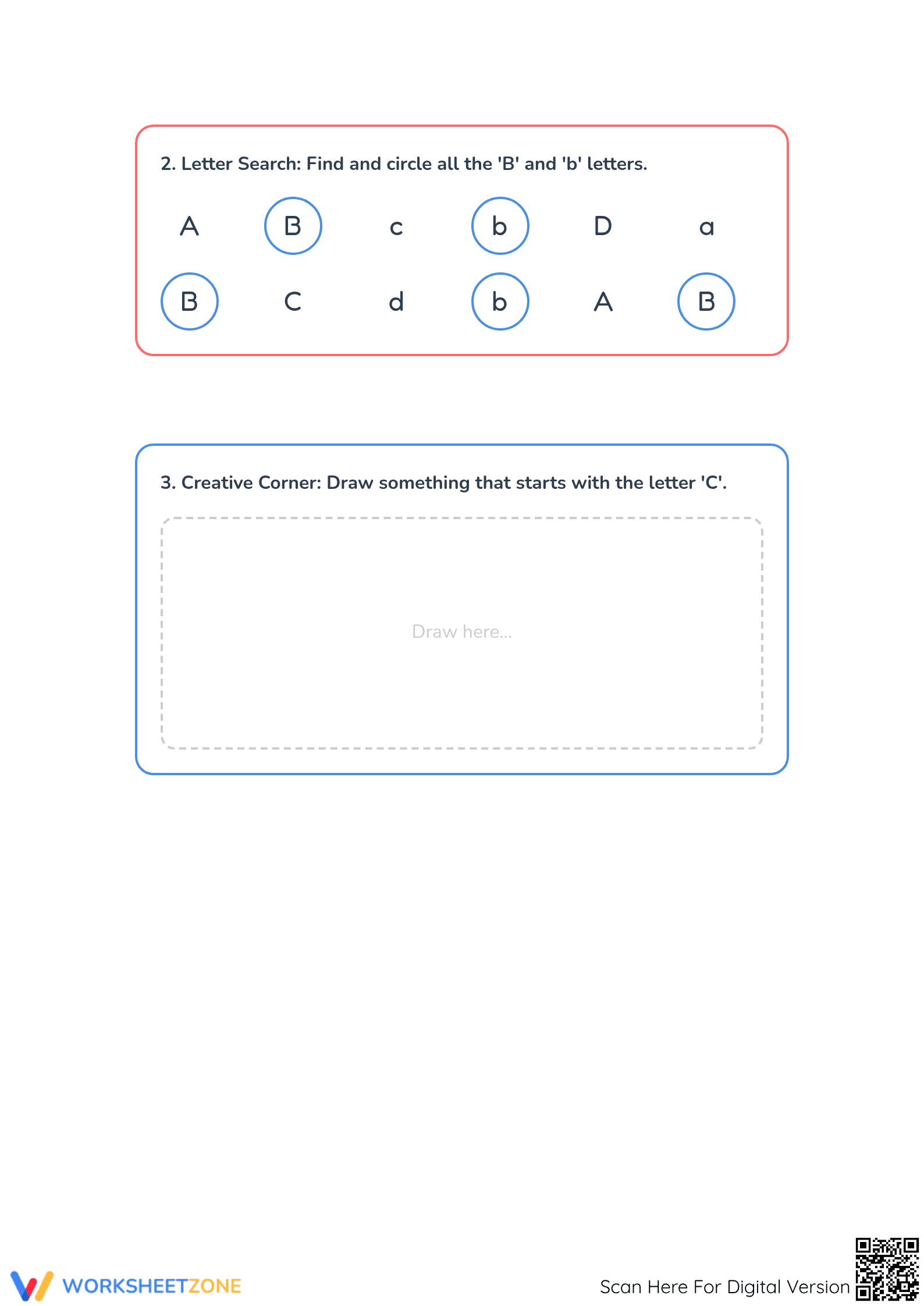
This five-page packet includes dedicated practice pages for the letters A, B, C, and D. Each letter page features guided tracing lines for both uppercase and lowercase forms, followed by a traceable vocabulary word (Apple, Ball, Cat, Dog) to reinforce beginning sounds. The final page includes three review activities: a picture-to-letter matching game, a visual letter search for the letter B, and a creative drawing corner to apply their knowledge.
Skill Progression
- Guided practice: Students begin by tracing uppercase and lowercase letters on dashed lines with clear starting points, building muscle memory.
- Supported practice: Learners trace complete words associated with each letter, connecting the physical act of writing to basic phonics and vocabulary.
- Independent practice: The final review page challenges students to independently match letters to pictures, visually discriminate between letters in a search, and draw a picture starting with C.
This gradual-release approach ensures students build confidence as they move from structured tracing to independent application.
Standards Alignment
This resource is aligned to primary standard CCSS.ELA-LITERACY.L.K.1.A: Print many upper- and lowercase letters. It also supports foundational phonics skills by associating letters with their primary sounds. Both standard codes can be copied directly into lesson plans, IEP goals, or district curriculum mapping tools.
How to Use It
Use this packet during morning work or as a dedicated literacy center activity after introducing the first four letters of the alphabet. As students work, observe their pencil grip and stroke direction to provide immediate corrective feedback. The five-page format allows you to assign one letter per day, culminating in the review activities on Friday. Expected completion time is 15 to 20 minutes per session.
Who It's For
This worksheet is designed for Kindergarten students developing early handwriting and letter recognition skills. It is also highly effective for preschool students ready for structured writing or first graders needing remediation. Pair this packet with an alphabet anchor chart or a read-aloud focusing on beginning sounds to reinforce the connection between written letters and spoken words.
Developing automaticity in handwriting is a critical component of early literacy instruction. When students practice with targeted resources aligned to CCSS.ELA-LITERACY.L.K.1.A to print many upper- and lowercase letters, they reduce the cognitive load required for physical writing. This frees up mental resources for higher-order tasks like spelling, reading comprehension, and composition. According to Fisher & Frey (2014), structured, gradual-release practice is essential for moving students from guided instruction to independent mastery. This alphabet tracing packet provides exactly that progression, starting with heavily scaffolded dashed lines and moving toward independent letter identification and creative drawing. By integrating fine motor practice with basic phonics and visual discrimination tasks, educators can ensure young learners build a robust foundation for future reading and writing success. This evidence-based approach supports comprehensive early childhood literacy development across diverse classroom settings.


