


























Views
Downloads
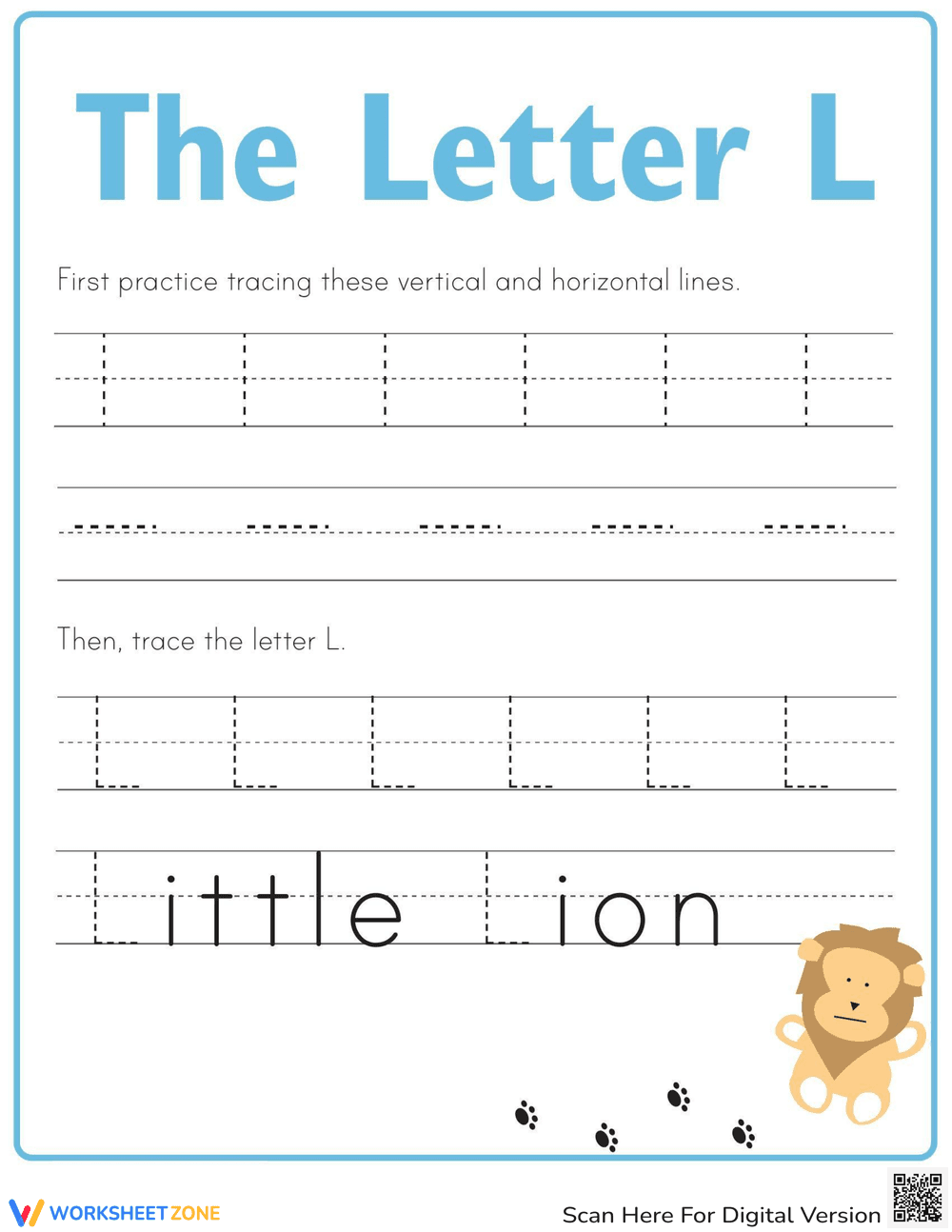

Letter L Tracing Worksheet | Printable Kindergarten PDF
Paste this activity's link or code into your existing LMS (Google Classroom, Canvas, Teams, Schoology, Moodle, etc.).
Students can open and work on the activity right away, with no student login required.
You'll still be able to track student progress and results from your teacher account.
This printable handwriting worksheet helps early learners master the letter L through structured tracing exercises. Students build fine motor control by practicing basic vertical and horizontal strokes before progressing to letter formation and complete words. This resource ensures young writers develop proper pencil grip and stroke sequence.
At a Glance
- Grade: Kindergarten · Subject: ELA
- Standard:
CCSS.ELA-LITERACY.L.K.1.A— Print uppercase and lowercase letters- Skill Focus: Letter L formation and word tracing
- Format: 1 page · 3 tasks · No answer key · PDF
- Best For: Independent morning work or writing centers
- Time: 10–15 minutes
What's Inside
This single-page PDF contains three practice zones designed for developmental progression. The top section provides dashed guidelines for tracing individual vertical and horizontal lines, establishing the foundational strokes needed for the target letter. The middle section transitions students to tracing the letter L itself on primary writing lines. The final section challenges learners to write the complete phrase "Little Lion," applying their letter formation skills to lowercase letters and word spacing.
Zero-Prep Workflow
Teachers can implement this handwriting resource with a simple three-step workflow. First, print the single-page PDF document, which takes less than 1 minute. Second, distribute the sheets to students during morning arrival or writing centers, requiring zero additional materials besides pencils. Third, review student progress by observing pencil grip and stroke direction during independent work, taking under 2 minutes of total teacher preparation time. This layout makes it an ideal option for emergency sub plans.
Standards Alignment
This activity aligns directly with the Common Core State Standard CCSS.ELA-LITERACY.L.K.1.A, which requires kindergarten students to print upper- and lowercase letters. By scaffolding the writing process from basic strokes to full words, the worksheet supports the motor planning required for letter legibility. Both standard codes can be copied directly into lesson plans, IEP goals, or district curriculum mapping tools.
How to Use It
Use this worksheet during the independent practice portion of a handwriting lesson to reinforce letter formation. Alternatively, assign it as a quiet morning work activity. While students work, walk around the room to observe their stroke order, noting if they draw the vertical line of the letter L from top to bottom. Most kindergarten students will complete the page within 10 to 15 minutes.
Who It's For
This resource is designed for kindergarten and first-grade students learning letter shapes and refining fine motor skills. It serves as an excellent intervention tool for older students struggling with letter orientation. Pair this worksheet with a letter L phonics read-aloud book or an anchor chart showing stroke directions to provide visual support for struggling writers.
This early literacy worksheet targets the foundational handwriting skills outlined in CCSS.ELA-LITERACY.L.K.1.A, focusing on the plain-English skill of printing uppercase and lowercase letters. According to research from Fisher & Frey (2014) on the gradual release of responsibility, scaffolding instruction from simple strokes to complex words helps young learners build cognitive schemas for motor tasks. By breaking down the letter L into its component vertical and horizontal lines before introducing the full letter and word context, this resource reduces cognitive load. The structured layout provides the repetitive, guided practice necessary to transition handwriting from conscious effort to automatic execution. Educators can utilize this structured approach to support fine motor development in early childhood classrooms, ensuring students establish the physical mechanics required for fluent writing. This systematic progression ensures that learners build confidence as they transition from isolated strokes to complete words.


