




























Views
Downloads
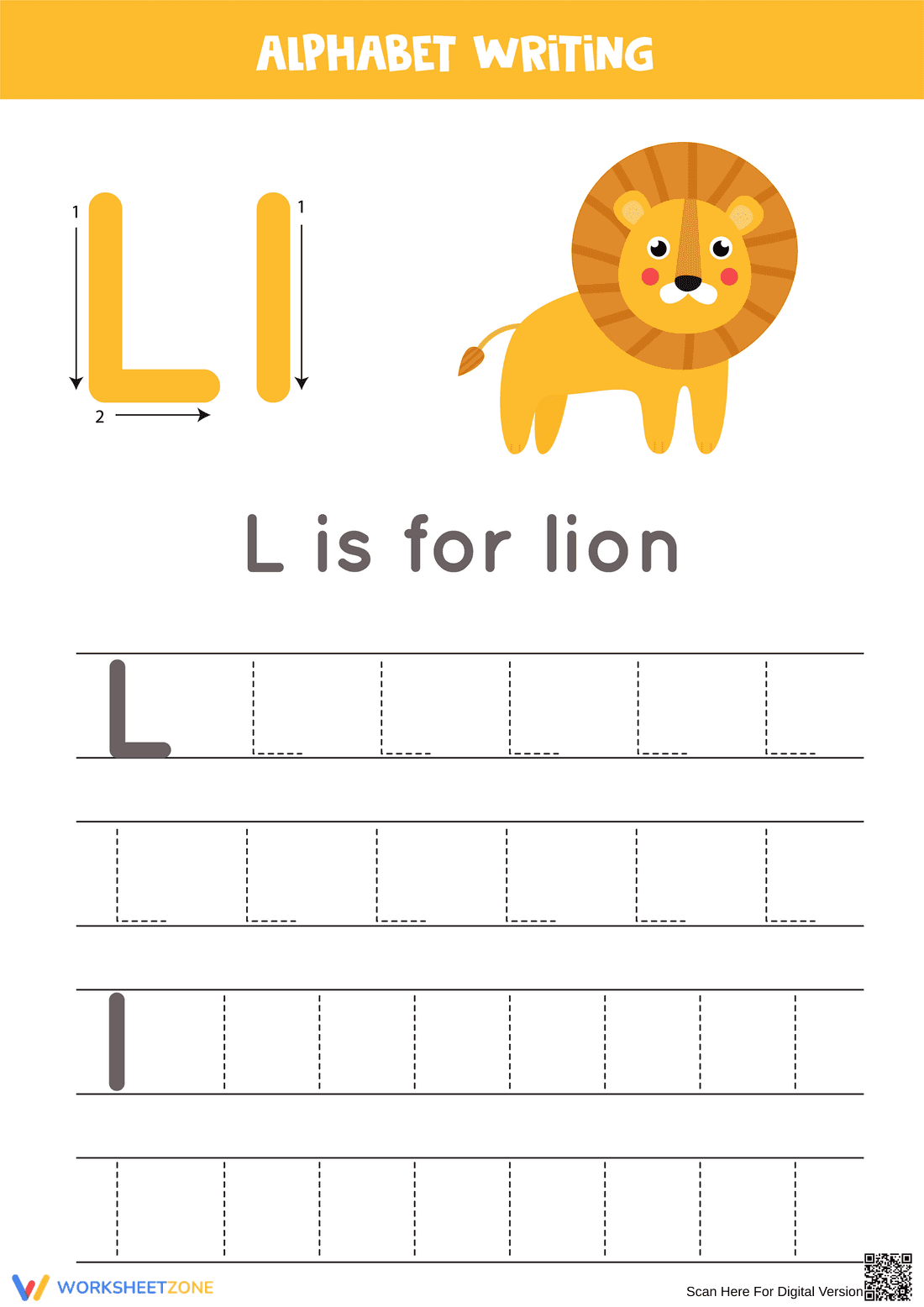

Letter L Writing Worksheet | Essential Grade K Practice

Paste this activity's link or code into your existing LMS (Google Classroom, Canvas, Teams, Schoology, Moodle, etc.).
Students can open and work on the activity right away, with no student login required.
You'll still be able to track student progress and results from your teacher account.
This letter L writing worksheet provides early learners with a structured environment to master uppercase and lowercase letter formation. By focusing on the specific mechanics of the letter L, students develop the muscle memory and fine motor control necessary for legible handwriting. This resource ensures students can confidently identify and produce the letter in various contexts.
At a Glance
- Grade: Kindergarten · Subject: ELA
- Standard:
CCSS.ELA-LITERACY.L.K.1.A— Print many upper- and lowercase letters correctly- Skill Focus: Letter L Formation
- Format: 1 page · 24 tasks · No-prep · PDF
- Best For: Independent literacy centers and morning work
- Time: 10–15 minutes
The worksheet features a clear, visual layout designed for young students. It includes a large "L is for lion" illustration to reinforce phonemic awareness. The page contains four distinct rows of tracing practice: two rows dedicated to uppercase 'L' and two rows for lowercase 'l'. Each row provides 6 tracing opportunities, totaling 24 practice points. Visual stroke order guides at the top help students understand where to begin their pencil movements.
This resource is designed for immediate classroom implementation with a total teacher prep time of under 2 minutes. First, print the single-page PDF for your entire class or small group. Second, distribute the sheets along with pencils or crayons during your literacy block. Finally, review student progress by checking for proper stroke direction and alignment within the provided lines. It serves as an ideal sub-plan component due to its self-explanatory nature.
This activity is directly aligned with CCSS.ELA-LITERACY.L.K.1.A, which requires students to print many upper- and lowercase letters. By isolating the letter L, the worksheet allows for targeted intervention and mastery before moving on to more complex letter combinations. Both standard codes can be copied directly into lesson plans, IEP goals, or district curriculum mapping tools.
Use this worksheet as a formative assessment tool during the "You Do" phase of a gradual release lesson. Observe students as they trace to ensure they are following the numbered stroke guides rather than drawing the letters haphazardly. It also works well as a quiet-time activity for students who finish other tasks early. Most students will complete the 24 tasks within 10 to 15 minutes.
This resource is specifically tailored for Preschool, Kindergarten, and Grade 1 students who are in the emergent writing stage. It is particularly helpful for students requiring fine motor support or English Language Learners (ELLs) who are familiarizing themselves with the Roman alphabet. Pair this worksheet with a letter L anchor chart or a read-aloud book featuring "L" words to strengthen the connection between sound and symbol.
According to research by Fisher & Frey (2014) regarding the gradual release of responsibility, structured practice like letter tracing provides the necessary scaffolding for students to move from guided instruction to independent mastery. This worksheet addresses the foundational requirements of CCSS.ELA-LITERACY.L.K.1.A by providing 24 repetitions of the letter L in both its upper and lowercase forms. Repetitive tracing is a proven method for developing the graphomotor skills required for early literacy success. By integrating visual cues like the lion illustration, the resource also supports phonological awareness, a key predictor of future reading proficiency. Educators can use the results of this worksheet to identify students who may need additional tactile support, such as sand trays or finger painting, to internalize letter shapes. This systematic approach to alphabet instruction ensures that all students build a solid foundation for more advanced writing tasks in later grades.


