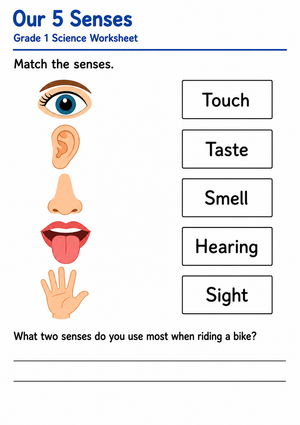
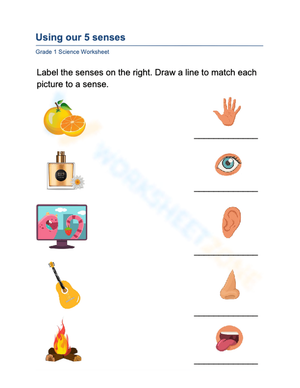
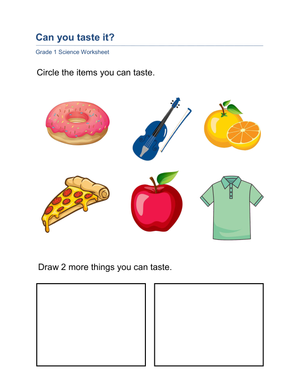
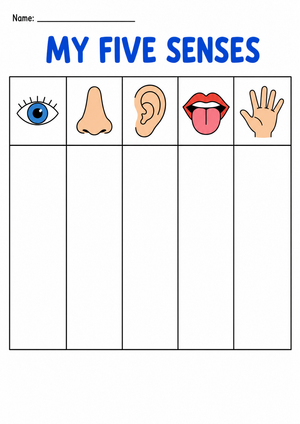
These 1st grade 5 senses worksheets resources give teachers structured recording tools built to run alongside hands-on sensory exploration — the kind of lesson where a student reaches into a mystery bag, feels around for ten seconds, and then needs somewhere concrete to capture what their hands just discovered. The set addresses all five senses across separate worksheets, pairing each sense organ with its corresponding function. Teachers get activities that fit naturally into a unit as pre-observation prep sheets, station recording forms, or end-of-unit checks.
The Specific Skills Targeted
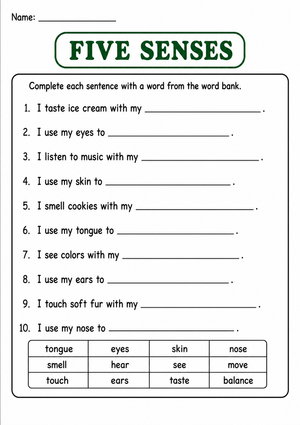
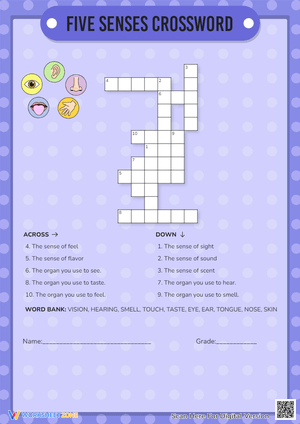
Each worksheet stays focused on one sense at a time, so students build clear mental categories before the unit asks them to compare across senses. The work students do varies by sense:
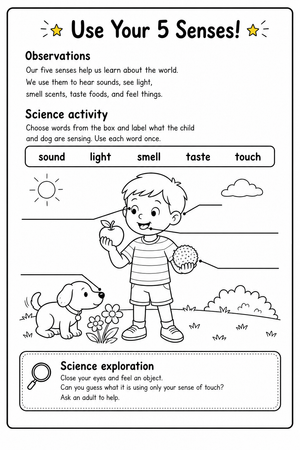
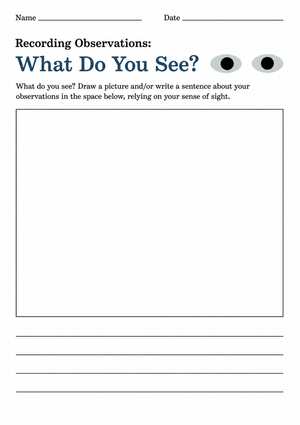
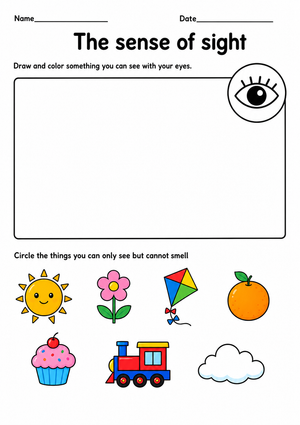
- Sight: Students observe a set of objects and record two descriptive words for each, practicing the language of visual observation.
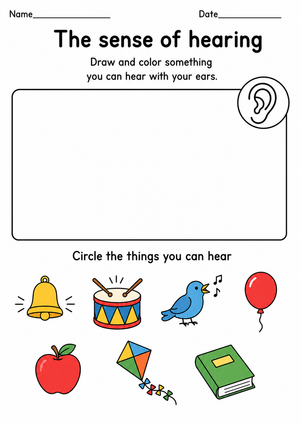
- Hearing: Students sort picture cards into loud or quiet columns, then mark whether each sound originates inside or outside the body.
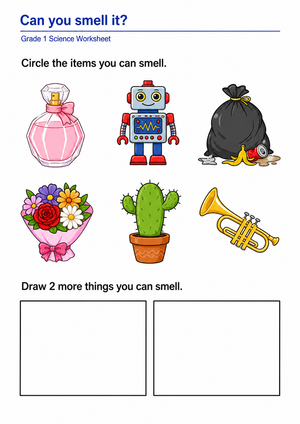
- Smell: Students match illustrated sources to scent descriptions read aloud, separating the smell from its visible origin.
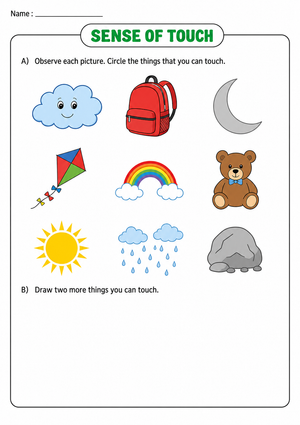
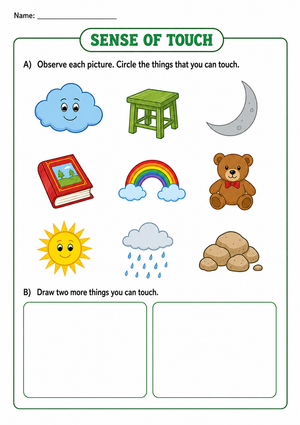
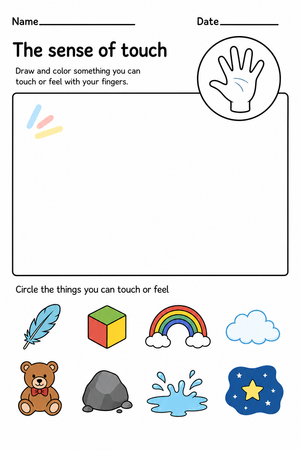
- Touch: Students describe object textures using a provided word bank — rough, smooth, bumpy, slick — and sketch what they felt.
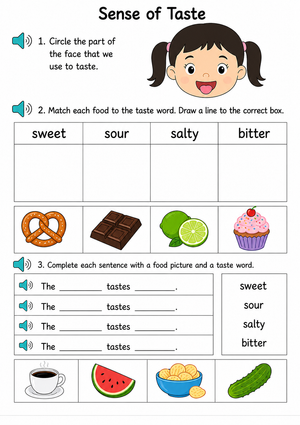
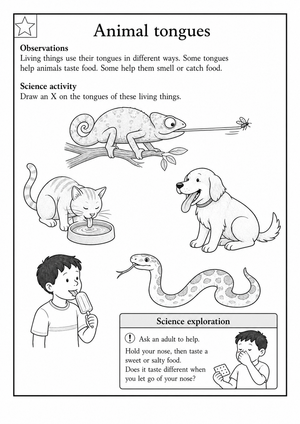
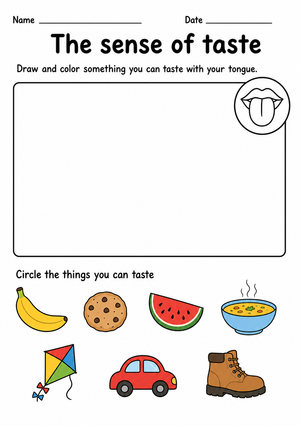
- Taste: Students sort food illustrations into sweet, salty, sour, and bitter columns, a task that works best after a short class conversation before anyone picks up a pencil.
The 1st grade 5 senses worksheets set also builds the science habit of distinguishing observation from inference. That distinction — "I felt it, so I know" versus "I think it might be" — appears in several worksheets through a two-column format that separates direct experience from the label or category a student assigns to it.
Mistakes Students Make That These Worksheets Help You Catch
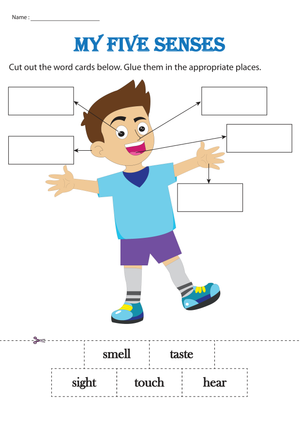
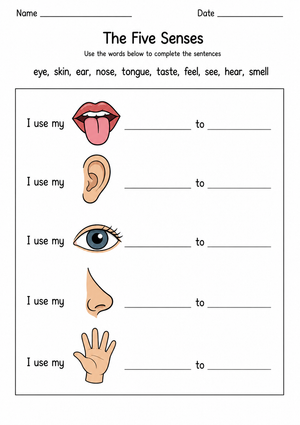
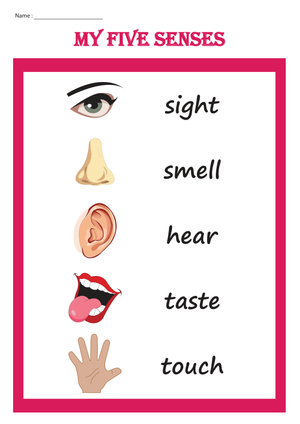
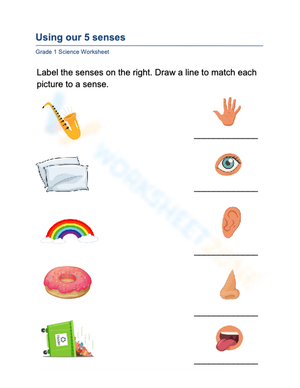
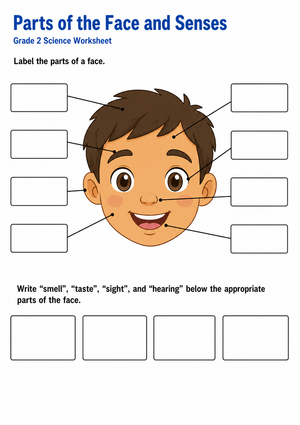
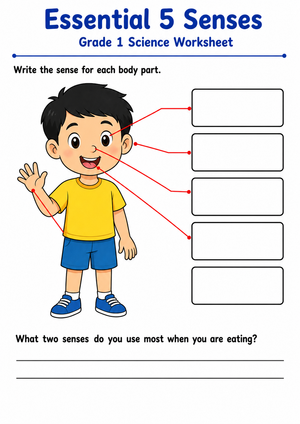
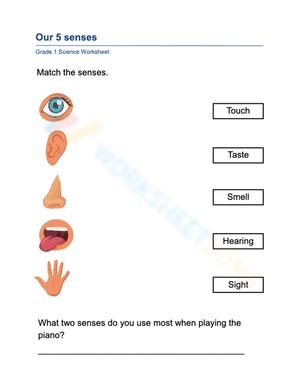
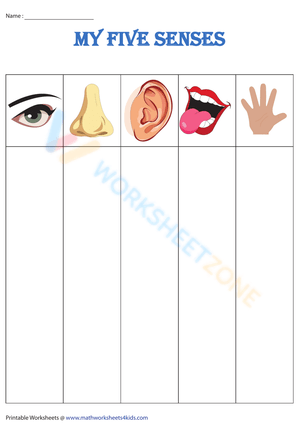
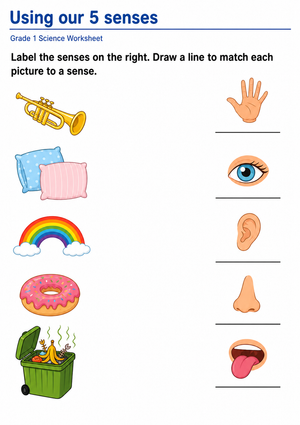
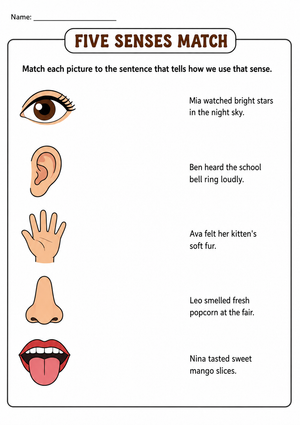
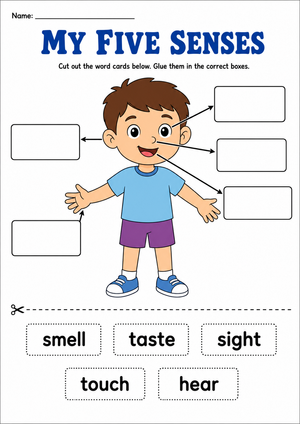
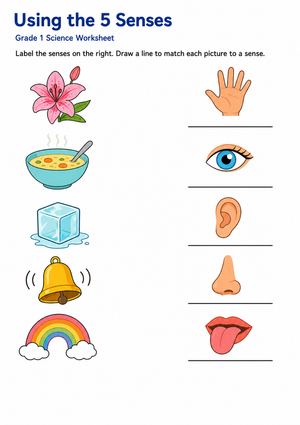
The most consistent error at this grade level is treating the organ and the sense as interchangeable — writing "my nose smells" when the target understanding is that the nose is the structure and smell is its function. That conflation signals the student hasn't yet separated structure from function, which is exactly the conceptual move NGSS 1-LS1-1 requires. Several worksheets surface this early by asking students to fill in the organ name and the sense function in separate blanks, making the gap visible before it gets buried inside a written response.
Taste categorization produces a different sticking point. Students reliably sort lemons as sour and candy as sweet, but bitter trips them up nearly every time. Most first graders have rarely encountered bitter as a deliberate, identifiable flavor — the category collapses into a general "yuck," so dark chocolate, coffee, and cruciferous vegetables all land on the chart without a unifying principle. A thirty-second conversation asking whether something tastes like medicine or like a lemon anchors the category better than any written explanation on the page.
Touch raises a third confusion: students consistently say "my hand touches things" and are genuinely surprised to learn that their cheek, elbow, or the back of their leg detects texture and temperature just as accurately. Naming that out loud before students open the touch worksheet prevents a round of incomplete responses built on the assumption that touch lives only in the fingertips.
How to Build These Worksheets Into Your Lesson Plans
The sequence that works most reliably runs the physical experience first and the recording sheet second — always. Set up five stations around the room, each centered on one sense, and allow eight to ten minutes per rotation. The worksheet for each station travels with students and gets completed on-site, while the observation is still present in working memory. When first graders are asked to record something they did fifteen minutes ago, specific details blur. When the sheet is right there at the station, the writing is precise because the experience is immediate.
For teachers who don't have a full station block available, one sense per day across a five-day week works cleanly. Monday's morning meeting introduces sight vocabulary and the worksheet follows during science block. By Friday, the class is ready for a compare-and-contrast sheet pulling all five senses together — a natural capstone that doubles as a formative check before any summative piece.
Standard Alignment
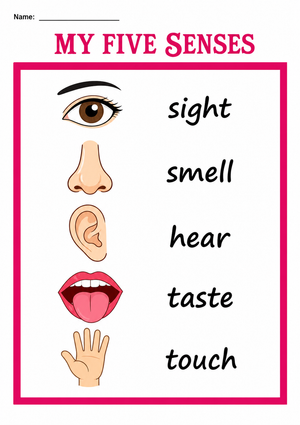
NGSS 1-LS1-1 addresses how organisms use their external parts — including sensory structures — to survive, grow, and meet their needs. In instructional terms, the 1st grade 5 senses worksheets materials practice exactly that sequence: organ → sense → real-world purpose. A teacher can point to completed worksheets as direct evidence that students connect a body structure to its function, which is the core move the standard assesses. The organ-matching and function-labeling tasks map cleanly onto the expectation that Grade 1 students explain how external body parts help organisms respond to the environment.
Adjusting These Worksheets for Different Student Levels
Students still developing academic vocabulary — a group that frequently includes ELL students and early readers — work more successfully when the word bank is expanded and each term is paired with a small illustration printed beside it. Adding a vocabulary support card to the station doesn't reduce the cognitive demand of the categorization task; it removes the language barrier so the science thinking can surface.
Students who move through each worksheet quickly benefit from an extension prompt added at the bottom: "Write one sentence about how you used this sense today without noticing it." The responses tend to be surprisingly specific — first graders are not accustomed to noticing their own automatic sensory processing, and the follow-up discussion that prompt generates is worth the two minutes it takes. For students with limited fine motor stamina, the sorting tasks work equally well when pre-printed labels replace handwriting; the conceptual work is identical either way.
Frequently Asked Questions
How do I handle the taste worksheet safely without running an in-class food tasting?
The taste worksheet uses food illustrations for sorting, so no actual tasting is required. Students categorize foods they already know — pretzels in salty, strawberries in sweet — from memory and class discussion rather than direct consumption. If you choose to run a brief tasting alongside it, check allergy documentation first and keep the selection narrow. One salty item and one sweet item anchors the vocabulary without the complications that come with introducing bitter or sour foods to a group of six-year-olds.
Are these practice tools, or can they function as assessments?
The 1st grade 5 senses worksheets materials work in both roles. The organ-matching and function-labeling worksheets make solid formative checks at the close of a sense-specific lesson — they show quickly which students have the vocabulary and which are still guessing. The final compare-and-contrast worksheet, completed after all five senses are covered, works as a summative document. It won't replace a performance task if your district requires one, but it captures the declarative knowledge the standard targets.
How much prep do the paired sensory activities actually require?
The worksheets themselves need nothing beyond pencils and crayons. The station materials that pair with them — the mystery bag for touch, covered containers for smell — require about twenty minutes of prep the first time through the unit. After that, they store and reset quickly between rotations. For smell containers, small lidded cups with cotton balls work reliably; cinnamon, vanilla extract, and coffee grounds are consistent choices that sidestep most allergy concerns and require no refrigeration between class periods.