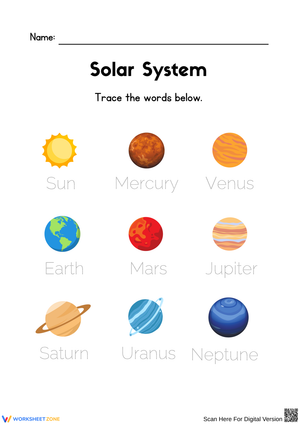
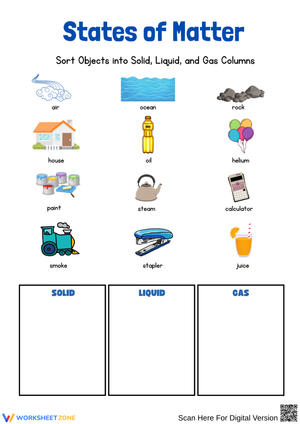
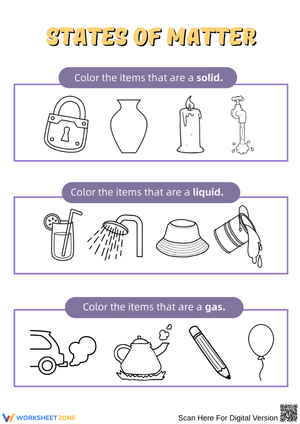
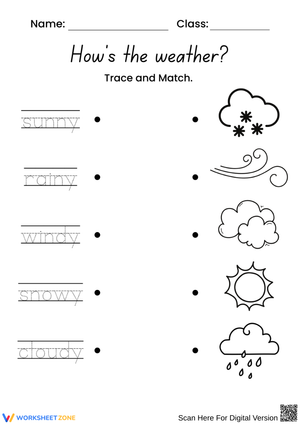
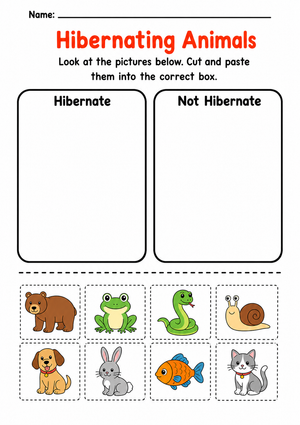
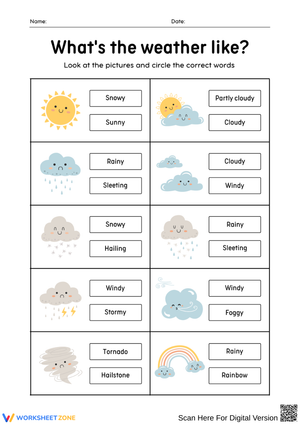
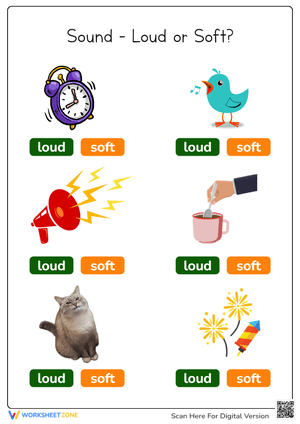
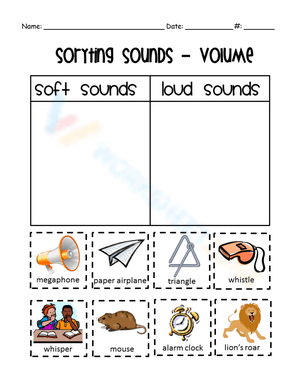
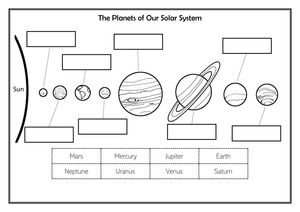
1st grade science printable worksheets resources earn their place in a classroom when every page asks students to do something concrete — sort picture cards into living and nonliving columns, label the parts of a flower, circle which object would sink, or mark the type of weather they observed that morning. These worksheets serve the documentation side of science: after a short activity, a read-aloud, or a class discussion, students have a structured place to put what they noticed. That's the function they serve best at this grade.
Grade 1 is the year students begin building the formal vocabulary of science — "living," "nonliving," "force," "property," "cycle" — before they can reliably read those words independently. Every worksheet in a well-designed set keeps that tension in mind: visuals carry the reading load so the science thinking can actually happen.
What These Worksheets Cover
A solid collection of 1st grade science printable worksheets pages spans four content areas that appear consistently in Grade 1 programs: life science, earth and space science, physical science, and process skills.
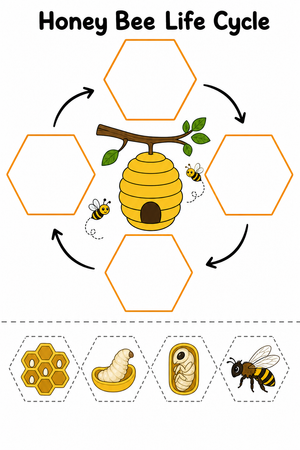
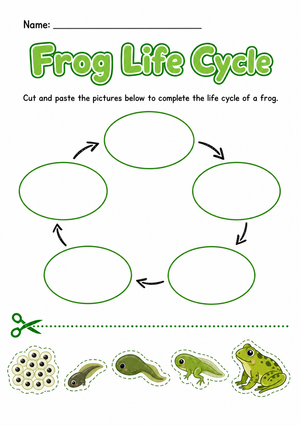
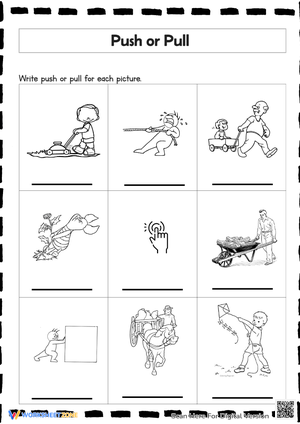
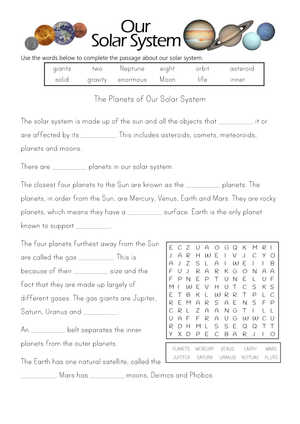
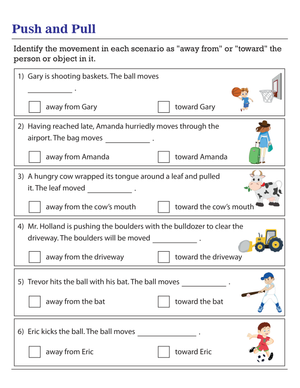
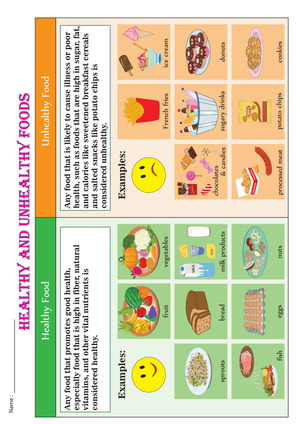
Life science worksheets ask students to sort living and nonliving objects, label basic plant parts, match animals to their needs, or sequence the stages of a seed's growth. Earth and space worksheets address observable patterns — daily weather, how clothing and daylight shift across seasons, what the sky looks like at different times. Physical science pages cover push and pull, basic properties of matter (hard/soft, rough/smooth, sink/float), and how objects move across different surfaces. Process-skills worksheets — built around observing, comparing, predicting, and measuring with nonstandard units — are intentionally format-light so teachers can reuse each worksheet across multiple units without the task feeling repetitive.
Why This Format Works at Grade 1
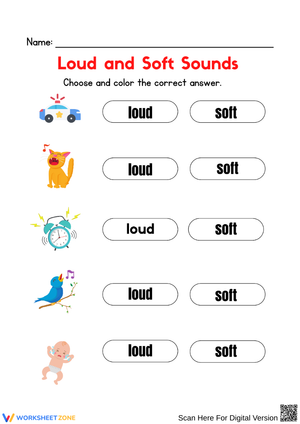
Cognitive load matters here in a specific way. A six-year-old who is still decoding the word "nonliving" while trying to remember what happened during the ramp experiment is splitting attention between literacy and science simultaneously. When the page relies on pictures, bold icons, and one clear task — "circle the things that are living" — students spend their working memory on the science concept rather than on reading the instructions. The most effective first-grade science pages are not simplified versions of older-grade worksheets. They are structurally different, built to prioritize visual evidence over verbal explanation.
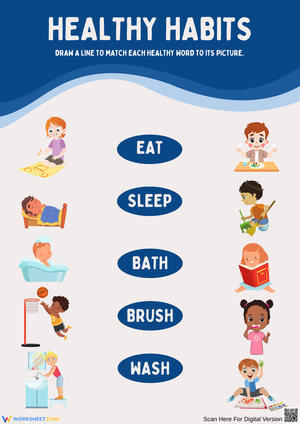
There is also a documentation habit being built. When students regularly complete a short recording page after an observation activity, they start to understand that science includes writing things down — not because the teacher says so, but because they see, over time, that what they recorded last week helps them remember what happened. That habit pays dividends when these students reach third grade and are expected to plan and document investigations on their own.
Where First Graders Go Wrong and What the Worksheets Reveal
The living/nonliving distinction surfaces the most predictable misconceptions at this grade. Students correctly place a dog on the living side and a rock on the nonliving side, then hesitate over a seed or a dead leaf. A seed looks like a pebble — round, dry, inert — and first graders routinely sort it into the nonliving column. A dead tree was alive, but students mark it nonliving because "it's not doing anything anymore." Worksheets that include these boundary cases alongside the obvious examples give teachers a much clearer read of where conceptual understanding actually sits.
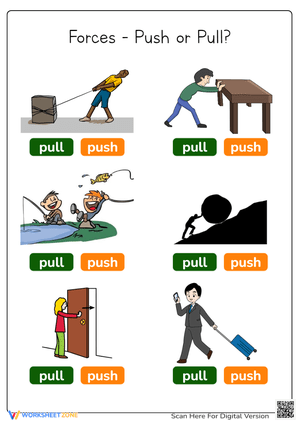
Push and pull pages reveal a different pattern. Students who watch a door swing open will often say they "moved" the door rather than that they "pushed" it — they understand the action but haven't yet attached the force vocabulary. On recording pages, this shows up when a student skips the label entirely and draws an arrow instead. That substitution tells a teacher the motion is understood; the word is not yet secure.
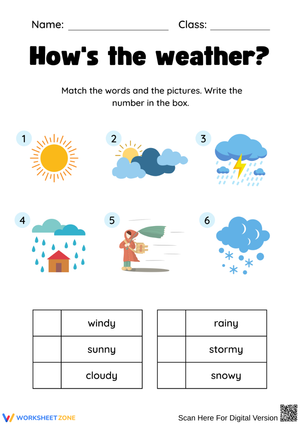
In weather units, students frequently confuse weather with season. Given a picture of a child in a snowsuit, they write "winter" when the prompt asks them to name the weather. That conflation is developmentally predictable at this age — cold air and snowy months feel like one thing, not two — but it needs to be addressed before the class begins comparing weather patterns across the year.
How to Work These Worksheets Into Your Lesson Plans
The most productive sequence is observation first, worksheet second. Five minutes after students finish watching a bean sprout, testing how far a toy car travels on carpet versus tile, or sorting classroom objects by their surface texture, they complete the corresponding page. In that order, the worksheet documents real evidence. Reversed, it becomes seatwork.
Exit tickets work especially well with the half-page formats. In the final eight minutes before students transition to lunch or specials, they circle one object that sinks, draw what the sky looks like today, or write one word that describes what they observed. Those half-page exits take about three minutes to sort into three piles — secure, nearly there, not yet — and that sort signals clearly where the next lesson needs to start.
For sub plans, the process-skills worksheets are the most reliable choice. They do not depend on a specific lesson having happened beforehand, and the visual directions are clear enough that a substitute without a science background can launch them without preparation time.
Standard Alignment
The life science worksheets — living/nonliving sorting, plant-part labeling, animal-needs matching — connect to 1-LS1-1, which asks students to use observations to describe how plants and animals use their external parts to survive and meet their needs. Weather and seasons worksheets address 1-ESS1-2, focused on observable patterns of daylight and the sun's apparent position across seasons. Push and pull pages build the conceptual groundwork for 3-PS2 (forces and motion) while aligning with K–2 engineering and design practices at the current grade band. The process-skills pages — observing, predicting, comparing, recording — address the science and engineering practices that run beneath every NGSS disciplinary core idea at this level, particularly constructing explanations from evidence.
Differentiating Across Readiness Levels Without Printing Multiple Versions
For students still building fine motor skills and letter recognition, replacing a label-and-write task with a circle-or-point-to format keeps the science concept accessible without removing the cognitive demand. These students are still thinking about the same idea — they are just not simultaneously managing a pencil and a spelling decision.
Students who are ready for more can extend any recording page with one sentence at the bottom: "I think this because ___." That sentence frame moves the task from observation into reasoning without requiring a separate worksheet. Teachers working with three readiness levels at once find it easier when the base task is shared — all students work from the same page, and the extension is additive rather than a whole separate document to track.
The 1st grade science printable worksheets format also serves English language learners well when the visual load is high and the writing requirement is minimal. A student who is new to English can circle, draw, and point to demonstrate understanding before having the vocabulary to write it — and those responses are still science evidence worth documenting.
Frequently Asked Questions
Can these worksheets run in a science center without direct teacher supervision?
Yes, provided students have already encountered the topic through a whole-group activity or discussion. Center work goes smoothly when the format is familiar — students who have completed a cut-and-paste sort at the table with the teacher can do the same type of task independently a day or two later. An unfamiliar format at an unsupervised center usually produces incomplete pages, not because students don't understand the science, but because they can't figure out what the task is asking them to do.
How many worksheets per unit is too many?
Two to four per unit is a reasonable range for most Grade 1 programs. One worksheet early in the unit to surface prior knowledge, one or two during instruction to capture observations, and one at the end as a quick check gives enough data without turning science into a paper-heavy block. More than that, and students begin treating science as writing practice rather than investigation.
Do these pages work for homework?
1st grade science printable worksheets pages that lead with pictures and ask for a single, clear response travel home reliably. The five-senses and weather observation worksheets are especially well-suited to family homework because they ask students to notice something at home — what they hear at dinner, what the sky looks like from their window — and record it on the page. That kind of homework reinforces the observation habit without requiring materials or equipment families may not have.