


























Views
Downloads

Essential Tomato Life Cycle Worksheet | Grades 1-3
Paste this activity's link or code into your existing LMS (Google Classroom, Canvas, Teams, Schoology, Moodle, etc.).
Students can open and work on the activity right away, with no student login required.
You'll still be able to track student progress and results from your teacher account.
This life cycle of a tomato worksheet provides a structured, hands-on activity for students to visualize and document the biological progression of a flowering plant. By combining labeling with creative drawing, students internalize the sequence from seed to fruit, ensuring they grasp the cyclical nature of growth and reproduction in the natural world.
At a Glance
- Grade: 1-3 · Subject: Science
- Standard:
3-LS1-1— Develop models to describe that organisms have unique and diverse life cycles- Skill Focus: Plant Life Cycle Sequencing
- Format: 2 pages · 10 tasks · Answer key included · PDF
- Best For: Independent practice and science centers
- Time: 15–25 minutes
What's Inside
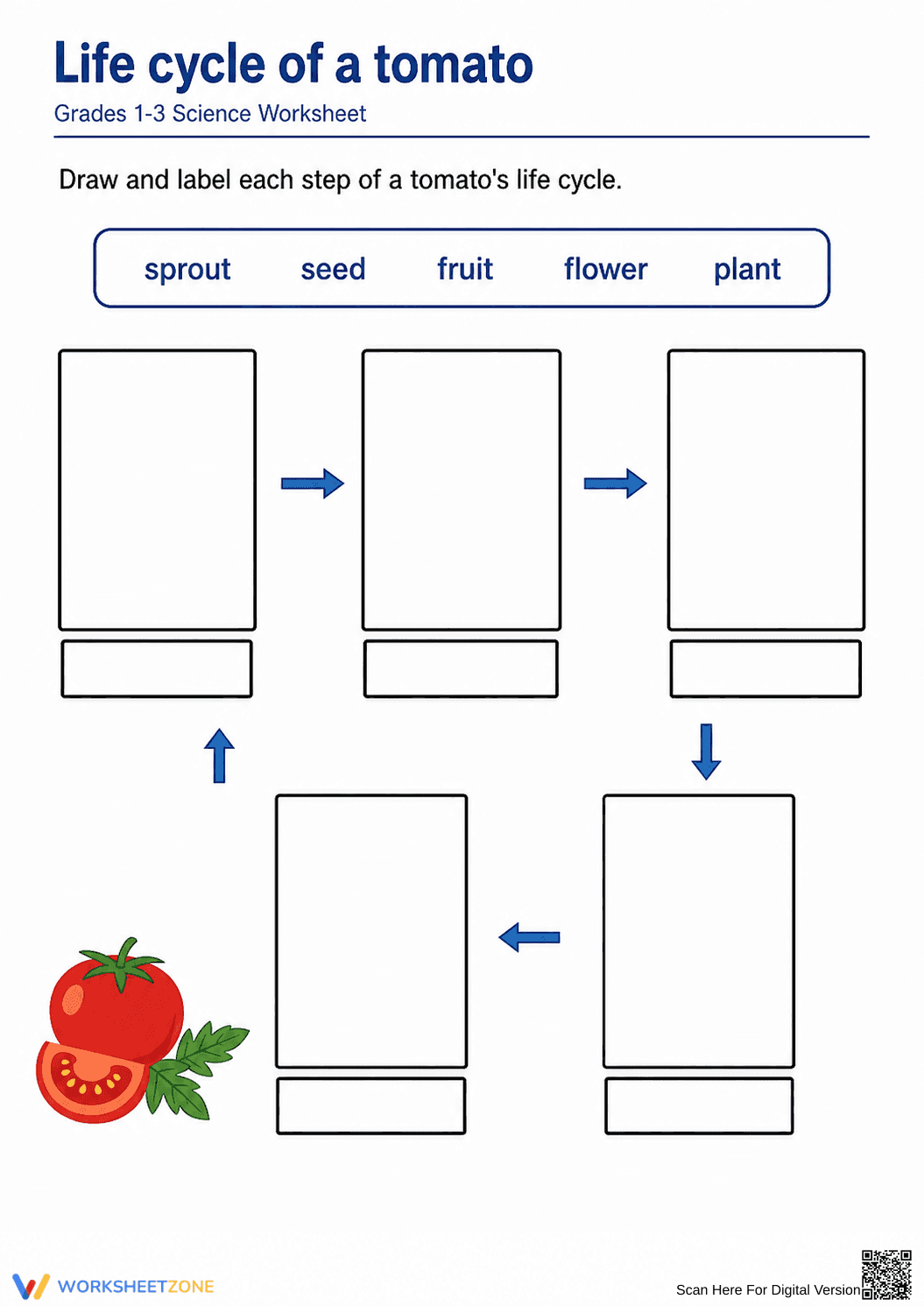
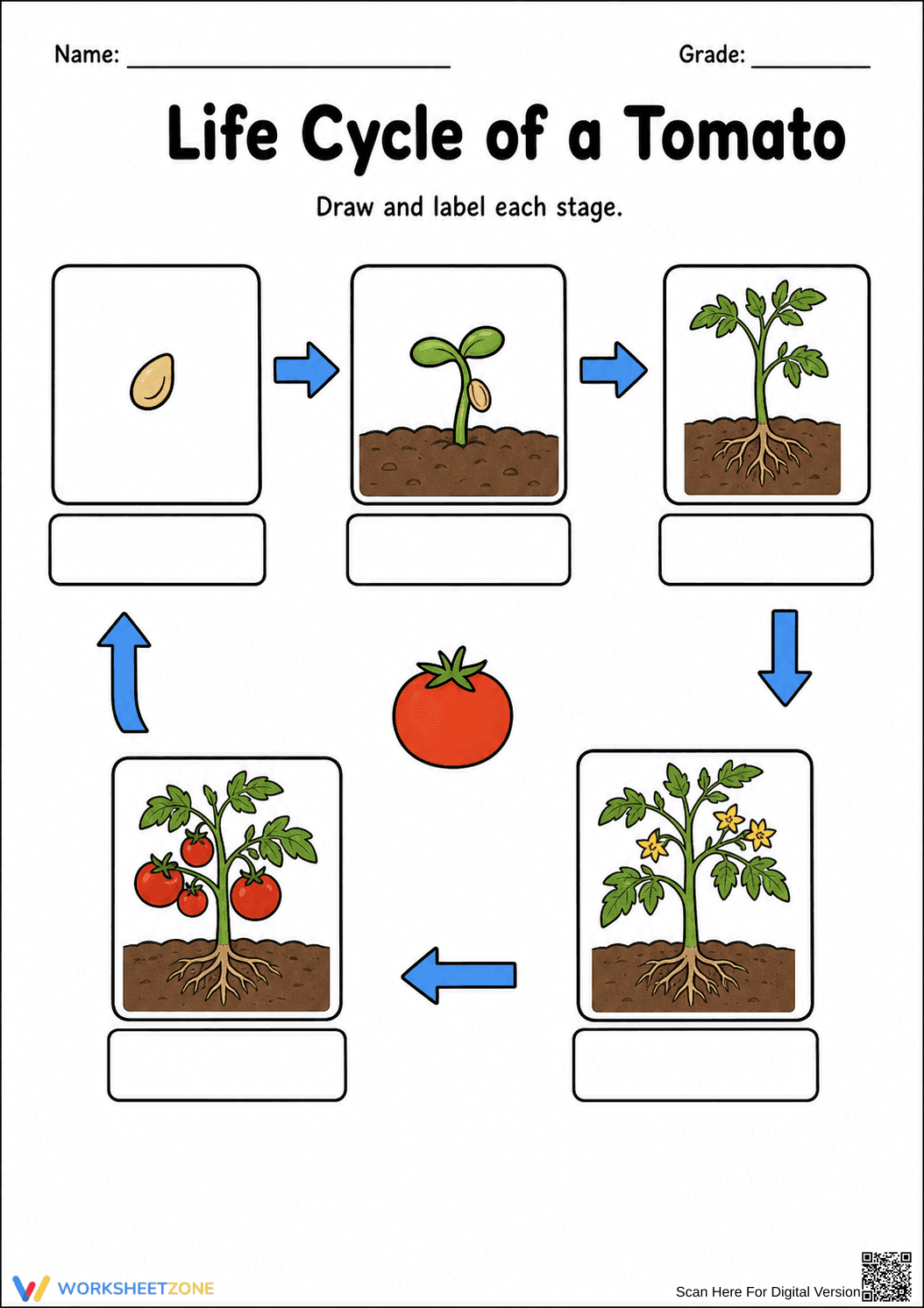
This two-page PDF includes an activity page and a full answer key. The worksheet features a circular diagram with five stages. Students use a targeted word bank (seed, sprout, plant, flower, and fruit) to label each phase. Dedicated boxes offer ample space for original illustrations, creating a personalized model of plant development.
Zero-Prep Workflow
This resource is designed for immediate classroom implementation with zero teacher setup required. First, print the single-sided activity page for your class, which takes less than one minute. Second, distribute the worksheets and have students use the built-in word bank to begin their analysis. Finally, project or distribute the included answer key for immediate student self-correction or rapid grading. Total preparation time is approximately two minutes.
Standards Alignment
The primary alignment for this resource is 3-LS1-1, which requires students to develop models to describe the common patterns of birth, growth, reproduction, and death across diverse organisms. By constructing this visual model, students demonstrate their understanding of how one stage of a tomato's life leads to the next. Both standard codes can be copied directly into lesson plans, IEP goals, or district curriculum mapping tools.
How to Use It
Use this worksheet as a summative assessment following a direct instruction lesson on plant biology. As students work independently, observe their sequencing logic to identify any misconceptions regarding the transition from flower to fruit. Alternatively, use it as a "science center" station where students can reference actual tomato plants or seed packets to inform their detailed drawings.
Who It's For
This activity is optimized for elementary students in grades 1 through 3, particularly those in general education or English Language Learner (ELL) settings who benefit from word bank scaffolds. It pairs naturally with a hands-on seed-planting project or an anchor chart detailing the parts of a plant, providing a bridge between physical observation and conceptual modeling.
Research consistently indicates that visual modeling and labeling tasks significantly enhance the retention of complex biological sequences in early childhood education. According to Fisher & Frey (2014), the use of specific graphic organizers like this life cycle diagram supports the gradual release of responsibility by providing enough structure for independent success while encouraging cognitive engagement. This tomato life cycle activity maps directly to the 3-LS1-1 standard, focusing on the specific student skill of identifying and modeling stages of growth and reproduction within the natural world. By integrating creative drawing with technical vocabulary, the worksheet addresses multiple learning modalities, ensuring that all 1st to 3rd-grade students can accurately describe and visualize the progression from seed to sprout to mature fruit. This resource serves as a valid and highly effective formative assessment tool for measuring mastery of Next Generation Science Standards (NGSS) in the foundational life science strand.


