


























Views
Downloads

Tomato Life Cycle Worksheet | Grade 3 Essential Science
Paste this activity's link or code into your existing LMS (Google Classroom, Canvas, Teams, Schoology, Moodle, etc.).
Students can open and work on the activity right away, with no student login required.
You'll still be able to track student progress and results from your teacher account.
This Grade 3 tomato life cycle worksheet provides a hands-on approach for students to identify and sequence the biological stages of a flowering plant. By combining a reading passage with a tactile cut-and-paste activity, learners develop a concrete understanding of how seeds transform into fruit-bearing plants through a predictable growth process.
At a Glance
- Grade: 3 · Subject: Science
- Standard:
3-LS1-1— Develop models to describe that organisms have unique and diverse life cycles- Skill Focus: Plant life cycle sequencing
- Format: 3 pages · 5 problems · Answer key included · PDF
- Best For: Science centers and independent practice
- Time: 20–30 minutes
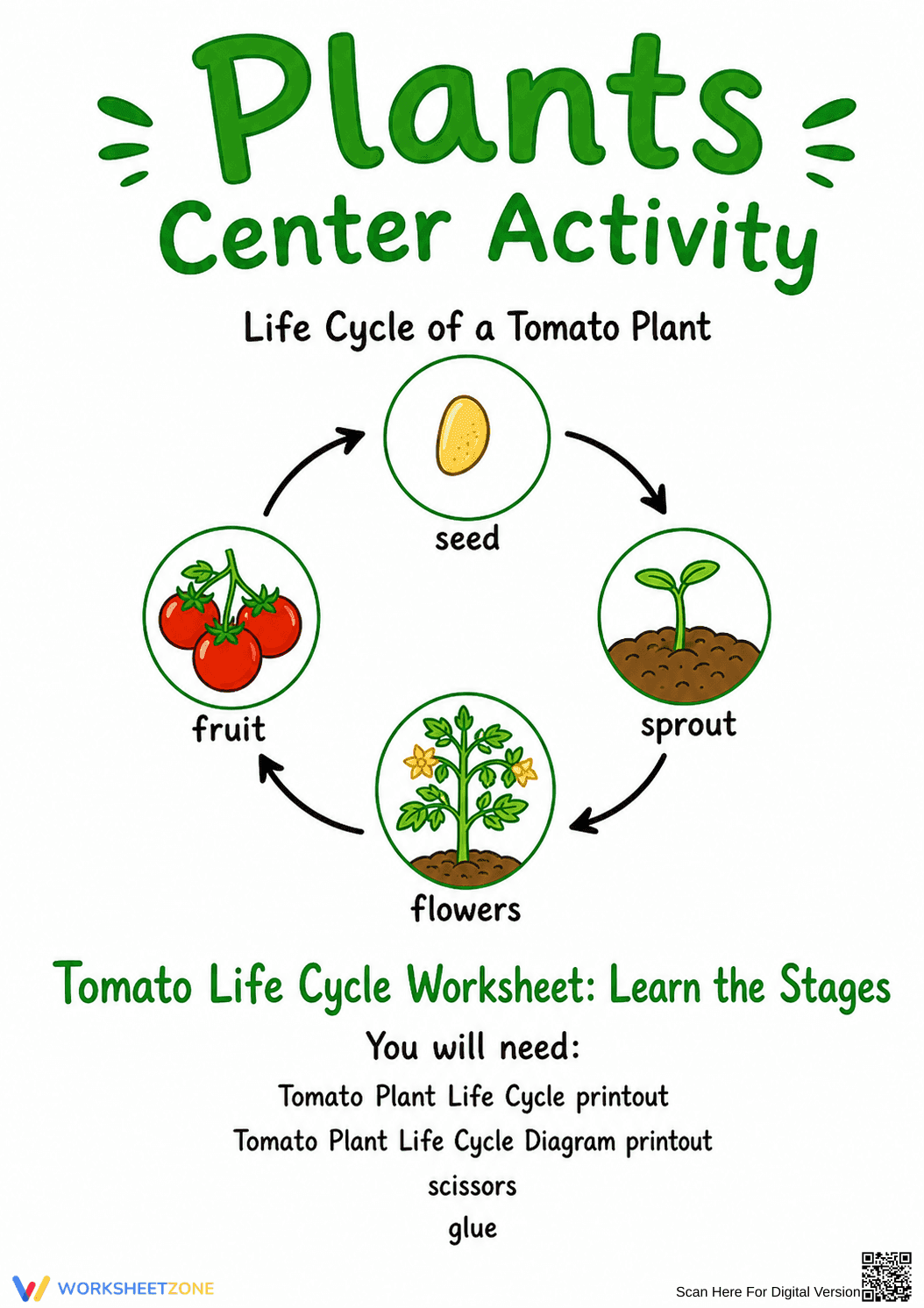
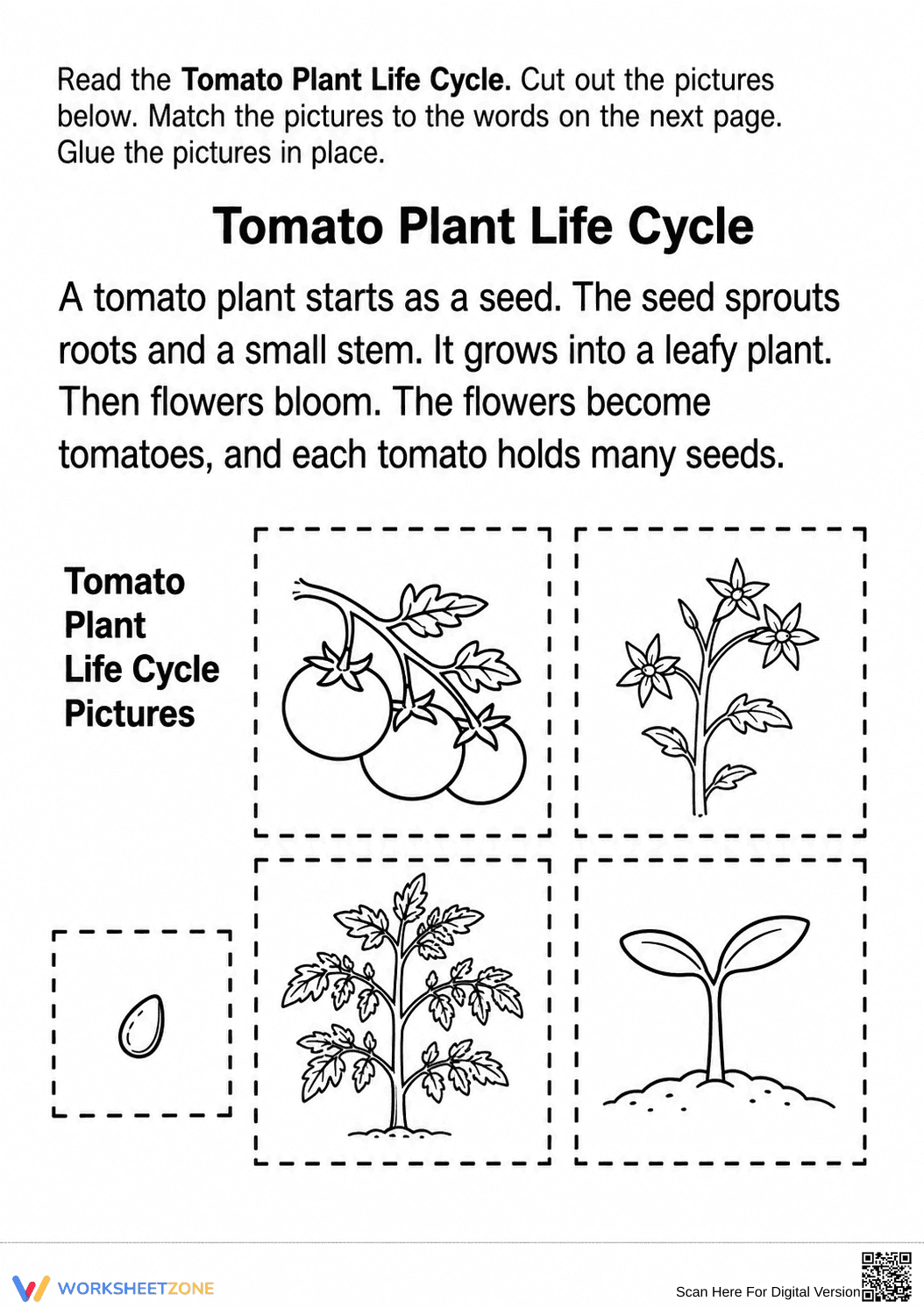
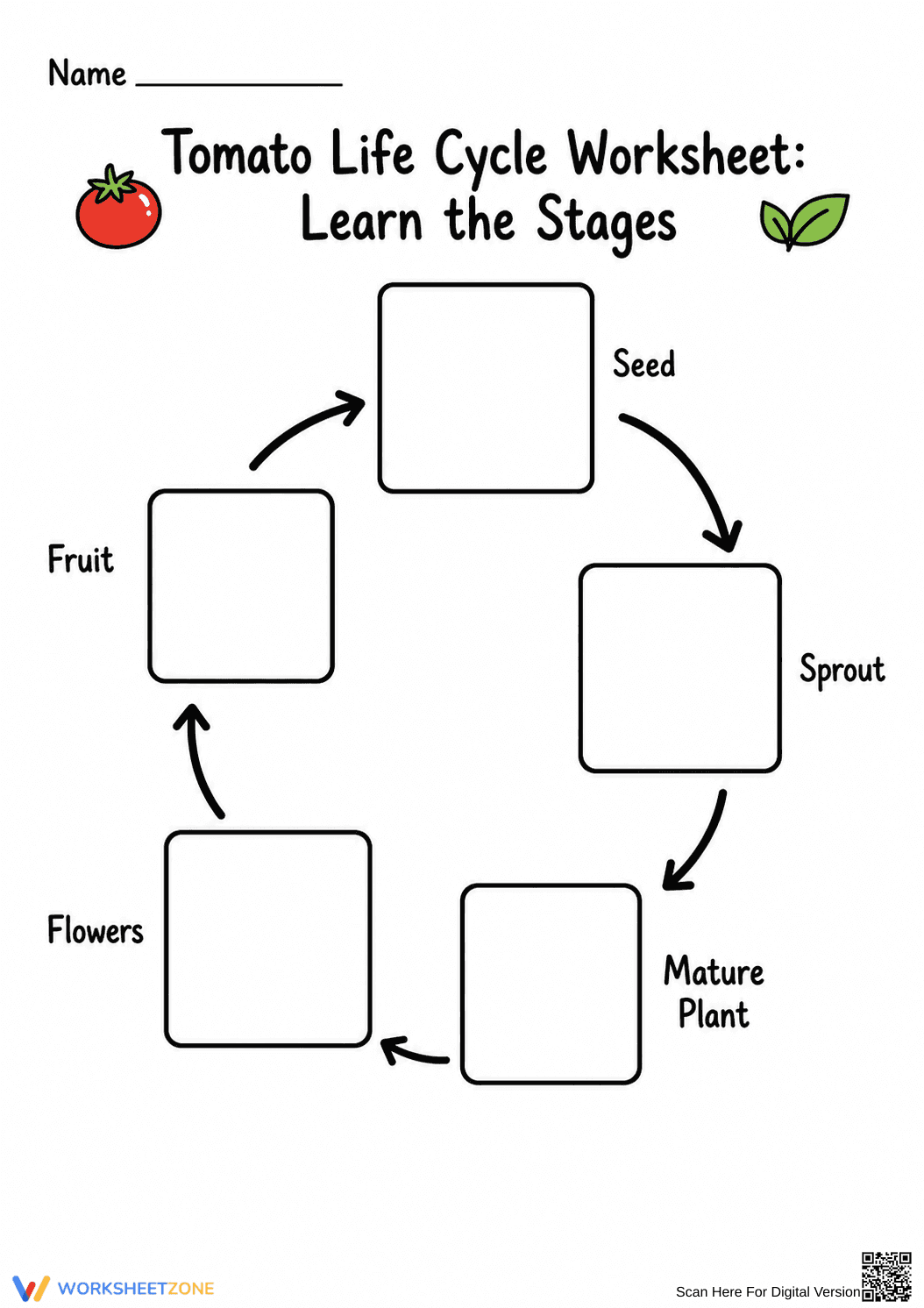
The resource includes three distinct pages designed for a comprehensive learning experience. The first page serves as a visual anchor chart, the second contains a short informational text and five high-quality illustrations for cutting, and the third provides a circular diagram template. This structure ensures students engage with the content through reading, visual analysis, and physical manipulation of the data.
Zero-Prep Workflow
- Print: Select the three-page PDF and print enough copies for your class (30 seconds).
- Distribute: Hand out the materials along with scissors and glue sticks to your students (1 minute).
- Review: Use the provided visual key on page one to check for accuracy as students complete their diagrams (under 1 minute).
This streamlined process makes the worksheet an ideal choice for emergency sub plans or a focused Friday science block.
This activity aligns with 3-LS1-1, which requires students to develop models to describe that organisms have unique and diverse life cycles but all have in common birth, growth, reproduction, and death. It also supports CCSS.ELA-LITERACY.RI.3.7 by using information gained from illustrations and words to demonstrate understanding of the text. Both standard codes can be copied directly into lesson plans, IEP goals, or district curriculum mapping tools.
Use this worksheet as a formative assessment after a direct instruction lesson on botany or plant biology. It works exceptionally well in a science rotation center where students can work independently. Teachers should observe students during the gluing phase to ensure they understand the directional flow of the cycle, providing a quick check for misconceptions about plant reproduction. The expected completion time is approximately 25 minutes.
This resource is tailored for elementary students in grades 2 through 4, including English Language Learners who benefit from the clear visual cues. It pairs naturally with a classroom gardening project or a reading of a botanical anchor text. The scaffolded reading passage ensures that even developing readers can access the scientific vocabulary required for the task.
Research from Fisher & Frey (2014) emphasizes that the gradual release of responsibility is most effective when students move from modeled examples to independent application. This worksheet facilitates that transition by providing a visual model before asking students to reconstruct the cycle themselves. According to the 3-LS1-1 standard, understanding that plants follow a predictable pattern of growth is a foundational concept in life science. By engaging in the tactile process of cutting and pasting, students reinforce their spatial memory of the sequence from seed to fruit. This specific resource provides 5 clear stages that map directly to NGSS expectations for third-grade learners. Educators can utilize this tool to provide evidence of student mastery in modeling biological processes, ensuring that the core concepts of plant reproduction and development are solidified through active participation rather than passive observation.


