


























Views
Downloads

Tomato Plant Life Cycle Worksheet | Grade 3 Essential
Paste this activity's link or code into your existing LMS (Google Classroom, Canvas, Teams, Schoology, Moodle, etc.).
Students can open and work on the activity right away, with no student login required.
You'll still be able to track student progress and results from your teacher account.
This Grade 3 tomato plant life cycle worksheet provides a hands-on sequencing activity for students to master the stages of plant growth. By combining a reading passage with a tactile cut-and-paste diagram, learners visualize the transition from seed to fruit. It is an effective tool for reinforcing biological concepts in any elementary science unit.
At a Glance
- Grade: 3 · Subject: Science
- Standard:
3-LS1-1— Develop models to describe that organisms have unique and diverse life cycles- Skill Focus: Sequencing biological stages
- Format: 3 pages · 5 problems · Answer key included · PDF
- Best For: Science centers and independent practice
- Time: 15–20 minutes
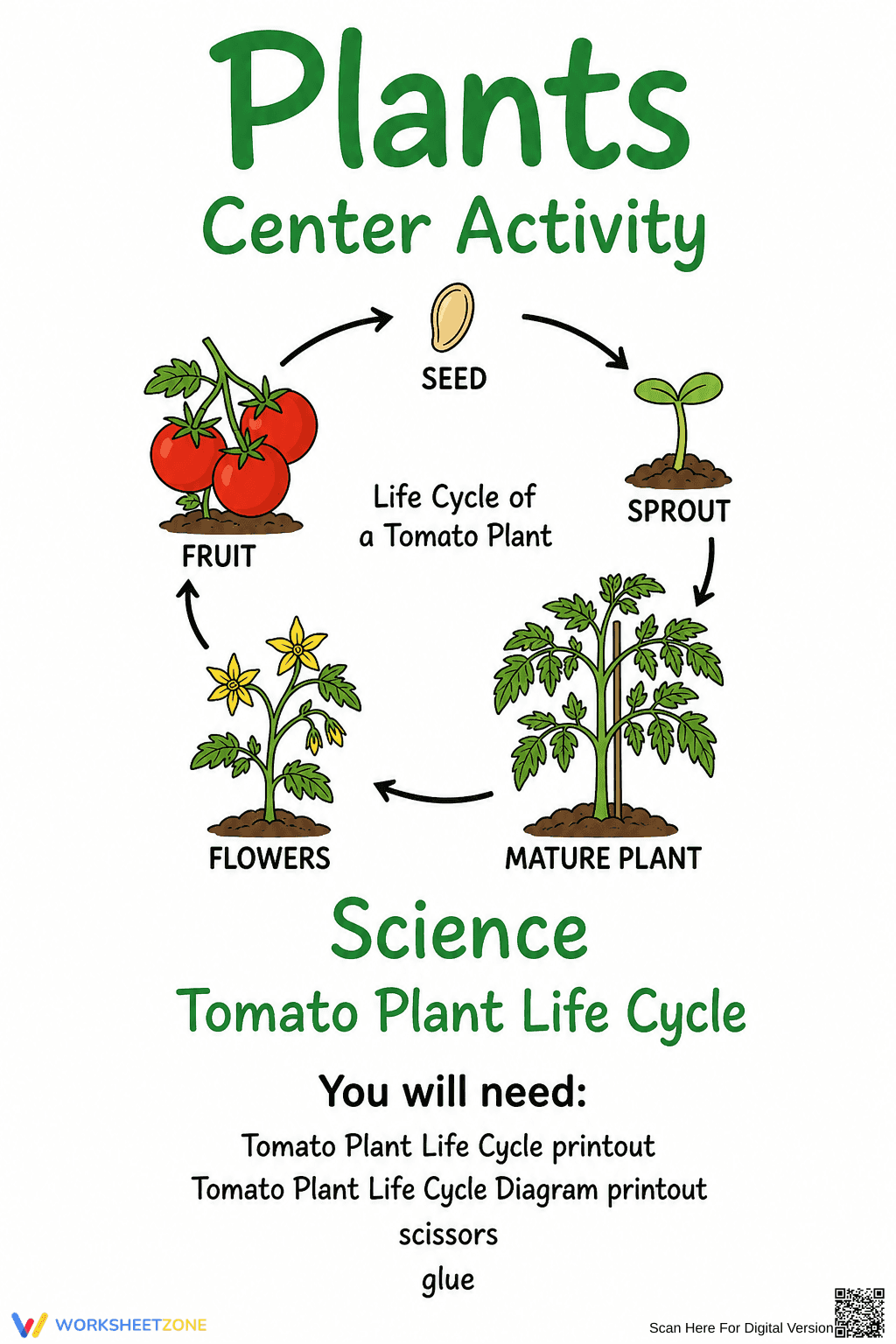
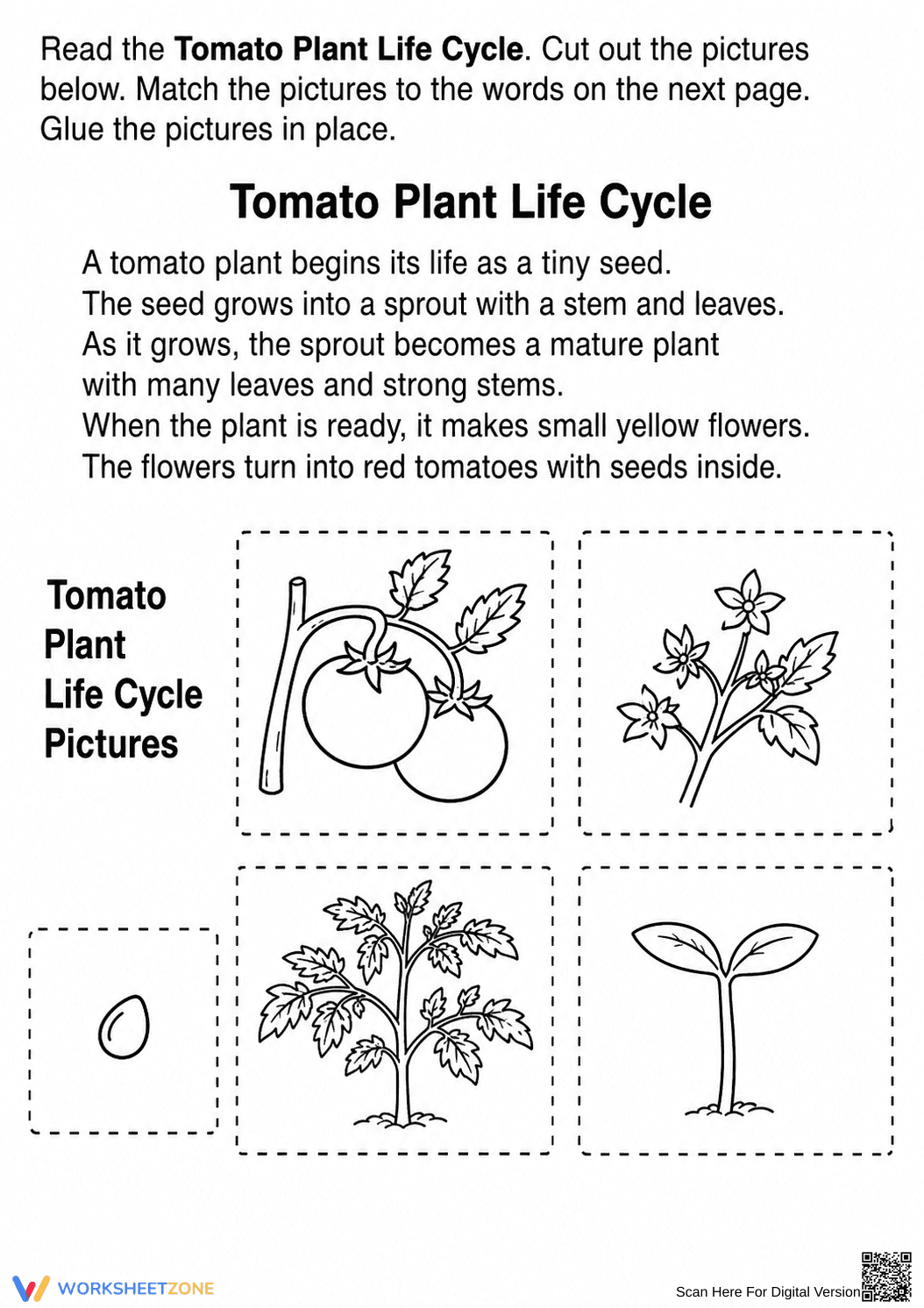
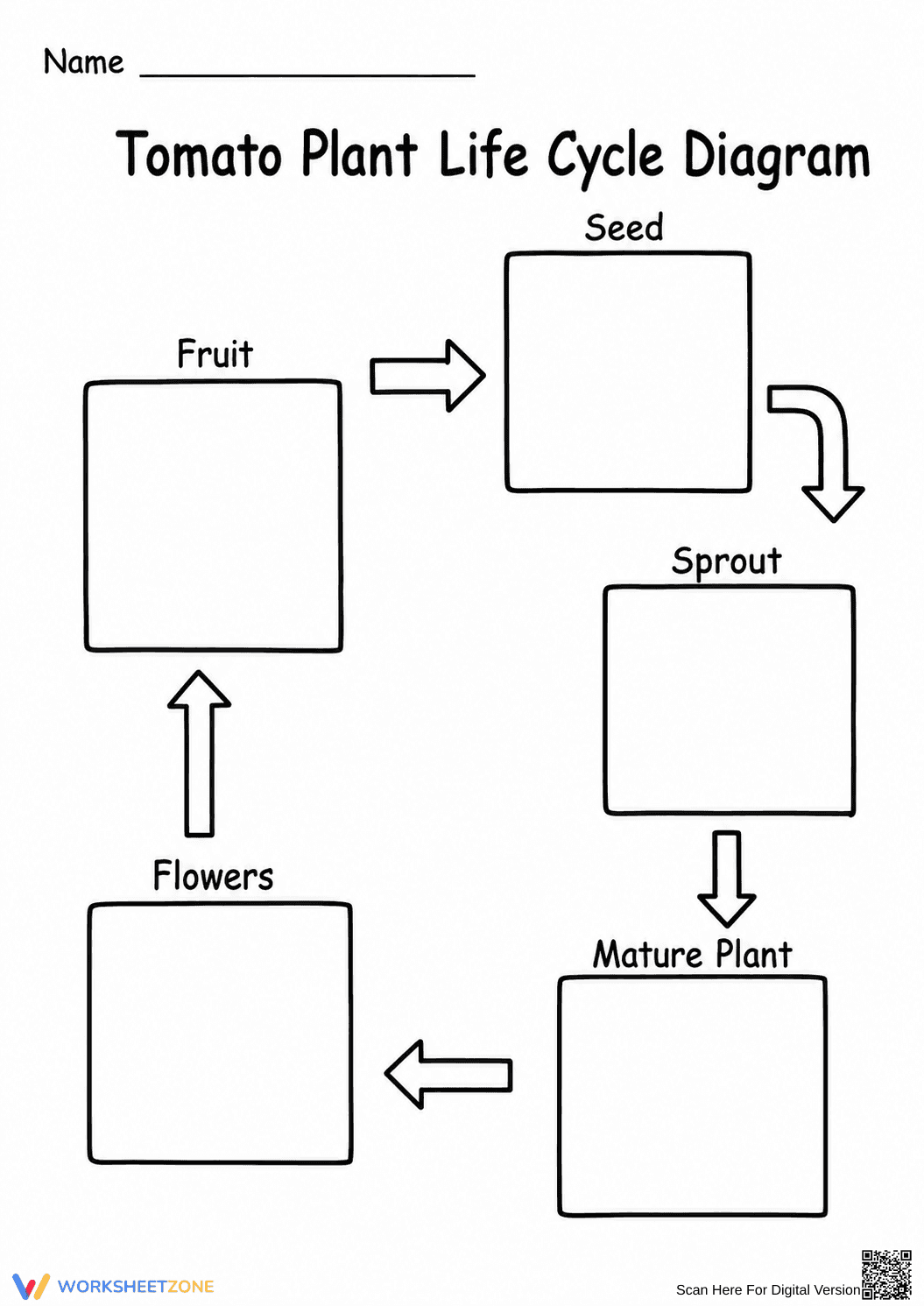
The resource includes a 3-page PDF set featuring a clear instructional cover, a short informational reading passage, and 5 illustrated cut-out tiles. Students use the provided diagram template to glue the stages—seed, sprout, mature plant, flowers, and fruit—in the correct chronological order. The layout is designed for easy cutting with standard classroom scissors and clear labeling for student success.
This activity is designed for immediate classroom implementation with a total prep time of under 2 minutes. First, print the required copies for your group (30 seconds). Next, distribute the sheets along with scissors and glue sticks (1 minute). Finally, students work independently to sequence the 5 stages, allowing the teacher to circulate for formative assessment or review the completed diagrams (30 seconds). It is an ideal sub-plan or center activity.
This worksheet is aligned with 3-LS1-1, which requires students to develop models to describe that organisms have unique and diverse life cycles. It also supports ELA integration through informational text reading. Both standard codes can be copied directly into lesson plans, IEP goals, or district curriculum mapping tools.
Use this as a "during instruction" activity after introducing the parts of a plant to solidify the concept of growth cycles. It also serves as an excellent formative assessment tool; observe students as they sequence the "flowers" and "fruit" stages to ensure they understand the reproductive phase of the cycle. Completion typically takes 15 to 20 minutes depending on student motor skills.
This resource is ideal for Grade 3 students but is adaptable for Grade 2 or Grade 5 learners needing a visual refresher. It works well for English Language Learners (ELLs) due to the heavy visual support and can be paired with a real tomato plant observation. It is perfect for inclusion classrooms where tactile learning is prioritized.
According to the RAND AIRS 2024 report on elementary science instruction, tactile sequencing activities significantly improve long-term retention of biological processes compared to passive reading alone. This worksheet leverages the 3-LS1-1 standard to help students build a mental model of the tomato plant life cycle, moving from seed to sprout and eventually to fruit-bearing maturity. By engaging in the physical act of cutting and gluing 5 distinct stages, students internalize the cyclical nature of life. Research from Fisher & Frey (2014) suggests that such scaffolded, hands-on tasks are essential for bridging the gap between abstract scientific concepts and concrete understanding. This resource provides a structured environment for Grade 3 learners to demonstrate mastery of plant biology while developing fine motor skills and reading comprehension in a cohesive, classroom-ready format that requires minimal teacher intervention.


