


























Views
Downloads

Printable Letter Mm Recognition Worksheet | Grade K ELA
Paste this activity's link or code into your existing LMS (Google Classroom, Canvas, Teams, Schoology, Moodle, etc.).
Students can open and work on the activity right away, with no student login required.
You'll still be able to track student progress and results from your teacher account.
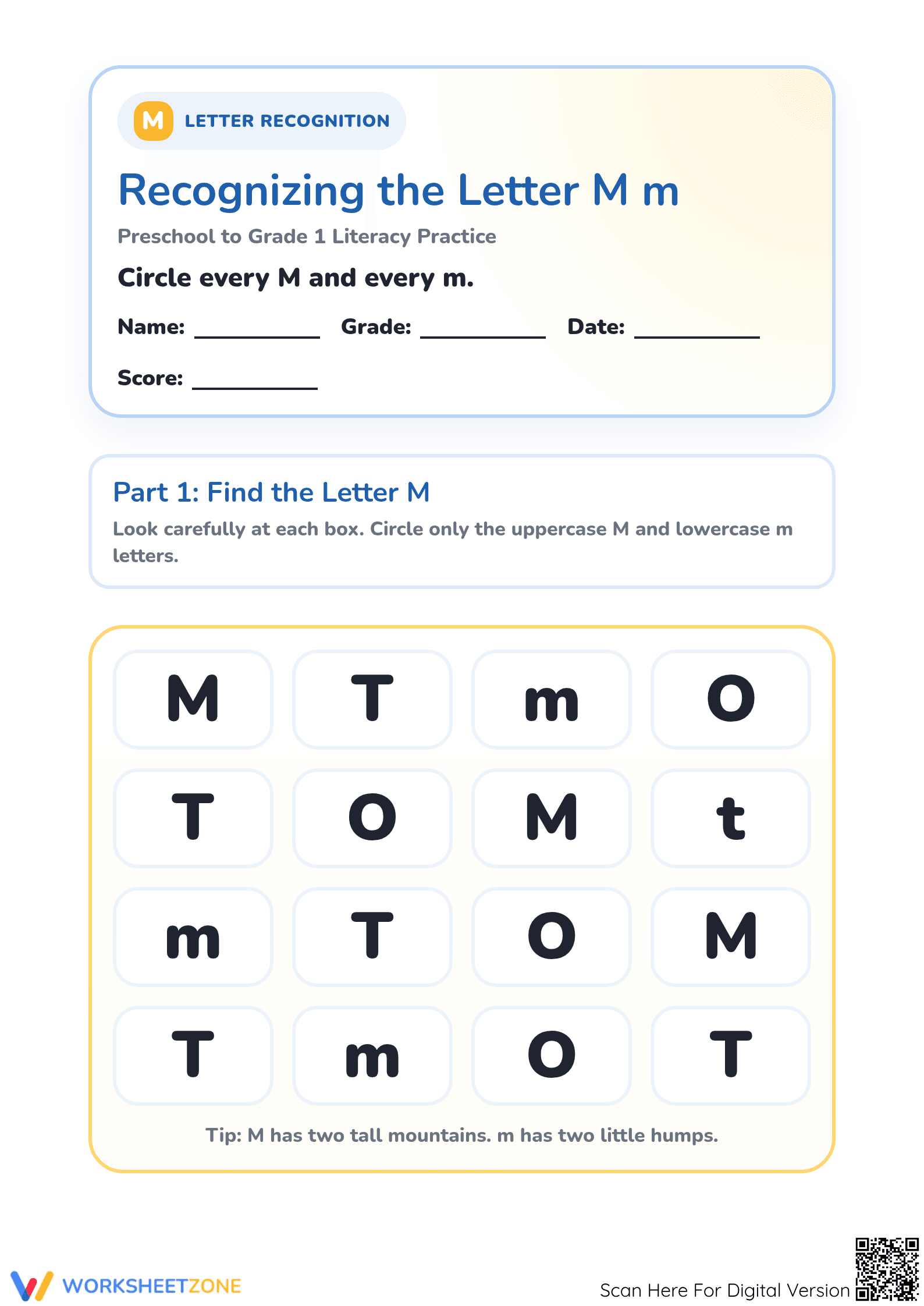
This essential Letter Mm recognition worksheet provides Preschool and Kindergarten students with a focused way to master alphabet identification. By searching for uppercase and lowercase forms in a visual grid, learners build foundational visual discrimination skills. This printable resource ensures students can reliably distinguish the letter M from similar characters.
At a Glance
- Grade: Kindergarten · Subject: ELA Alphabet
- Standard:
CCSS.ELA-LITERACY.RF.K.1.D— Recognize and name all upper- and lowercase letters of the alphabet- Skill Focus: Letter Mm Recognition
- Format: 2 pages · 18 tasks · Answer key included · PDF
- Best For: Initial alphabet introduction and reinforcement
- Time: 10–15 minutes
What's Inside
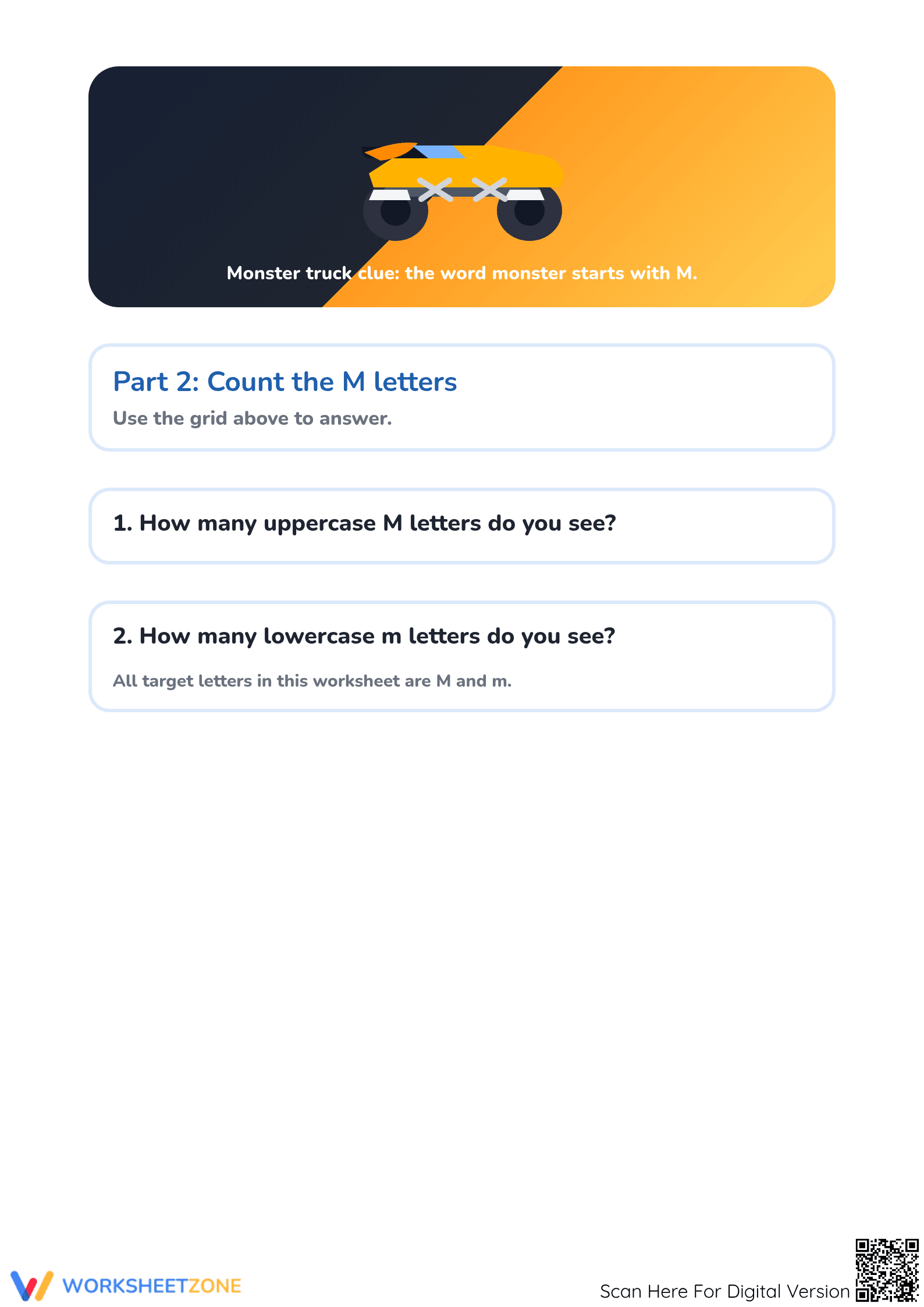
This two-page PDF includes a letter-finding grid featuring 16 different characters to sharpen visual scanning. Students must identify and circle every instance of uppercase M and lowercase m. The second page features a counting activity to reinforce quantity recognition and provides a helpful monster truck mnemonic. A full answer key is included for rapid grading.
Skill Progression
- Guided Practice: Students use the visual mnemonic tip provided to identify the specific shapes of uppercase and lowercase letters.
- Supported Practice: Learners scan a 16-item grid to discriminate the letter M from visually similar distractors.
- Independent Practice: Students apply their knowledge by counting and categorizing the total number of letters identified across both cases.
This instructional sequence ensures mastery through the gradual-release model of I Do, We Do, You Do.
Standards Alignment
The primary focus is CCSS.ELA-LITERACY.RF.K.1.D, which requires students to 'Recognize and name all upper- and lowercase letters of the alphabet.' This worksheet specifically isolates the letter M to ensure mastery of its specific form before moving to more complex blends. This standard code can be copied directly into lesson plans, IEP goals, or district curriculum mapping tools.
How to Use It
Use this worksheet during the 'You Do' phase of an alphabet lesson or as a quick morning work activity. Teachers should observe students as they scan the grid to identify those who may struggle with letter orientation or similar-shaped characters. Expect students to complete both parts in 10 to 15 minutes, making it an ideal formative assessment.
Who It's For
This resource is designed for Preschoolers, Kindergartners, and Grade 1 students requiring additional literacy support. It pairs naturally with an alphabet anchor chart or a direct instruction lesson on the /m/ sound. The clear formatting and helpful tips provide the necessary scaffolding for students with varying levels of fine motor control and visual perception.
According to a RAND AIRS 2024 analysis, early letter recognition is a foundational predictor of long-term literacy success. This worksheet targets CCSS.ELA-LITERACY.RF.K.1.D by providing structured opportunities for students to recognize both upper- and lowercase versions of the letter Mm. By engaging in visual discrimination tasks and counting exercises, learners reinforce phonemic awareness and grapheme development within a kindergarten setting. The inclusion of clear visual cues—such as comparing the 'tall mountains' of uppercase M to 'little humps' of lowercase m—aligns with evidence-based instructional strategies identified in EdReports 2024. These systematic practice routines help bridge the gap between alphabet introduction and fluent reading readiness. Educators can reliably utilize this resource to track student progress in identifying specific letter forms, ensuring every child masters the essential visual components required for decoding and encoding words during subsequent phonics instruction.


