




























Views
Downloads
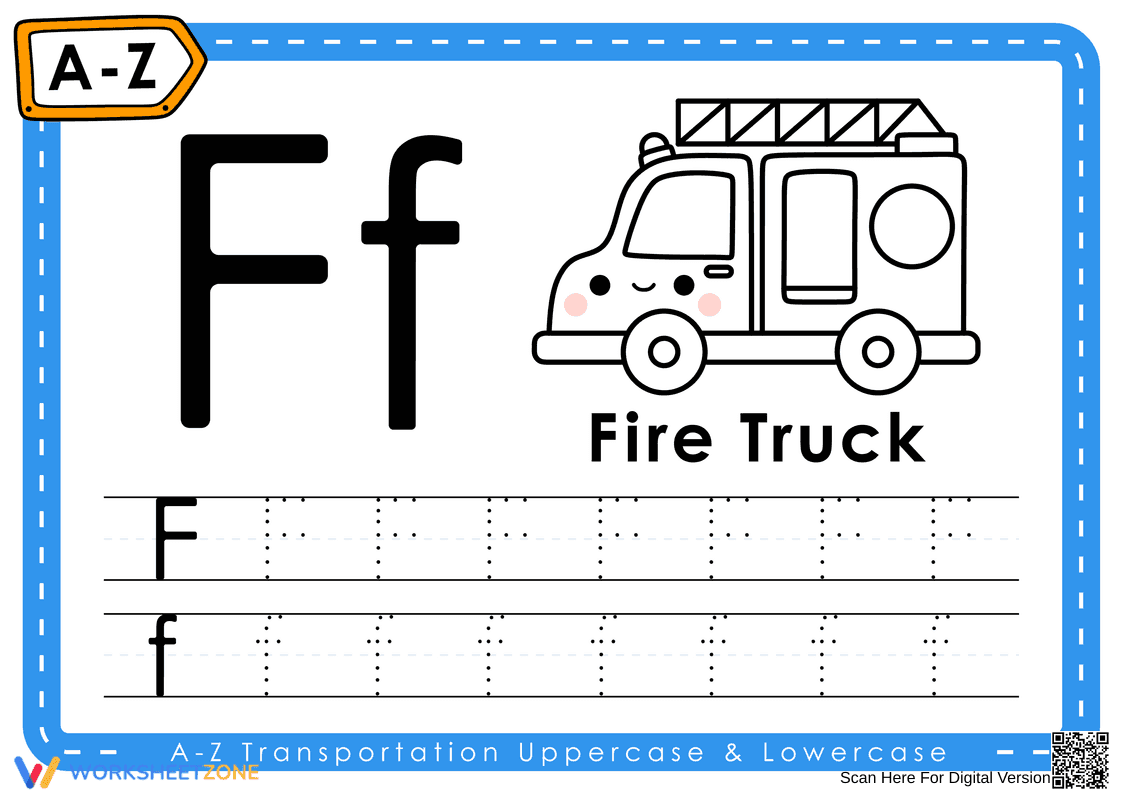

Printable Letter F Tracing Worksheet | Grade K

Paste this activity's link or code into your existing LMS (Google Classroom, Canvas, Teams, Schoology, Moodle, etc.).
Students can open and work on the activity right away, with no student login required.
You'll still be able to track student progress and results from your teacher account.
This foundational handwriting worksheet helps early learners master the letter F through guided tracing practice. By completing these structured exercises, kindergarten students develop fine motor control and letter recognition skills essential for early literacy. The clear layout ensures young writers can confidently practice both uppercase and lowercase forms independently.
At a Glance
- Grade: K · Subject: ELA
- Standard:
CCSS.ELA-LITERACY.L.K.1.A— Print many upper- and lowercase letters- Skill Focus: Letter F tracing and recognition
- Format: 1 page · 16 problems · No answer key · PDF
- Best For: Independent morning work
- Time: 10–15 minutes
This single-page printable features a large, clear model of the uppercase and lowercase letter F, accompanied by an engaging fire truck illustration to reinforce phonetic connections. The core activity includes two distinct writing lines: one dedicated to tracing eight uppercase Fs, and another for tracing eight lowercase fs. Dotted guidelines and standard primary writing lines provide the exact structural support early writers need to maintain proper letter proportions and spacing.
Zero-Prep Workflow
This resource is designed for immediate classroom implementation with absolutely no teacher setup required.
- Print (1 minute): Simply download the PDF and print the exact number of copies needed for your class.
- Distribute (1 minute): Hand out the worksheets. The intuitive layout means students instantly understand the task.
- Review (0 minutes): Because this is a tracing activity, no formal grading or answer key is necessary. Teachers can quickly scan for completion and proper pencil grip.
Total teacher prep time is under two minutes, making this an ideal, stress-free addition to any emergency sub plan or morning routine.
Standards Alignment
This handwriting practice is directly aligned to CCSS.ELA-LITERACY.L.K.1.A, which requires students to print many upper- and lowercase letters. By focusing specifically on the letter F, this targeted activity ensures students build the muscle memory required to meet this foundational literacy benchmark. Both standard codes can be copied directly into lesson plans, IEP goals, or district curriculum mapping tools.
How to Use It
This worksheet is excellent morning work. It can also be utilized during small group literacy centers after a direct instruction lesson on the /f/ sound. While students are working, teachers should observe their pencil grip and stroke direction, offering gentle corrections to ensure proper letter formation habits are established early. Most kindergarteners will complete this task comfortably within a 10 to 15-minute timeframe.
Who It's For
This resource is designed for kindergarten students learning the alphabet and developing handwriting skills. It provides necessary scaffolding for students who struggle with fine motor control, offering clear dotted paths to follow. For a comprehensive literacy block, pair this tracing sheet with a read-aloud book featuring a protagonist whose name starts with F, or a classroom anchor chart displaying F-words.
Mastering the physical act of writing is a critical stepping stone in early childhood education. This resource supports CCSS.ELA-LITERACY.L.K.1.A by helping students print many upper- and lowercase letters with accuracy and confidence. According to an EdReports 2024 analysis, explicit handwriting practice significantly improves letter formation, reading fluency, and spelling acquisition. When young learners do not have to expend excessive cognitive energy on the mechanics of holding a pencil and forming shapes, they can better focus on phonics and meaning. By isolating the letter F and providing structured tracing paths, this worksheet offers the exact type of targeted, low-stakes repetition that research indicates is necessary for developing automaticity in early writing skills.


