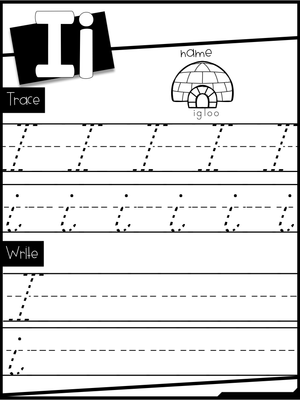
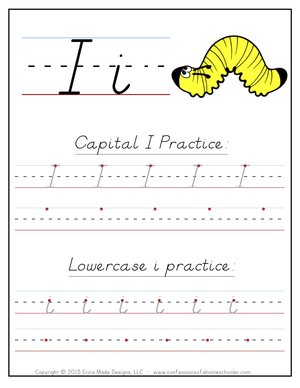
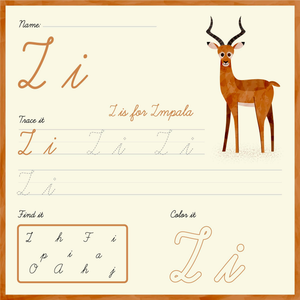
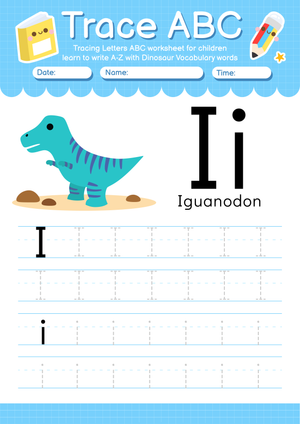
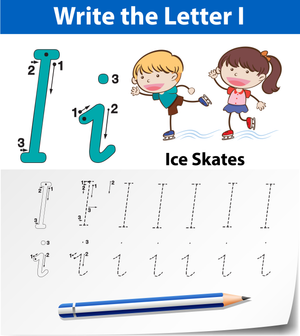
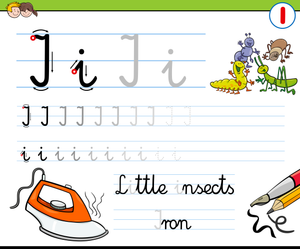
These letter i printable worksheets for 1st grade address one of handwriting's most deceptively complicated characters — a vertical stroke so minimal that students regularly mistake it for three different symbols within the same lesson. The set covers both uppercase and lowercase formation, the visual discrimination work needed to separate i from l and the numeral 1, and phonics connections that tie letter-writing practice directly to short and long i sounds. Each worksheet stands alone, so teachers can pull one for a Monday warm-up, drop it into a literacy center rotation, or run the full set as a dedicated letter-I instructional sequence.
Skills Built Across the Set
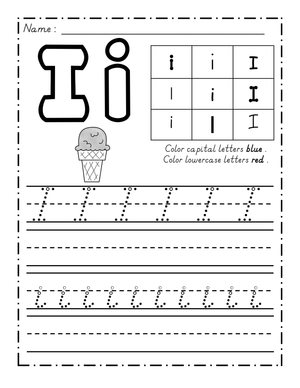
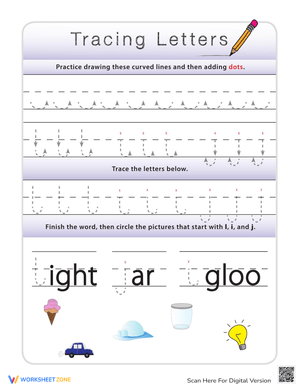
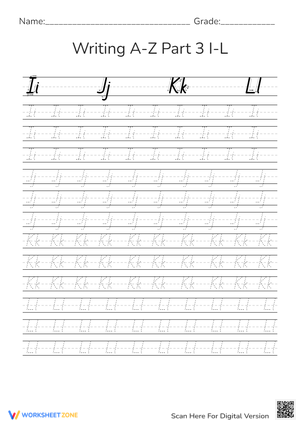
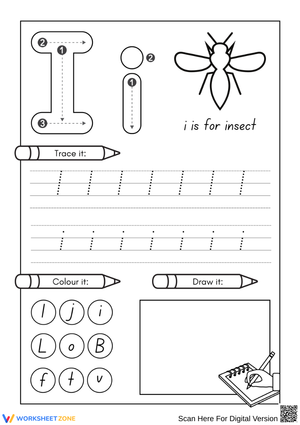
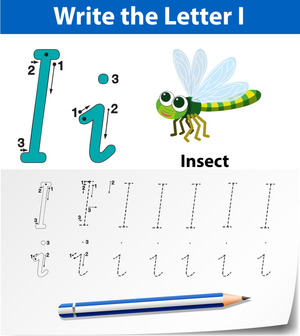
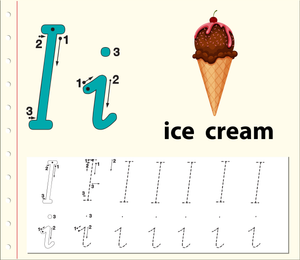
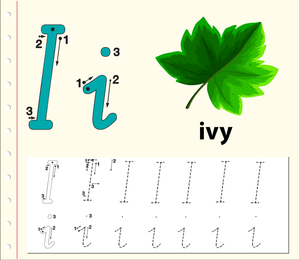
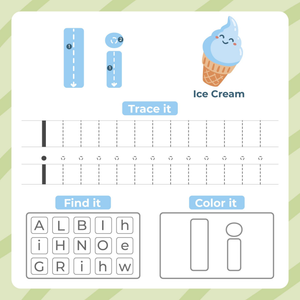
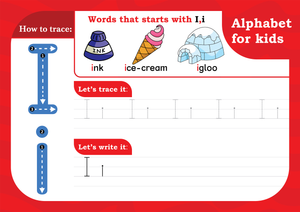
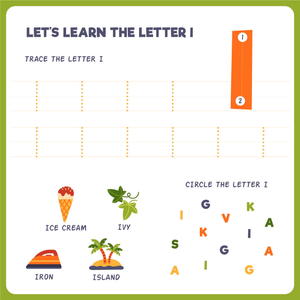
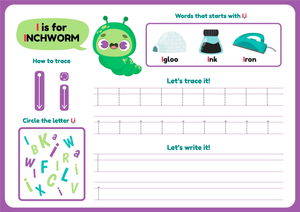
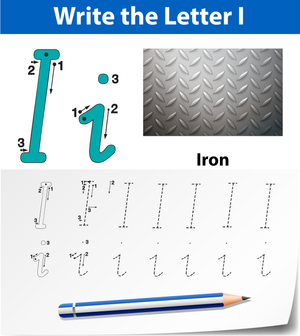
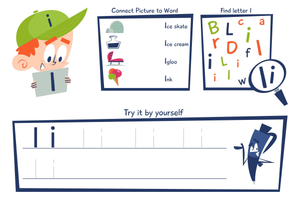
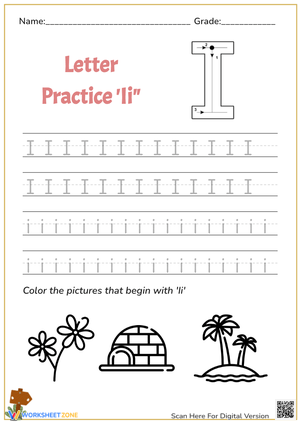
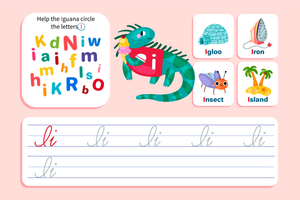
The worksheets move through a logical range without locking teachers into a fixed sequence. Tracing worksheets introduce the stroke pattern for uppercase I and lowercase i with directional arrows that mark start points and movement direction. Follow-up worksheets remove the guided paths so students write the letter independently in rows, first at a larger size and then in standard first-grade lined format. Several worksheets ask students to sort characters — placing i among similar-looking symbols so they have to identify specific distinguishing features (the dot, the consistent short height of the lowercase form) rather than simply reproduce a shape from memory. Phonics-integrated worksheets pair the letter with pictures of words like igloo, iron, and ice cream, asking students to write the letter, name the sound, and in some cases copy a simple word. That dual focus on physical formation and phonetic role is where the most transfer to independent reading happens.
Predictable Errors to Watch For When Teaching Letter I
The lowercase i looks simple on paper, but student work tells a different story. The most consistent error is dot omission — not because students forget that i has a dot, but because they add it as an afterthought and it drifts too far right, landing above the following letter or the space between words. In a quick reading scan, that produces something indistinguishable from l. A second pattern: students who do place the dot still tend to make it too large — a small circle or a flattened oval — which crowds the ascender space and creates visual noise across the line. The i/l/1 confusion intensifies during the same instructional window when students are also practicing number formation, which means first-grade teachers see this problem muddled across math journals and reading responses simultaneously, not just on handwriting pages. Worksheets that include side-by-side sorting tasks — asking students to classify each character as a letter or a number — address this more directly than any amount of verbal reminding.
Uppercase I brings a separate complication. Students who learn the basic vertical stroke first often resist adding the horizontal serifs at the top and bottom, because no other uppercase letter they have practiced uses that structure. They write a tall vertical line and consider the letter finished. Teachers have to name the serifs explicitly as a required part of the letter — not optional decoration — and model them from the first day of instruction on this character.
Standard Alignment
These worksheets support CCSS.ELA-LITERACY.L.1.1.A, which requires first graders to print all upper- and lowercase letters legibly. In most first-grade classrooms, formal handwriting instruction runs through the first trimester, with letter I typically appearing in the second or third week depending on the district's adopted scope and sequence. That timing matters: by then, students have enough pencil control to manage the short vertical stroke but often lack the fine motor precision to place the dot consistently. This is the instructional window where targeted, repeated practice does the most work — not the spring semester, when illegible habits have already had months to calcify into automatic movements that are hard to undo.
Where These Worksheets Fit Across Your Instructional Week
The most effective placement for formation practice is the opening five minutes of the literacy block. When students arrive to find letter i printable worksheets for 1st grade already waiting on their desks, they settle faster than they do standing around for verbal directions, and those first quiet minutes of writing build exactly the repeated retrieval that handwriting acquisition requires. That window also creates a natural observation opportunity: a quick walk around the room during arrival lets teachers spot the three or four students whose dots are drifting or whose lowercase i is sitting above the baseline, so a brief small-group correction can happen before the main lesson begins.
Literacy centers are a better fit for the discrimination and phonics-integrated worksheets, which benefit from a slower pace than the compressed energy of morning arrival. A laminated stroke guide posted at the center gives students a self-check reference without requiring teacher confirmation at each step, which keeps the station genuinely independent.
Tailoring the Practice for Students at Different Writing Stages
Students who are still building fine motor control get the most from the larger-format tracing worksheets, where the hand has room to complete the stroke without crowding. For these students, a golf pencil is worth trying — a full-length pencil amplifies shaky wrist movement through its length, while a shorter one keeps the motion tighter and more controlled. At the other end of the room, students who form both cases of the letter correctly can use the phonics worksheets as a writing launch: instead of practicing the letter in isolation, they write two or three short-i words and then circle every instance of the letter in their own writing. That task builds on everything the foundational letter i printable worksheets for 1st grade develop, with the added encoding demand that moves students toward fluent, automatic writing.
Frequently Asked Questions
How do I handle students who confuse lowercase i with lowercase l or the numeral 1?
Put all three forms on the board at the same time and ask students to name what makes each one distinct — the dot on i, the foot curve on l, the angled top on the numeral 1. Then run a sorting worksheet that mixes all three. Visual discrimination tasks work better than verbal reminders because they require students to do the identifying themselves, repeatedly, rather than receive the information once and move on.
Should I require the serifs on uppercase I from the very first lesson?
Yes. Students who skip the serifs write uppercase I identically to lowercase l and the numeral 1 in mixed-case work, creating a different version of the same legibility problem. Name the serifs on day one, show why they exist, and include them in every tracing and independent writing session from that point forward.
How do these worksheets connect to phonics instruction?
Several worksheets pair the letter with pictures representing both short i (inch, igloo) and long i (ice, iron). Students who work through the letter i printable worksheets for 1st grade that incorporate picture-word tasks reinforce the phoneme-grapheme connection that underlies decoding. Having students say the letter's sound aloud while writing it adds an auditory layer to the otherwise visual and motor task, which strengthens retention across both skills at once.
When in first grade should these worksheets be introduced?
Formation and tracing worksheets belong in the first trimester, during the dedicated handwriting sequence. The visual discrimination and phonics-integrated worksheets extend well into the second trimester as review and reinforcement, once the motor pattern for the letter is established and students are ready to apply it in more demanding contexts.