If you are planning a life science unit for grades 1-3, bird life cycle worksheets give students a concrete, sequential model for how living things grow and change. Unlike butterflies or frogs, birds do not undergo full metamorphosis, which makes them a useful comparison point when students are learning to distinguish gradual growth from dramatic body transformation. This guide breaks down the stages, explains how to use worksheets for more than coloring, and connects the unit to standards documentation you may need for lesson planning.
The Five Stages of a Bird Life Cycle
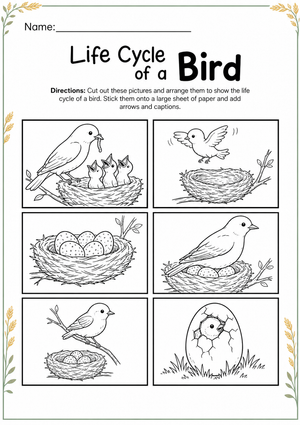
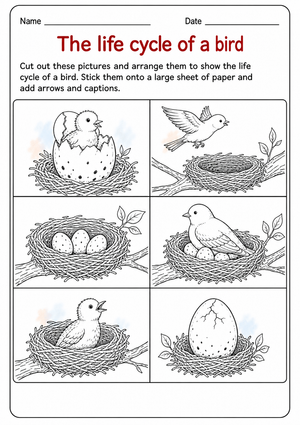
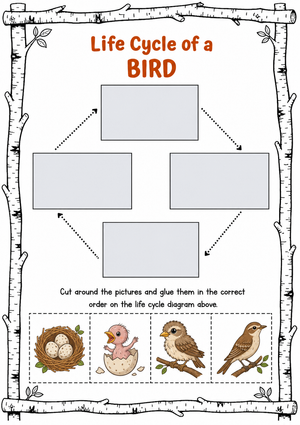
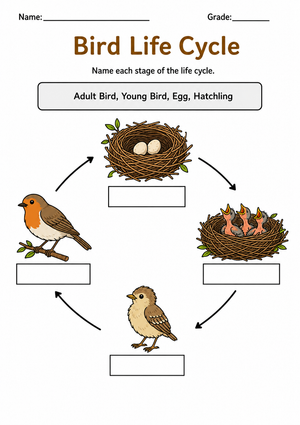
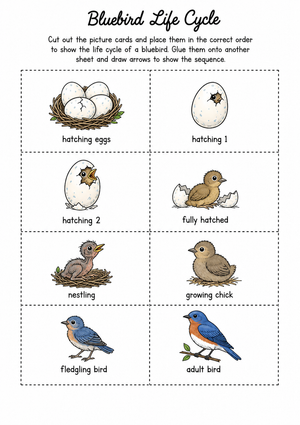
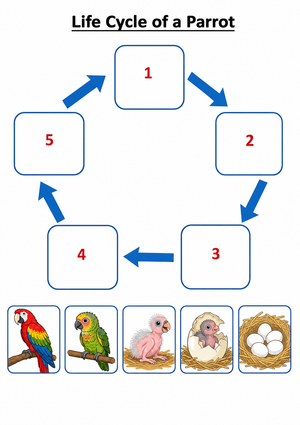
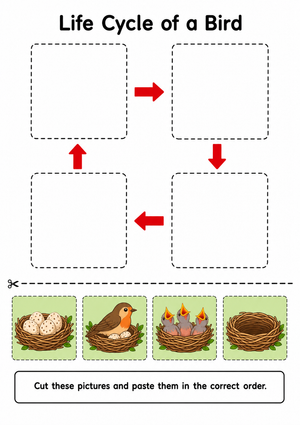
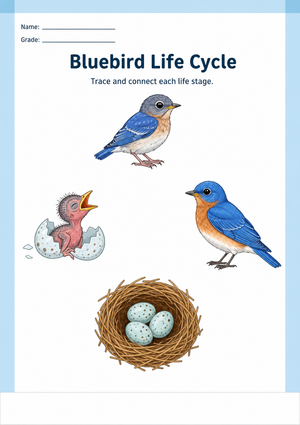
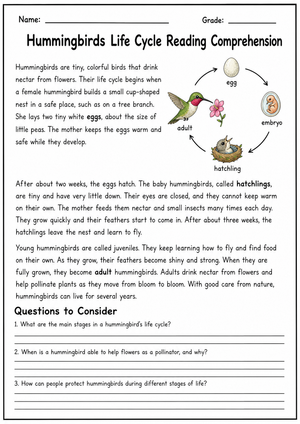
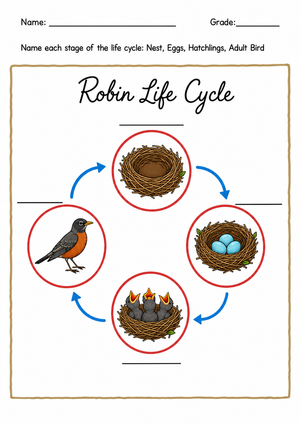
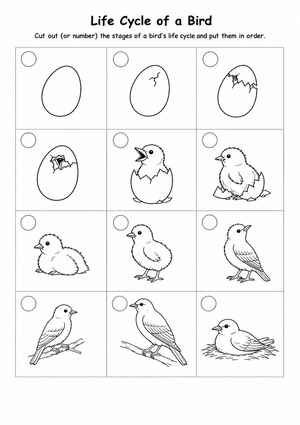
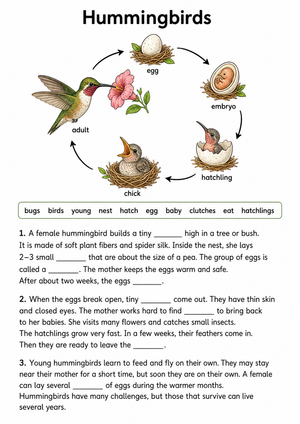
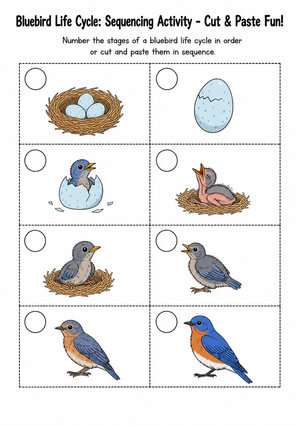
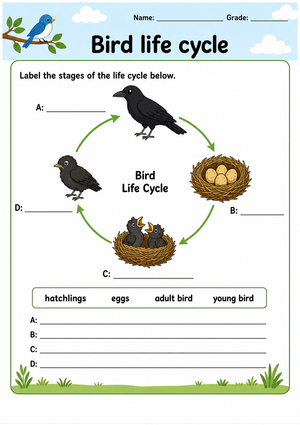
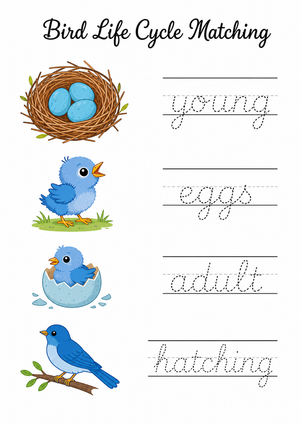
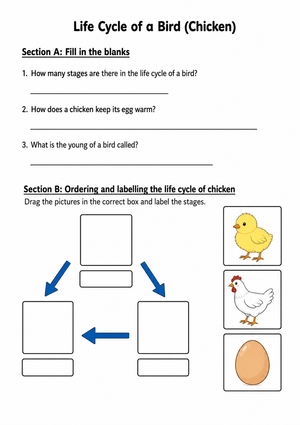
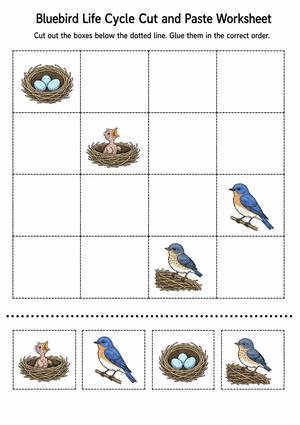
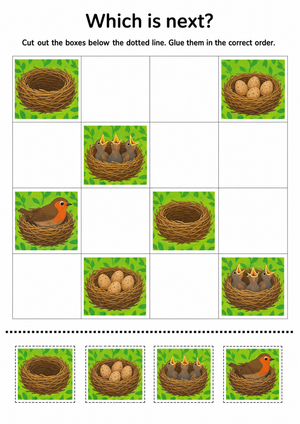
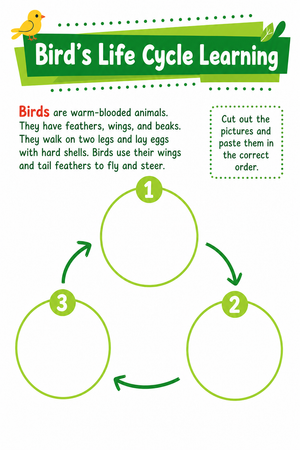
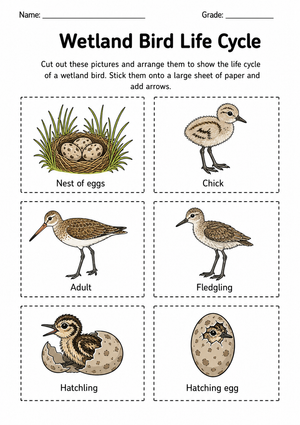
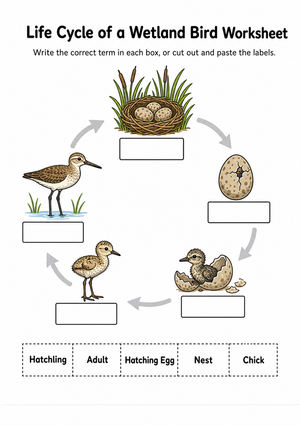
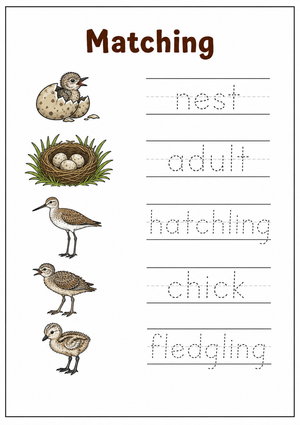
Most elementary curricula teach the bird life cycle in five stages: egg, hatchling, nestling, fledgling, and adult. Presenting these stages in order gives students a clear framework before they attempt any sequencing worksheet. The egg stage covers incubation, when a parent bird keeps the egg warm until it is ready to hatch. The hatchling stage begins the moment the chick breaks free of the shell. The nestling stage covers the period when the young bird stays in the nest and depends entirely on its parents. The fledgling stage begins once the bird has grown flight feathers and takes its first flights out of the nest. The adult stage is reached when the bird can feed, fly, and eventually reproduce independently.
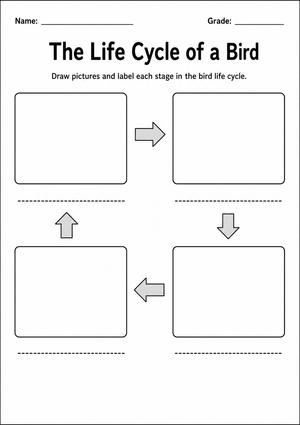
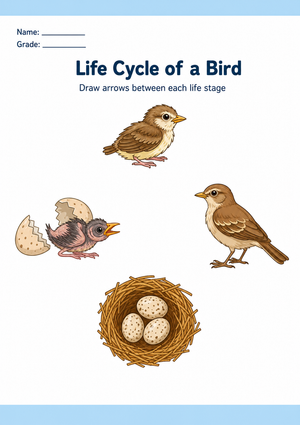
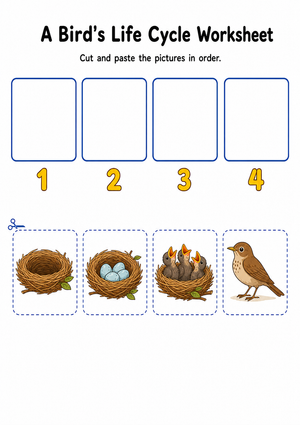
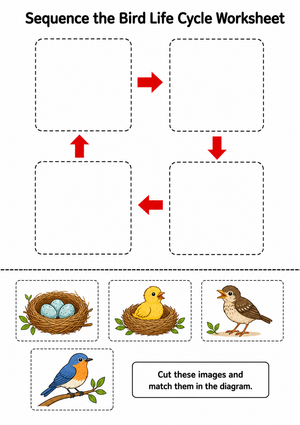
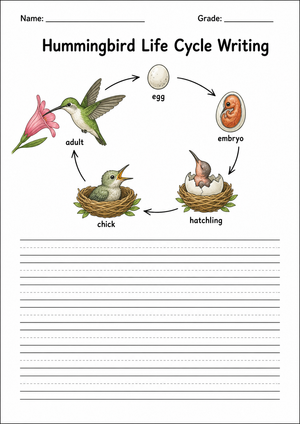
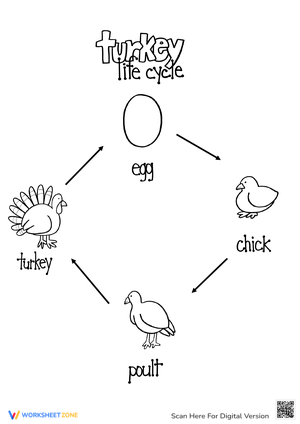
Worksheets that ask students to label or reorder these five stages work well as an introductory activity because they reinforce vocabulary and sequence at the same time. Consider pairing a labeling worksheet with a simple sentence-writing prompt so students practice both content and language skills together.
Incubation and Hatching: What Happens Inside the Egg
Incubation length is one of the most useful data points for classroom discussion because it varies so widely by species. Small songbirds typically incubate for about 10 to 14 days, while larger birds such as eagles or owls can take 30 days or more. This range gives students a real number to reason with when comparing bird species, and it is a natural entry point for a short math or data connection within a science block.
Hatchlings use a temporary, sharp bump on the top of the beak called an egg tooth to crack the shell from the inside. This structure falls off within days of hatching and does not return. A worksheet that asks students to identify the egg tooth in a diagram, or to explain its purpose in one sentence, checks for understanding of a detail that is easy to skim past in a general reading passage.
From Nestling to Fledgling: Growth and Dependence
Newly hatched chicks are covered in soft down feathers and are frequently born with their eyes sealed shut. At this stage, called the nestling stage, chicks rely completely on their parents for food, warmth, and protection. This is a good moment to introduce the vocabulary term dependence, since students will use the same concept later when comparing other animal life cycles.
As nestlings mature, they grow true flight feathers and become fledglings. Fledglings leave the nest for the first time, but they are not fully independent. Parents often continue to feed and guide fledglings for a period after the first flights. A short-answer worksheet item asking students to explain why a fledgling still needs its parents, even after leaving the nest, pushes students past simple recall and toward cause-and-effect reasoning.
Comparing Bird Life Cycles to Other Animals in the Unit
Many life science units place bird life cycles alongside butterflies or frogs, both of which undergo metamorphosis. Birds do not; a chick resembles a smaller, downy version of the adult rather than passing through a completely different larval form. A Venn diagram or two-column comparison worksheet works well here, asking students to sort features such as complete body change, nest dependence, or number of stages under bird, insect, or both.
This comparison activity reinforces a key science practice: recognizing patterns across different organisms while noticing meaningful differences. It also gives you a natural transition point if your unit moves from birds into an amphibian or insect life cycle next.
Classroom Implementation
Bird life cycle worksheets are most effective when used in more than one instructional moment rather than as a single stand-alone activity. Consider these placements across a unit:
- Use a labeling or sequencing worksheet as a warm-up before introducing new vocabulary.
- Use a short written-response worksheet mid-unit to check whether students can explain why each stage matters, not just name it.
- Use a comparison worksheet when introducing a second animal life cycle, so students actively contrast rather than passively review.
- Save a cumulative worksheet, covering all five stages plus vocabulary, for a formative assessment before any formal quiz or test.
For small-group intervention, pull students who struggle with sequencing and give them a picture-card version of the stages before returning to the text-based worksheet. This scaffolds the same content without slowing down the rest of the class.
Standards Alignment for Lesson Planning
Bird life cycle content commonly aligns with NGSS 3-LS1-1, which addresses how organisms grow, change, and reproduce over their life cycles. If your school or district requires standards documentation on lesson plans, this alignment applies directly to third-grade life science units built around bird development. When documenting your unit, note that the standard focuses on the pattern of growth and change across a life cycle, which is exactly what a stage-sequencing worksheet is designed to assess.
Frequently Asked Questions
1. What grade level is appropriate for teaching the bird life cycle?
Bird life cycle content is most commonly taught in grades 1 through 3, with third grade often anchoring the unit to NGSS 3-LS1-1. Younger grades can use simplified picture-based worksheets, while third grade typically adds vocabulary and written-response tasks.
2. How many stages are in a bird life cycle and what are they called?
Most classroom materials teach five stages: egg, hatchling, nestling, fledgling, and adult. Each stage represents a distinct point in physical development and independence from parent birds.
3. How can teachers use bird life cycle worksheets for assessment rather than just coloring activities?
Pair a labeling or coloring page with a short-response prompt, such as explaining why a nestling depends on its parents or why incubation time varies by species. This turns a low-level recall activity into a formative check of understanding.
4. What NGSS standard does bird life cycle content align with?
Bird life cycle units commonly align with NGSS 3-LS1-1, which covers how organisms grow, change, and reproduce over their life cycles.
5. How does a bird life cycle differ from an insect life cycle like a butterfly?
Birds grow gradually from egg to adult without changing body form, while insects like butterflies undergo complete metamorphosis, passing through a larval stage that looks nothing like the adult. A comparison worksheet is an effective way to help students see this distinction clearly.