If you are planning a K-2 animal life cycles unit, penguins give you a life stage sequence that is visual, easy to sort, and full of behaviors young learners find memorable. Before you hand out a life cycle of a penguin worksheet, it helps to have the stage-by-stage background clear in your own head so you can answer student questions and steer small-group discussion with confidence.
Stage One: The Egg and Incubation
The life cycle begins with a single egg, which most penguin species incubate for roughly 38 to 42 days before hatching. In many species, incubation duties are shared between the male and female, with each parent taking turns keeping the egg warm while the other forages for food at sea. This shared parenting is a useful discussion hook for students, since it invites comparison to how other animals in your classroom library divide caregiving tasks.
The 38-42 day incubation window is longer than many familiar classroom animals, such as a chicken egg, which typically hatches in about 21 days. Framing this comparison for students builds a foundation for later lessons on variation across species and helps them see that life cycle timing is not one-size-fits-all across the animal kingdom.
Stage Two: Hatching
Hatching itself is a slow, physical process rather than an instant event. The chick uses its beak to pip through the shell, a process that can take 24 to 48 hours from the first crack to full emergence. This is a great moment to introduce vocabulary like pip, hatch, and shell, and to have students predict what the chick might look like the moment it emerges compared to how it looks a few weeks later.
Stage Three: The Chick Stage
Newly hatched chicks are covered in soft down feathers rather than the sleek, waterproof feathers of an adult. Down keeps chicks warm but is not suited for swimming, which is why chicks stay close to the nest or colony rather than entering the water. During this stage, parents feed chicks through regurgitation, bringing food back from foraging trips and passing it directly to the chick. This stage is rich for classroom discussion around dependency, parental care, and how physical features like down feathers relate to a young animal's needs and limitations.
Stage Four: The Creche, or Chick Nursery
As chicks grow older but are still not ready to fend for themselves, many species form group nurseries called creches, sometimes gathering 100 or more chicks together while the adults head out to sea to forage. Creche behavior is one of the most engaging talking points in a penguin unit because it doubles as both a life cycle stage and a social behavior lesson. Chicks huddled together in a creche get warmth and some protection from predators, since a large group is harder for a predator to target than a lone chick. This is a natural bridge into a broader conversation about animal adaptations for survival, tying directly into K-2 life science standards around how young animals survive when parents are not immediately present.
Stage Five: Fledgling to Adult
Once a chick molts its down feathers and grows waterproof adult plumage, it becomes a fledgling and can finally enter the water to swim and hunt independently. Fledging marks the shift from full dependency toward self-sufficiency, though the young penguin still has growing to do. Penguins typically reach full reproductive maturity and adulthood between 3 and 6 years old, at which point they are ready to find a mate and begin the cycle again with an egg of their own.
Classroom Implementation
To turn this background knowledge into a hands-on lesson, consider these approaches:
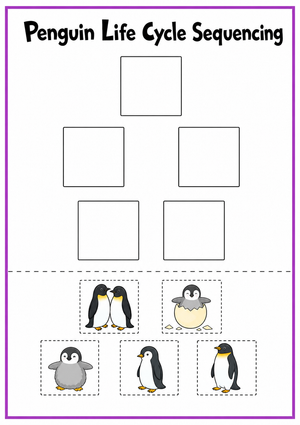
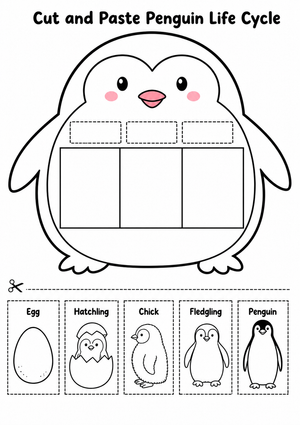
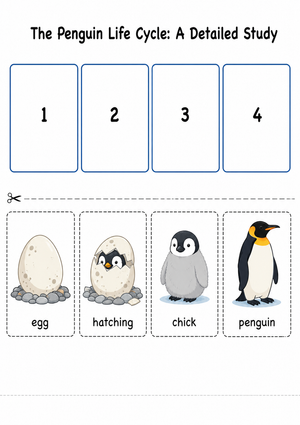
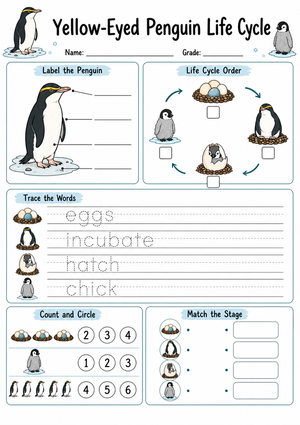
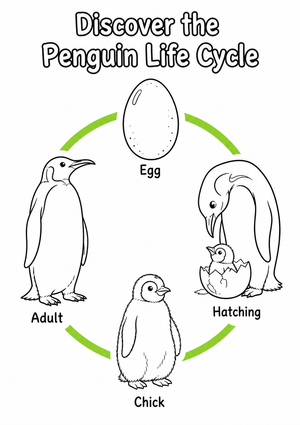
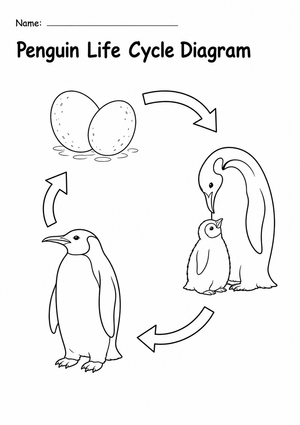
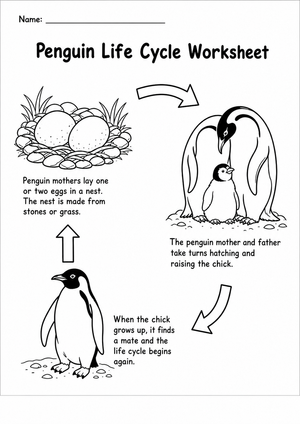
- Have students sequence the five stages (egg, hatching, chick, fledgling, adult) using a cut-and-paste or life cycle wheel worksheet, then label each stage in their own words.
- Build a small vocabulary set around down, fledgling, creche, and incubation, and use picture cards so students can match the term to the correct life cycle stage.
- Use the creche stage as a discussion prompt: ask students why a group of 100+ chicks might be safer than one chick alone, connecting to broader lessons on group behavior and predator protection.
- Pair the penguin life cycle with a comparison chart against a metamorphosing animal already in your unit, such as a butterfly or frog, so students can see direct development versus metamorphosis side by side.
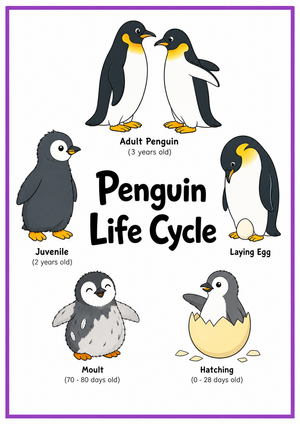
- Use a labeling diagram as a quick formative assessment or exit ticket, checking whether students can correctly identify and sequence all five stages independently.
Frequently Asked Questions
1. How long does it take a penguin egg to hatch?
Most penguin eggs are incubated for roughly 38 to 42 days before hatching begins. The hatching process itself, from the first pip to full emergence, can take another 24 to 48 hours.
2. What do penguin parents do during incubation and early chick care?
In many species, both parents share incubation duties, taking turns keeping the egg warm while the other forages at sea. After hatching, parents feed the chick through regurgitation until the chick is old enough to fend for itself.
3. What is a penguin creche and why do chicks form one?
A creche is a group nursery where older chicks gather together, sometimes 100 or more at once, while adults are away foraging. Grouping together offers chicks warmth and some protection from predators during this vulnerable stage.
4. At what age do penguins become adults and start breeding?
Penguins typically reach full reproductive maturity and adulthood between 3 and 6 years old, at which point they are ready to breed and begin the life cycle again.
5. How can teachers use penguin life cycle worksheets in a K-2 science unit?
Worksheets work well for sequencing the five life cycle stages, building vocabulary around terms like down, fledgling, and creche, and supporting formative assessment through labeling diagrams or exit tickets. They also pair naturally with a comparison activity against a metamorphosing animal already covered in the unit.