


























Views
Downloads

Bird's Life Cycle Worksheet | Grade 6 Essential Science
Paste this activity's link or code into your existing LMS (Google Classroom, Canvas, Teams, Schoology, Moodle, etc.).
Students can open and work on the activity right away, with no student login required.
You'll still be able to track student progress and results from your teacher account.
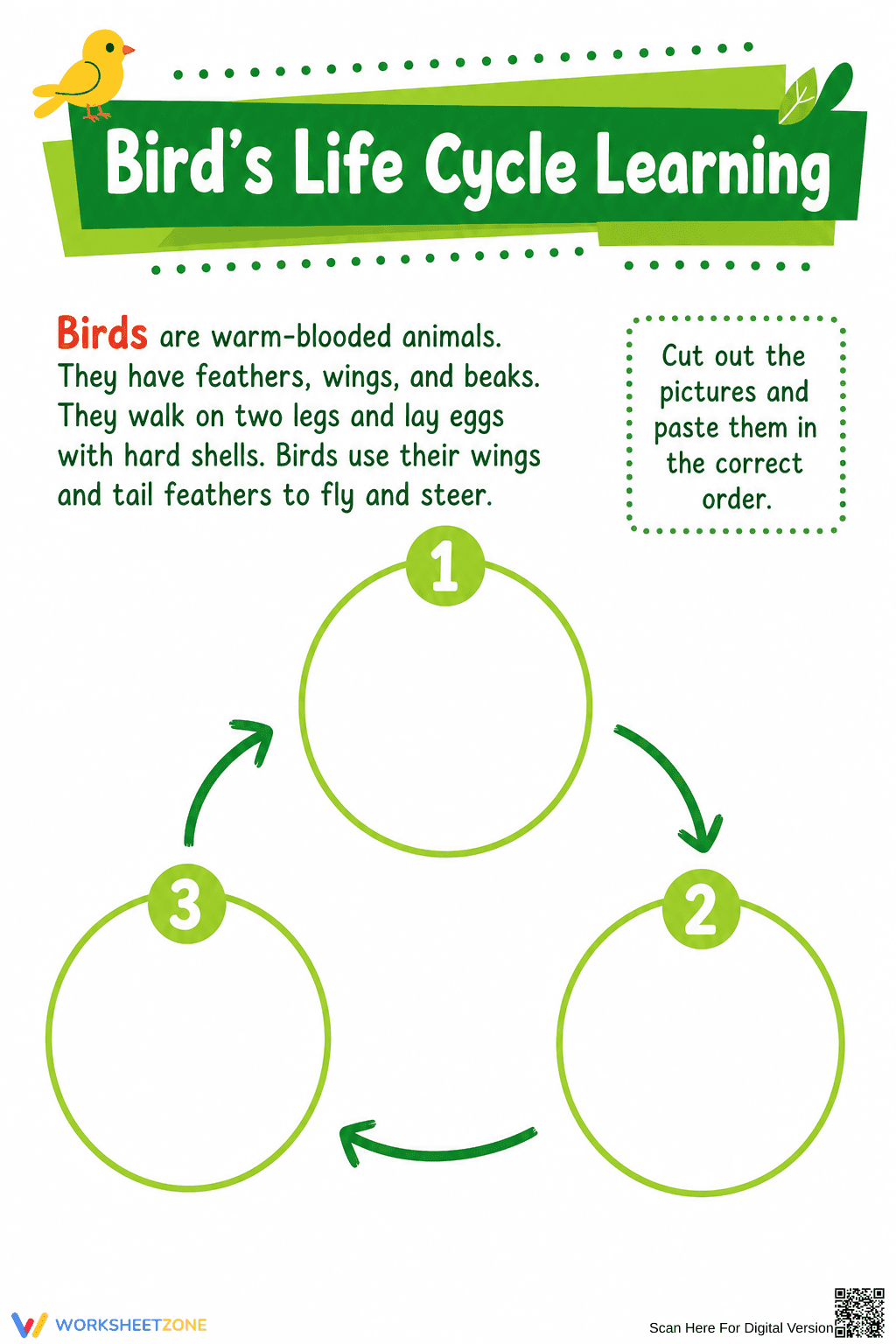
This Grade 6 science worksheet provides a hands-on approach to understanding avian development. Students identify key characteristics of birds and sequence the three primary stages of their life cycle. By engaging with visual models, learners solidify their grasp of biological growth patterns and the specific traits that define the class Aves.
At a Glance
- Grade: 6 · Subject: Science
- Standard:
MS-LS1-5— Construct a scientific explanation for how factors influence the growth of organisms- Skill Focus: Life cycle sequencing and avian characteristics
- Format: 2 pages · 3 problems · Answer key included · PDF
- Best For: Introductory biology lessons and formative assessment
- Time: 15–20 minutes
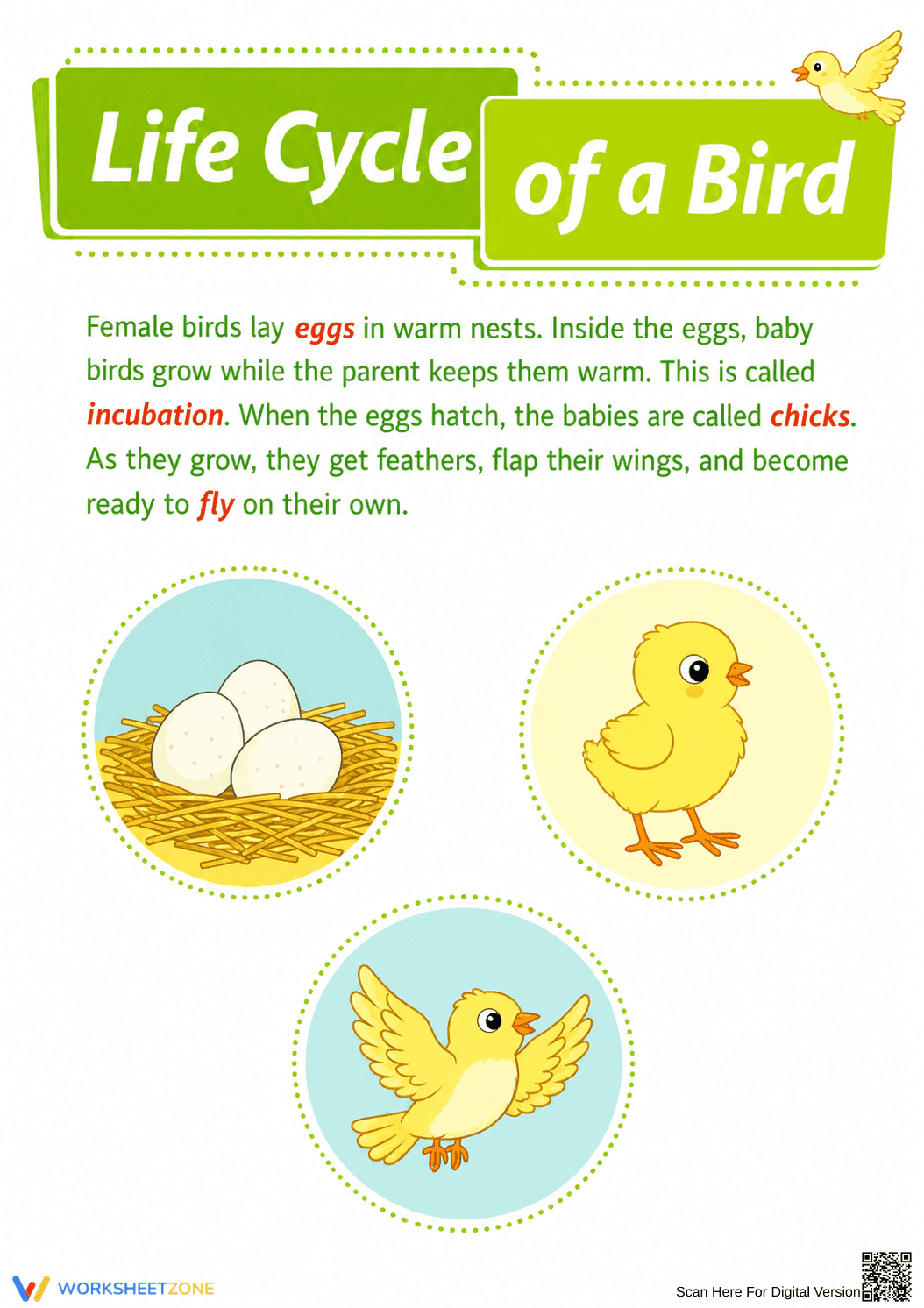
This two-page PDF resource features a structured diagram for sequencing and a dedicated information sheet. The first page includes a concise summary of bird anatomy—covering feathers, wings, and egg-laying—alongside a numbered cycle template. The second page provides high-quality illustrations of eggs, chicks, and adult birds designed for a cut-and-paste activity. A clear instructional block guides students through the process of ordering biological stages.
Zero-Prep Workflow
- Print: Print the two-page set for each student in under 1 minute.
- Distribute: Hand out materials and have students read the introductory text to identify avian traits (5 minutes).
- Review: Students cut, arrange, and paste the life cycle stages, followed by a quick peer-review or teacher check (10 minutes).
Total teacher preparation time is under 2 minutes, making it an ideal choice for substitute plans or bell-ringer activities.
Standards Alignment
This resource aligns with MS-LS1-5, focusing on the growth and development of organisms. By sequencing the transition from egg to chick to adult, students visualize the progression of life stages inherent to avian species. This activity supports the understanding that organisms have unique and diverse life cycles but all have in common birth, growth, reproduction, and death. Both standard codes can be copied directly into lesson plans, IEP goals, or district curriculum mapping tools.
How to Use It
Use this worksheet as a formative assessment after a lecture on vertebrate characteristics. It serves as an excellent bridge between direct instruction and independent research. Teachers can observe students during the "arrange" phase to identify misconceptions about incubation or maturation before the final pasting. It is also effective as a station activity during a broader unit on animal kingdoms, requiring approximately 15 to 20 minutes for completion.
Who It's For
This worksheet is designed for middle school students, particularly those in Grade 6, who require visual scaffolds to master biological concepts. It is highly effective for English Language Learners (ELLs) due to the clear imagery and simplified vocabulary. Pair this resource with a short video on bird nesting habits or an anchor chart detailing the differences between mammals and birds for a comprehensive learning experience.
According to the RAND AIRS 2024 report, the integration of visual sequencing tasks in middle school science significantly improves the retention of complex biological processes. This worksheet utilizes the MS-LS1-5 standard to guide students through the life cycle of a bird, emphasizing the transition from incubation to independent flight. By requiring students to physically manipulate the stages of growth, the activity reinforces the instructional model, moving from reading facts to active application. Research from Fisher & Frey (2014) suggests that such scaffolded, hands-on activities are essential for developing scientific literacy in diverse classrooms. This resource provides a structured framework for observing how organisms grow and develop over time, ensuring that Grade 6 students meet core curriculum requirements while building fine motor and organizational skills. It serves as a reliable tool for both general education and specialized instructional settings.


