




























Views
Downloads

Essential Genetics Vocabulary & Punnett Square Worksheet

Paste this activity's link or code into your existing LMS (Google Classroom, Canvas, Teams, Schoology, Moodle, etc.).
Students can open and work on the activity right away, with no student login required.
You'll still be able to track student progress and results from your teacher account.
This comprehensive genetics worksheet provides high school biology students with a structured environment to master heredity concepts. By bridging the gap between technical vocabulary and mathematical probability, students develop a functional understanding of how traits are passed from parents to offspring. It ensures learners can accurately predict phenotypic outcomes using standard genetic models.
At a Glance
- Grade: 9-10 · Subject: Biology
- Standard:
HS-LS3-3— Apply concepts of statistics and probability to explain the variation and distribution of traits.- Skill Focus: Genetics Vocabulary & Punnett Squares
- Format: 4 pages · 18 problems · Answer key included · PDF
- Best For: Mid-unit reinforcement or test preparation
- Time: 45–50 minutes
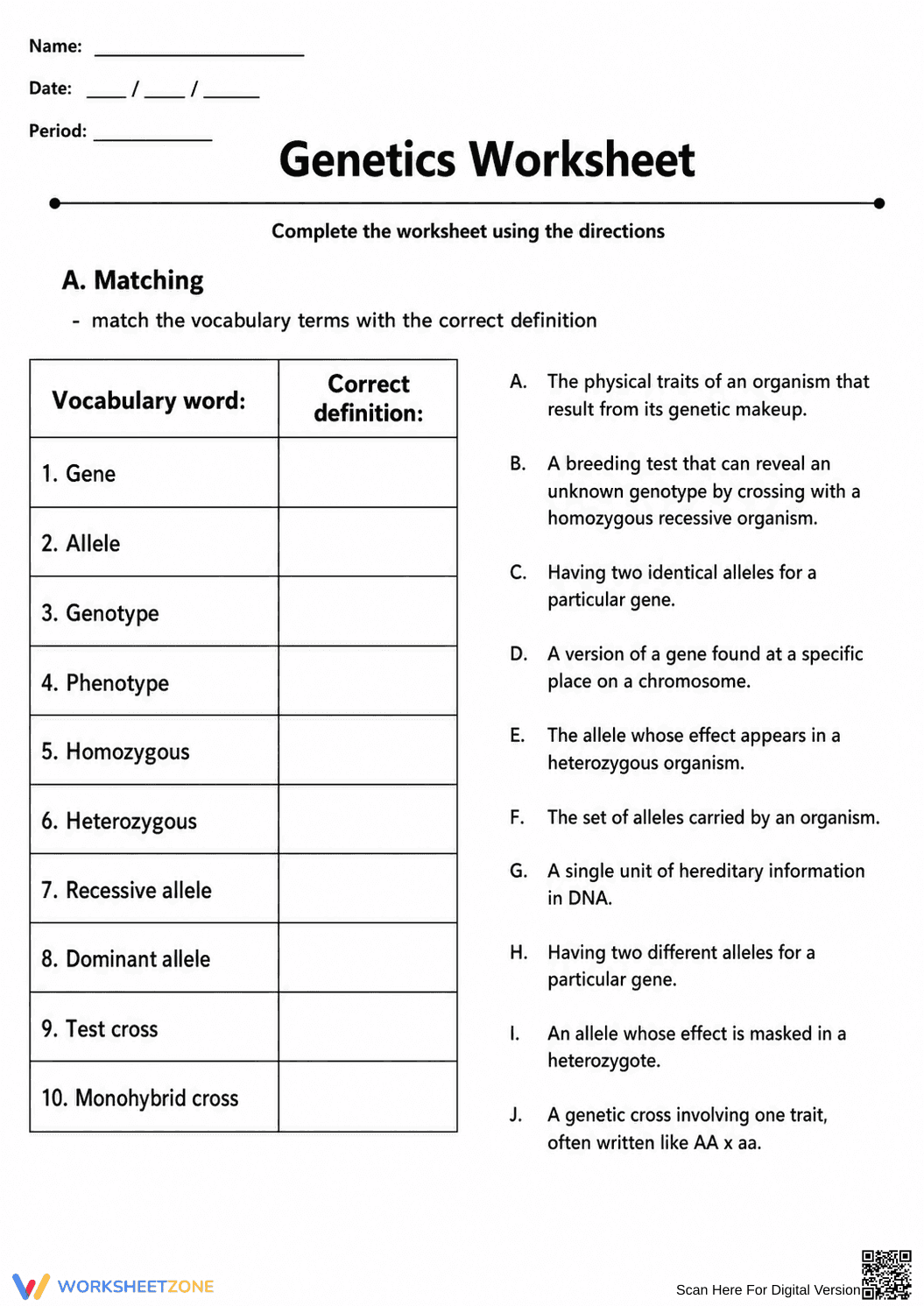
This resource includes a 10-term vocabulary matching section covering essential nomenclature like alleles, genotypes, and phenotypes. Following the terminology, students engage with multiple Punnett square scenarios, including monohybrid crosses, test crosses, and incomplete dominance problems. The layout provides ample space for drawing squares and writing detailed explanations of phenotypic and genotypic ratios.
Skill Progression
- Guided practice: The worksheet begins with a 10-item matching bank to establish a common language, ensuring students understand the difference between homozygous and heterozygous states before solving problems.
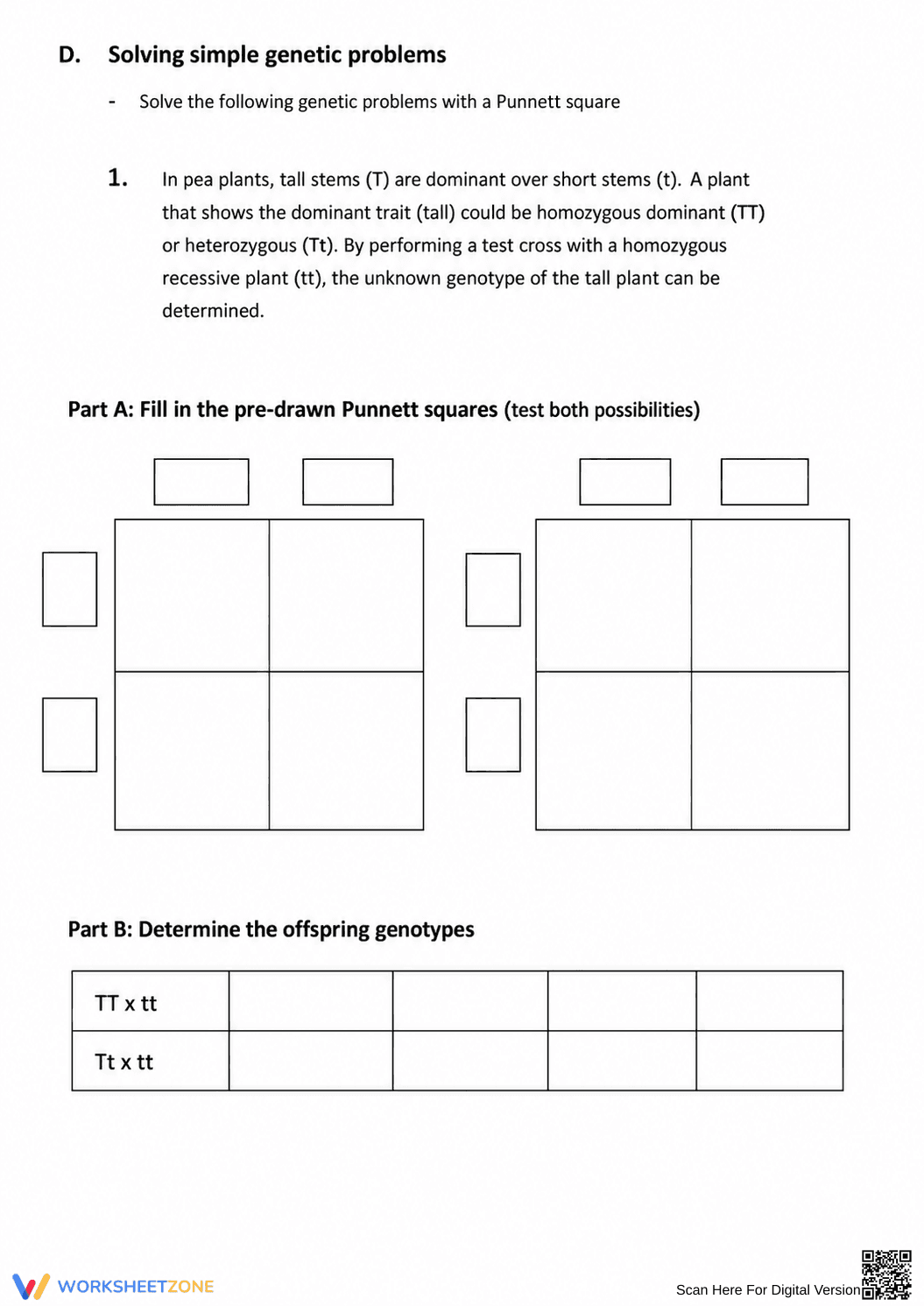
- Supported practice: Students transition to pre-drawn Punnett squares where they must fill in gametes and determine offspring genotypes for tall and short pea plants.
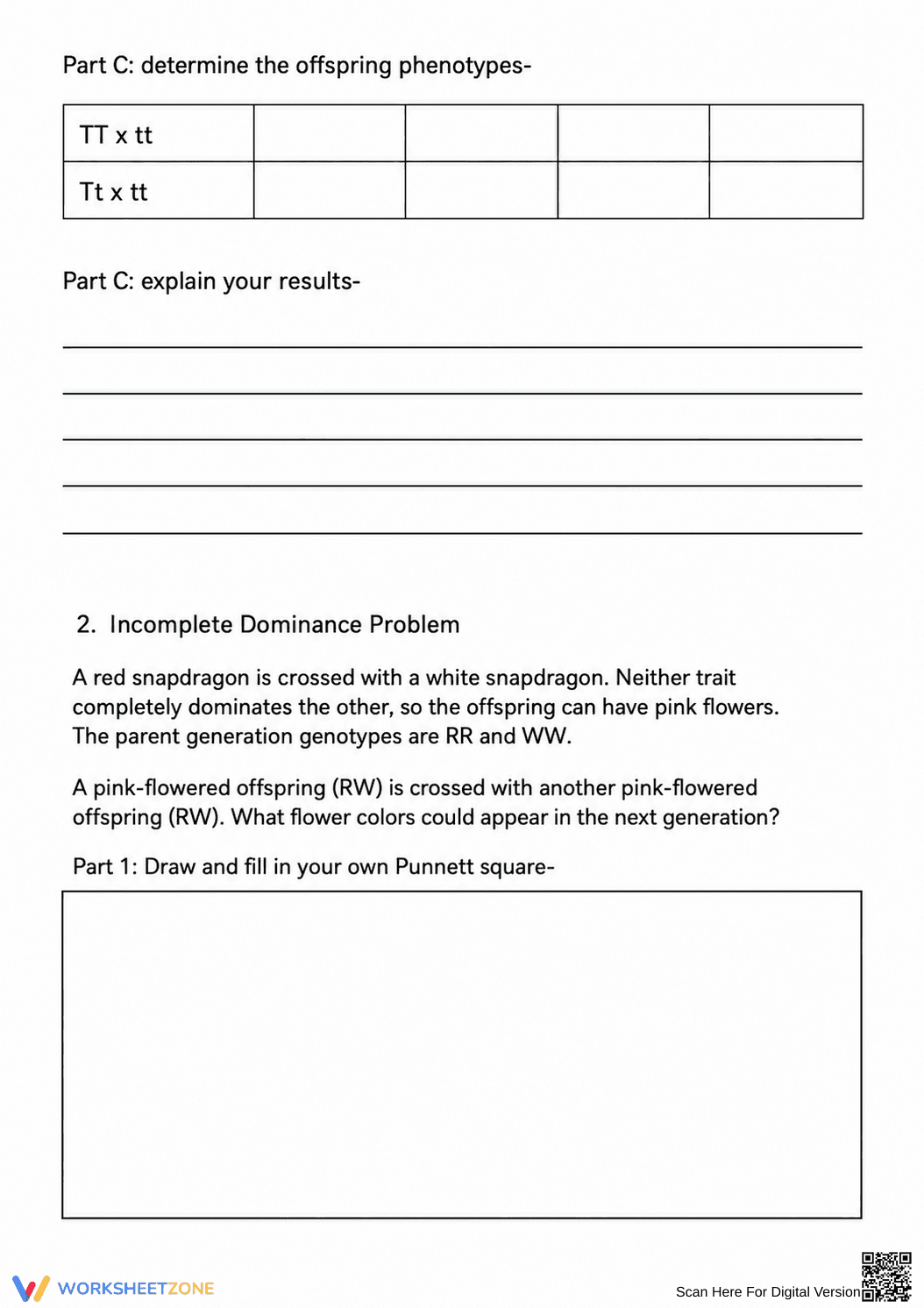
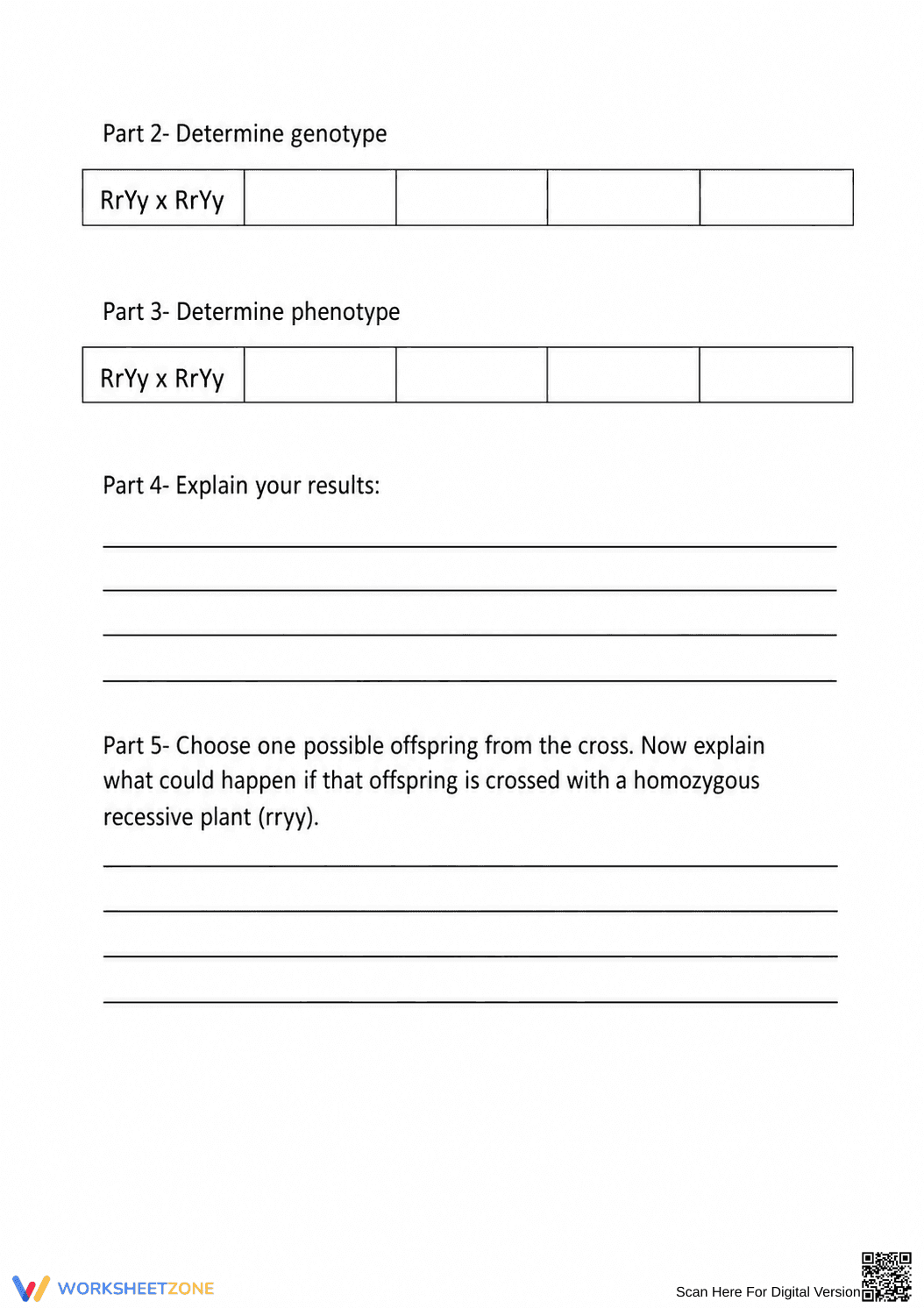
- Independent practice: The final pages challenge students to construct their own squares for complex scenarios like incomplete dominance in snapdragons and multi-trait analysis.
This gradual-release model moves students from simple recall to higher-order application of Mendelian and non-Mendelian inheritance patterns.
Standards Alignment
This resource is aligned to `HS-LS3-3`, which requires students to apply concepts of statistics and probability to explain the variation and distribution of expressed traits in a population. It also supports MS-LS3-2 by developing models to describe why sexual reproduction results in genetic variation. Both standard codes can be copied directly into lesson plans, IEP goals, or district curriculum mapping tools.
How to Use It
Use this worksheet as a formative assessment during the middle of a genetics unit. After direct instruction on Punnett squares, assign the first two pages to check for immediate understanding of Mendelian ratios. Teachers should circulate during the incomplete dominance section to observe if students are correctly identifying the intermediate phenotype (RW). Completion typically takes 45 to 50 minutes.
Who It's For
This resource is designed for Grade 9 and 10 biology students, though it serves as an excellent challenge for advanced Grade 8 life science learners. It is particularly effective for students who require visual scaffolds, such as the pre-drawn grids. Pair this with a physical "monster genetics" lab or a digital simulation for a complete instructional cycle.
Mastery of genetics vocabulary is a critical predictor of success in advanced biological sciences. According to research by Fisher & Frey (2014), the gradual release of responsibility—moving from vocabulary matching to independent problem-solving—is essential for internalizing complex scientific frameworks. This worksheet directly addresses HS-LS3-3 by requiring students to calculate the probability of specific trait distributions. By engaging with 18 distinct tasks across 4 pages, students move beyond rote memorization into the application of Mendelian laws. The inclusion of non-Mendelian patterns like incomplete dominance ensures that learners recognize the nuances of genetic expression. Data from the NAEP indicates that students who can successfully model genetic crosses demonstrate higher proficiency in scientific reasoning and data interpretation. This resource provides the necessary repetition and scaffolding to ensure that high school learners can confidently explain the mechanisms of heredity and variation within populations.


