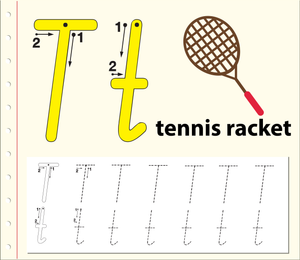
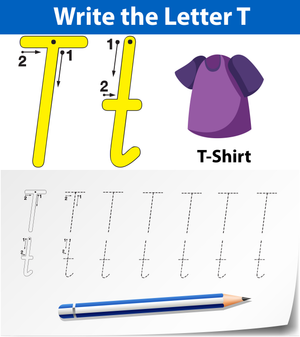
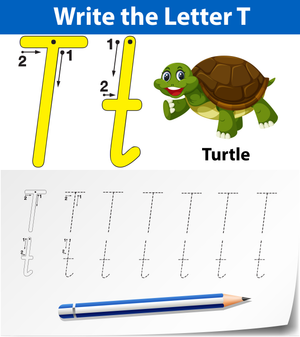
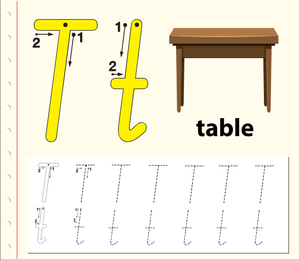
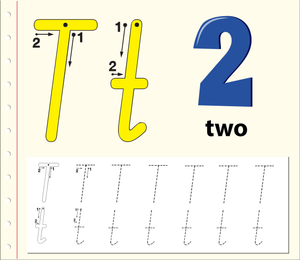
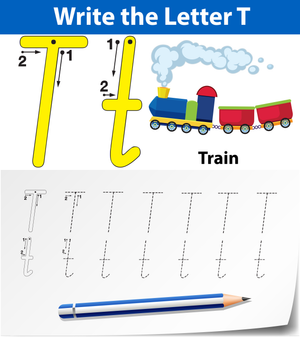
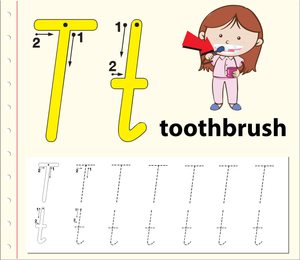
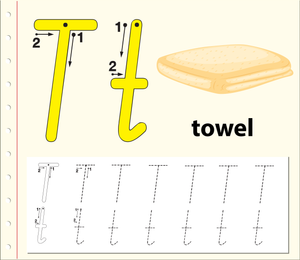
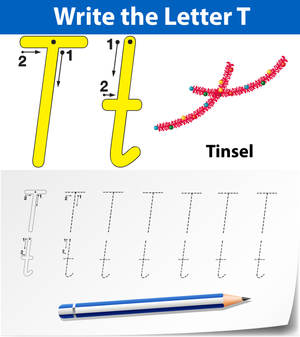
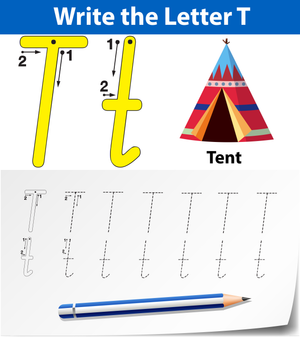
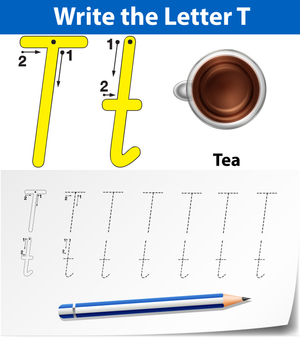
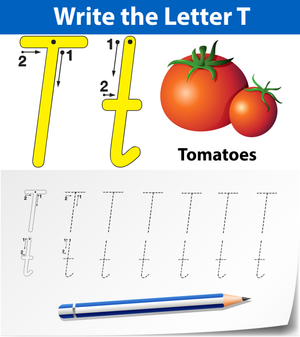
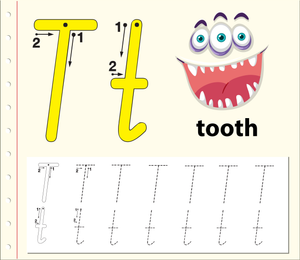
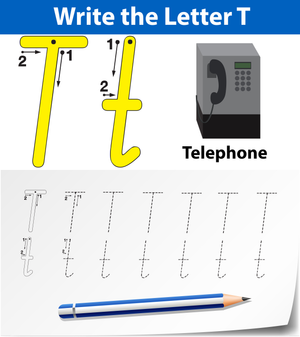
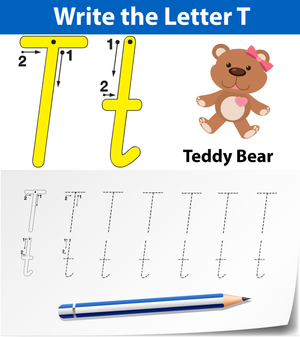
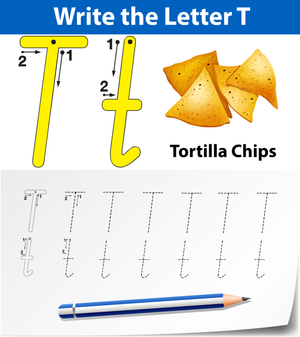
Why cursive letter T handwriting worksheets?
Cursive T is one of the trickier letters to teach because the uppercase and lowercase forms ask students to do almost opposite things with their hands. The capital T opens with a curved cap and sweeps into a downstroke, while the lowercase t is a tall vertical line finished with a separate crossbar. When you hand a class a full-alphabet cursive packet, the letter T often gets three lines of practice and then disappears. That is rarely enough for students still building fine motor control. Handwriting is a motor skill, not just a visual one, so students learn the letter by producing it many times, not by studying a model once. A dedicated set of cursive T worksheets lets you slow down, isolate the stroke, and give every learner enough repetitions to build muscle memory before connecting the letter into words.
Uppercase T loop versus lowercase t crossbar
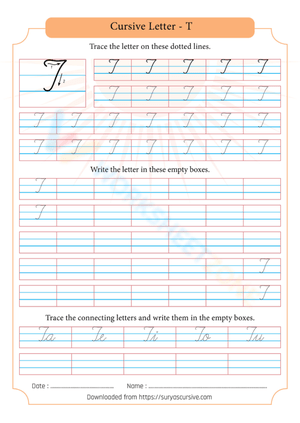
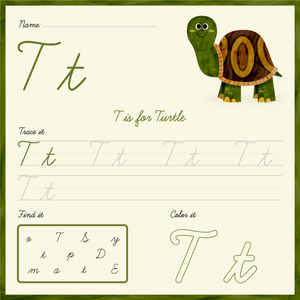
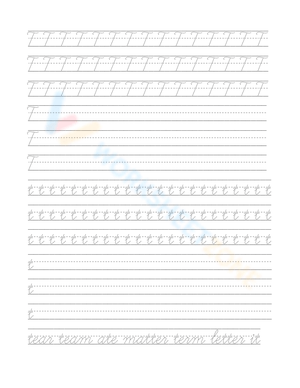
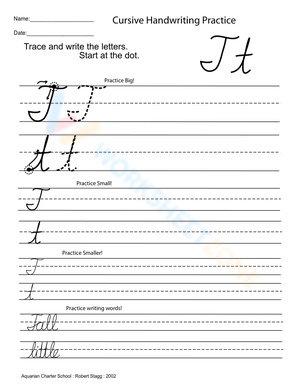
You get the best results when you treat the two forms as separate skills taught in the same block. The uppercase cursive T begins near the top line with a small forward cap, curves back into a downstroke, and ends with a tail that swings toward the next letter. The lowercase t stays closer to its print cousin: students pull a tall stroke down from just below the top line, retrace slightly, and add a horizontal crossbar. The most common errors are crossing the lowercase t too high and dropping the entry stroke that connects it to the letter before it.
Here is the detail that changes how students perform: the lowercase cursive t is one of the few letters where the pencil lifts. Most cursive is taught as one continuous motion, but the crossbar is a deliberate second stroke. If you do not name that pencil lift out loud, students try to loop the crossbar into the downstroke and produce a shape that reads like a lowercase l or b. Teaching the class to say down, retrace, lift, then cross turns a frustrating letter into a two-step routine they can self-check.
Using these worksheets in real classes
Cursive T practice works best as a short, predictable warm-up rather than a long standalone lesson. Five to seven minutes at the start of a handwriting block is enough to build the stroke without tiring young hands. Try this routine:
- Model both forms on the board while narrating each stroke and the pencil lift.
- Have students trace the guided letters first, then copy independently in the blank rows.
- Ask them to circle their single best t before moving on, which builds self-assessment.
- Close with two or three T-words so the letter connects into real writing.
Keep completed sheets in a handwriting folder so you can show growth across the unit and quickly spot which students need another round.
Frequently asked questions
1. How many repetitions does a student need to master a cursive letter?
There is no fixed number, but most students need far more than one line of practice. Plan for short, repeated sessions across several days rather than one long drill, since spaced repetition builds handwriting muscle memory more reliably than a single heavy session.
2. What is the correct stroke order for uppercase T versus lowercase t?
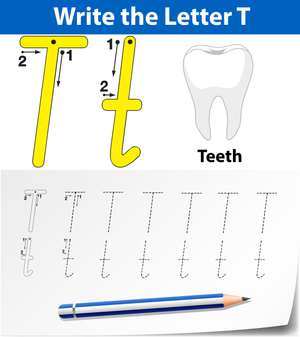
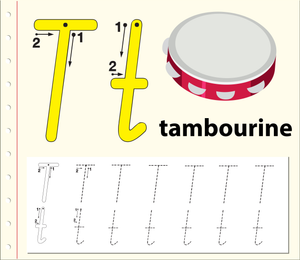
For the uppercase T, start with a small forward cap near the top line, curve into a downstroke, and finish with a tail toward the next letter. For the lowercase t, pull a tall stroke down, retrace, lift the pencil, and add the crossbar at about two-thirds height.
3. At what grade should cursive T be introduced?
Most experts recommend starting formal cursive around third grade, when students generally have the hand coordination needed for joined letterforms. Younger students can preview the strokes, and older students often use these sheets for review or intervention after a shaky first exposure.
4. How do I use these sheets for small groups versus the whole class?
For whole-class work, use the sheet as a timed warm-up with modeling on the board. For small groups, slow down, watch each student's pencil path, and give immediate feedback on stroke direction and slant so errors do not become habits.
5. How do cursive T worksheets fit a state-mandated curriculum?
Single-letter sheets give you documented, sequential practice you can point to when cursive is required. They break a full mandate into manageable daily steps and create a paper trail of student progress across the alphabet.