


























Views
Downloads
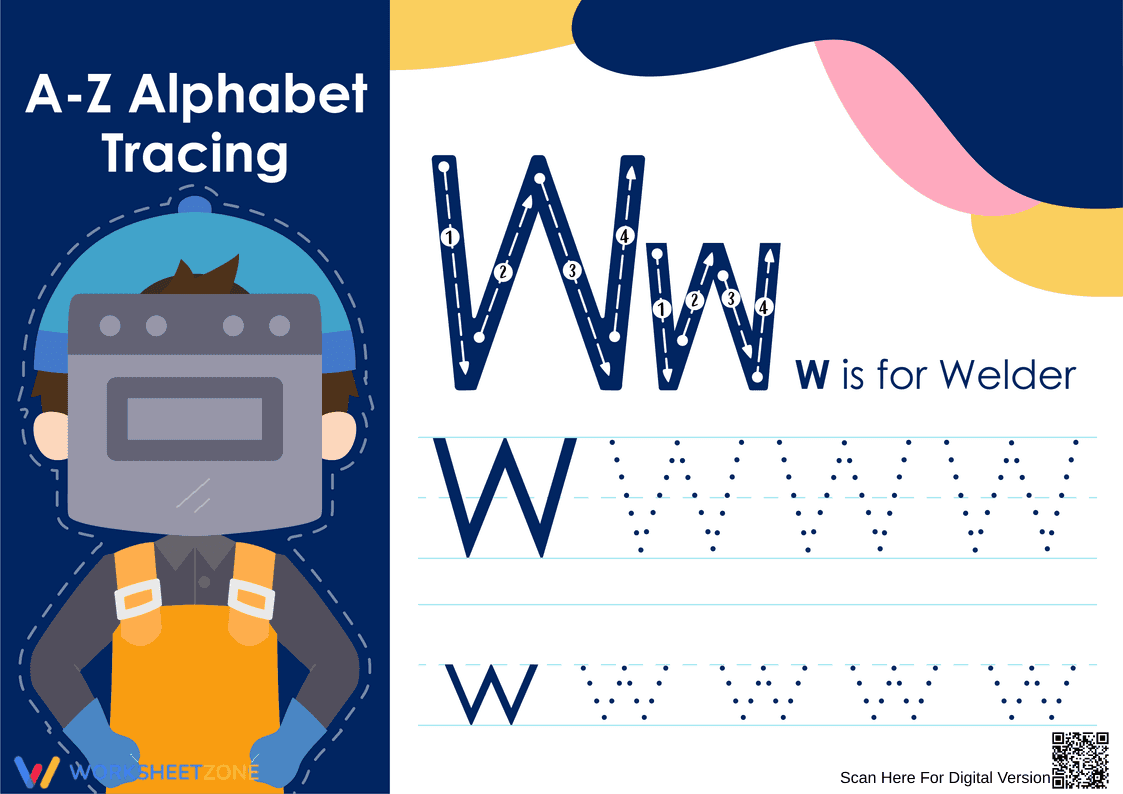

Printable Letter W Tracing Worksheet | Pre-K & K
Paste this activity's link or code into your existing LMS (Google Classroom, Canvas, Teams, Schoology, Moodle, etc.).
Students can open and work on the activity right away, with no student login required.
You'll still be able to track student progress and results from your teacher account.
This foundational handwriting worksheet provides early learners with targeted practice for the letter W. By tracing both uppercase and lowercase forms, students develop essential fine motor control and letter recognition skills. The clear visual guides ensure proper stroke order, setting the stage for confident, legible penmanship.
At a Glance
- Grade: Kindergarten · Subject: ELA
- Standard:
CCSS.ELA-LITERACY.L.K.1.A— Print many upper- and lowercase letters- Skill Focus: Letter W tracing and recognition
- Format: 1 page · 10 problems · No answer key · PDF
- Best For: Independent practice and centers
- Time: 10–15 minutes
Inside this single-page resource, educators find a structured approach to letter formation. The page features a large, guided example of uppercase and lowercase W with numbered directional arrows modeling correct stroke sequence. Below, students complete two rows of dotted tracing practice. A thematic welder illustration provides a phonetic connection reinforcing letter-sound correspondence.
Zero-Prep Workflow
This resource is designed for immediate classroom implementation with minimal teacher setup:
- Print (1 minute): Simply download the PDF and print the required number of copies. The high-contrast design ensures clear dotted lines even on standard black-and-white school printers.
- Distribute (1 minute): Hand out the sheets along with pencils or thick crayons for younger learners who need a wider grip.
- Review (1 minute): Briefly model the stroke order on the board using the numbered arrows as a guide, then let students work independently.
With prep time under three minutes, this activity perfectly suits emergency sub plans.
Standards Alignment
This handwriting practice is directly aligned with CCSS.ELA-LITERACY.L.K.1.A, which requires students to print many upper- and lowercase letters. By focusing on the specific motor patterns required for the letter W, the activity supports early literacy foundations. Both standard codes can be copied directly into lesson plans, IEP goals, or district curriculum mapping tools.
How to Use It
This tracing sheet is highly versatile. Use it during morning arrival as a quiet, focused task to settle students into the daily routine. Alternatively, place it in a literacy center alongside tactile letter-building materials like playdough or sand trays. As students work, observe their pencil grip and stroke direction; this serves as a quick formative assessment to identify children who may need targeted occupational therapy strategies or pencil grips. Expected completion time ranges from 10 to 15 minutes.
Who It's For
This resource is ideal for Preschool and Kindergarten students who are transitioning from tracing basic lines to forming actual letters. For students needing extra support, consider placing the page in a dry-erase sleeve so they can practice multiple times with a marker. It pairs perfectly with a direct instruction phonics lesson introducing the /w/ sound or a read-aloud featuring words starting with W.
Effective handwriting instruction remains a critical component of early literacy development. According to a comprehensive review by EdReports 2024, explicit instruction in letter formation, such as the guided stroke practice provided here, significantly improves both reading fluency and written expression in early elementary students. This worksheet targets CCSS.ELA-LITERACY.L.K.1.A, helping students print many upper- and lowercase letters with accuracy. By integrating directional arrows and repetitive tracing tasks, the resource builds the essential muscle memory required for automaticity. When young children do not have to expend cognitive energy on how to form a letter, they can dedicate more working memory to phonics, spelling, and eventually, complex composition. This targeted practice ensures that foundational motor skills are firmly established, paving the way for future academic success across all subject areas.


