


























Views
Downloads
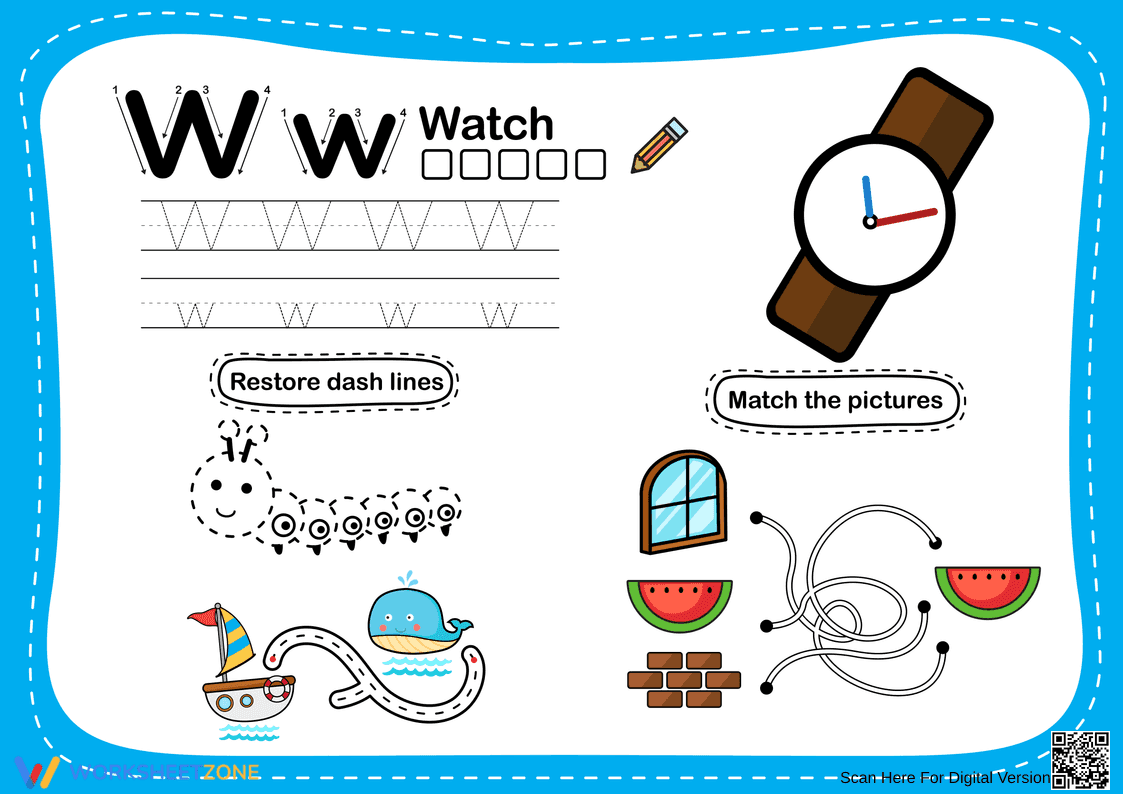

Letter W Alphabet Tracing Worksheet | Essential Grade K
Paste this activity's link or code into your existing LMS (Google Classroom, Canvas, Teams, Schoology, Moodle, etc.).
Students can open and work on the activity right away, with no student login required.
You'll still be able to track student progress and results from your teacher account.
This Letter W alphabet tracing worksheet provides foundational literacy practice for early learners. Students develop proper letter formation for both uppercase and lowercase W while strengthening fine motor skills through path-tracing and visual matching. It ensures students connect the letter shape to its phonetic sound using familiar vocabulary like watch and watermelon.
At a Glance
- Grade: Kindergarten · Subject: ELA
- Standard:
CCSS.ELA-LITERACY.RF.K.1.D— Recognize and name all upper- and lowercase letters of the alphabet- Skill Focus: Letter W formation and initial sounds
- Format: 1 page · 6 tasks · Answer key included · PDF
- Best For: Morning work or literacy centers
- Time: 10–15 minutes
Inside this single-page PDF, you will find a structured layout designed for independent work. It features numbered stroke guides for uppercase and lowercase W, a dedicated line for tracing the word Watch, and two restore dash lines activities that build pencil control. The worksheet concludes with a match the pictures maze connecting the letter W to a window, wall, and watermelon.
The zero-prep workflow for this resource is designed for maximum efficiency in busy classrooms. First, print the single-page PDF in about 30 seconds. Next, distribute the sheets to students during your phonics block or as a transition activity. Finally, review the completed letter forms and matching paths during small-group rotations to check for grip and stroke accuracy in under 1 minute. This makes it an ideal choice for emergency sub plans.
This resource is specifically aligned to `CCSS.ELA-LITERACY.RF.K.1.D`, which requires students to recognize and name all upper- and lowercase letters of the alphabet. By providing both versions of the letter W alongside visual cues, it supports the transition from letter recognition to active production. This standard code can be copied directly into lesson plans, IEP goals, or district curriculum mapping tools.
Use this worksheet as a formative assessment after introducing the letter W sound. Observe students as they follow the numbered arrows to ensure they are not writing the letters from the bottom up. It also serves as an excellent quiet-time activity for students who finish their primary ELA tasks early, requiring approximately 12 minutes for thorough completion. You can use the matching section to prompt verbal identification of the objects.
This worksheet is ideal for preschool, kindergarten, and first-grade students who need reinforced practice with specific letter shapes. It is particularly helpful for English Language Learners (ELLs) who benefit from the visual pairing of the letter with common objects. Pair this with a physical alphabet tray or a letter-sound anchor chart for a multi-sensory experience that supports diverse learning styles.
According to research from Fisher & Frey (2014) on the gradual release of responsibility, providing clear visual scaffolds like numbered stroke guides is essential for early writing success. This worksheet implements those findings by guiding students through the specific movements required for the letter W, which is often challenging due to its multiple diagonal strokes. By integrating fine motor path tracing with formal letter formation, the resource addresses the developmental needs of 4- to 6-year-olds. The inclusion of initial sound matching further reinforces the phonological awareness necessary for CCSS.ELA-LITERACY.RF.K.1.D mastery. Data from the RAND AIRS 2024 report suggests that consistent, short-burst practice with individual graphemes significantly improves long-term letter-name fluency. This printable provides a structured, high-utility tool for achieving these foundational literacy benchmarks in any early childhood setting.


