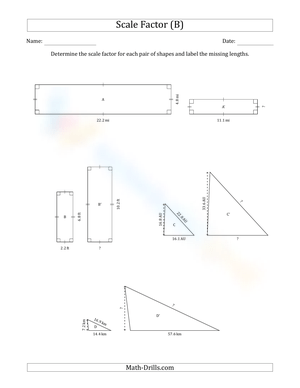
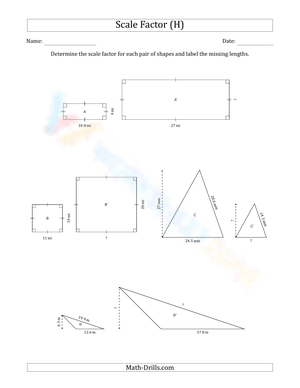
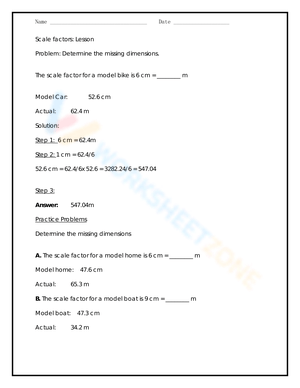
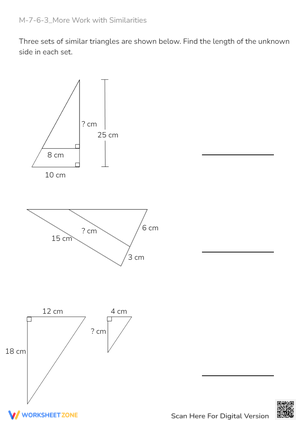
Scale factor sits at an awkward junction in the middle school math sequence. It depends on ratio reasoning students built in grade 6, it drives the scale drawing work required in grade 7, and it resurfaces again in grade 8 when dilations and similarity enter the picture. A single worksheet rarely covers that span well, which is why most classrooms benefit from a short progression of scale factor worksheets rather than one isolated assignment. Teachers who sequence scale factor practice explicitly from ratio tables, to scale drawings, to dilation coordinates report fewer misconceptions resurfacing at test time, because each worksheet reinforces the same multiplier idea in a new geometric context instead of treating scale factor as a one-off topic.
What CCSS.7.G.A.1 Asks Students to Do
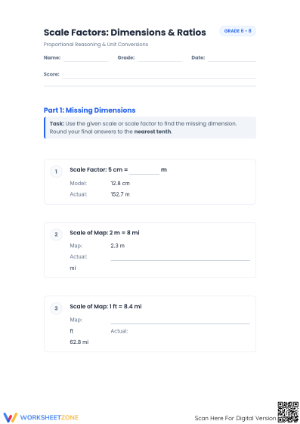
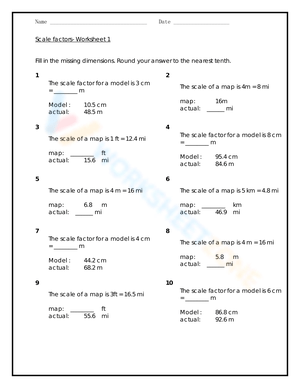
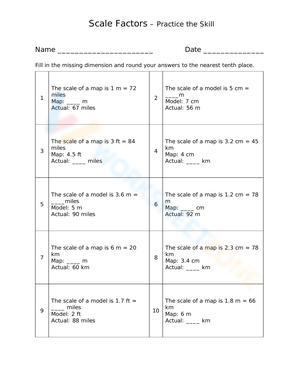
CCSS.7.G.A.1 requires students to solve problems involving scale drawings, including computing actual lengths and areas from a scale drawing and reproducing a drawing at a different scale. That single standard packs in three distinct skills: finding an actual length from a scaled one, finding a scaled length from an actual one, and redrawing a figure at a new scale. Scale factor worksheets built around 7.G.A.1 typically isolate each skill before mixing them, so students practice one direction of the calculation at a time before they are asked to move flexibly between scale drawing and actual measurement.
Defining Scale Factor Clearly Before Practice Begins
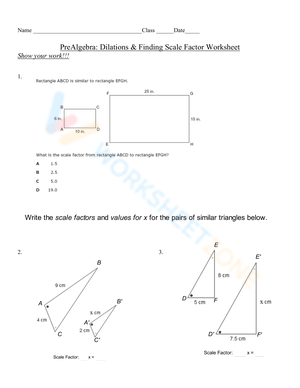
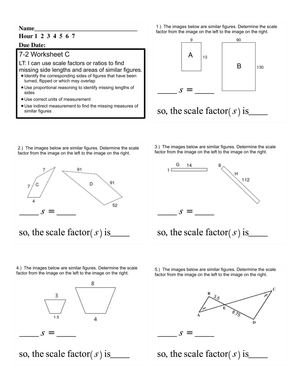
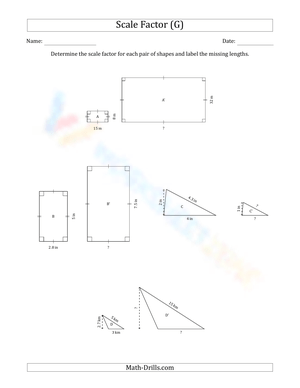
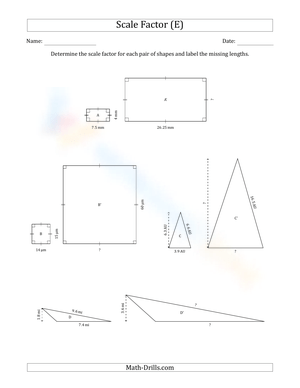
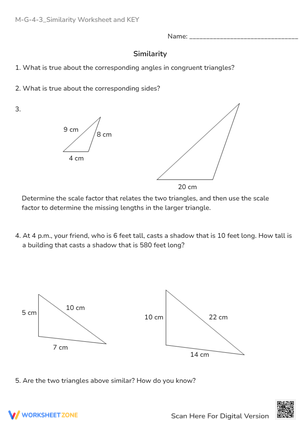
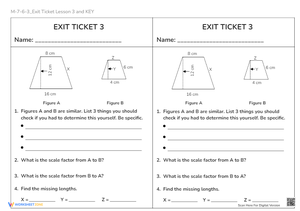
Scale factor is the constant multiplier that relates corresponding lengths between a scale drawing or model and the actual object, producing similar figures. Before assigning any worksheet, it helps to have students state the definition in their own words and identify the multiplier in a simple example, such as a 1-inch map length representing 50 actual miles. Worksheets that open with a warm-up identifying scale factor from labeled figures, rather than jumping straight into computation, tend to reduce the number of students who apply the multiplier in the wrong direction later in the assignment.
Sequencing from Ratio Foundations to Dilations
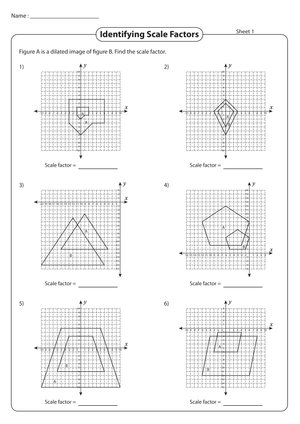
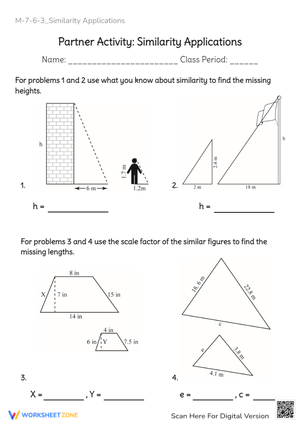
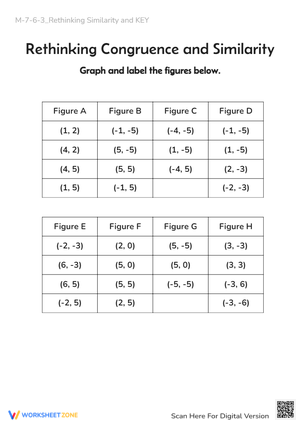
Scale factor work builds on grade 6 ratio and proportional reasoning (6.RP) before extending into grade 8 dilations and similarity (8.G.A). A practical sequence for a geometry unit looks like this. Start with grade 6 style ratio table worksheets that use scale factor language explicitly, such as scaling a recipe or a simple shape by a given multiplier. Move into grade 7 scale drawing worksheets that require computing actual or scaled lengths and areas. Finish with grade 8 worksheets that plot dilations on a coordinate grid using a center point and scale factor, connecting the same multiplier concept to transformations. This vertical alignment matters most for teachers who loop with students across grade bands or who are building an intervention block that spans multiple grade levels in the same room.
- Grade 6: ratio tables and simple scaling of quantities
- Grade 7: scale drawings, floor plans, and map problems
- Grade 7-8: area change after scaling
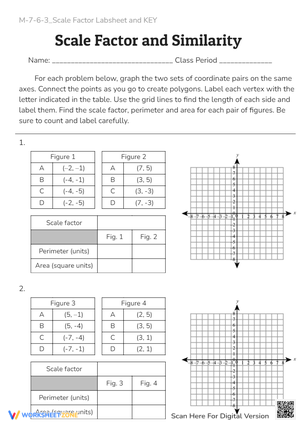
- Grade 8: dilations on a coordinate plane
The Area Misconception Every Scale Factor Worksheet Should Address
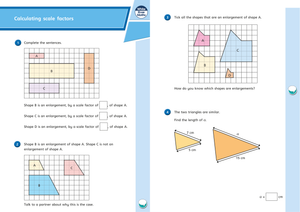
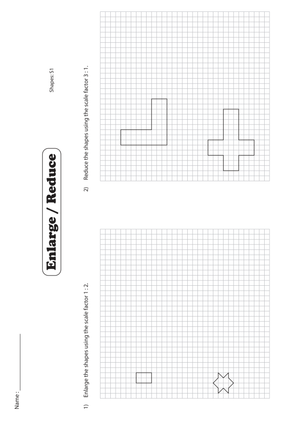
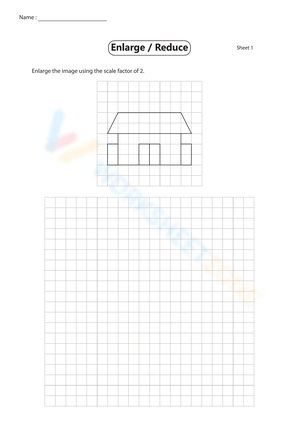
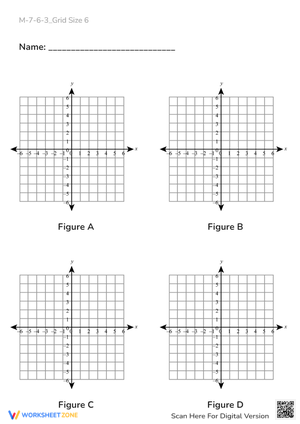
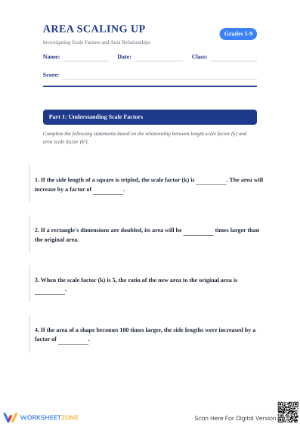
Area scales by the square of the linear scale factor, a frequent point of confusion that worksheets specifically target. Students who correctly multiply a length by a scale factor of 3 will often multiply the original area by 3 as well, instead of by 9. A worksheet section built specifically around this misconception, where students first calculate new side lengths and then calculate new area from those lengths, forces the squaring step to happen visibly rather than being skipped. Pairing a numeric problem with a grid-based drawing where students can count squares reinforces why the area relationship is squared rather than linear, which tends to stick better than a rule stated on its own.
Classroom Implementation
When rolling out a scale factor worksheet set, introduce one skill per day rather than combining all three formats in a single assignment early in the unit. Day one can focus on identifying scale factor from labeled similar figures. Day two can shift to computing actual or scaled lengths given a known scale factor. Day three can bring in area change, since it depends on the first two skills being solid. By day four or five, a mixed worksheet that combines all three formats works as a checkpoint before a quiz. This staged rollout also makes it easier to spot which day a particular student started to struggle, which is useful information heading into a parent conference or an IEP progress note.
Frequently Asked Questions
1. What grade level are scale factor worksheets typically used for?
Scale factor worksheets are most commonly used in grades 6 through 8, starting with ratio-based scaling in grade 6, moving into scale drawings in grade 7, and extending into dilations in grade 8.
2. How is scale factor different from a ratio or proportion?
A ratio compares two quantities, and a proportion states that two ratios are equal. Scale factor is the specific multiplier derived from that ratio that transforms one length into a corresponding length on a similar figure.
3. How does scale factor affect area versus length?
Length scales directly by the scale factor, but area scales by the square of the scale factor, which is why a scale factor of 3 produces an area nine times larger rather than three times larger.
4. What standard does scale factor worksheet practice align to?
Scale drawing and scale factor problems in the middle grades align most directly to CCSS.7.G.A.1, which covers computing actual and scaled lengths and areas and reproducing drawings at a different scale.
5. How can teachers use scale factor worksheets for intervention or enrichment?
For intervention, group students by which specific skill is breaking down, such as finding scale factor versus computing area change, and assign a worksheet focused only on that skill. For enrichment, use the same problem types with fractional or decimal scale factors, or require students to find the scale factor before solving for a missing length.