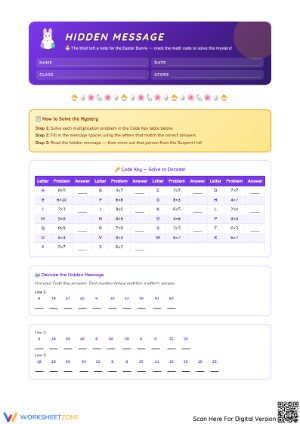
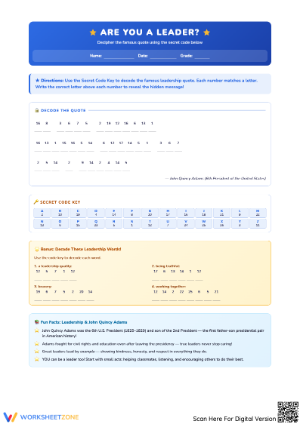
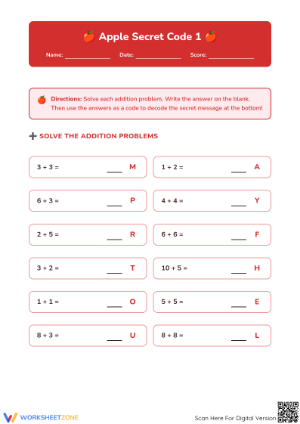
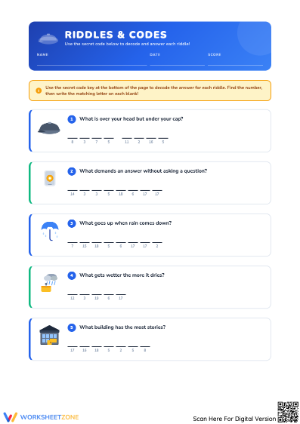
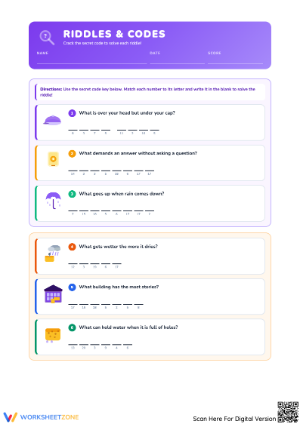
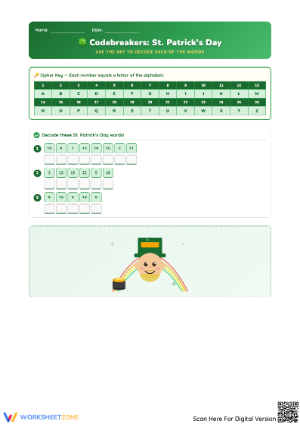
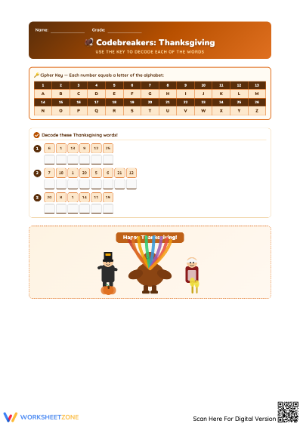
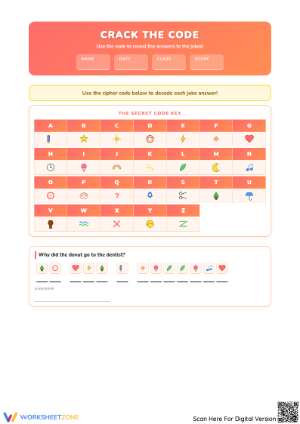
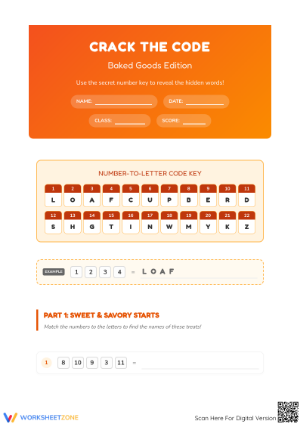
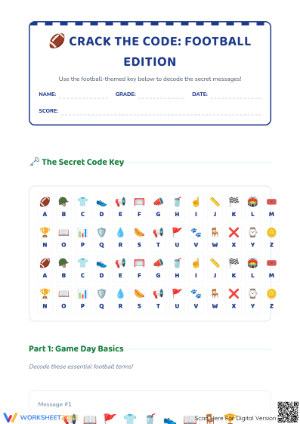
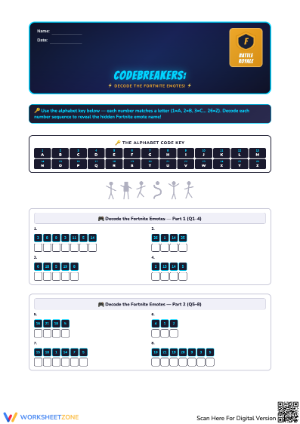
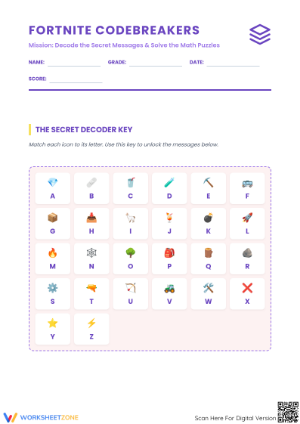
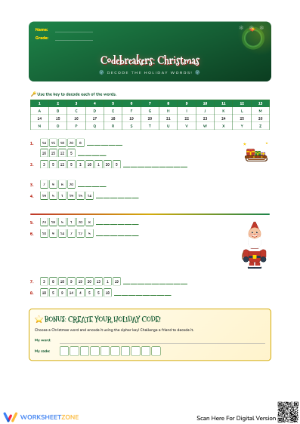
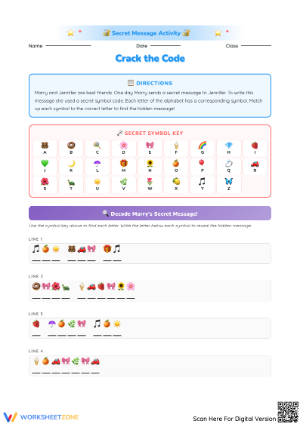
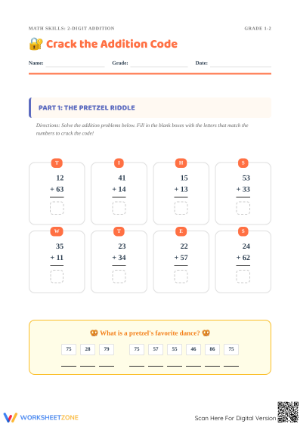
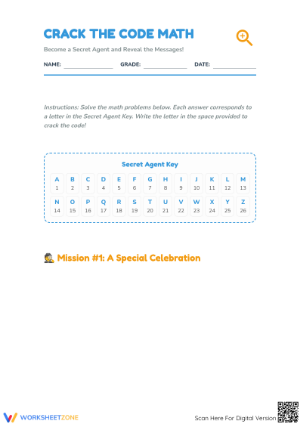
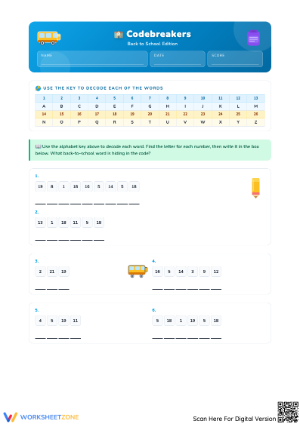
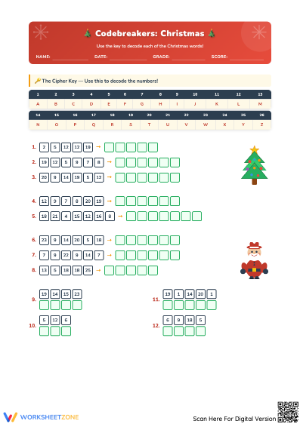
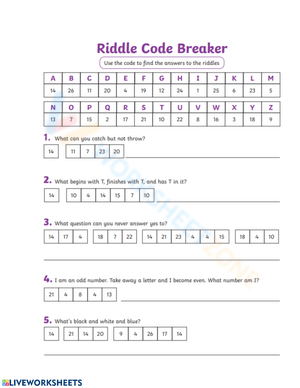
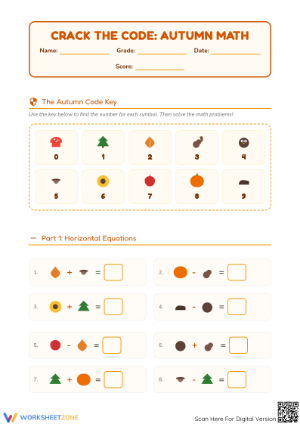
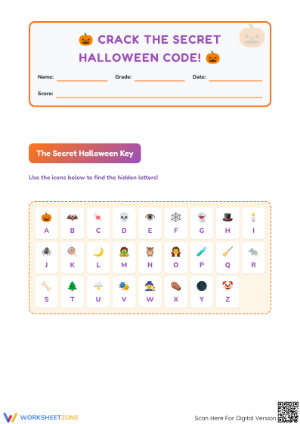
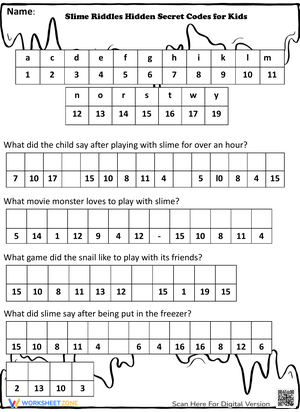
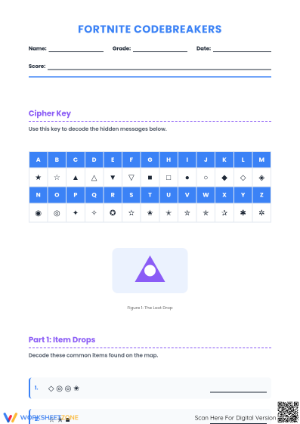
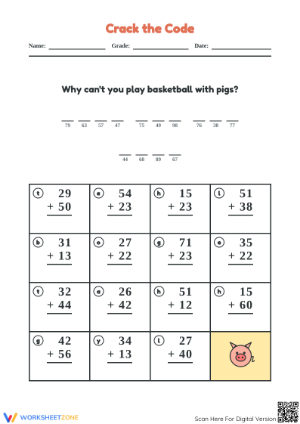
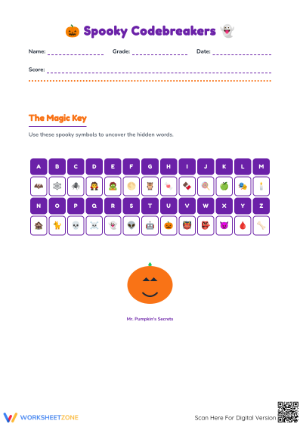
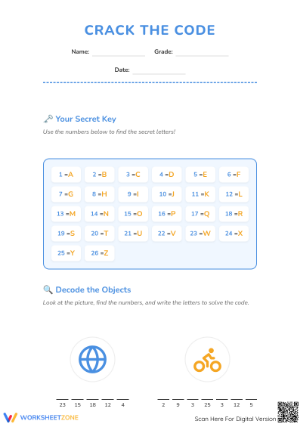
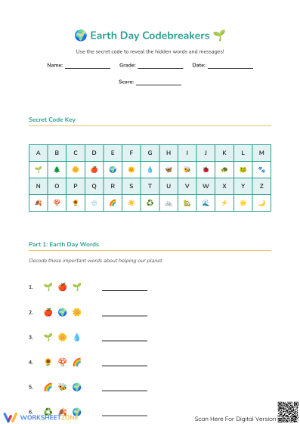
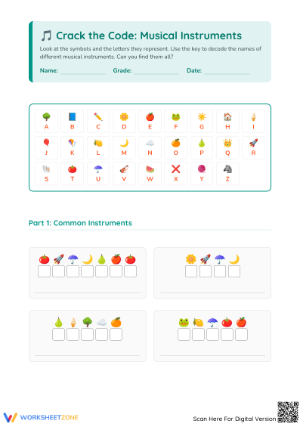
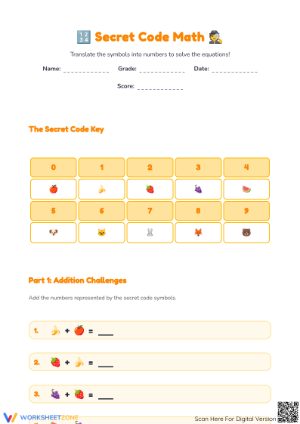
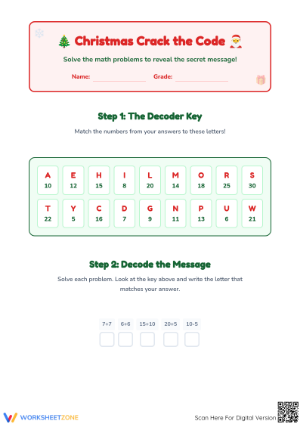
Crack the code worksheets pair a math skill, such as addition, subtraction, multiplication, division, or number patterns, with a decoding task. Students solve each problem, then match the answer to a letter or symbol key. Once every problem is solved, the letters line up to reveal a hidden word or short message. For a US classroom, this format solves a common problem: students need repeated practice with the same skill, but repeated practice can feel flat. The decoding layer gives a reason to keep going problem after problem, because the payoff is a message, not just a checked box.
The math content underneath the puzzle is exactly what you would expect from any fact-practice page. Nothing about the underlying skill changes. What changes is the framing, and that framing matters more than it might seem. Students who resist a worksheet titled Addition Practice will often work through the same twenty problems without complaint when the page is labeled a code to crack.
Matching Difficulty to Grade Level and Skill
Worksheetzone offers grade-specific versions, including Grade 1 and Grade 3 sets, so the operation and number range can match where students actually are rather than a generic middle-of-the-road difficulty. A Grade 1 set can stay inside single-digit addition and subtraction, while a Grade 3 set can move into two- and three-digit computation or early multiplication. That range matters for differentiation: two students working at different levels can both be doing a crack the code worksheet during the same block of independent work time, just with different number sets underneath the same format.
Because the format itself does not change across grade levels, students who move up a grade or into a new unit do not need a new set of directions. They already know how the puzzle works, so the teacher only has to introduce new number ranges or a new operation, not a new task type.
Classroom Implementation
Crack the code worksheets fit into several parts of a US classroom day without extra setup:
- Warm-ups: a five-minute puzzle at the start of a math block reviews yesterday's skill before new content is introduced.
- Fast-finisher tasks: students who complete independent work early can move to a themed code page instead of sitting idle.
- Homework: the format needs no manipulatives or extra materials, so it travels home cleanly.
- Sub plans: a substitute can hand out the page and answer key with minimal explanation, since the task is self-contained.
- Small-group intervention: a teacher working with a pull-out group can use a lower-difficulty version to give struggling students the same puzzle experience as their peers, just with an easier number range.
According to Classroom Callouts, crack the code activities work well across both math and spelling because the reveal mechanic gives students an immediate, built-in way to check their own accuracy. Worksheetzone offers grade-specific versions, including Grade 1 and Grade 3 sets, so teachers can match difficulty to a class or small group precisely instead of guessing at readiness before handing out a page.
Frequently Asked Questions
1. What grade levels are crack the code worksheets appropriate for?
The format works from early elementary through middle grades. Worksheetzone offers Grade 1 and Grade 3 sets as examples, and the same puzzle structure scales up by adjusting the operation and number range, not the task itself.
2. How do crack the code worksheets help with math fact fluency?
They give students repeated, low-stakes practice with a target operation while adding a self-checking step at the end, so students get both rehearsal and immediate feedback on accuracy in a single page.
3. Can crack the code worksheets be used for whole-class instruction or only independent practice?
Both. They work as a whole-class warm-up projected or handed out at the start of a lesson, and just as well as independent seat work, homework, or a fast-finisher task during a differentiated block.
4. How should teachers introduce the crack-the-code format to students for the first time?
Walk through one example as a class, showing both a correct reveal and a garbled one caused by a single wrong answer, so students understand the reveal is a built-in accuracy check rather than just a novelty.
5. Are crack the code worksheets useful for math intervention or only enrichment?
They fit both uses. A lower-difficulty version gives an intervention group the same engaging format as the rest of the class, while a higher-difficulty version can extend fast finishers or students ready for enrichment.