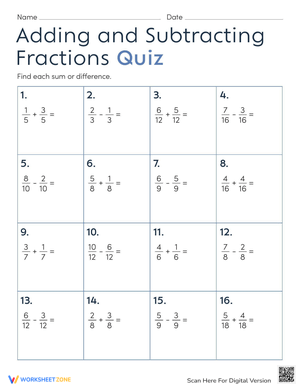
These mixed operation worksheets give grades 2–6 teachers a straightforward way to interrupt one of the most persistent habits in elementary math: students who stop reading the signs. When every problem on a sheet is multiplication, the operation becomes invisible. These worksheets put the operation back in question every single time.
The Specific Skills Targeted By These Mixed Operation Worksheets
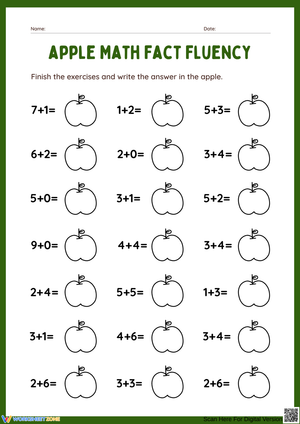
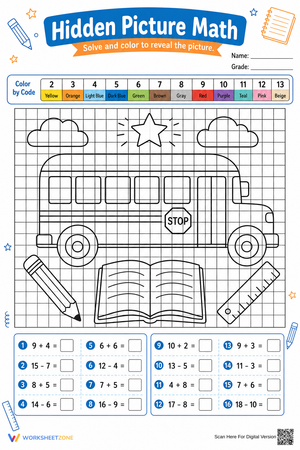
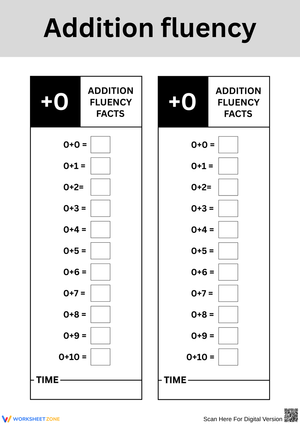
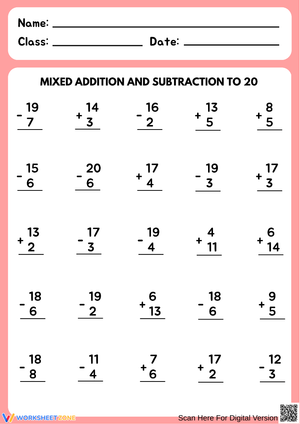
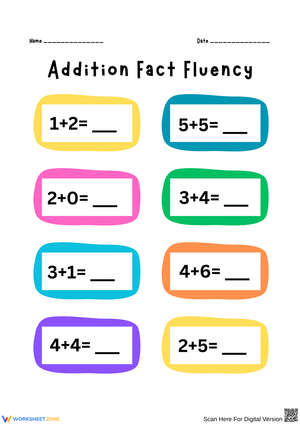
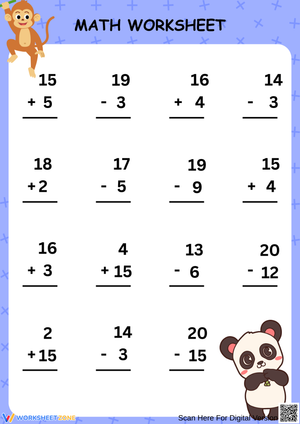
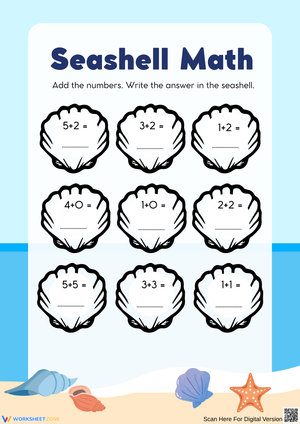
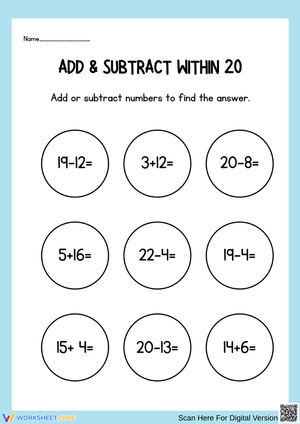
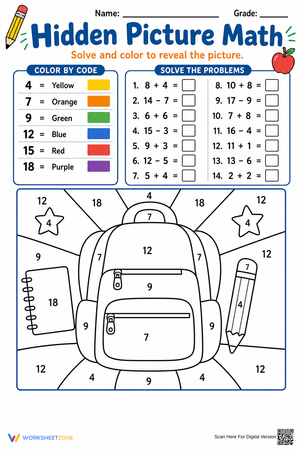
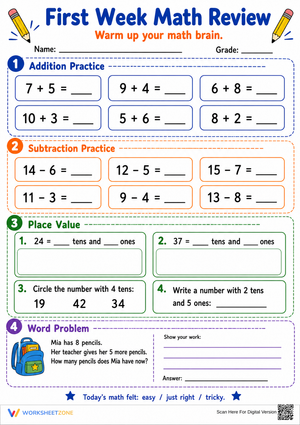
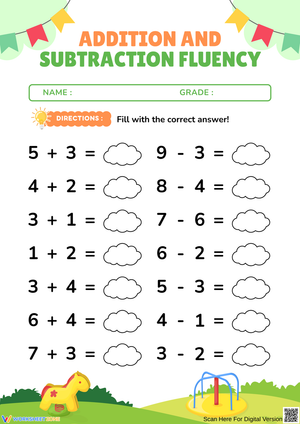
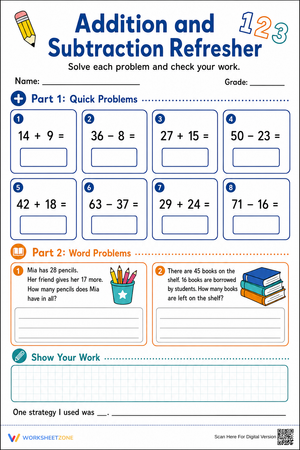
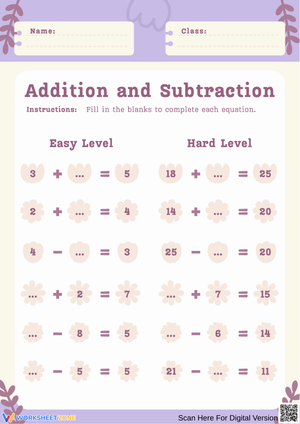
The set spans a wide instructional range, organized by grade band and operation mix. Grades 2–3 worksheets combine addition and subtraction with single- and double-digit numbers, with the emphasis on sign recognition rather than computation speed. That distinction matters at this stage — a second grader who consistently answers correctly but always "just knows" which to do hasn't developed the deliberate habit these worksheets are building.
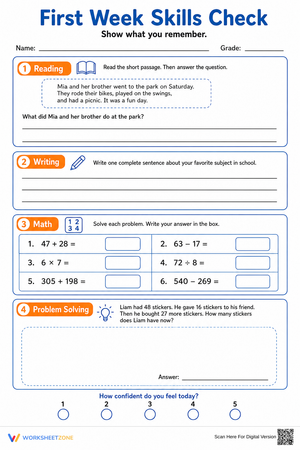
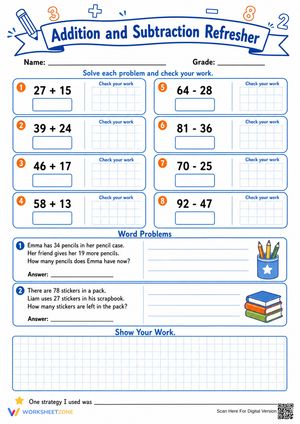
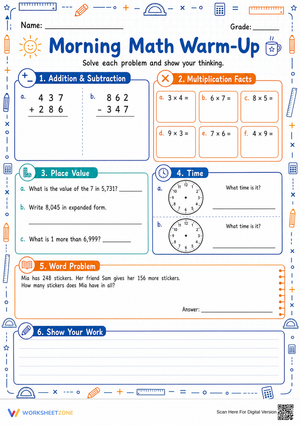
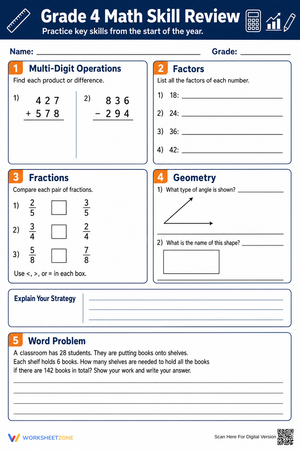
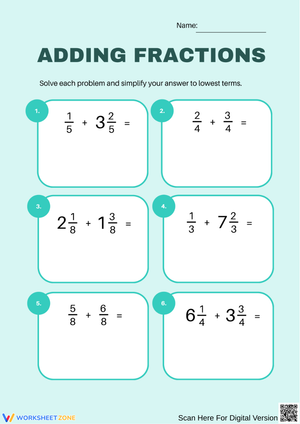
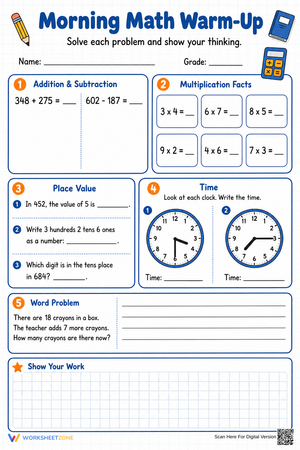
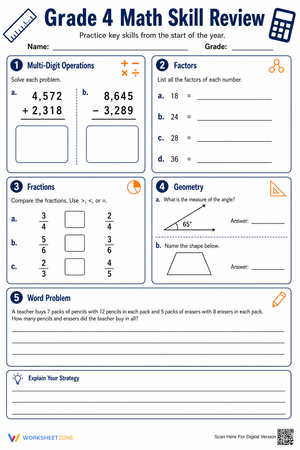
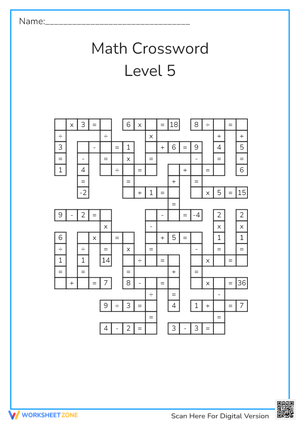
Grades 3–4 worksheets bring multiplication into the mix alongside addition and subtraction, in both horizontal and vertical formats. By grades 4–6, each worksheet pulls from all four operations, including multi-digit multiplication and division. Students at this level rewrite expressions, identify missing values, and work through missing-operation puzzles where they supply the symbol rather than the answer — a format that isolates sign-reading as a discrete skill. For grades 5–6, a subset of worksheets extends into order of operations, introducing parentheses and multi-step expressions that bridge arithmetic fluency into early algebraic thinking.
Standard Alignment
These worksheets align to several Common Core State Standards for Mathematics. The grades 2–3 addition and subtraction mix supports 2.OA.B.2 (fluency with addition and subtraction within 20) and 3.NBT.A.2 (fluency with addition and subtraction within 1,000). The grades 3–4 worksheets incorporating multiplication align to 3.OA.C.7 (multiply and divide within 100) and 4.NBT.B.4–6 (multi-digit operations). Full four-operation practice in grades 4–6 connects directly to 4.OA.A.1–3, which expects students to interpret and solve multi-step problems using all four operations. The order of operations extensions address 5.OA.A.1, where students apply conventional rules to numerical expressions with parentheses.
Practically, this means a teacher preparing students for end-of-year benchmark assessments can pull from this set without re-checking alignment — the grade-band organization maps directly to the fluency expectations in the standards progression.
Recommended Lesson Planning Strategies To Take Full Advantages Of These Worksheets
The most consistent use teachers report is the opening five to eight minutes of math class — before the lesson, not after. Ten to fifteen problems is the right scope there: enough to surface gaps without cutting into core instruction time. Because the operations vary problem to problem, these warm-ups also function as low-stakes retrieval practice rather than a preview of whatever comes next.
Exit strips — five problems cut from the bottom of a worksheet — work particularly well as end-of-class formative checks. Scanning a class set of five-problem strips takes about two minutes and makes it immediately clear which students are still hesitant on division versus which are making errors across all four operations. That's more useful than a single-operation check because it shows the full picture at once. Mixed operation worksheets also fit naturally into the moment right after a new operation is introduced: pairing the new skill with previously mastered ones keeps students from mentally filing it as something separate from what they already know.
Why Interleaved Practice Works Here
The research on interleaved practice — mixing problem types within a session rather than blocking all of one type together — consistently shows stronger long-term retention than massed, single-operation drills. The mechanism is straightforward: when students can't predict which operation is coming, they have to actively retrieve the correct procedure each time rather than staying in a single cognitive groove. That retrieval effort is what drives retention. Mixed operation worksheets are one of the few classroom tools that implement interleaved practice automatically, with no restructuring of the lesson required.
This is also why the missing-operation format earns its place alongside standard computation drills. A student who fills in the correct symbol on twenty problems has practiced operation identification twenty separate times in one sitting — a cognitive workout that a straightforward answer-fill drill doesn't replicate.
Common Mistake Of Students That Teachers Should Aware and Address
The most common error pattern in mixed operation student work isn't computational — it's operational. Students who can multiply accurately will divide incorrectly when a division symbol appears two problems after a string of multiplication, because they haven't fully reset. On longer worksheets, this tends to cluster: three or four consecutive errors, then recovery, then another cluster where the sign changed. Marking those clusters rather than individual wrong answers helps teachers distinguish a fluency gap from an attention gap.
A second pattern appears specifically with horizontal format problems. Students who were taught column arithmetic almost exclusively will rewrite horizontal problems vertically before solving — which is fine as a scaffold but becomes a bottleneck on timed work. The horizontal worksheets in this set give students repeated exposure to solving in place, which matters because standardized assessments rarely present problems in column format.
Frequently Asked Questions
What's the difference between mixed operations and order of operations worksheets?
Each problem on a mixed operations worksheet uses one operation — but that operation changes from problem to problem across the worksheet. Order of operations worksheets present multi-step expressions where students apply sequencing rules (multiplication before addition, parentheses first) within a single problem. The two formats target different skills and are usually introduced at different points: mixed operations beginning in grades 2–3, order of operations in grades 5–6.
How many problems make sense for a warm-up versus independent practice?
For a five-to-eight-minute warm-up, ten to fifteen problems is the right range — enough to build the habit without running long. Independent practice sessions can run thirty to fifty problems depending on grade level and timing. The consistent finding is that daily short sessions build fluency more reliably than occasional long ones, so frequency matters more than volume.
Can these worksheets be used for assessment?
A mixed operation worksheet covering all four operations functions as a formative snapshot of computational fluency across multiple skills simultaneously — more efficient than four separate fact checks. It works especially well as a beginning-of-unit diagnostic, where the goal is identifying which operations need the most instructional attention before moving forward.
How do I know which grade-band worksheet to assign?
Grade bands are a starting point, not a prescription. If a fourth grader is still hesitant with basic multiplication facts, a grades 3–4 mix is more useful than pushing straight to all four operations. A quick three-minute observation of a student working through five problems — watching whether they pause at the sign or move straight to computation — usually tells you more than the grade on the class roster.













 Interactive Worksheet Maker
 Quiz Maker
 Word Search Maker
 Crossword Puzzle Maker
 Word Scramble Generator
 Sentence Scramble Generator
 Handwriting Worksheet Generator
 Name Tracing Generator
 Fill In The Blank Generator