


























Views
Downloads

Essential Crack the Code Worksheet | Grade 1-2 English
Paste this activity's link or code into your existing LMS (Google Classroom, Canvas, Teams, Schoology, Moodle, etc.).
Students can open and work on the activity right away, with no student login required.
You'll still be able to track student progress and results from your teacher account.
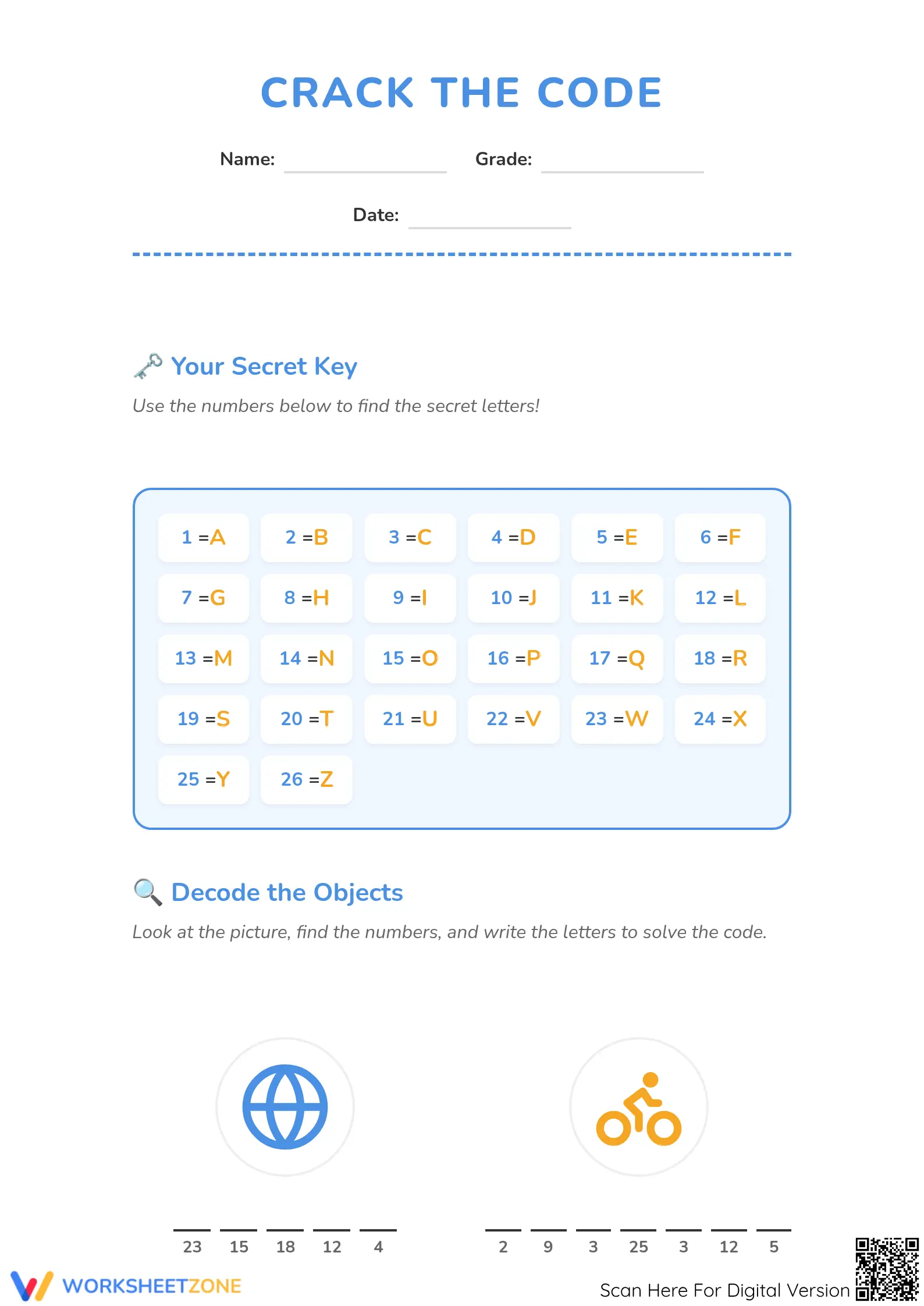
This Crack the Code worksheet transforms spelling practice into an engaging mystery-solving mission for early elementary students. By mapping numbers to letters, learners develop critical phonemic awareness and letter-recognition skills while decoding familiar objects and secret messages. It provides a structured yet playful environment for students to master grade-level vocabulary and spelling conventions independently.
At a Glance
- Grade: 1-2 · Subject: English
- Standard:
CCSS.ELA-LITERACY.L.1.2— Demonstrate command of the conventions of standard English capitalization, punctuation, and spelling- Skill Focus: Letter-number mapping and spelling
- Format: 3 pages · 7 tasks · Answer key included · PDF
- Best For: Independent practice or morning work
- Time: 15–20 minutes
What's Inside
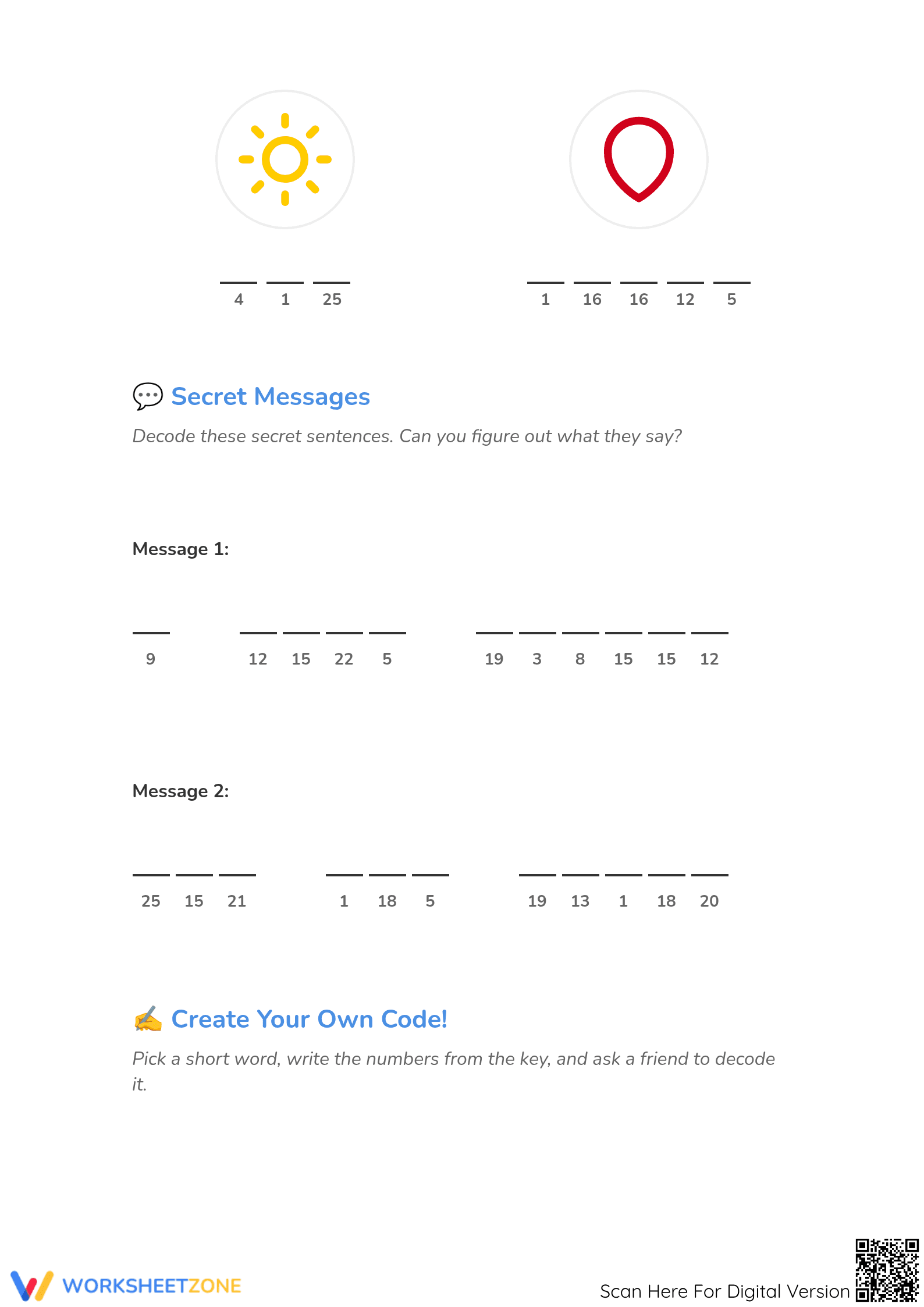
The three-page packet includes a comprehensive secret key mapping the entire alphabet to numerical values. Students utilize this key to decode four visual objects, such as a globe and a bicycle, before moving on to two complex secret messages. The final section encourages creative application by providing space for students to generate their own unique codes, reinforcing their understanding of the symbolic relationship between numbers and letters.
Zero-Prep Workflow
This resource is designed for a efficient classroom workflow. Teachers can print the three pages in approximately thirty seconds and distribute them immediately without additional instructions. Students can follow the visual cues independently, requiring less than one minute of teacher setup. Reviewing the work is equally fast using the provided answer key, which allows for quick formative assessment or peer-grading in under two minutes.
Standards Alignment
The primary standard addressed is `CCSS.ELA-LITERACY.L.1.2`, which requires students to demonstrate command of standard English spelling when writing. By identifying the correct letters associated with specific numbers, students reinforce their grasp of alphabet sequencing and phonetic components. This standard code can be copied directly into lesson plans, IEP goals, or district curriculum mapping tools to ensure instructional accountability.
How to Use It
Use this worksheet as a high-interest morning work activity to settle the class during transitions or as a reliable sub-plan resource. During direct instruction, teachers might use the "Create Your Own Code" section as a formative assessment to observe how well students can reverse the decoding process. This 20-minute activity serves as an excellent fast-finisher task that maintains academic rigor while providing a needed cognitive break from traditional spelling drills.
Who It's For
This resource is ideal for Grade 1 and Grade 2 students who are solidifying their letter-sound knowledge. It offers natural support for students with IEP goals focused on fine motor control or attention to detail. It pairs perfectly with any primary ELA curriculum or as a supplemental activity for literacy centers that utilize anchor charts for alphabet reference.
Educational research emphasizes the importance of multisensory and game-based approaches to literacy in early childhood. According to the NAEP, students who engage in diverse word-study activities that go beyond rote memorization show higher retention rates for complex spelling patterns. This worksheet applies these principles by requiring students to utilize `CCSS.ELA-LITERACY.L.1.2` through a symbolic decoding system, moving beyond simple copying to active mental processing. Fisher & Frey (2014) highlight that such scaffolds allow for a gradual release of responsibility, where students move from guided mapping to independent message creation. By integrating visual objects with abstract number-letter correspondence, the activity strengthens the neural pathways associated with phonemic awareness and orthographic mapping. This 3-page printable serves as a robust tool for educators seeking to improve student engagement without sacrificing the technical standards required for foundational literacy development.


