Comparing quantities and numbers is one of the first math skills your kindergartners and first graders need before they can tackle place value, addition, or subtraction with any real confidence. Comparison worksheets give you a fast, reliable way to build and check that skill, whether you are running a whole-group lesson, pulling a small intervention group, or checking readiness before a unit test.
Why Comparison Skills Come Before Everything Else
Comparing two groups of objects or two written numbers is not a side skill. It is the foundation students stand on when they move into place value work, regrouping, and ordering numbers in grades 1 and 2. If a student cannot reliably say which group has more, fewer, or an equal number, later lessons on tens and ones will feel shaky no matter how much time you spend on them.
CCSS.MATH.CONTENT.K.CC.C.6 specifically asks kindergartners to compare two groups of objects, using matching and counting strategies, to determine which group has more, fewer, or an equal number of objects. This standard sits at the center of kindergarten number sense, and comparison worksheets built around it should start with pictures and manipulatives, not abstract symbols.
How to Sequence Worksheets from Objects to Symbols
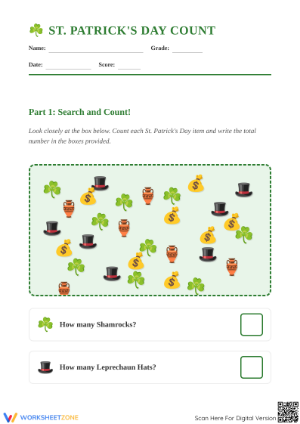
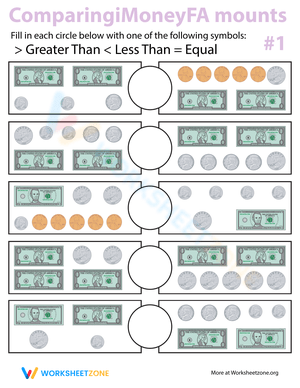
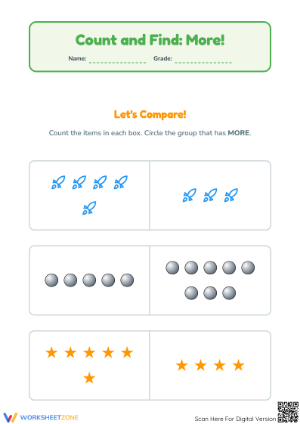
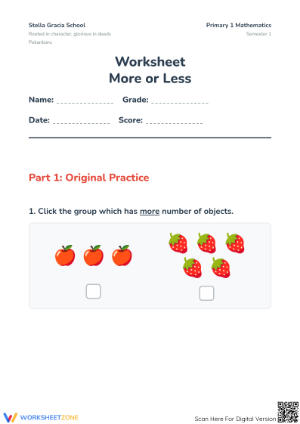
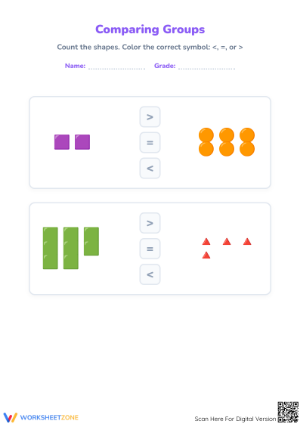
Start your youngest students with worksheets that show two groups of pictures side by side: apples, counters, or stars. Ask them to circle the group with more or fewer items. This visual, countable format matches how kindergartners actually think about quantity, and it lines up directly with K.CC.C.6.
Once students can reliably compare object groups, move to worksheets that pair a small picture set with a written numeral, then finally to worksheets comparing two written numerals side by side. This gradual shift from concrete to abstract is what makes the greater than and less than symbols make sense later, instead of feeling like a random rule to memorize.
Introducing the Greater Than and Less Than Symbols
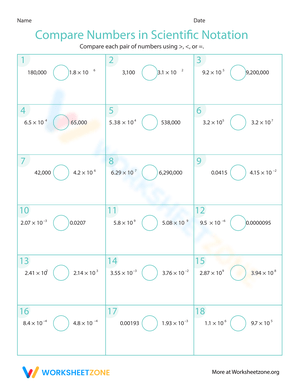
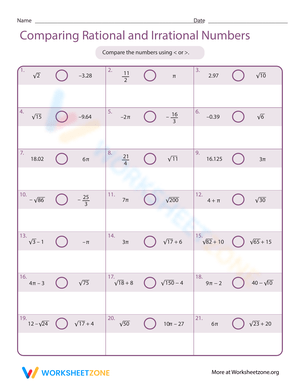
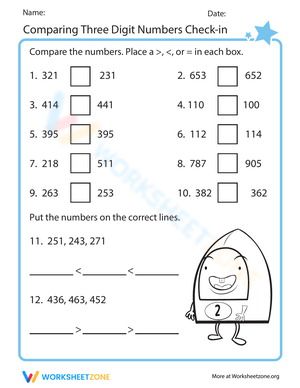
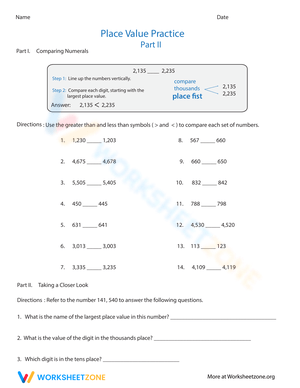
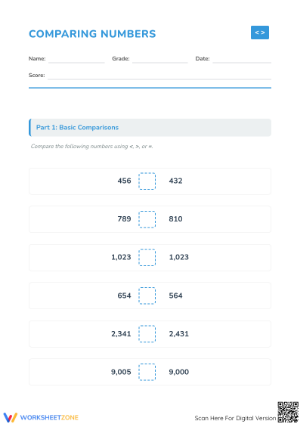
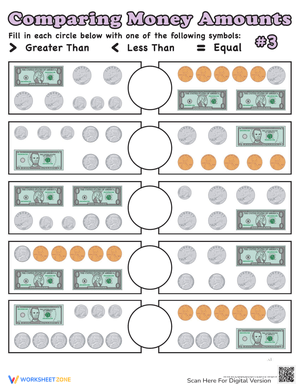
First grade is where the symbols themselves take over. CCSS.MATH.CONTENT.1.NBT.B.3 requires first graders to compare two two-digit numbers using the greater than, equal to, and less than symbols, based on an understanding of place value in the tens and ones digits. Worksheets at this stage typically ask students to fill in the correct symbol between two numbers, or to circle the larger or smaller number in a pair.
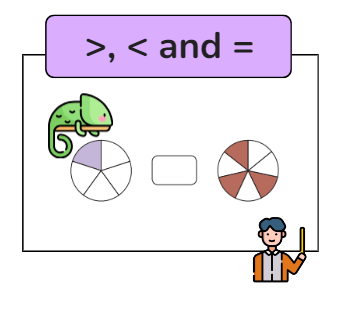
A classic way to anchor the symbol is the alligator mouth trick: the open mouth always points toward the bigger number because the alligator wants to eat more. It is a small visual cue, but it gives students something concrete to hold onto while they are still building automaticity with the abstract symbols.
Watching for Common Symbol Reversals
Reversing greater than and less than symbols is one of the most common errors you will see, and it does not necessarily mean a student misunderstands the concept of more or less. Often it is a directionality issue similar to letter reversals in early writing. When you see this pattern, go back to object comparisons briefly, then reintroduce the symbol with a consistent physical cue like the alligator mouth or arrows drawn on the worksheet itself.
Comparison worksheets that mix object-based and symbol-based problems on the same page are especially useful here, because they let you watch whether a student's error is conceptual or purely about symbol direction.
Classroom Implementation
Build comparison worksheets into your regular math block as a short, repeated routine rather than a one-time unit. A five-minute warm-up worksheet at the start of a lesson can double as a quick formative check on whether students are ready to move from object comparisons to symbol comparisons, or whether they need another day with manipulatives first.
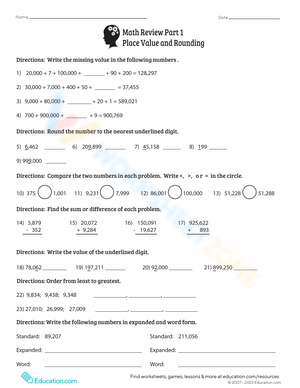
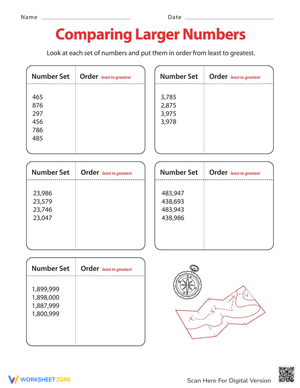
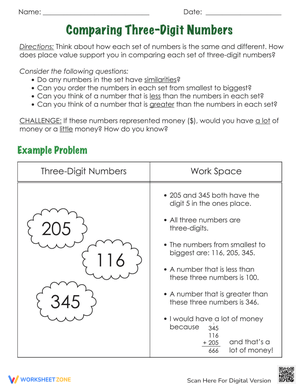
When you introduce ordering tasks, such as arranging a set of numbers from least to greatest, use worksheets that ask students to explain their choice for at least one comparison. Even a single written sentence, like stating which number has more tens, gives you insight into their reasoning that a purely symbolic answer would not.
Keep a small stack of object-comparison worksheets on hand even after your class has moved on to symbols. Some students benefit from cycling back to the concrete version for a quick reset before a harder two-digit comparison task, especially after a school break or long weekend.
Frequently Asked Questions
1. What grade level are comparison worksheets appropriate for?
Comparison worksheets are most commonly used in kindergarten and first grade. Kindergarten worksheets focus on comparing groups of objects, while first-grade worksheets shift toward comparing written two-digit numbers using greater than, less than, and equal to symbols.
2. How do comparison worksheets align with Common Core standards like K.CC.C.6 and 1.NBT.B.3?
CCSS.MATH.CONTENT.K.CC.C.6 asks kindergartners to compare two groups of objects to find which has more, fewer, or an equal number. CCSS.MATH.CONTENT.1.NBT.B.3 asks first graders to compare two two-digit numbers using greater than, equal to, and less than symbols based on place value understanding.
3. What is the best way to teach the greater than and less than symbols using worksheets?
Pair the worksheet with a consistent visual cue, such as an alligator mouth pointing toward the larger number, and sequence practice from object comparisons to mixed picture-and-numeral problems before moving to full symbol comparisons between two written numbers.
4. How can teachers use comparison worksheets for math intervention or reteaching?
Short comparison worksheets work well as quick diagnostic checks in small-group settings. They can reveal whether a student needs more time with object comparisons, is ready for symbol practice, or is simply reversing symbol direction rather than misunderstanding the underlying concept.
5. How do comparison worksheets support later place value and addition skills?
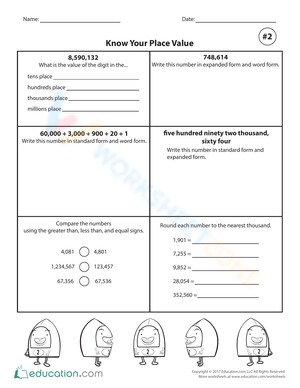
Comparing numbers requires understanding what each digit represents, which is the same reasoning students later use for regrouping in addition and subtraction and for ordering numbers within larger place value units in grades 1 and 2.