Division instruction is not one skill, it is a progression, and your worksheets should reflect that progression rather than jumping straight to the standard algorithm.
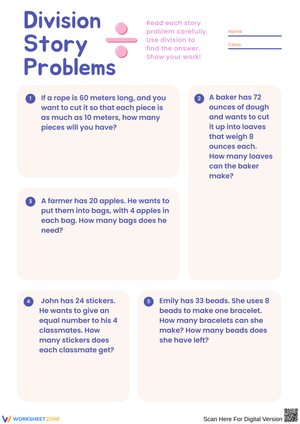
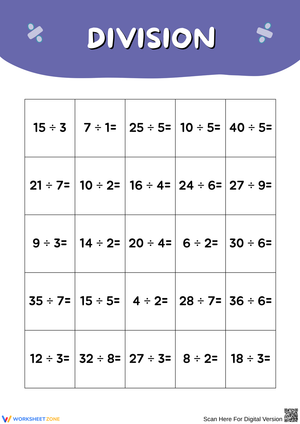
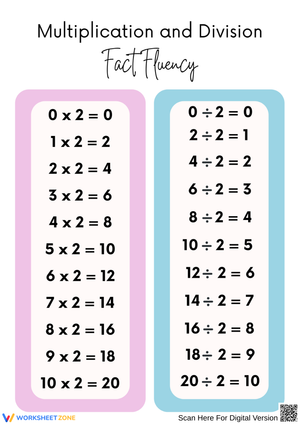
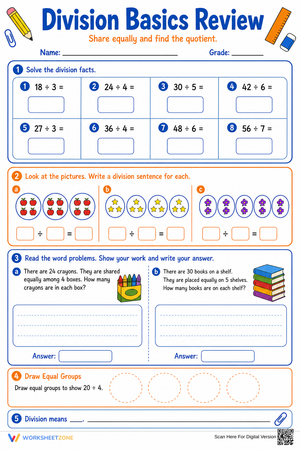
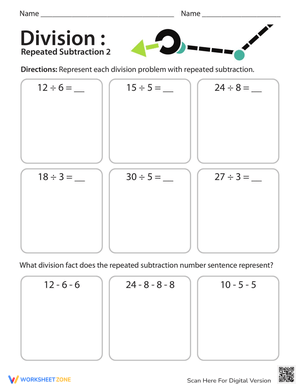
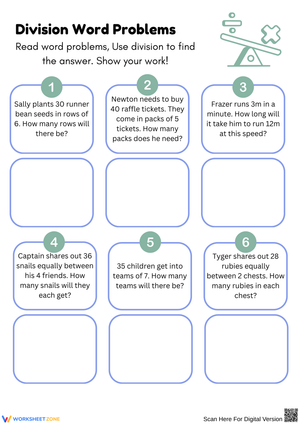
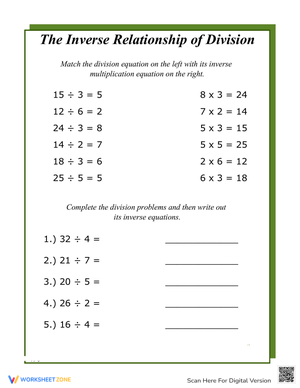
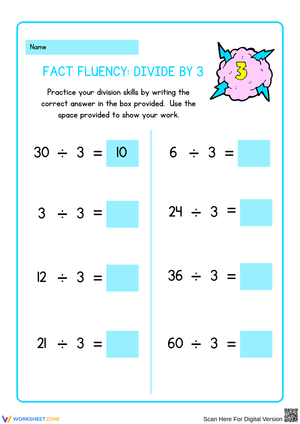
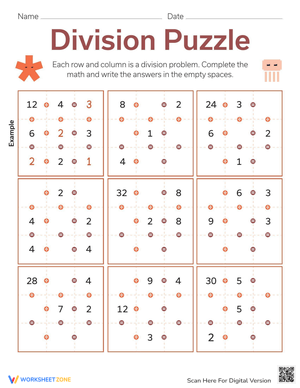
CCSS.MATH.CONTENT.3.OA.C.7 sets a specific benchmark: by the end of grade 3, students are expected to fluently multiply and divide within 100 and know all one-digit products from memory. That means grade 3 division worksheets should stay firmly in the within-100 range, built directly on the multiplication facts students are also memorizing that year.
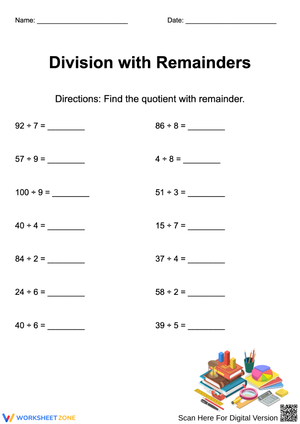
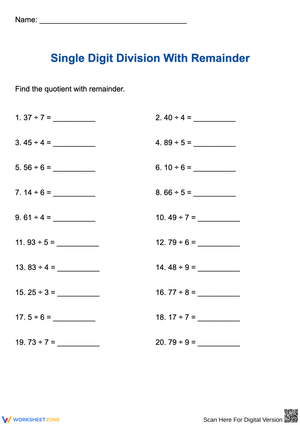
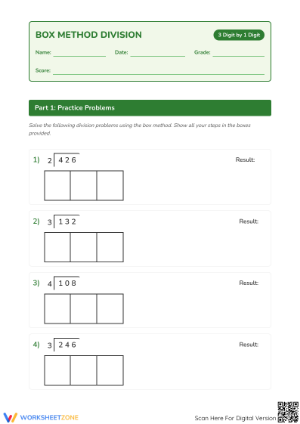
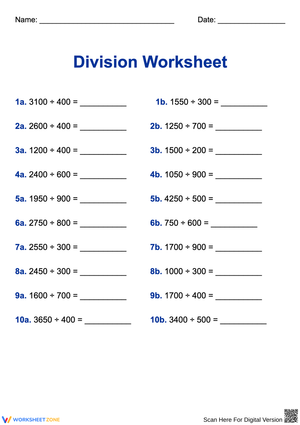
Grade 4 shifts the target. The grade 4 critical area focuses on multi-digit division involving up to four-digit dividends and one-digit divisors, so worksheets at this level should introduce the area model and partial quotients method before moving into more procedural practice. Grade 5 extends this further, adding two-digit divisors and requiring fluency with whole-number division using standard algorithms and models. If you are choosing worksheets for a grade 5 or grade 6 class, look for sets that mix area model, partial quotients, and standard algorithm problems rather than defaulting straight to the algorithm.
Area Model, Partial Quotients, or Standard Algorithm: Choosing the Right Worksheet
One of the most common questions from teachers new to a grade level is which division method to use on a given worksheet. The honest answer is that most classrooms need all three at different points.
- Area model worksheets are best early in a unit, when students need to see division as breaking a large area into manageable rectangles tied to place value.
- Partial quotients worksheets are a strong middle step, letting students subtract friendly chunks of the dividend without needing to guess the exact quotient digit on the first try.
- Standard algorithm worksheets should come once students already understand what division represents, so the steps have meaning instead of being a memorized procedure.
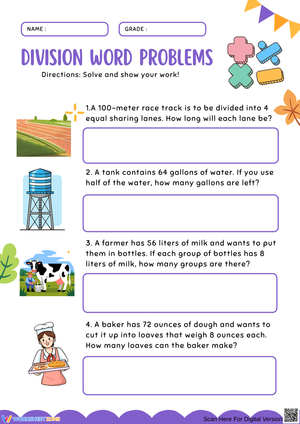
Sequencing worksheets in that order, area model, then partial quotients, then standard algorithm, tends to reduce the number of students who can execute steps but cannot explain what they are doing, which shows up later as struggles with word problems.
Classroom Implementation
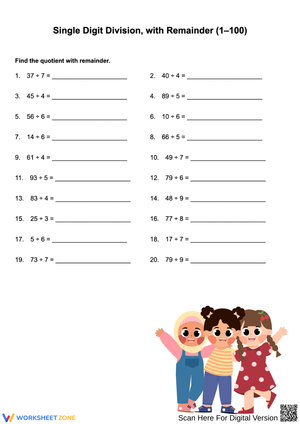
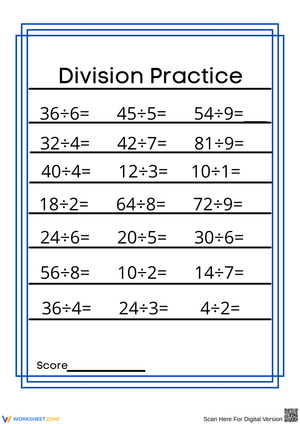
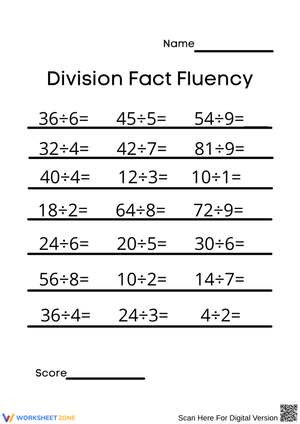
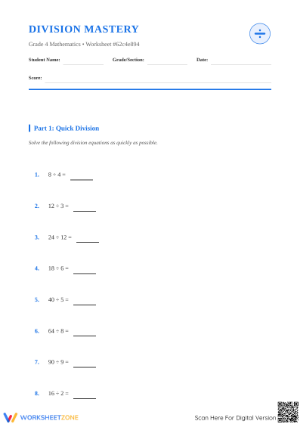
In practice, pairing two types of division worksheets in the same lesson works well: a short, timed basic-fact division worksheet at the start of class, followed by an untimed, multi-step long division worksheet later in the lesson. The timed piece keeps fact fluency sharp without taking much class time, while the untimed piece gives students room to work through the reasoning of a multi-digit problem without feeling rushed.
For small-group and intervention blocks, keep a stack of basic-fact worksheets on hand separate from your grade-level long division worksheets. That way, if a group needs to step back and rebuild fact fluency mid-unit, you are not scrambling to find appropriate practice on the spot.
Differentiating Division Worksheets Within One Classroom
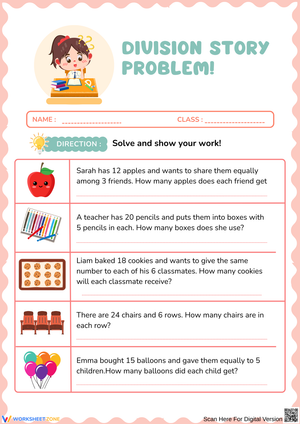
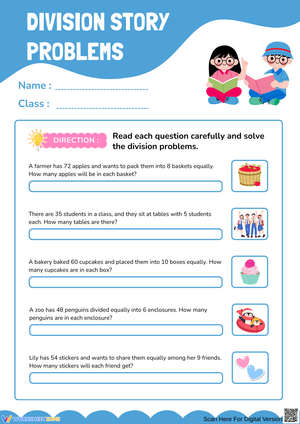
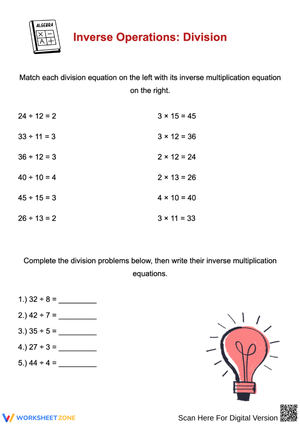
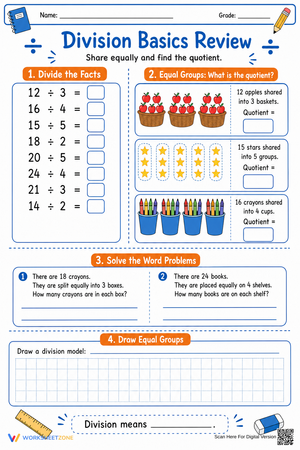
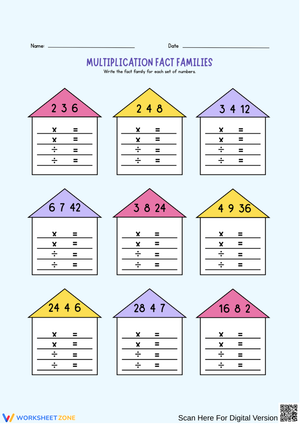
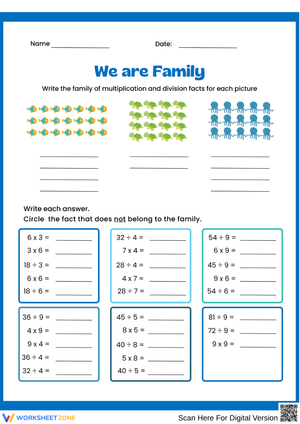
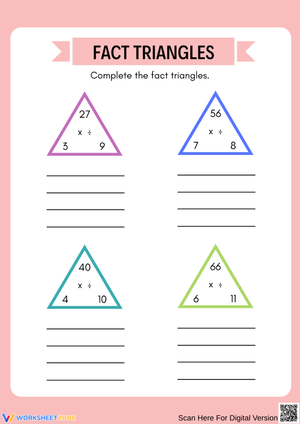
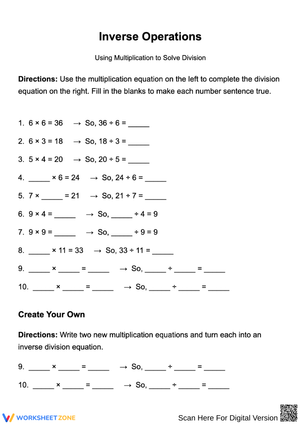
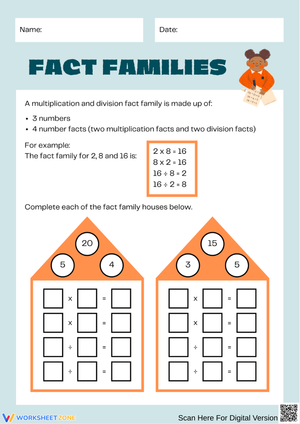
Most classrooms have a wide range of readiness for division at any given point in the year, so a single worksheet rarely fits everyone. Students still building multiplication fact recall benefit from worksheets that stay within 100 and reinforce fact families directly, even if the rest of the class has moved on to multi-digit problems.
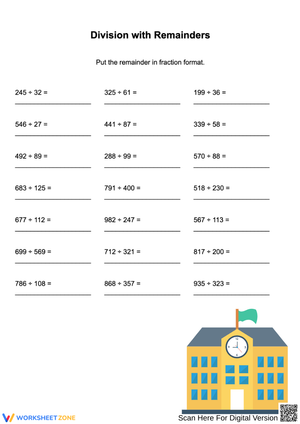
Students who are fluent with one-digit divisors and ready for two-digit divisors need worksheets that stretch them without skipping the area model or partial quotients scaffolding entirely, since two-digit divisor problems are much harder to reason through with the standard algorithm alone. Keeping two or three worksheet tiers on hand, one for fact fluency, one for one-digit divisor practice, and one for two-digit divisor challenge problems, makes it easier to differentiate without creating new materials every week.
Frequently Asked Questions
1. What grade level should introduce long division worksheets?
Long division with multi-digit dividends and one-digit divisors is a grade 4 critical area under the CCSS. Grade 3 should stay focused on basic fact division within 100, since that fluency is a prerequisite for long division to make sense.
2. How many division worksheets should students practice per week to build fluency?
There is no single fixed number in the standards, but many teachers find that short, frequent practice, such as a few basic-fact worksheets spread across the week plus one longer multi-step worksheet, works better than one long worksheet done all at once.
3. What is the difference between basic division fact worksheets and long division worksheets?
Basic division fact worksheets stay within 100 and focus on recall, matching the grade 3 expectation to fluently divide within 100. Long division worksheets involve multi-digit dividends and one or two-digit divisors, which is the grade 4 and grade 5 focus.
4. How can teachers use division worksheets to identify students who need multiplication fact intervention first?
A short basic-fact division worksheet given before a multi-digit unit works as a quick screener. Students who are slow or inaccurate on basic facts are strong candidates for a brief multiplication and division fact fluency intervention before starting long division practice.
5. Are timed division worksheets appropriate for all grade levels?
Timed worksheets work well for basic fact recall practice, which aligns with the grade 3 fluency expectation. For multi-step long division involving multi-digit dividends or two-digit divisors, untimed worksheets are generally more appropriate, since the goal is accurate reasoning through each step rather than speed.













 Interactive Worksheet Maker
 Quiz Maker
 Word Search Maker
 Crossword Puzzle Maker
 Word Scramble Generator
 Sentence Scramble Generator
 Handwriting Worksheet Generator
 Name Tracing Generator
 Fill In The Blank Generator