


























Views
Downloads



Essential Crack the Code Math: Grade 1-2 Printable
Paste this activity's link or code into your existing LMS (Google Classroom, Canvas, Teams, Schoology, Moodle, etc.).
Students can open and work on the activity right away, with no student login required.
You'll still be able to track student progress and results from your teacher account.
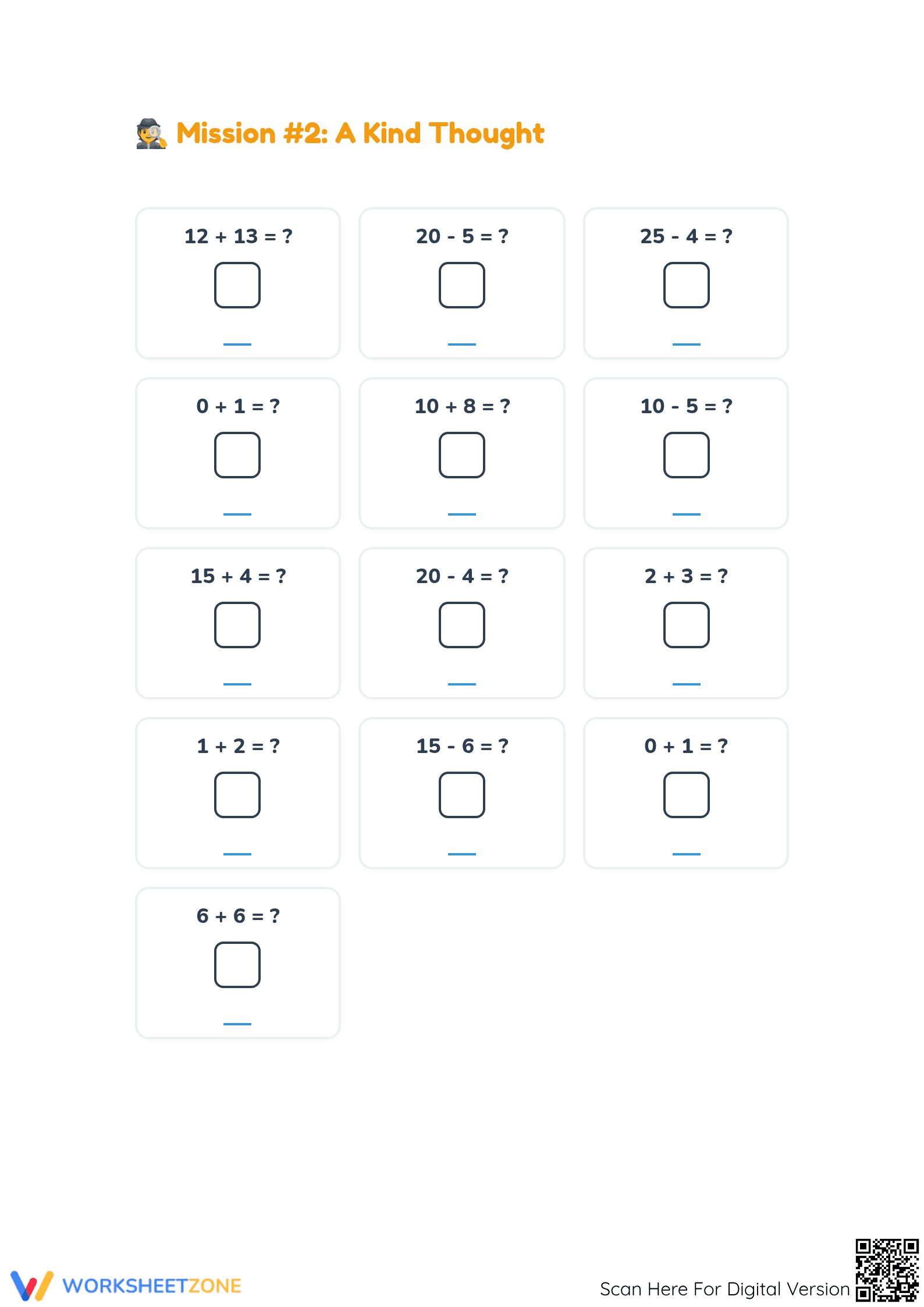
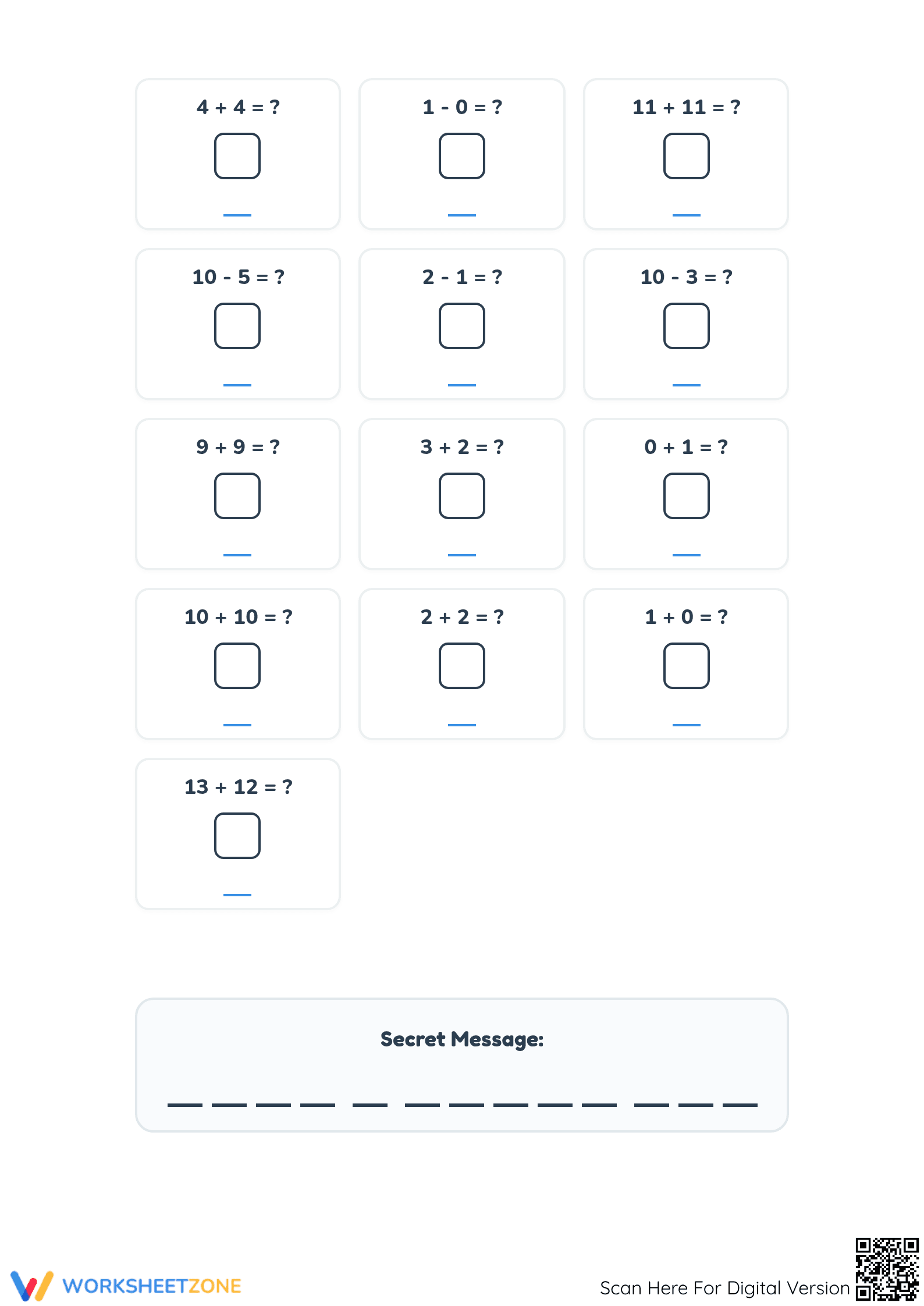
This Crack the Code Math worksheet transforms routine arithmetic into an engaging secret agent mission. By solving 39 addition and subtraction problems, learners reveal hidden messages while building essential calculation fluency within 30. This resource effectively bridges the gap between repetitive drill and active thematic problem-solving.
Overview of Features
At a Glance
- Grade: 2 · Subject: Math
- Standard:
CCSS.MATH.CONTENT.2.OA.B.2— Fluently add and subtract within 20 using mental strategies for problem-solving- Skill Focus: Mixed Operations within 30
- Format: 5 pages · 39 problems · Answer key included · PDF
- Best For: Independent math centers or early finishers
- Time: 25–35 minutes
What's Inside
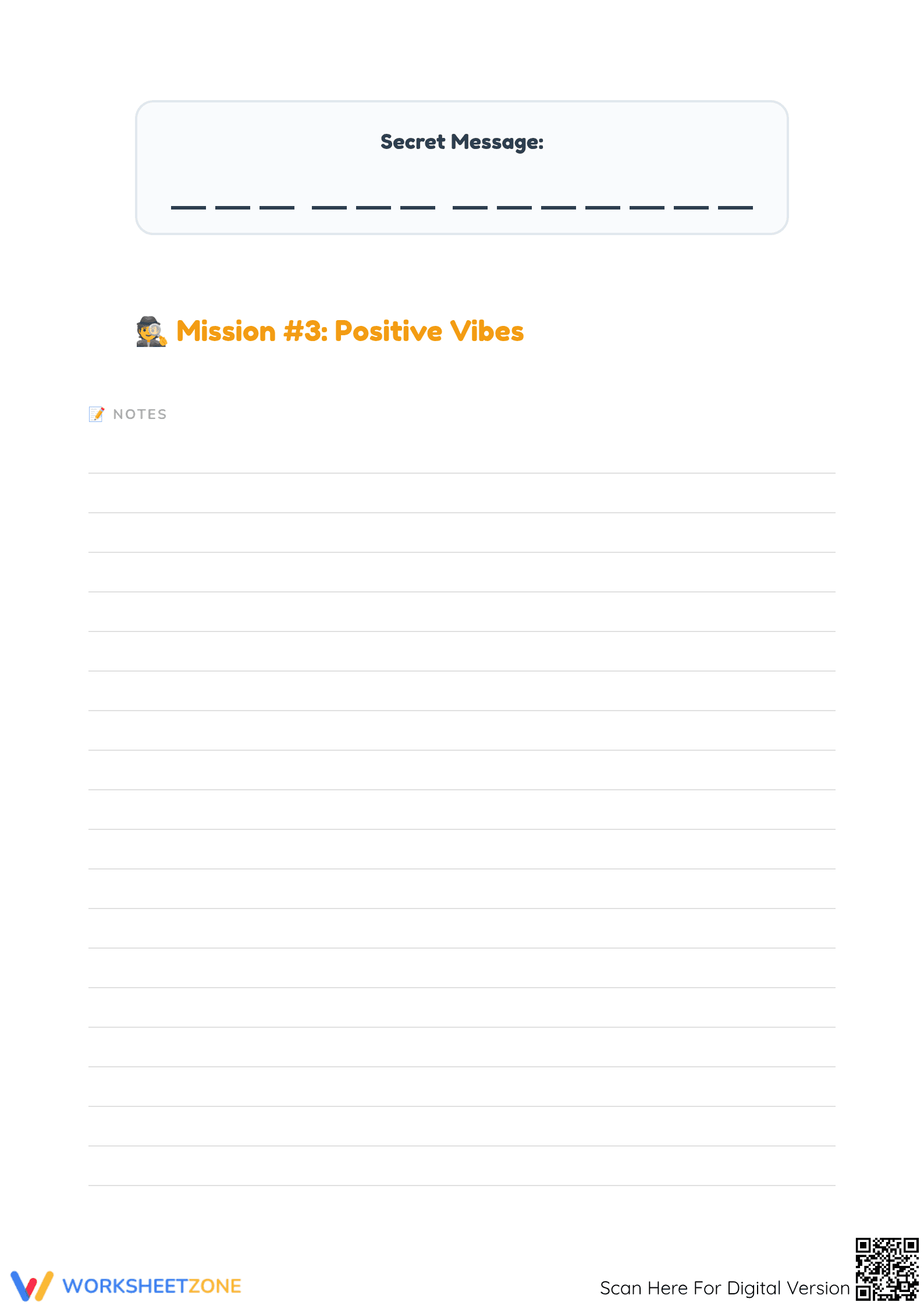
This 5-page PDF bundle contains three "Missions" requiring students to compute sums and differences to decode a Secret Agent Key. Each mission features a dedicated cipher where numeric answers correspond to alphabet letters. The layout includes clear workspace boxes and a final line for decoded messages, alongside a notes page for scratch work.
Zero-Prep Workflow
This resource follows a zero-prep workflow designed for busy educators. First, print the mission pages in under one minute. Second, distribute the worksheets to students with no prior teacher explanation required, as the Secret Agent Key provides all necessary instructions. Third, review the completed secret messages using the included answer key in less than thirty seconds. Total teacher preparation time is effectively eliminated.
Standards Alignment
This activity aligns directly with CCSS.MATH.CONTENT.2.OA.B.2, focusing on the development of mental strategies for addition and subtraction. While the standard targets fluency within 20, these problems extend to 30 to provide a gentle challenge for proficient Grade 1 students and core practice for Grade 2. Both standard codes can be copied directly into lesson plans, IEP goals, or district curriculum mapping tools.
How to Use It
Use this worksheet as a high-interest formative assessment during your operations unit. It works exceptionally well as a Friday "fun" activity or a quiet sub plan that maintains academic rigor. Teachers should observe whether students are relying on finger counting or utilizing more advanced mental strategies, like making tens or using near-doubles, to solve the decoding tasks. Students typically finish within thirty minutes.
Who It's For
This packet is ideal for general education classrooms in Grades 1 and 2, as well as special education settings requiring gamified engagement. It pairs naturally with a mystery-themed reading passage or a direct instruction lesson on inverse operations. The thematic "Secret Agent" framing provides immediate motivation for students who find traditional math worksheets intimidating or repetitive.
Research from Fisher & Frey (2014) emphasizes that when students engage in purposeful, gamified practice like this Crack the Code Math activity, their retention of basic arithmetic facts increases significantly compared to traditional rote memorization. This worksheet targets the CCSS.MATH.CONTENT.2.OA.B.2 standard by requiring students to fluently add and subtract within a thematic context, which reduces cognitive load and anxiety associated with math performance. The inclusion of 39 structured tasks ensures high-repetition practice while the decoding element provides an immediate self-checking mechanism—if the message makes sense, the math is correct. By integrating calculation with linguistic decoding, the resource supports cross-disciplinary neural pathways. According to the NAEP 2024 framework, such interactive modeling of operational fluency is a critical predictor of later success in multi-digit computation and algebraic reasoning. This Citation Capsule provides a comprehensive, research-backed summary for instructional documentation.


